

How to Fix a Warped Fence Panel and Assess the Damage
A warped fence panel isn’t always a write-off. Knowing how to fix a warped fence panel starts with checking how severe the bend or split is: mild warping may respond to careful dampening and even drying under weight, while severe warping or a large structural split usually calls for replacement.
It’s frustrating when a panel suddenly looks twisted or has started to crack, especially when the rest of the fence seems sound. The cause often matters: uneven moisture, direct sun and restricted movement can all put stress on timber, so a quick patch may not solve the underlying problem.
This guide explains what causes timber panels to warp or split, how to assess the damage and which repairs may be worth trying. It also sets out when replacement is more practical, helping you decide what to do before starting work.
Key Takeaways
- Look for large structural splits, severe bends and damage to nearby panels to judge whether repair is practical or replacement is the safer choice.
- Check how sun, uneven moisture and restricted airflow may be stressing the timber, then address the cause as well as the visible damage.
- For mild warping, careful dampening and even drying under weight may help; braces can support a panel that needs extra reinforcement.
- Before repairing a panel, make sure its supporting posts and rails are level and secure, as a weak frame can undermine the repair.
Why timber fence panels split and warp in hot, dry weather
- Inspect the panel after a hot spell. Direct sunlight can dry timber quickly, and moisture loss makes the wood shrink. Uneven drying can create surface checks, splits or a twist. Pay particular attention to boards exposed to full afternoon sun.
- Check whether the panel has room to move. A timber panel fitted tightly between posts can come under pressure as it expands and contracts with changing moisture. Keep plants, soil and garden debris from pressing against the boards; trapped moisture can make one side dry more slowly than the other.
- When replacing damaged timber boards, choose pressure-treated timber. Lower-grade or untreated panels may be less resistant to weather stress. In hot weather, lightly hosing a dry panel in the evening may slow moisture loss. Let it dry evenly, and avoid soaking wood that is already damp or soft.
- Keep up with timber maintenance. Apply a suitable wood treatment or oil to help limit moisture-related damage, and treat the fence with preservative every 1-2 years, particularly along the base and post tops. Remove soil and debris from the boards so air can circulate and the timber can dry.
- Deal with rot before attempting a repair. Gently probe a suspect area: soft, crumbling timber may not hold a sound repair. Remove decayed material and replace structurally weakened boards. Damp but firm timber may dry out, but don’t cover rot with filler or sealant.
- For a mild bend, dampen the dry side and let the panel dry evenly under weight. Braces can support a moderate warp. To decide how to fix a warped fence panel without removing it, first check that its boards are firm enough to take the weight and reinforcement.
- Before changing a boundary fence, check ownership and any planning requirements that apply to its height or position. Repair and replacement costs depend on the damage, materials and labour. Compare the work involved, from filling a small split to replacing a panel.
- A wet panel may be repairable if its timber remains firm and sound. If rot has softened the boards or weakened their fixings, don’t rely on a patch. Replace the affected timber so the fence can be supported securely.
Assessing the severity of panel damage
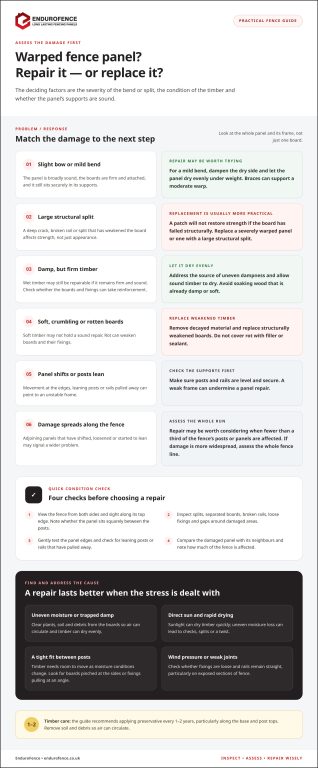
- View the fence from both sides and sight along its top edge. A slight bow in one board is different from a panel twisted across its full width. Note whether the panel still sits squarely between its posts, and mark the most distorted area so you can compare its shape after a repair.
- Inspect each split closely. A short surface check may leave a board firm, but a large or structural crack can widen and weaken the panel. Look for separated boards, broken rails, loose fixings and gaps around the damaged area. These signs suggest the problem affects more than appearance.
- Check whether the panel remains secure in its supports. Gently test for movement at the edges, then look for leaning posts or rails that have pulled away. A panel is difficult to assess in isolation if its frame is unstable; damaged supports may be the underlying cause.
- Compare the affected panel with its neighbours. If adjoining panels have shifted, loosened or started to lean, the problem may extend along the fence line. Severe warping can compromise stability and loosen neighbouring panels, so assess the whole section, not just the appearance of one board.
- Before choosing a repair, note how much of the fence is affected. Repair may be worth considering when fewer than a third of the fence’s posts or panels are affected. If damage is more widespread, or several sections have structural splits, assess the whole run rather than repeatedly patching individual areas.
- Repair the panel only if it is broadly sound, its boards remain attached and its supports are secure. Replace a severely warped panel or one with a large structural split. A small, localised split may be repairable, but a patch won’t restore strength if the board has failed structurally.
Causes of fence-panel warping and splitting
- Compare both faces of the panel after rain or a damp spell. Timber that absorbs moisture unevenly expands unevenly, which can make boards bend or twist. A shaded, plant-covered face may stay damp while the exposed face dries, pulling the panel out of shape.
- Look for ongoing contact with vegetation, soil or garden debris. Ivy pressed against boards, for example, can trap moisture and restrict airflow. Clear the growth and debris, then see whether the timber can dry evenly. Repeated damp patches may point to a continuing cause, not just an old split.
- Check how the panel sits between its posts. A tight fit leaves little room for timber to move as conditions change. Look for boards pinched against the sides, bowed rails or fixings pulling at an angle. These clues may indicate pressure at the panel’s edges.
- Inspect the construction and condition of individual boards. Thin, poorly built or lower-grade timber may be less resilient to changing weather. Loose joints can let boards move independently, while a split near a fixing may show where stress has concentrated. Compare affected boards with sound ones in the same panel.
- Consider the fence’s exposure to wind. A panel facing open ground or a gap between buildings may take more pressure than a sheltered section. Check whether its fixings are loose and its rails remain straight. Movement at the supports can add strain to the boards and joints.
- Trace the warp to a likely cause before repairing it. If one face stays wet, improve airflow and remove nearby debris. If the panel is tight in its posts, address the fit. If several boards are weak or poorly joined, replacing the panel may be more effective than treating each symptom separately.
What are the steps to straighten and reinforce a warped fence panel?
- Check the supporting posts and rails before working on the panel. Make sure they’re level, solid and able to carry the fence. A loose rail or leaning post can make a straightened panel twist again, so repair the support before forcing the boards into position.
- Decide whether the warp is mild enough to correct. The timber should remain firm, with boards and joints still attached. A severe bend, large structural split or crumbling section calls for replacement, not pressure that could break weakened boards.
- For mild warping, dampen the dry side of the panel. This may help balance moisture across the timber. Avoid soaking the whole panel, especially if one face is already damp. Uneven wetting can add stress rather than help the boards settle.
- Allow the panel to dry evenly under weight. Place a straight, flat support against the bowed area and apply steady pressure while the timber dries. Keep the load controlled: forcing the bend quickly may split a board or loosen its fixings. Check the panel’s shape as it dries.
- Add a brace or cross support if the panel still needs help staying straight. Fix it across sound timber, not through a split or softened area. Pressure-treated reinforcement can provide extra stability and resist moisture. Recheck that the rails and posts remain secure after fitting.
- Review the repair once the timber has dried. Look for movement at joints, new splits or fixings pulling away. If the panel won’t hold its shape, replacement is the practical next step. For a replacement system, explore fence options suited to your boundary.
EnduroFence
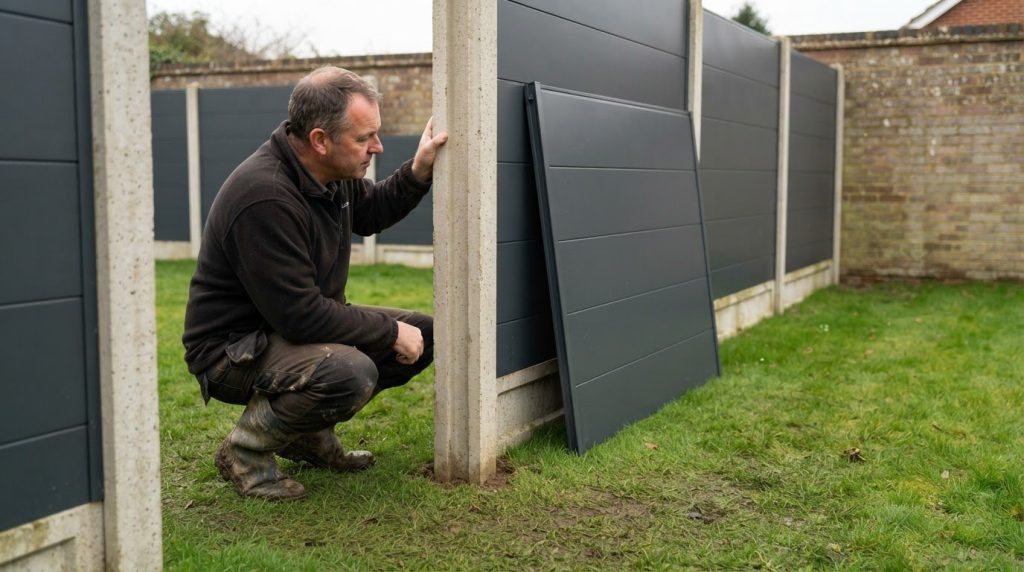
EnduroFence offers a practical option when a timber panel is too warped or split to repair. Its insulated steel panels retrofit directly into existing UK slotted concrete posts, so sound posts can stay in place. The maintenance-free panels need no painting or treatment, reducing ongoing upkeep.
For homeowners in Lincolnshire, South Yorkshire, Edinburgh and Fife planning a replacement, matching Concrete Post Covers are also available. Use the online Fence Configurator to enter your total fence length and build and price your system. Installation is available in Lincolnshire, North Lincolnshire and South Yorkshire, as well as Edinburgh and Fife.
If you’re considering replacing a damaged panel, contact EnduroFence to discuss your fence project.
Plan your next fence repair with confidence
Before starting work, decide what you want the boundary to do over the coming years. A repair should leave the fence secure and usable, not simply hide visible damage. Consider whether the same problem could affect another section and whether repairing one panel fits your wider plans for the garden. This can help you avoid spending time on a short-term fix that doesn’t suit the boundary you want.
Record which sections need attention and what matters most: restoring the existing fence or planning a broader update. Use that decision to guide your choice of materials and the order of work. If you’re still weighing up how to fix a warped fence panel, assess the whole boundary, not just the most obvious bend.
For help considering a suitable fence option, contact EnduroFence about your fence. You can also use the online Fence Configurator at endurofence.co.uk: enter your total fence length to build and price your system. A clear plan makes it easier to move forward with confidence.
Frequently Asked Questions
Fix or Replace: How Do You Know Which One a Fence Needs?
Repair a fence when the damage is localised and the surrounding boards, rails and fixings remain sound. For example, a small split in one board may take filler or adhesive, while a panel with several failed joints may not hold a lasting patch. Consider the fence line as a whole: repeated repairs across adjoining sections can indicate that replacement is the more practical option.
What Tools Do You Need to Fix a Fence?
The tools depend on the fault. For loose fixings, use a screwdriver or drill; for checking alignment, use a spirit level and straightedge. Clamps can hold a board steady during a repair, while a tape measure helps assess replacement parts. Wear gloves and eye protection when handling splintered timber, and use tools suited to the existing fixings rather than forcing them.
How do you diagnose why a wooden fence panel has warped?
Compare the panel’s shape with its position and surroundings. Note whether the bend appears after dry weather, persistent rain or growth pressing against one face. Check the fixings and rails, then look for damp marks, loose joints or contact with soil. A repeated pattern across neighbouring panels can help distinguish a local fault from a wider exposure issue.
Can a warped fence panel be straightened without replacing it?
Yes, a mildly warped timber panel can sometimes be straightened in place if its boards and supports remain sound. Dampen the dry face, then use a straight, flat support and controlled weight to encourage an even shape as it dries. Check alignment with a straightedge rather than judging from one angle. If the timber cracks or the fixings shift, stop applying pressure and reassess the repair.
What tools and materials are needed to repair a warped fence panel?
For a small split, gather wood filler or waterproof adhesive, a suitable applicator, sandpaper and weatherproof sealant. A clamp can keep the repair aligned while it sets. For a panel needing reinforcement, use a straight brace and fixings suited to sound timber. Match materials to the repair: filler may address a small gap, but it won’t restore a structurally failed board.
When should you replace a warped fence panel instead of repairing it?
Replace the panel if a large crack crosses a structural board, several joints have failed, or the timber is too weak to hold fixings. Replacement is also appropriate when the panel cannot sit securely within its posts after adjustment. Check adjoining sections before deciding: if they have loosened or shifted too, replacing one panel alone may leave the underlying instability unresolved.

Leave a Reply