

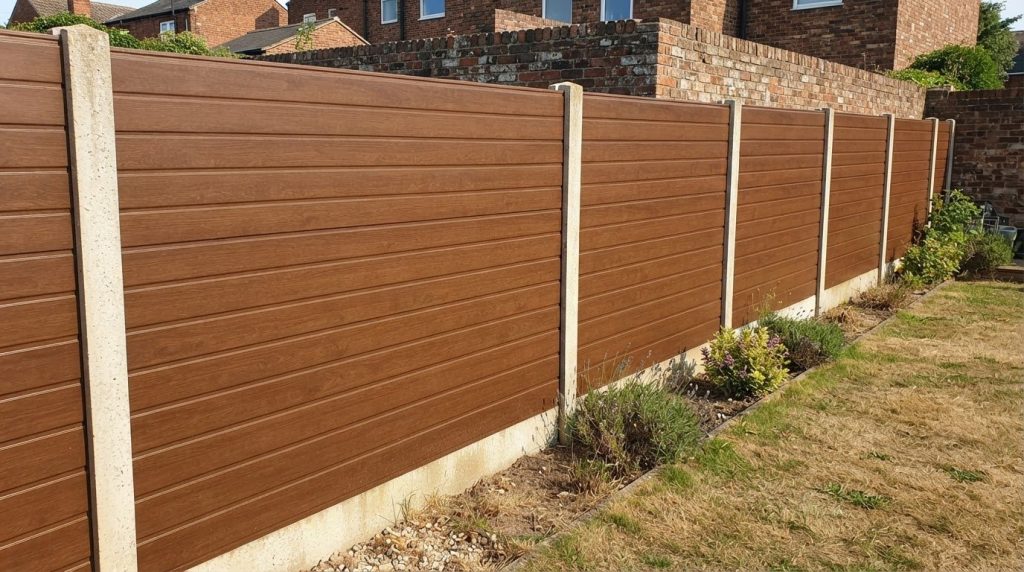
How to Choose Garden Fence Panels That Resist Warping
Warping often starts before a fence panel is installed: poor-quality timber, inadequate treatment or storage can leave it more vulnerable to movement. To choose garden fence panels that don’t warp, look for well-treated timber and match the panel design and support to the garden’s exposure. Keeping panels clear of damp ground and allowing airflow can also help limit damage.
It’s frustrating when a fence splits, bows or develops uneven gaps, especially when it’s meant to provide privacy for years. Timber can shrink unevenly when one side dries faster than the other, while strong wind can put extra pressure on a panel and its posts.
This guide explains why panels warp, what to look for when choosing one, and how exposure and installation affect its lifespan. You’ll learn which practical details matter, from treatment and panel design to ground clearance, fixings and regular checks, so you can make a more informed choice for your garden.
Key Takeaways
- Look beyond appearance: timber quality, treatment and storage can all affect how well a panel holds its shape.
- Match panel design and height to your garden’s exposure, as wind pressure can influence the whole fence structure.
- Keep panels clear of damp ground and allow airflow to support more even drying and protect vulnerable edges.
- Understand how rapid drying on one side can cause timber to shrink unevenly, then use the right protection and upkeep to reduce the risk.
Why Do Fence Panels Split and Warp?
Timber panels can bow or crack when one side dries faster than the other, causing uneven shrinkage. Timber quality, treatment, storage and installation can all affect how a panel holds its shape.
Compare the material, panel structure and support before choosing garden fencing. Then use regular maintenance to catch movement before it worsens.
Compare panel materials for warp resistance
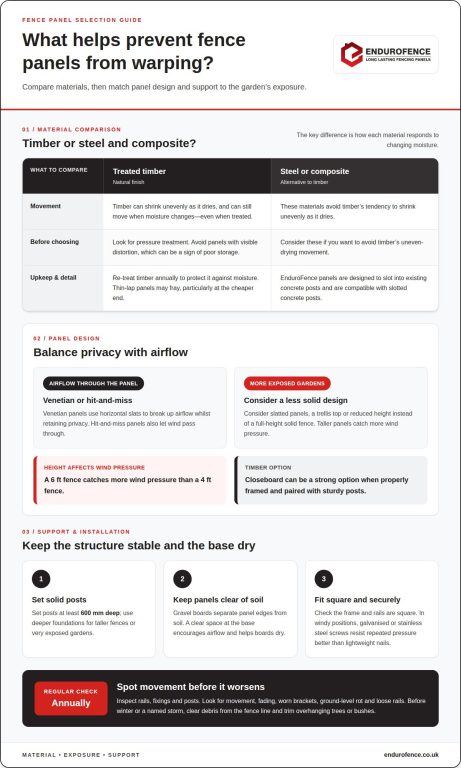
Choose a material that suits your maintenance needs and exposure. Steel and composite panels avoid timber’s tendency to shrink unevenly as it dries, while treated timber can still move with changing moisture. For timber, look for pressure treatment and avoid panels with signs of poor storage, such as visible distortion. Thin-lap panels may fray, particularly at the cheaper end.
Assess panel thickness and frame design
Inspect the frame as well as the facing boards. A thicker panel with a secure frame is less likely to flex than thin, loosely joined slats, but taller panels also catch more wind. Check that rails hold the boards firmly and that fence posts provide stable support. Gaps between boards can allow airflow and help timber dry more evenly.
- Check for repairable damage. If a panel has warped, inspect its rails, fixings and fence post before deciding what to do. A slight bow with sound rails may be refixed; split boards or a distorted frame usually need replacing. Avoid forcing timber straight, which can loosen joints or cause fresh splits.
- Inspect the whole fence annually. Look for movement, fading, worn brackets, ground-level rot and loose rails. Re-treat timber annually to protect it against moisture. Check concrete posts for movement or damage; correctly installed concrete posts need no painting, treatment or weatherproofing.
- Clear the fence line before winter or a named storm. Remove debris from the base and trim overhanging trees or bushes. Gravel boards keep panel edges away from soil, while clear space at the base helps airflow and reduces persistent damp.
Choosing panels for privacy, style, and exposure
For garden fence panels that don’t warp, consider steel as an alternative to timber. EnduroFence Maintenance-Free Fence Panels are designed to slot into existing concrete posts and are fully compatible with slotted concrete posts.
- Choose a design that balances privacy with airflow. Venetian panels use horizontal slats to break up airflow whilst retaining privacy, and hit-and-miss panels also let wind pass through. In exposed gardens, consider slatted panels, a trellis top or reduced height instead of a full-height solid fence. Taller panels catch more wind pressure, so factor this into your choice.
-
Select pressure-treated or heavy-duty panels
Choose pressure-treated timber if you prefer a natural finish, and consider heavy-duty panels for more demanding positions. Closeboard can provide a strong option when properly framed and paired with sturdy posts. Waney lap panels are less suited to extremely windy gardens unless strong posts, gravel boards and proper fixings support them. A treated finish helps timber resist weather-related movement.
-
Choose post sizes, height and durability
Set posts at least 600 mm deep, with deeper foundations for taller fences or very exposed gardens. A 6 ft fence catches more wind pressure than a 4 ft fence, so factor exposure into your height decision. For timber, 100 mm x 100 mm is an example of a thicker, solid post; UC4 pressure-treated posts suit a natural timber appearance. These choices help garden fence panels that don’t warp stay supported as conditions change.
- Pair panels with durable posts and ground-level support. Concrete posts resist rot and warping, while concrete posts, closeboard panels and concrete gravel boards form a heavy-duty system. Gravel boards separate panels from soil contact, helping protect their lower edges from moisture. When replacing a fence, consider the exposure, privacy and finish you need before settling on a panel style.
Fence panel installation and lifespan
Install panels square and securely so the fence structure supports them evenly. Measure each bay and prepare the ground before fixing boards in place.
- Measure each bay and level the ground. Check the distance between fence posts before buying panels, as an incorrect fit can leave uneven gaps or force the frame into position. Make sure the ground is level where the fence will sit. If the line slopes, plan how each panel will follow it rather than twisting the boards to compensate.
- Keep panels straight during fitting. Set the frame square between posts and check its horizontal rails before securing fixings. A panel fitted at an angle can put uneven strain on joints, weakening its structure over time. Leave small, uniform gaps between panels and boards where appropriate, allowing timber to move as moisture levels change.
- Protect exposed edges and fixings. Seal timber panel top edges and end grain, where rain can enter readily. Post caps or capping rails shield the fence top from direct sun and rainfall. In windy positions, use galvanised or stainless steel screws rather than lightweight nails, which can loosen under repeated pressure.
- Keep the panel base clear. Gravel boards lift panels away from soil, protecting lower edges from ground contact, moisture and rot. A small gap at the base also encourages airflow and helps the boards dry. Before winter or a named storm, clear debris from the fence line and trim overhanging branches that could strike the structure.
- Inspect the whole fence annually. Look for loose brackets, shifting panels, damaged rails and gaps that have become large or uneven. Those changes can point to warped timber or poor installation. Consider replacement when a fence has stood for 15-20 years without refurbishment, especially if its posts are rotten or unstable.
Why heat and dry weather cause timber panels to split or warp
In hot, dry weather, timber can dry faster on its sun-facing side, shrinking unevenly and causing panels to bow, warp or crack. Protect panels by limiting direct exposure, keeping them clear of damp ground and maintaining their surface treatment.
- Notice where the sun hits. A panel with one side exposed to strong sunlight may dry unevenly, particularly after damp weather. As the exposed face loses moisture and contracts faster than the shaded face, boards can bend or split. Check sun-facing sections for changes in shape and finish after periods of hot, dry weather.
- Keep the benefits of timber in view. Timber offers a traditional appearance and can be treated to help protect against moisture loss and sun damage. Its natural character suits many gardens, but it responds to changing conditions. Maintain the protective finish so the surface is less exposed to repeated wetting and drying.
- Reduce persistent moisture at ground level. Make sure soil and leaves do not remain piled against the bottom of the fence. Gravel boards separate timber panels from the ground, helping protect their lower edges from moisture and rot. Clear debris after wet weather so the base can dry, rather than staying damp beneath the boards.
- Adapt exposed sections to airflow. A solid panel can face greater wind pressure in an exposed garden, adding strain to boards and fixings. Consider a slatted design where privacy needs allow; gaps let wind pass through. This does not prevent timber responding to heat, but it can reduce pressure on the overall fence structure.
- Maintain the surface through changing seasons. Check for faded or worn treatment and re-treat timber annually to protect it against moisture. Inspect panels after a hot spell for cracks, loose boards or new bowing. Addressing a small surface split early can help prevent water entering the exposed timber and worsening the damage.
EnduroFence: Maintenance-Free Fence Panels
EnduroFence supplies maintenance-free steel fence panels for homeowners replacing timber fencing. Each panel has profiled steel outer sheets on both sides and a high-density insulated core. The panels are powder-coated, with no painting or treating needed, and no colour fading or rot.
The panels are designed to slot into existing concrete posts, making them a practical option when the posts are sound and you want to replace the panels rather than the whole fence. The retrofit panel swap requires no training or qualification and no additional tools. EnduroFence also offers post covers and caps.
If you want to explore a lower-maintenance alternative for your garden, contact EnduroFence to discuss your fence panel needs.
Make your next fence decision count
Choosing garden fence panels that don’t warp starts with deciding whether timber’s natural appearance or a maintenance-free alternative better suits your plans. Check the existing posts, consider the panel height and finish, and choose a system that fits the fence you have.
If you’re ready to replace timber panels, explore EnduroFence Maintenance-Free Fence Panels and the available colours, finishes and designs online. Choose panels to suit your existing concrete posts and request a free quote through the website.
Get fencing advice from EnduroFence and take the next step towards a fence that works for your home.
Frequently Asked Questions
What Makes a Fence Storm-Proof?
No fence is completely storm-proof, but a sound structure can better withstand strong winds. Choose panels that suit the garden’s exposure and make sure posts, rails and fixings work together. Wind-permeable designs can reduce pressure on solid sections. After a storm, look for loose connections, cracked boards or leaning posts, and deal with damage before the next spell of bad weather.
Do pressure-treated timber fence panels warp less than untreated panels?
Pressure treatment can help timber resist weather-related movement, but it doesn’t make panels immune to warping. Check that treatment covers vulnerable surfaces and exposed ends, then keep the protective finish in good condition. Untreated timber is more exposed to moisture changes, which can lead to uneven drying. Panel quality, storage and how the fence is installed also influence its shape over time.
Are composite fence panels resistant to warping in UK weather?
Composite panels don’t warp through timber’s uneven drying and shrinkage process, but that doesn’t mean every panel is immune to movement. Wind pressure, changing temperatures and the support structure can still affect how a fence sits. For a UK garden, consider the product’s stated exposure guidance and make sure the posts and fixings suit the panel system before choosing it.
How much do warp-resistant garden fence panels cost in the UK?
The overall cost depends on the panel material, size and finish, as well as whether posts, gravel boards or fixings need replacing. Reusing sound existing posts can change what the project requires compared with replacing the full fence structure. Set your budget around the complete job, not just the panel, and factor in any preparation or upkeep associated with the material you choose.
How should fence panels be installed to reduce warping and movement?
Start with a stable, level fence line and correctly spaced posts, then fit each panel square without forcing it into a tight gap. Keep fixings secure and allow small, even gaps where timber needs room to move. Choose fixings suited to outdoor exposure, and support the panel’s base so it stays clear of soil. Check alignment again before completing the run.

Leave a Reply