

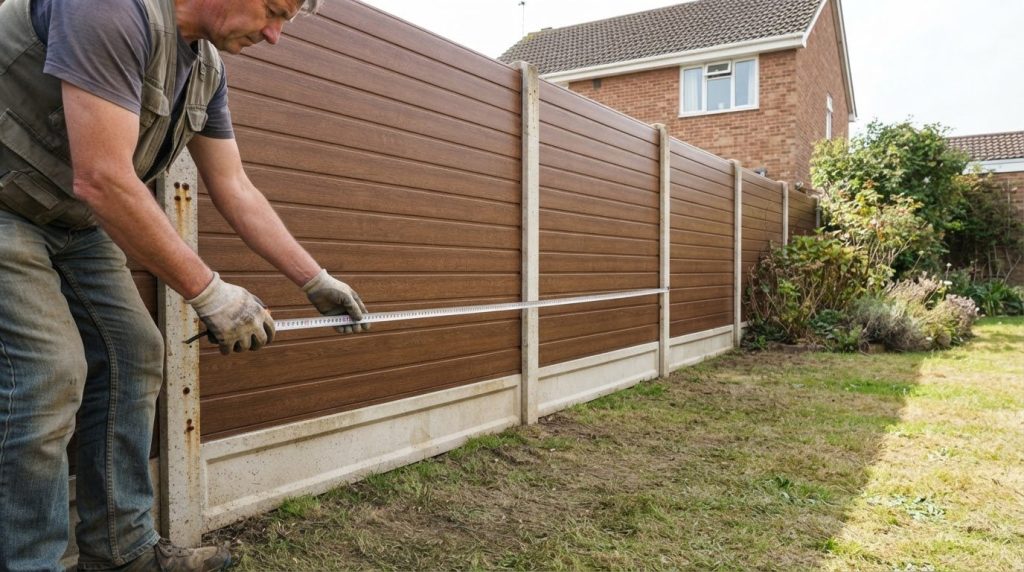
One-off cost fencing for UK homeowners
The one-off cost of fencing depends mainly on the fence’s length and height, the panels you choose, the condition of the posts and whether old fencing needs removing. To estimate the total, measure the fence line, calculate how many panels and posts it needs, then account for fitting and any additional work.
It’s easy to focus on panel prices, but the full cost can include more than materials. Access to the site, ground conditions and removing existing fencing can also affect the total.
This guide explains what affects fencing costs in the UK, how to estimate the number of panels and what to look for in a quote. It also shows how to distinguish fitting from additional work, so you can understand the scope and plan your budget.
Key Takeaways
- Measure the fence line and consider panel height, materials and existing posts to build a more realistic cost estimate.
- According to UK Government, garden fences in back gardens are generally permitted up to 2 metres high without planning permission.
- Look for a quote that separates materials and labour from removal and other extra charges, so you can see what the total covers.
- Maintenance-free panels designed to fit existing concrete posts can be a practical option when replacing timber panels without changing the posts.
Affordable fencing materials and installation costs
Budget for the whole fence, not just the panels. A bay is one section between posts. The figures describe different scopes, so don’t add them together without checking what each installed price includes.
Your choice of material affects the upfront cost. These examples aren’t like for like: panel height, construction and finish all affect the price.
Posts and boards also add to the total. A typical installed timber section includes a panel, a gravel board and one or two concrete posts. A quote that covers panels alone won’t show the full materials requirement.
Labour adds another cost. The actual figure depends on the fence design and the work involved. Compare quotes using the same fence length, height and materials, and check whether they cover posts, gravel boards and fitting.
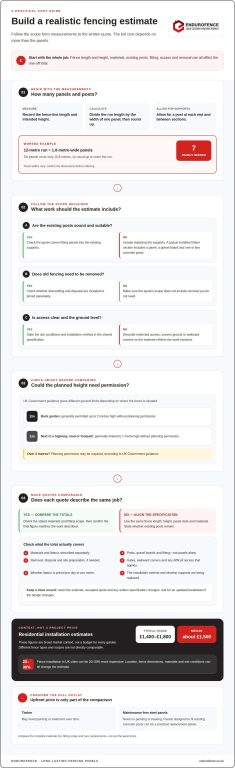
Height affects both the quantity and the type of materials required. According to UK Government, garden fences in back gardens are generally permitted up to 2 metres high without planning permission. Fences next to a highway, road or footpath are generally limited to 1 metre high without planning permission, according to UK Government. A fence exceeding 2 metres may require planning permission, according to UK Government.
For a practical estimate, measure the fence line, then divide its length by the width of one panel. Round up to a whole panel and allow for a post at each end and between sections. For example, a 12-metre run using 1.8-metre-wide panels needs seven panels, because six panels cover only 10.8 metres. Confirm the panel dimensions before ordering, as widths vary.
Separate the one-off purchase cost from future upkeep. Timber may need painting or treatment, while maintenance-free steel panels need no painting or treating. The lowest panel price may not mean the lowest long-term outlay, so compare the full materials list, fitting scope and care requirements before deciding.
Fencing cost estimates and quotes
Use an estimate to set a working budget, then compare written quotes against the same fence specification. Materials, dimensions and fitting scope all affect your one-off cost of fencing.
Fencing cost estimates
An estimate is a starting point, not a fixed price for every garden. The different ranges show why you need to identify the fence type and scope before comparing figures.
For a residential installation, the typical market range is between £1,400 and £1,800, with a median of about £1,500. Treat this as broad context rather than a budget for every project. Fence length, height, chosen materials and site conditions can change the amount substantially.
Location can also affect estimates: fence installation in UK cities can be 20-30% more expensive. To estimate your one-off cost for fencing, use figures that reflect the property and stated specification, rather than applying a national range without adjustment.
Fencing quotes
A useful quote makes the proposed work easy to understand. Check that it identifies the fence style, dimensions and materials, then states what the total includes. A quote for closeboard fencing isn’t directly comparable with one that doesn’t specify a style.
Look for separate descriptions of materials and fitting, as well as any removal or site preparation included. This matters particularly if existing supports are damaged or unsuitable.
Compare quotes against one shared specification. Record the fence length, height and panel style, and whether existing posts will remain. Then note differences in the work included. A lower total may reflect a different material or narrower scope, rather than better value for your one-off cost of fencing.
Before accepting a quote, check that the final figure matches the work described. Look for omissions such as a gate, awkward corners or removal of old fencing, if these apply to your project. Don’t assume an item is included just because it appears in another quote.
Keep the estimate and accepted quote together with any written changes to the specification. If the fence design changes, request an updated breakdown before work proceeds. A clear record helps you track why the total changed and what materials or tasks the revised figure covers.
Installation labour and extra charges
Fitting and site preparation can change the final fencing bill. Separate the installation work from additional tasks to see what each cost covers.
Installation labour
These are different pricing bases, so compare like with like. Check whether the figure covers the full fence run or a daily work rate.
Access and location influence the time involved. A clear, level garden can be simpler to work in than a narrow space with restricted access or uneven ground. Installation in London tends to cost more because labour and logistics costs are higher. Ask for the work and pricing basis to be described clearly in the quote.
Fence height and construction also affect the fitting work. A taller fence may take more handling, while replacing panels between existing posts differs from setting new posts. Check which approach the estimate covers. For example, a quote for panels fitted into sound existing supports shouldn’t be compared directly with one that includes replacing the supports.
Extra charges
The cost depends on how much fencing needs removing and the work involved. A quote should say whether dismantling and disposal are included or priced separately. This matters when comparing a total that includes clearance with one covering fitting only.
Other possible additions depend on the garden’s condition and layout. Damaged posts, awkward corners or restricted access can affect the work required. Include these conditions in the scope so the estimate reflects the actual project, rather than assuming every garden needs the same preparation.
Use this short checklist when reviewing labour and extras:
- Check whether labour is priced per day or per metre.
- Confirm if removal and disposal of existing fencing are included.
- Look for separate costs for replacing posts or handling difficult access.
- Make sure the quoted work matches the fence height and installation method.
For a project retaining existing concrete posts, explore Post Covers as a separate option. They may suit a plan focused on improving the look of existing posts, rather than including post replacement in the installation work.
EnduroFence
EnduroFence offers maintenance-free steel fence panels designed to fit existing concrete posts. They’re a practical option when timber panels need replacing but sound posts can remain. Each panel has profiled steel outer sheets on both sides and a high-density insulated core, with no painting or treating needed. A Retro Fitting Panel Swap replaces panels within an existing fence structure, while EnduroSmart Post Covers provide an option for existing posts. These choices can help focus your estimate on the parts that need attention, rather than assuming every component must be replaced. Explore EnduroFence panels and post covers to find an option for your project.
Take the next step with confidence
Before committing, decide what you want the finished boundary to do: provide privacy, define the garden or refresh its appearance. That priority can guide your material choices and keep the specification focused. A clear scope is the foundation of a one-off cost for fencing, because it connects the planned result to the work being priced.
Think beyond the immediate replacement, too. Consider how much upkeep you’re comfortable with and whether existing fence components can remain. These decisions give you a practical starting point for choosing an option that suits your garden and preferences.
Discuss your fencing plans with EnduroFence and take the next step towards a fence that fits your needs. A well-considered choice can make planning feel more straightforward, so you can move ahead with confidence.
Frequently Asked Questions
What Affects Fencing Costs?
Fence length, height, material and fitting requirements are the main cost drivers. Access matters, too: carrying materials through a narrow side passage can make the work more involved than reaching an open garden directly. Replacing panels while retaining sound supports also differs from a project that needs post work. Set the specification first, then compare estimates for the same work.
What is the typical one-off cost to install a fence in the UK?
A typical market range for residential fence installation is £1,400 to £1,800, with a median of about £1,500. This is a broad reference, not a fixed price for every garden. A shorter boundary with straightforward access can differ from a longer, taller fence with removal work. Use the range as context, then base your budget on your fence dimensions and the work required.
How much does fencing cost per metre in the UK by fence type?
These figures may not cover identical work or specifications. Compare the same height and fitting scope, and check whether each estimate includes materials and labour before treating the per-metre amounts as comparable.
What are the costs of timber, panel, closeboard, metal and composite fencing?
Prices depend on whether the estimate is per panel or per metre.
How much do fence posts, gravel boards, gates and concrete bases add to the cost?
Gate and concrete-base costs depend on their size, design and fitting requirements. Ask for each item to be listed separately in the estimate, so you can see what’s included and avoid comparing different specifications.
Does fencing cost vary by region in the UK, including London?
Yes, location can affect installation costs, and London tends to be more expensive because of higher labour and logistics costs. Fence installation in UK cities can be 20-30% more expensive. A practical estimate should reflect the property’s location and access, rather than relying solely on a national figure. Compare quotes for the same materials, dimensions and work before judging the difference.

Leave a Reply