

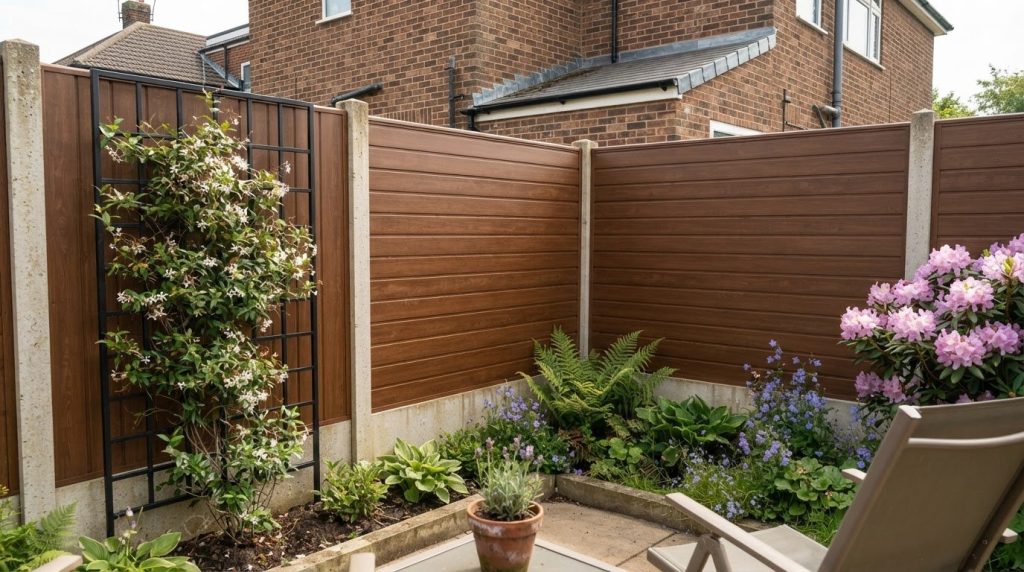
Garden screening for privacy, decorative style and planting
What if the best garden screen isn’t the one that blocks everything out? The best garden screening ideas UK gardens can use balance privacy with light, space and the upkeep you’re willing to take on. Choose decorative screens, trellis with climbing plants, hedges or trees according to the view you want to soften and the look you prefer.
It’s easy to focus on height or appearance and overlook how a screen will work in daily use. A solid barrier offers more privacy, while slatted or woven screening lets light through. Planting brings greenery, but may need pruning. Your space, budget and preferred level of upkeep will help narrow the options.
This guide explains how to choose screening for privacy, height, budget and upkeep, and compares decorative styles with planted solutions. You’ll also learn what to consider when fitting a screen to an existing wall or fence, so you can choose an option that suits your garden.
Key Takeaways
- Choose screening by balancing the privacy you need with light, available space and the upkeep you’re prepared to do.
- Compare decorative screens and planted options to find a style that suits your garden and the level of shelter you want.
- Plan how a screen will attach to an existing wall or fence before choosing its material and design.
- Consider how hedge and bamboo growth habits affect your long-term screening plans, and whether maintenance-free panels could suit an existing concrete-post fence.
Choosing screening for privacy needs, height, budget and maintenance
First, identify the view you want to screen, such as neighbouring windows or a bare fence. Then balance privacy against daylight, garden space and the care each option needs.
Privacy, fence coverage and borders
For fence coverage, trellis can support climbing plants and soften a large, plain boundary. Willow screening offers moderate privacy while allowing daylight through its natural weave; climbing plants can intertwine with it and obscure gaps. Use decorative screens to divide outdoor spaces or screen a seating area. Choose a design that provides the privacy you need without making the whole garden feel enclosed.
Hedges can add shelter, support wildlife and help filter noise and pollution. Choose one for a boundary where those benefits matter, and consider its mature spread and pruning needs when planning.
Height and small garden choices
Pleached trees provide high-level privacy without taking up much ground space. Hornbeams can retain russet-coloured leaves through winter, while crab apples offer spring blossom. Pleached trees need annual pruning to maintain their shape, so factor that into your decision.
In a small garden or on a patio, slatted screening can offer some shelter while letting light and views through. A narrow screen or pleached tree can preserve usable floor space better than a wide hedge. Choose according to whether you need to block a direct sightline or create a more private seating corner.
Budget, maintenance and neighbour considerations
Bamboo can be relatively low-maintenance with proper care, as can slatted screening. Wooden screens may need oiling or staining to help them last longer, while formal hedges generally need more care than other hedge types. Compare upkeep as well as the initial spend to find an option that suits your budget.
There isn’t one fence-height rule for every UK garden; requirements can depend on the boundary and planning context. Check relevant local planning requirements before adding height. Consider sightlines, shade and boundary position before choosing a design, as neighbours may raise concerns about a screen or high hedge. The growth of hedges and bamboo also affects the space and trimming they may need over time.
Decorative garden screen patterns and styles
Decorative screens add structure while dividing an outdoor space into useful areas. When choosing a pattern, consider what it should conceal, how much light should pass through, and whether it will sit against a boundary or stand freestanding. For example, a screen beside a dining area can create separation without enclosing the whole garden.
Metal and composite screens suit designs where a defined pattern is part of the look. Geometric cut-outs create a crisp backdrop, while leaf or branch motifs add a softer detail. Compare the size and spacing of the pattern: wider openings reveal more of the garden beyond, while closer details provide a stronger visual screen.
A decorative metal trellis can frame climbing plants or stand as an open feature on its own. Place it against an existing fence to add texture, or beside a patio as a focal point. Wooden trellis offers a natural-looking alternative, and plants can soften its lines as they grow.
To screen a garden without blocking sunlight or views, choose slatted panels or open trellis. Their gaps preserve some outlook and daylight while creating separation. Willow screening is another option: its natural weave lets daylight through and provides moderate privacy.
Bamboo is described as durable and relatively low-maintenance with proper care. When comparing metal, composite and wooden designs, check the stated material and weather resistance of each product. The material name alone doesn’t show how a particular screen will perform outdoors.
Finish the boundary as a whole: match the screen’s colour or pattern with nearby surfaces, then consider how visible posts affect the overall design. Decorative post covers may also suit a scheme where existing posts remain part of the view.
Screen installation on walls and fences
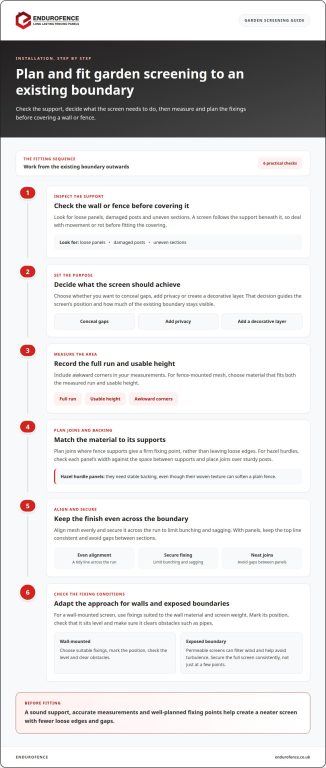
Before attaching screening, inspect the wall or fence for loose panels, damaged posts and uneven sections. A screen follows the support beneath it, so address movement or rot before covering the surface. Decide whether you want to conceal gaps, add privacy or create a decorative layer. This will determine the screen’s position and how much of the boundary remains visible.
For a fence-mounted screen, measure the full run and usable height, including awkward corners. Choose a fence-screening mesh that fits the measured run and usable height. Plan joins where fence supports provide a firm fixing point, rather than leaving loose edges. Align the material evenly, then secure it across the run to limit bunching and sagging.
Hazel hurdle panels give a boundary a natural, woven appearance. Check each panel’s width against the space between supports, and position joins over sturdy posts. Their texture can soften a plain fence, but the hurdles still need stable backing. A tidy installation keeps the top line consistent and avoids gaps between panels.
Slatted fences offer a more structured finish. Set the slats evenly, and consider their spacing before installation: closer gaps screen more of the view, while wider gaps preserve openness. Straight lines, aligned edges and a finish that suits nearby fencing or garden features help create a polished result.
For a wall-mounted screen, choose fixings suited to the wall material and the screen’s weight. Mark the position, then check that the screen sits level and clears obstacles such as pipes. Permeable screens can filter wind and help avoid turbulence. On exposed boundaries, secure the full screen consistently rather than relying on just a few attachment points.
How fast do popular screening hedges and bamboo grow?
Plant growth speed depends on the species and conditions along your boundary. Soil, light, water and available space all affect how quickly a screen fills out. A hedge or bamboo won’t provide instant cover simply because it’s planted for screening. Choose based on the mature form and upkeep you can manage, as well as how quickly you need coverage.
For a hedge, compare specific species rather than treating all hedging plants alike. Hornbeam is one option when winter screening matters, since it can retain russet-coloured leaves through winter. Formal hedges need more care than other hedge types, so weigh the pruning involved against how quickly you want a dense, shaped barrier.
Bamboo is described as durable, lightweight and relatively low-maintenance with proper care. Its screening effect depends on how the chosen plants fill the space, so plan for their eventual spread as well as their height. Leave room for growth, and avoid placing plants where an expanding screen would crowd a path, patio or neighbouring planting.
To compare options, first mark the section that needs screening. Then decide whether you need privacy at ground level, higher up or across the full boundary. A hedge can support wildlife and help filter noise and pollution; bamboo offers a different, more upright planting style. Choose according to the view, space and upkeep you can accommodate.
For faster privacy, don’t rely on a planting label alone. Assess the site’s light, soil and available space, then choose plants suited to those conditions. Pleached trees, such as hornbeam, provide high-level privacy without using much ground space, but need annual pruning to maintain their shape. They suit places where height matters more than a dense screen at ground level.
EnduroFence
EnduroFence helps homeowners replace worn timber fence panels while keeping existing concrete posts in place. Its Maintenance-Free Fence Panels have profiled steel outer sheets on both sides and a high-density insulated core, creating a durable, weather-resistant boundary with no painting or treating needed.
The Retro Fitting Panel Swap suits gardens where the posts remain usable but the old panels need replacing. EnduroSmart Post Covers can provide a neater finish around existing posts. The panels are designed for straightforward installation, and no training or qualification is needed, making them a practical option for homeowners who want to update a boundary without changing its overall layout.
If you’re weighing planted screening against a more permanent fence solution, consider whether replacing the panels would meet your privacy and upkeep needs. Contact EnduroFence to discuss your fencing requirements.
Plan a screen that works for your garden
Before settling on a design, picture how you want the garden to feel in everyday use. A screen can shape a quiet place to sit, create a backdrop for planting or give a boundary a more finished appearance. Choose an option that serves its purpose without making the space harder to enjoy.
Use these garden screening ideas UK gardens can benefit from as a starting point, then consider how your preferred solution fits your home and garden. If you want to improve an existing fence, EnduroFence offers replacement panels and post covers, rather than planting or decorative screens.
For a practical discussion about your boundary, contact EnduroFence about garden screening. A clear idea of what you want the space to do will help you move forward with confidence.
Frequently Asked Questions
What are the best garden screening ideas for UK gardens?
The best option depends on whether you need privacy, shelter or a decorative boundary. For a patio, consider slatted screening that preserves some light and outlook; for a plain fence, trellis can support climbing plants. A hedge suits a greener boundary, while pleached trees provide screening higher up. Match your choice to the available space and upkeep you can manage.
Which plants make the best evergreen privacy screens in the UK?
Italian cypress and ‘Skyrocket’ juniper are narrow tree choices for screening an unwanted view while allowing light into the garden. Bamboo can also provide a leafy screen, though its growth habit and space needs matter. Choose plants to suit the available height and width, and consider how much pruning or growth management you’re prepared to do as the screen develops.
How much do garden screening panels, trellis and hedges cost in the UK?
Costs vary with the material, screen dimensions, fixing requirements and planting maturity. A ready-made panel and a hedge that needs time to fill out are different kinds of investment, so compare what each offers for your boundary. For a useful estimate, work out the length and height required, then account for any posts, supports, plants or finishing materials needed for your chosen design.
How do you install garden screening panels or plant a privacy hedge?
For panels, measure the boundary, inspect the supporting fence or wall, and choose fixings suited to that structure. Position joins over firm supports and secure the screen evenly. For a hedge, prepare a continuous planting area, space plants according to their eventual spread and water them after planting. Keep the hedge clear of paths and allow room for future trimming.
What are the risks of bamboo roots, invasive plants and blocked light?
Some bamboo spreads through underground rhizomes, which can extend beyond the planting area if growth is left unmanaged. Allow room around bamboo and plan how to control its spread. Dense screens can also reduce daylight for nearby planting or seating, so consider the sun’s direction and the screen’s position. Check how your chosen plant grows before placing it near boundaries or paths.

Leave a Reply