

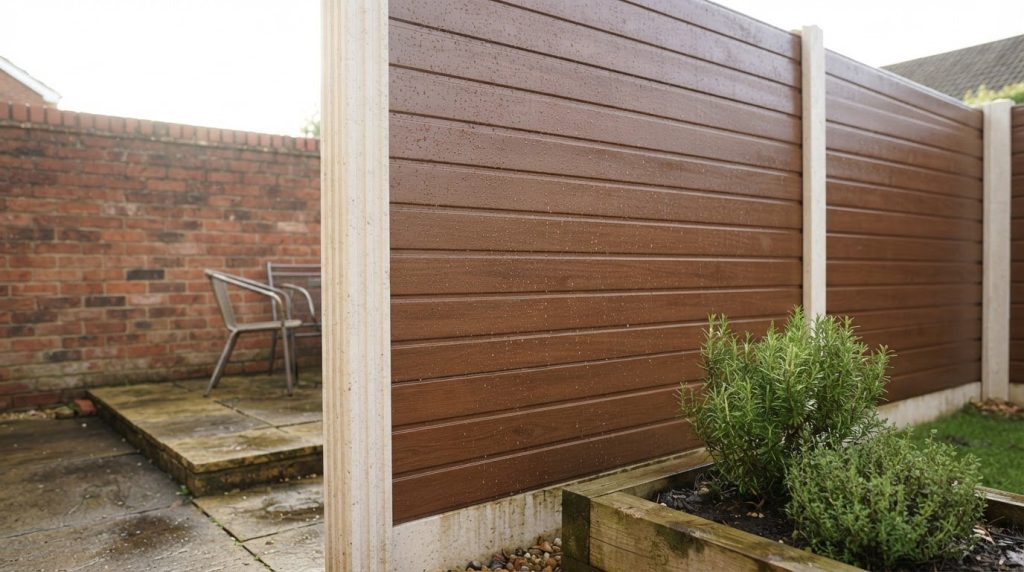
Fence That Doesn’t Need Painting: Choosing a Low-Upkeep Material
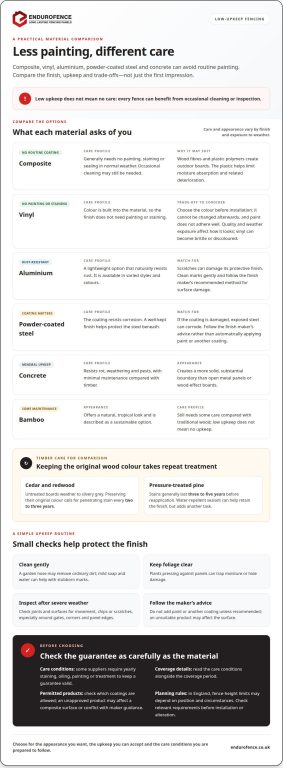
A fence that doesn’t need painting can be made from composite, aluminium, vinyl, powder-coated steel or concrete. These materials avoid routine painting, staining or sealing, though some may need occasional cleaning or inspection. The right choice depends on the appearance you want and the care you’re comfortable with.
Want a fence that stays presentable without regular painting? Low upkeep doesn’t always mean no care at all, and finishes and guarantee terms vary by material. This guide compares common options, explains their care needs and highlights what to check in guarantee conditions, so you can weigh appearance, durability and upkeep before choosing an alternative to painted timber.
Key Takeaways
- Compare composite, aluminium, steel and concrete for low-paint upkeep, then weigh their appearance and care needs.
- Read guarantee terms closely: some suppliers require regular treatment, even when a fence is marketed as low-maintenance.
- Plan for occasional cleaning and inspections, and follow the material maker’s advice before applying any coating.
- If you have existing concrete posts, EnduroFence panels are designed to fit them, offering a route to replace timber panels without routine painting.
Is There Such a Thing as Maintenance-Free Fencing?
No garden fence is entirely maintenance-free: even low-upkeep materials need occasional cleaning or inspection. Composite and vinyl avoid routine painting, while bamboo still needs some care compared with traditional wood.
Composite fencing maintenance benefits
Composite fencing combines wood fibres with plastic polymers to create outdoor boards that generally need no painting, staining or sealing in normal weather. The plastic helps limit moisture absorption and reduce the risk of moisture-related deterioration. Some panels use recycled wood and plastic, offering an alternative to traditional timber without its regular coating routine. Occasional cleaning may still be needed.
Vinyl fencing and colour upkeep
Vinyl fencing has colour built into the material, so it doesn’t need painting or staining to maintain its finish. This can help prevent the cycle of preparing, painting and re-coating a traditional fence. Colour choice matters before installation: it can’t be changed afterwards, and paint doesn’t adhere well to vinyl. Quality and exposure to the weather affect how the surface looks over time; vinyl can become brittle or discoloured, so low upkeep doesn’t mean an unchanged appearance forever.
Choosing fencing by key qualities
Choose fencing by balancing initial cost, appearance and durability against the upkeep you want to avoid. Composite can suit homeowners seeking a timber-like look without routine staining, whilst aluminium offers a lightweight, rust-resistant option. Concrete resists rot, weathering and pests, though its appearance differs from timber. Bamboo creates a natural, tropical look and is described as a sustainable option, but it still needs some maintenance. Compare materials in the context of your garden: a lasting colour, natural finish or minimal coating routine may matter most. Consider how the material’s likely weathering fits your preferred appearance, not just its first impression.
Maintenance requirements and guarantee terms
In England, planning rules may limit garden fence height depending on its position and circumstances. Check the relevant planning requirements before installing or altering fencing.
Low-maintenance panels can reduce recurring work, though some materials still need occasional cleaning and inspection. A hose may remove ordinary dirt, while mild soap and water can help with stubborn marks. Keep plants from pressing against panels, as foliage can trap moisture or hide damage. After severe weather, check joints and surfaces for movement, chips or scratches.
Guarantee terms matter as much as the material. Some suppliers require yearly staining, oiling, painting or treatment to keep a guarantee valid. Read the care conditions alongside the coverage period, and note which products or coatings are permitted. An unapproved coating may affect a composite surface or conflict with the maker’s recommendations.
Metal finishes also need sensible care. Aluminium resists rust, but scratches can damage its protective finish. Powder-coated steel resists corrosion, yet exposed steel can corrode if its coating is damaged. Clean marks gently and follow the finish maker’s recommended method for surface damage, rather than applying paint or another coating automatically.
Cedar and redwood need a different approach. Untreated boards weather to a silvery grey; preserving their original colour calls for penetrating stain every two to three years. Pressure-treated pine stains generally last three to five years before reapplication. Water-repellent sealant can help stained wood retain its finish, but adds another maintenance task.
Before choosing, compare the care routine with the garden’s appearance and use. A natural timber style may justify periodic staining; vinyl or a coated finish may reduce that work. A low-upkeep choice is most practical when its guarantee conditions and cleaning needs fit the time you want to spend on the fence.
Fence materials that do not need routine painting
Composite, aluminium, powder-coated steel and concrete are common choices for fencing that avoids routine painting or staining. Each material responds differently to weather and wear, so compare its finish, cleaning needs and durability before deciding. Even a low-maintenance surface can benefit from occasional inspection, especially around gates, corners and panel edges.
Composite boards are designed for outdoor use and generally need no routine coating in normal weather. Their wood-fibre and plastic-polymer mix offers a different balance of appearance and upkeep from traditional timber. Aluminium naturally resists rust, although its protective finish can be scratched. Powder-coated steel resists rust, corrosion and fading, but damage to its coating can expose the steel beneath.
Concrete offers another practical option. It resists rot, weathering and pests, with minimal maintenance compared with timber. The trade-off is appearance: concrete creates a more solid, substantial boundary than open metal panels or wood-effect boards. For a lighter look, aluminium comes in varied styles and colours; the finish and panel design affect how it fits the garden.
Can you install a no-paint fence yourself, and what tools are needed? It depends on the panel design and the condition of the posts. Systems designed to fit existing posts can be installed without specialised tools, while other designs and site conditions may call for different equipment. Follow the fitting instructions for the system you choose.
Installation affects how well any material performs. Check that panels sit securely in their supports, then inspect the finish for chips or scratches. A garden hose is often enough for routine cleaning; mild soap and water can help remove stubborn marks. Avoid adding paint or another coating unless the material maker recommends it, as an unsuitable product may affect the surface.
Pressure-treated timber with a long lifetime guarantee is described as lasting just as long with or without paint. That makes the guarantee terms central to your choice: consider required care, expected appearance and material durability together, rather than assuming timber always needs painting.
Is composite fencing maintenance-free in the UK?
Composite fencing in the UK avoids routine painting, staining and sealing, but still benefits from occasional cleaning and inspection. Rain, garden debris and shaded conditions can leave dirt or organic growth on the surface.
For ordinary cleaning, use warm water, mild detergent and a soft brush or cloth. Rinse the panels thoroughly afterwards to remove detergent residue. A gentle approach helps keep the surface clean without introducing an unapproved coating. Avoid applying sealants or finishes unless the manufacturer recommends them, as unsuitable products may affect the composite surface or conflict with its maintenance guidance.
Location influences how often cleaning is needed. A fence beside dense planting or in a shaded corner may gather grime more quickly than one in an open, sunny garden. Clear leaves and vegetation away from the boards, then clean visible marks with the mild method above. This helps you deal with build-up before it becomes harder to remove.
Inspect the structure after strong wind, heavy rain or freezing weather. Look along the panels and their supports for movement, visible damage or debris lodged between boards. These checks offer a practical way to spot problems early; they don’t mean the composite needs a fresh coat of paint.
Composite combines wood fibres with plastic polymers. The plastic component helps reduce moisture absorption and the risk of moisture-related deterioration. Unlike timber, composite generally needs no routine protective coating in normal weather, making it a useful option for homeowners seeking a wood-like appearance without recurring staining.
Before choosing composite, consider its position, surrounding plants and the manufacturer’s cleaning recommendations. A sheltered, heavily planted boundary may need more frequent attention than an exposed fence. Follow the care instructions for the specific panels, keep to gentle cleaning methods and avoid treating “maintenance-free” as a promise of zero care. The realistic benefit is fewer recurring finishing jobs, with simple cleaning and occasional checks still required.
EnduroFence: Maintenance-Free Fence Panels
EnduroFence supplies maintenance-free steel fence panels for homeowners who want to replace timber panels without routine painting or treatment. Made with profiled steel outer sheets on both sides and a high-density insulated core, the panels are designed for durability, weather resistance and security.
The panels are designed to slot into existing concrete posts, making them a practical option when those posts are already in place. EnduroFence’s Retro Fitting Panel Swap lets you replace the panels while retaining the posts. EnduroSmart Post Covers are also available to complement the fence.
Fitting is straightforward, and no specialised tools, training or qualifications are needed. Explore EnduroFence’s maintenance-free panels as a lower-upkeep replacement for timber panels.
Choose a boundary that fits your plans
Think beyond the day the fence goes in. Your garden may change as planting grows, outdoor seating moves or you rethink how different areas connect. A fence that doesn’t need painting can simplify upkeep, but it should also suit how you want to use and see the space over time.
Before deciding, picture the boundary alongside your garden’s existing features and any changes you may make later. Consider whether you want the fence to blend into the background or create a clear edge around the space. This helps you judge whether your preferred option will still feel right as the garden develops.
For a next step, discuss your fencing requirements with EnduroFence and explore an option that fits your plans. Contact EnduroFence about your fence. A considered choice now can make it easier to enjoy your garden without building painting into your regular jobs.
Frequently Asked Questions
Does Composite Fencing Need Sealing?
Composite fencing generally doesn’t need sealing in normal weather. After cleaning a panel, let it dry naturally rather than adding a coating to restore its finish. Sealants not approved by the manufacturer may affect the surface or conflict with its care advice. If a section looks different from the rest, clean it gently and follow the product’s maintenance instructions.
To paint or not to paint your wooden fence?
Paint a wooden fence if you want a coloured finish and are prepared to maintain it. Paint can restrict timber’s natural movement as temperatures change, potentially contributing to splitting. It may also blister or peel after a few seasons, particularly with freeze-thaw cycles or strong UV exposure. If you prefer weathered timber, leave it untreated; cedar and redwood gradually turn silvery grey.
What is a Low Maintenance Fence?
A low-maintenance fence avoids regular painting, staining or protective treatment while still allowing for occasional attention. For example, composite may need cleaning rather than recoating. Consider what “low upkeep” means for your garden: a shaded fence beside dense planting may need more cleaning than one in an open position. Choose a material whose care needs suit your routine.
What issues does painting fencing cause?
Painting adds preparation and recoating to a fence’s care routine, and the finish can blister or peel after a few seasons. On timber, paint can restrict natural movement as temperatures change, potentially causing splitting. It’s also a poor fit for vinyl, because paint doesn’t adhere well. Choose a finish that suits the fence material, rather than assuming paint works on every surface.
What types of fencing do not need painting?
Composite, aluminium, vinyl, powder-coated steel and concrete fencing generally avoid routine painting. Their finishes and appearance differ: concrete creates a solid boundary, while aluminium offers a lighter, open style. For a fence that doesn’t need painting, compare more than colour or first impressions. Consider your garden’s layout, the look you want, and the material’s cleaning and inspection needs.
Do uPVC fences need painting or treating?
uPVC fencing doesn’t usually need painting or preservative treatment. Its care routine generally involves cleaning rather than applying a protective finish. Follow the manufacturer’s instructions for the particular fence, especially before trying a cleaning product or coating. If you want to change the colour later, painting may not be suitable because paint does not adhere well to vinyl.

Leave a Reply