

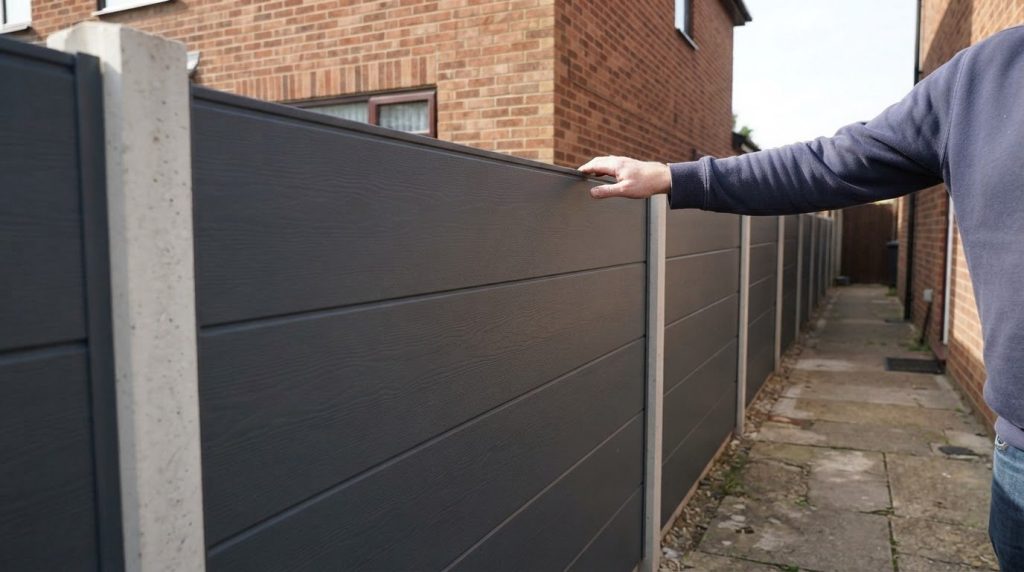
Home Security Fencing: Costs, Value, and Deterrence
A fence can help increase home security, but its panels must stay firmly seated in the posts. A panel that lifts out can create an easy access point, even when the boundary looks solid. A new fence is most useful when it clearly defines the property, discourages casual entry and closes off weak spots.
It makes sense to consider more than height or appearance when weighing up the cost. A clear boundary can make access easier to control, while a sturdy, well-maintained fence can make it harder for intruders to get in. The gate and the way each panel is fixed matter too.
This article explains how fencing can deter intruders, why secure panel fitting matters and what to consider when deciding whether to replace a fence. It also covers how to weigh the benefits against the cost, while recognising that fencing is not a complete security solution on its own.
Key Takeaways
- Judge a fence by how well it defines the boundary, discourages climbing and suits the property, not by height alone.
- Choose a sturdy design that balances privacy and visibility, and consider how the gate affects access and monitoring.
- Check that panels are firmly secured to their posts; loose panels can create an easy way into the garden.
- Weigh the fence’s security and appearance benefits against its condition, and consider replacement when more than 25% of a panel is damaged.
Return on Investment: Is a New Fence Worth It?
A new fence can improve security when it closes weak points and makes entry harder. If more than 25% of a panel is damaged, replacement may be more effective than a patch. To increase home security with fencing, weigh the barrier’s condition and design against the needs of your property.
Fence Materials and Durability
Durable fencing resists weather and tampering, while its design affects climbing and visibility. Metal bars can make climbing harder and offer less cover than solid panels; thick panels can form a stronger barrier. According to the NPSA, security fence panels should be at least 2.4 metres high, with 3.0 metres advised for higher security requirements. These are security-fence recommendations, not a default height for every garden.
Maintenance and Statutory Requirements
Regular maintenance helps keep a barrier effective: inspect panels, fixings, posts and gates for movement, corrosion or damage. Replace a panel if more than 25% is damaged, and keep gate locks and bolts working. In the UK, like-for-like replacements at the same height usually don’t need planning permission. A change to the fence’s style, height or position may require it. A fence fitted with anti-climb spikes should not exceed 2 metres without planning permission, and hazards should be clearly signposted.
Security Fencing Installation Costs
There is no single UK average that fits every security fence. The total depends on boundary length, material, height, gate specification and ground preparation. Compare expected service life and maintenance needs as well as initial outlay. A decorative finish can contribute to appearance, whilst a robust design may address a weak boundary more effectively than replacing sound panels. A homeowner looking to increase home security with fencing can assess these factors before deciding whether a new fence is worthwhile.
Gates, Monitoring and Access
A gate is part of the perimeter. Match its height to adjoining walls or fences, and secure its hinges, bolts and padlocks on the garden side. Where possible, use two different locks. Fencing can also limit entry points, making them easier to monitor with security cameras or intrusion detection systems. Lighting near access points improves visibility, but a barrier supports monitoring rather than replacing it.
Fencing as a visible boundary and deterrent
A visible boundary makes the edge of a garden easier to recognise and can discourage casual trespass. Beside a pavement, for example, a continuous fence shows where public access ends and private space begins. Without that clear line, an open route across a front garden may seem easier to enter. Fencing cannot prevent every intrusion, but it can make access more deliberate and noticeable.
Choose a boundary that suits how the property is overlooked. A front fence with open sections can preserve views from the street, while a more private rear boundary can screen a patio from neighbouring windows. There is a trade-off: solid panels limit views into the home, but can also hide activity behind them. A secluded corner beside a shed, for example, may provide cover from neighbours.
Consider the whole garden layout, not just the fence line, to reduce hidden spots. Where possible, keep the gate and route to the house visible from windows. Avoid creating concealed recesses behind tall panels or dense planting. A hedge alongside a fence adds another physical layer, while climbing plants can soften the look and improve privacy. Arrange greenery so it does not block sightlines around entrances.
Choose a boundary with visibility and everyday use in mind. A low, open front fence can mark the property without screening the doorstep; a solid rear fence can provide seclusion between neighbouring gardens. Trellis above a fence or wall supports climbing plants and adds screening, but consider whether it creates a foothold or hides a gate. Walk the perimeter from both the street and garden before deciding. Note what neighbours can see, where someone could wait unseen and whether the entrance is clearly visible. These practical checks help define the boundary without creating avoidable blind spots.
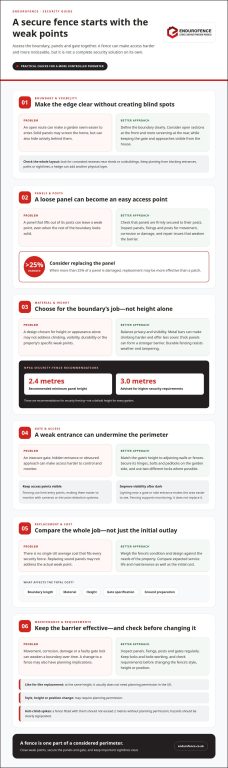
Fencing as a security deterrent
A sturdy fence can deter casual trespassers and make access harder for determined intruders. It adds a physical obstacle and makes entry more deliberate. For example, a continuous fence around a side passage closes an open route between the street and rear garden. A secure boundary also helps limit entry points, making it easier to monitor who comes and goes. Fencing supports home security, but works best as part of a considered perimeter.
Solid panels can block views into the garden and reduce direct views into the home. That privacy may deter intruders, but an opaque fence can also conceal activity behind it. Balance screening with visibility: keep the gate and approaches in view from the house, and avoid hidden corners beside sheds or outbuildings. A tall, sturdy fence can discourage access, while clear sightlines help residents notice movement around the boundary.
Pay close attention to the gate: a weak entrance can undermine the rest of the fence. Match its height to adjoining walls or fences and make sure it is securely constructed. Position hinges, bolts and padlocks on the garden side, where they are less accessible from outside. If possible, fit two different locks. For example, a padlock paired with a separate bolt makes the gate harder to open than a latch alone.
A hedge alongside a fence adds another layer, while climbing plants or greenery can improve privacy. Keep vegetation from obscuring the gate, paths or views from the house. Security fencing can also work alongside cameras and intrusion detection systems, helping focus attention on defined access points. Lighting near a gate or side entrance makes the area easier to see after dark. Together, these measures create a clearer, more controlled perimeter without relying on fencing alone to prevent every attempt at entry.
Securing panels to posts
A fence panel is only as secure as its connection to the posts. If it is loose enough to lift out, the boundary may have a hidden access weakness, even when the panel looks sound. Slotted concrete posts hold panels in place through the slot rather than a built-in locking mechanism, so do not assume a panel cannot be removed from outside. Securely fitted panels are one practical way to increase home security with fencing.
Inspect each panel where it meets the post. Look for gaps, movement, damaged edges or a panel sitting unevenly in the slot. A replacement panel between concrete posts is commonly measured at 1.83 metres wide, but the fit depends on the opening and panel dimensions. Check that the panel sits properly between its posts and cannot be lifted free without resistance. A poor fit can leave movement at the edges and weaken the barrier.
Pay particular attention to corners, boundaries beside alleys and panels that are easy to reach from public areas. Carefully lift a panel to check for movement, then check whether the posts themselves are stable. If a panel moves, address how it fits and stays seated rather than relying on height or a gate lock. Keep the panel seated with its edges supported by the posts. Check again after severe weather or an impact that may have shifted it.
Security also depends on the condition of the whole assembly. A firm panel in a leaning post can still leave a gap, while a stable post cannot secure a panel that has come loose. Check both sides of the boundary where accessible, and look along the fence line for sections sitting differently from their neighbours. For homeowners looking to increase home security with fencing, checking panel retention alongside post stability helps reveal weak points before they become access gaps.
For a fence between existing concrete posts, consider a panel replacement designed for that arrangement. Explore panel replacement options when loose or damaged panels need attention.
EnduroFence: Maintenance-Free Fence Panels
EnduroFence supplies maintenance-free steel fence panels for homeowners replacing worn or insecure garden panels. Designed to fit existing concrete posts, they are a practical option when the posts remain suitable but the panels need replacing.
Each panel is made from profiled steel outer sheets on both sides, with a high-density insulated core. The panels are powder-coated, and no painting or treating is needed. Installation is straightforward: no additional tools, training or qualification is needed, so homeowners can replace timber panels themselves. EnduroSmart Post Covers provide a finishing touch to existing posts, while Retro Fitting Panel Swap lets you update the panels without replacing the concrete posts.
If you’re considering a panel replacement, contact EnduroFence or visit endurofence.co.uk to explore the options.
Plan your next fencing decision
Start by deciding which part of the boundary needs attention. Consider how you use the garden, which areas need privacy and whether your priority is fixing a weak section or replacing a longer run. This keeps the project focused on the problem you want to solve.
Before choosing an approach, note the condition of the existing fence and posts, then decide what you want the finished boundary to do. A clear brief makes it easier to compare a targeted replacement with a broader update. If you want to increase home security with fencing, choose an option that suits your property and priorities.
For a practical next step, contact EnduroFence about your fencing. A considered plan can help you move forward with confidence.
Frequently Asked Questions
What Types of Fencing Add the Most Value?
Fencing adds the most value when its appearance and function suit the property. A neat boundary can improve kerb appeal, while screening may make the garden more useful to people seeking privacy. No single style increases every home’s value. Consider the garden layout, neighbouring properties and upkeep, then choose a fence that looks appropriate rather than imposing.
Which fence panels are the best for security?
Look for panels that are sturdy, difficult to lift out and suited to the boundary’s exposure and privacy needs. Check how each panel fits its posts: even a strong panel can leave a weak point if it moves or creates gaps. For example, a side passage benefits from a firmly seated panel and a gate that leaves no easy opening.
Which types of fencing are most effective for improving home security?
Choose a design that suits the risks at each boundary. Solid panels can screen windows and patios, while open metal fencing preserves sightlines and makes concealed activity harder. A rear garden beside a public route may benefit from screening; a front boundary may be better kept visible from the house. Pair the fence with a securely fastened gate and clear views of entrances.
How tall should a security fence be around a UK home?
There isn’t one security height that suits every home. The NPSA recommends security fence panels at least 2.4 metres high, and at least 3.0 metres for higher security requirements. Those recommendations relate to security fencing, not a universal domestic garden standard. For a home, consider the boundary, visibility and applicable planning rules before choosing a height, particularly if adding anti-climb toppings.
What UK planning rules and height limits apply to garden fences?
Like-for-like panel replacements at the same height usually don’t need planning permission, while changing a fence’s style, height or position may require it. A garden fence fitted with anti-climb spikes should not exceed 2 metres without planning permission. If fitting spikes, clearly warn others about the hazard. Treat these points separately: a replacement’s height and position matter, as do added toppings.
Do I need my neighbour’s permission to replace or raise a boundary fence in the UK?
Responsibility for the boundary and the change you plan both matter. Before replacing or raising a fence, establish the boundary arrangements and discuss the proposal with your neighbour, especially if the work could affect their side. Planning permission is a separate issue: a neighbour’s agreement does not replace it when the proposed height, style or position requires permission.

Leave a Reply