

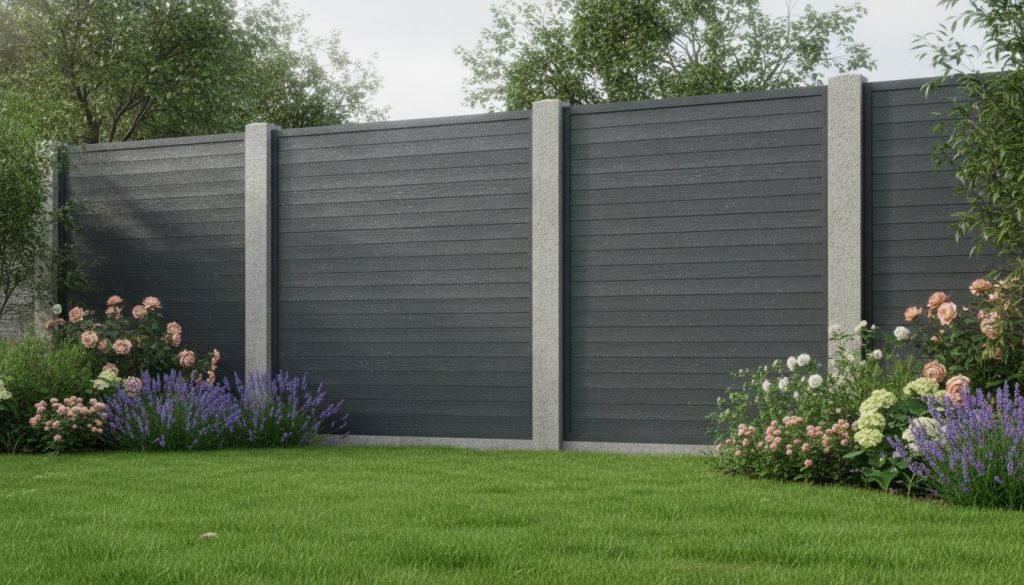
Weatherproof Fence Panels UK: Ultimate 2026 Buying Guide
Why should a British garden boundary require more annual maintenance than the house it surrounds? Most homeowners accept that timber fences will eventually rot at the base, rattle during autumn gales, or require a fresh coat of expensive treatment every spring. It’s a frustrating cycle of labour and expense that often fails the moment the next Atlantic storm arrives, leaving you with panels that have either blown out or succumbed to the damp. Finding truly weatherproof fence panels UK homeowners can trust is the only way to break this cycle of repair and replacement.
You don’t have to settle for a fence that demands your constant attention. This guide reveals how to achieve a stylish garden boundary that offers zero maintenance for 20 years or more. We’ll explore the latest 2026 material innovations, including durable steel constructions and clever retrofitting systems designed to slide directly into your existing concrete posts for a straightforward upgrade. You will learn how to select a solution that stays secure in gale-force winds whilst looking as good as the day it was first installed.
Key Takeaways
- Understand why the UK’s unique wet-dry cycles cause traditional timber to fail and how modern materials provide a more stable, rot-resistant alternative.
- Compare the lifespans of different fencing materials to see why steel offers a maintenance-free solution for 25 years or more.
- Learn how to simplify your garden upgrade using a retrofit system that slides directly into existing concrete posts without the need for specialist tools.
- Discover the critical quality markers, such as multi-layered protective coatings, to look for when choosing weatherproof fence panels UK homeowners can rely on.
- Realise the long-term savings in both time and effort by moving away from annual painting and staining towards a durable, “fit and forget” boundary.
Why Traditional Timber Fails the UK Weather Test
In the British climate, “weatherproof” means more than just being waterproof. A truly resilient boundary must withstand a relentless combination of driving rain, high humidity, and sudden gale-force winds. Whilst many homeowners choose timber for its initial look, wood is an inherently organic material that reacts poorly to these environmental shifts. To find the best weatherproof fence panels UK gardens require, you first need to understand why traditional options struggle to survive more than a few seasons without intervention.
The primary culprit is the “Wet-Dry Cycle.” Timber is a porous material that acts like a sponge. When it rains, the wood fibres absorb moisture and expand; when the sun emerges, they dry out and contract. This constant physical movement puts immense internal stress on the wood, leading to the visible splits, warping, and “shaking” seen in older panels. Over time, UV rays also break down lignin, the natural glue that holds wood fibres together. This process doesn’t just turn your fence a dull grey; it makes the boards brittle and prone to snapping under pressure.
Ground-level rot remains the most common cause of fence failure in the UK. Even when using rot-resistant wooden posts or pressure-treated gravel boards, the point where the fence meets the damp earth is a breeding ground for fungi. Once moisture settles into the base of a timber panel, decay is inevitable. This structural rot often goes unnoticed until a storm arrives and the weakened timber simply gives way.
The Hidden Costs of Annual Maintenance
Maintaining a timber fence is a significant drain on your time and finances. Every two years, a standard garden boundary requires a full cycle of prep-washing, sanding, and restaining to keep rot at bay. When you calculate the cumulative cost of high-quality treatments, specialist brushes, and the inevitable replacement of individual slats, the “cheap” timber option becomes expensive. Switching to a maintenance-free solution isn’t just about saving money; it’s an investment in your weekend leisure time. You shouldn’t have to spend your bank holidays with a paintbrush in hand just to keep your garden secure.
Wind Damage: Why Standard Panels Blow Out
Storms are the ultimate test for any garden boundary. Standard timber panels act like a giant sail, catching the wind and transferring all that force directly into the posts and foundations. This “Sail Effect” is particularly dangerous for solid panels that offer no wind through-flow. As the wind buffets the fence, the panels often rattle within their concrete post channels. This constant vibration acts like a hammer, slowly widening the gap or even cracking the concrete. In the summer, as the wood shrinks, these panels become loose, making them even more likely to pop out or fail entirely when the autumn gales return.
Defining Weatherproof: What Makes a Fence Panel Durable?
Durability in a garden boundary is often misunderstood. It isn’t just about how long a material lasts before it falls over; it’s about how well that material maintains its structural integrity and appearance under constant environmental stress. For weatherproof fence panels UK homeowners can rely on, the focus must be on material stability. Whilst timber is an organic material that naturally degrades, and some plastics can become brittle under UV exposure, modern steel panels offer a predictable, engineered performance. They are designed to meet the rigorous British Standards for fencing, ensuring they remain upright and attractive regardless of the season.
True weatherproofing requires a multi-layered approach to protection. In the UK, we face a combination of high rainfall and salt-laden air, especially in coastal regions. This makes corrosion resistance a priority. High-quality panels utilise a galvanised zinc coating as a first line of defence, followed by a primer and a durable topcoat. This system prevents oxygen and moisture from reaching the metal core, effectively stopping rust before it starts. Structural integrity is equally vital. A panel must be rigid enough to resist buckling under the weight of heavy snow or the pressure of high winds, which is achieved through clever profiling and internal reinforcement.
Material Science: Steel vs the Elements
Steel is an ideal choice for the British climate because it’s non-porous. Unlike wood, it doesn’t absorb moisture, which completely eliminates the risk of internal rot or fungal growth. Modern panels use profiled steel sheets, which are shaped to provide maximum strength while remaining light enough for a single person to handle during installation. The finish is typically a colour-bonded coating that is baked onto the metal. This process ensures the colour stays vibrant for decades, resisting the fading and peeling often seen with painted timber or cheaper plastic alternatives.
The Benefit of an Insulated Core
One of the most significant innovations in modern fencing is the inclusion of a high-density insulated core. This addition serves several practical purposes beyond simple weatherproofing. Firstly, it adds mass to the panel, which removes the “tinny” drumming sound often associated with metal sheets during heavy rain. This gives the fence a solid, high-quality feel. Secondly, the core provides thermal stability. In direct summer sunlight, it prevents the panel from expanding excessively, which maintains a tight fit within the posts.
There are also clear acoustic advantages to this design. If your garden is near a busy road or has noisy neighbours, an insulated core acts as a sound barrier, reflecting and absorbing noise more effectively than a single-layer timber slat. If you want to upgrade your garden with a permanent solution, choosing a maintenance-free fence panel with these engineered features will save you hours of labour over the coming years.
Comparing the Contenders: Steel vs Composite vs Timber
Choosing between materials involves balancing the initial cost against long-term performance. Whilst timber remains the traditional choice, composite and steel have emerged as the primary alternatives for those seeking weatherproof fence panels UK homeowners can install once and forget about. The differences in lifespan are stark. Standard timber often requires replacement within 5 to 10 years. Composite usually offers 15 to 20 years, whereas steel panels are engineered to last 25 years or more. Installation effort is another key differentiator. Steel is lightweight and manageable for a single person, whilst composite often requires two people to lift and position the heavy boards safely.
Aesthetic longevity also varies amongst these materials. Timber boards inevitably silver and split, but steel and composite maintain their factory finish for decades. From an environmental perspective, steel is highly recyclable at the end of its long life. This contrasts with composite, which often contains mixed plastics that are difficult to process, and timber, which requires frequent harvesting and chemical treatments. Steel’s long replacement cycle significantly reduces its overall carbon footprint compared to materials that fail every few years.
The Problem with Composite in High Winds
Composite panels are significantly heavier than steel alternatives. This weight puts constant strain on your fence posts, especially during the high winds common in the UK. Because composite is a mix of wood and plastic, it experiences high levels of thermal expansion. It needs “room to breathe” within the post channels to prevent warping. This requirement for expansion gaps often leads to annoying rattling during storms. Steel panels offer a tighter, more secure fit in standard UK concrete posts. They don’t expand or contract to the same degree, providing a stable boundary that doesn’t move or make noise when the weather turns.
Timber: A False Economy?
Many people choose timber because the initial price is lower. This is often a false economy when viewed over a 20-year period. When you calculate the “Life Cycle Cost,” including the price of high-quality stains, brushes, and the inevitable replacement of panels every decade, timber becomes the most expensive option. There is also an environmental cost to consider. The frequent replacement cycle and the use of chemical preservatives contribute to a larger carbon footprint than a single, long-lasting steel installation. Choosing a durable, engineered material is a pragmatic decision that protects both your garden and your wallet over the long term.
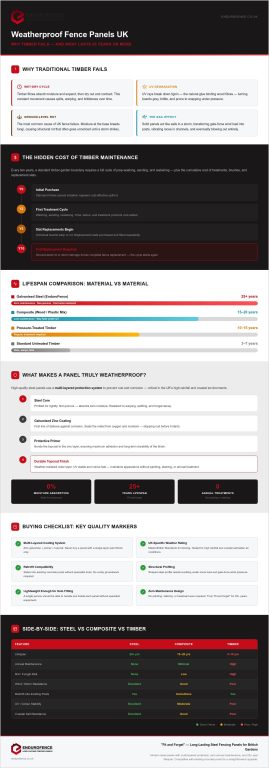
Buying Checklist: Selecting Your Weatherproof Fence Panels
Transitioning to a permanent boundary solution requires careful planning to ensure your new installation fits perfectly and performs as expected. When you are searching for the best weatherproof fence panels UK suppliers provide, your first task is a precise measurement. Most residential concrete posts in Britain are set at six-foot centres, but even a slight deviation can make installation difficult. Measure the distance between the inside faces of your posts at both the top and bottom to confirm they’re parallel. This simple check ensures your new panels will slide in smoothly without gaps or sticking.
Examine the technical specifications of the protective coating before committing. A single layer of paint won’t withstand a decade of British winters. High-quality steel panels should feature a multi-layered defence: a galvanised zinc base, followed by a high-adhesion primer and a durable topcoat. This combination prevents the “peel and rust” cycle common in cheaper metal products. Additionally, consider the “rattle factor.” Look for systems that include secure locking mechanisms or gaskets to prevent the panels from vibrating during high winds, which is a common complaint with loose-fitting timber alternatives.
Colour choice is about more than just personal preference. Modern shades like Anthracite Grey or Goosewing Grey are popular because they complement the UK’s often overcast skies and provide a neutral backdrop for garden greenery. These darker, matt finishes also mask dirt and rain streaks better than lighter colours, keeping your boundary looking pristine for years without the need for a jet wash.
Retrofitting vs Starting Fresh
One of the biggest advantages of modern steel fencing is the ability to perform a retrofit. If your existing concrete posts are structurally sound, there’s no need to dig them out. This “Panel Swap” approach saves significant time and avoids the mess of wet concrete and excavated soil in your garden. Check that your current posts haven’t leaned or cracked significantly. If the concrete itself looks weathered or dated, you can use post covers to hide the old material. This gives the entire boundary a uniform, contemporary appearance without the labour of a full replacement.
Security and Privacy Considerations
A secure boundary should provide peace of mind as well as weather protection. Solid steel panels are excellent for privacy because they eliminate the “peep-through” gaps found in shrinking timber slats. They’re also notoriously difficult to climb; the smooth, vertical surface offers no footholds for intruders. Whilst planning permission in England generally allows for fences up to 2 metres in height in rear gardens, always check your local regulations if you live near a highway or in a conservation area. For a straightforward upgrade that secures your home for the long term, you can order your Retro Fitting Panel Swap to begin the process.
The EnduroFence Solution: Modern Fencing for British Gardens
EnduroFence has been engineered to solve the specific issues British homeowners face with their garden boundaries. Instead of offering a generic product, we focus on a system that works with the infrastructure you already have. Our weatherproof fence panels UK homeowners choose are built from high-grade steel with an insulated core. This construction ensures that once the panels are in place, they require no painting, treatment, or structural repairs for decades. It is the ultimate “fit and forget” solution for a modern garden, providing a level of durability that traditional materials cannot match.
The pragmatic design focuses on reducing both initial effort and long-term labour. By choosing a material that is naturally resistant to the UK’s damp cycles, you eliminate the need for annual staining. The result is a boundary that stays secure and looks pristine regardless of the weather. This approach moves fencing away from being a recurring chore and turns it into a permanent home improvement.
Designed for Existing Concrete Posts
The majority of UK gardens utilise standard concrete posts with a 50mm channel. Replacing these posts is a labour-intensive, messy, and expensive task that often involves significant manual digging or professional help. EnduroFence panels are specifically sized to slide directly into these existing channels, making the transition from rotting timber to durable steel effortless. This “Panel Swap” system is a genuine DIY-friendly option. No specialist tools are required for the swap; you simply remove the old timber and slide the new steel panels into place.
By engineering the panels for a precise fit, we have also eliminated the common rattle associated with loose timber slats. The structural integrity of the steel, combined with the insulated core, ensures a snug fit that remains silent even during autumn gales. It’s a straightforward way to upgrade your security and garden aesthetics without the disruption of a full renovation.
The Aesthetic Upgrade: Post Covers and Colours
Whilst the performance of the panels is paramount, the visual impact is equally important. Weathered, grey concrete posts can often detract from the look of a new fence. To solve this, we offer colour-matched post covers that slide over your existing concrete pillars. This creates a uniform, sleek appearance across the entire garden perimeter, transforming the look of your boundary into a contemporary architectural feature.
Our colour palette is curated to suit both traditional and modern homes. Whether you prefer the architectural appeal of Anthracite Grey or more traditional tones, the colour-bonded finish ensures the shade remains vibrant without fading. You can discover our range of weatherproof colours and request a free quote to see how this system can work for your property. Choosing a maintenance-free, rot-proof boundary provides the long-term peace of mind that timber simply cannot match.
Upgrade Your Garden with a Permanent Boundary
Choosing a garden boundary shouldn’t be a decision you have to repeat every decade. By understanding the science behind material failure and the benefits of modern engineering, you can secure your property with weatherproof fence panels UK homeowners trust for long-term performance. Moving away from timber means leaving behind the annual cycle of sanding, staining, and repairing storm damage. Instead, you gain a stylish, resilient boundary that stands firm against the British elements.
EnduroFence provides a pragmatic path to this maintenance-free lifestyle. Our steel panels feature an insulated core for superior strength and are designed to slide directly into your existing concrete posts. This retrofit approach eliminates the mess of digging whilst providing a sleek, modern look in a range of contemporary colours. It is a straightforward investment in your property’s security and your own leisure time. Ready to transform your garden boundary with a “fit and forget” solution?
Get Your Free Quote for Maintenance-Free Fencing
Take the first step towards a garden that looks its best in every season without the ongoing labour.
Frequently Asked Questions
Are steel fence panels noisy when it rains in the UK?
Steel fence panels with an insulated core are remarkably quiet during heavy downpours. Unlike single-skin metal sheets that can vibrate or drum, the high-density core inside our panels absorbs sound energy. This creates a solid “thud” rather than a metallic ring when rain hits the surface. You’ll find they behave much like traditional timber in terms of noise levels, providing a peaceful garden environment even during typical British weather cycles.
Can I fit weatherproof steel panels into my existing concrete posts?
You can certainly fit these panels into your existing concrete posts. They are specifically engineered to slide into the standard 50mm channels found in most UK garden boundaries. This makes the Retro Fitting Panel Swap a popular choice for homeowners who want to avoid the mess and expense of digging out old foundations. As long as your current posts are structurally sound, the transition to weatherproof fence panels UK gardens need is very simple.
Do I need to paint or treat steel fence panels?
No, you will never need to paint, stain, or chemically treat these panels. The steel is finished with a durable colour-bonded coating that is baked on during the manufacturing process. This finish is designed to resist peeling, cracking, and fading for decades. Whilst timber requires annual maintenance to prevent rot, our maintenance-free solution allows you to reclaim your weekends. Simply wipe them down with soapy water occasionally if they become dusty or splashed with mud.
How do weatherproof panels handle high winds compared to timber?
Weatherproof steel panels handle high winds much more effectively than standard timber. Because they don’t warp or shrink, they maintain a consistent, secure fit within the post channels, which prevents the annoying rattling often heard during storms. The solid construction and insulated core provide the structural rigidity needed to resist the pressure of gale-force winds. This ensures your boundary remains upright and secure when traditional lap or feather-edge panels might otherwise blow out or snap.
Will steel fence panels rust if I live near the coast?
These panels are highly resistant to rust, even in coastal areas with high salt-air content. Each panel features a multi-layered protective system, starting with a galvanised zinc base that prevents corrosion. This is followed by a high-adhesion primer and a tough architectural topcoat. This engineered defence ensures the steel core remains completely protected from the elements. It’s a significant upgrade over traditional metal products that might rely on a single layer of basic paint.
Is it difficult to cut steel fence panels to size?
Cutting the panels to size is a straightforward process that doesn’t require specialist engineering skills. If you have a shorter gap at the end of a fence run, you can easily trim the steel sheets using a standard angle grinder with a metal-cutting blade or a pair of nibblers. We recommend treating any cut edges with a matching touch-up paint to maintain the integrity of the weatherproof seal. This flexibility ensures a perfect fit for every unique garden layout.
How long do maintenance-free fence panels actually last?
Our maintenance-free fence panels are designed to last for 25 years or more. In comparison, traditional timber panels often succumb to ground-level rot or wind damage within 5 to 10 years. The combination of galvanised steel and a colour-bonded finish means the panels won’t degrade, split, or lose their structural integrity over time. It’s a long-term investment that provides a consistent, attractive boundary for your property without the need for periodic replacement cycles.
Do I need a professional to install EnduroFence panels?
You don’t need a professional installer to fit EnduroFence panels. The system is designed specifically for DIY enthusiasts and requires no specialist tools or previous fencing experience. Most homeowners find they can complete a full weatherproof fence panels UK upgrade over a single weekend. Because the panels are lightweight and designed to slide directly into existing concrete posts, it’s a manageable project for one or two people looking to improve their garden boundary efficiently.

Leave a Reply