

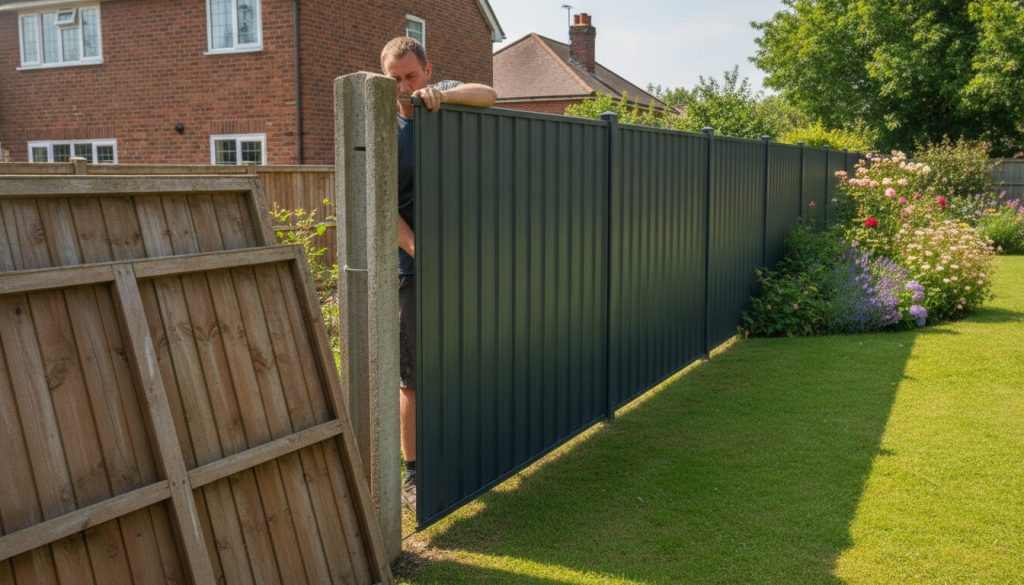
Steel Fence Panels for Concrete Posts: 2026 Buyer’s Guide
Why spend another weekend with a paintbrush in hand just to watch your timber fence rot at the base by next winter? Most British homeowners accept the cycle of sanding, staining, and eventually replacing wooden slats as an unavoidable part of garden ownership. However, switching to steel fence panels for concrete posts offers a permanent escape from this labour intensive routine. These modern systems are designed to slide directly into your existing infrastructure, replacing flimsy timber with a resilient, high quality alternative that won’t rattle during a typical autumn storm or decay where it meets the gravel board.
It’s frustrating to invest time and money into a boundary that inevitably succumbs to the damp UK weather. This 2026 buyer’s guide will show you how to achieve a secure, contemporary garden aesthetic with zero maintenance for the next two decades. We’ll explore the straightforward DIY installation process, the benefits of insulated cores, and how a simple retro fitting panel swap can finally give you a garden boundary that looks as good as it performs. By the end of this guide, you’ll have the knowledge to transform your outdoor space with a solution that is built to last.
Key Takeaways
- Understand the structural flaws of timber-in-concrete systems and why steel offers a permanent, rot-proof solution for your garden.
- Explore the anatomy of a premium panel, including the high-density insulated core that provides superior rigidity and long-term durability.
- Master the simple DIY technique for sliding steel fence panels for concrete posts into your existing garden infrastructure without specialised tools.
- Learn how to accurately measure your perimeter and calculate the number of panels required for a seamless retro-fitting swap.
- Eliminate the need for annual sanding and painting with a maintenance-free finish that remains vibrant and secure for over 20 years.
Why Steel is the Ultimate Upgrade for Concrete Fence Posts
Homeowners across the UK are increasingly moving away from the traditional cycle of garden maintenance. For decades, timber has been the default choice, but its relationship with concrete infrastructure is fundamentally flawed. In 2026, the demand for industrial-strength, low-maintenance materials has reached a peak as people prioritise their time over the annual ritual of sanding and staining. Utilising steel fence panels for concrete posts represents a logical shift toward durability. This approach doesn’t require you to dig up your garden or replace your existing posts; instead, it uses what you already have to create a boundary that lasts.
The Problem with Timber in Concrete Slots
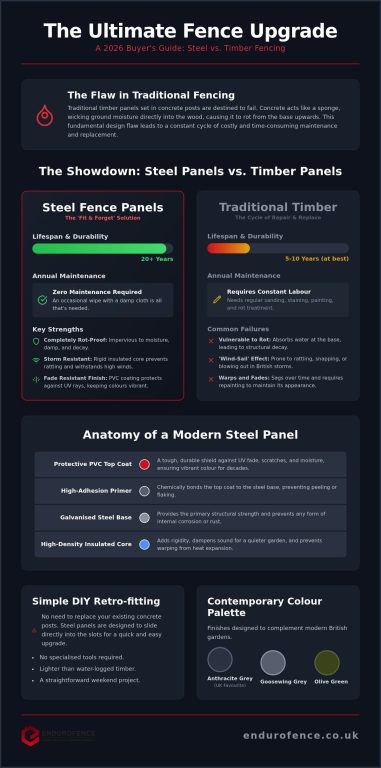
Concrete posts provide a solid foundation, but they create a significant moisture trap for wooden panels. Because concrete is porous, it acts like a wick, drawing dampness from the ground and holding it against the timber inside the post slots. This constant contact leads to rot at the base and sides, often before the rest of the panel shows wear. It’s a design conflict that guarantees failure. Beyond decay, timber panels are susceptible to the ‘wind-sail’ effect. During British storms, the relative lightness of wood allows it to rattle or even snap under pressure. When you factor in the cost of treatments and the labour involved in frequent replacements, ‘cheap’ timber often proves to be the more expensive long-term option. By the time a wooden panel begins to sag or grey, the structural integrity is already compromised.
The Steel Solution: Fit and Forget
Upgrading to steel fence panels for concrete posts solves these issues by introducing a material that is entirely impervious to rot. Modern panels are constructed from galvanised and PVC-coated steel, ensuring they remain rust-free and structurally sound for decades. While you might associate metal with industrial sites, the aesthetic has evolved significantly. You can now find finishes in popular contemporary shades like Anthracite or Goosewing Grey, which complement modern garden designs perfectly. When considering different types of fencing, steel stands out as the most secure residential option. It’s difficult to breach, won’t warp over time, and provides a ‘fit and forget’ solution that looks professional from day one. This Retro Fitting Panel Swap is a pragmatic way to modernise your garden without the disruption of a full landscape overhaul.
Understanding the Anatomy of Maintenance-Free Steel Fencing
To understand why steel fence panels for concrete posts are so effective, you have to look beneath the surface. These aren’t simple sheets of corrugated metal. They are engineered systems built from multiple protective layers designed to withstand the British climate. Weatherproofing technology is at the heart of this design. The PVC coating acts as a primary shield, preventing salty air or acidic rain from reaching the metal core. This ensures that the panels remain 100% rot-proof even in damp conditions where timber would fail. These systems are built from several essential components:
- Galvanised Steel Base: Provides the primary strength and prevents internal corrosion.
- High-Adhesion Primer: Ensures the final finish bonds perfectly to the metal.
- PVC Top Coating: A durable shield that resists UV fade, scratches, and moisture.
Despite their industrial-strength performance, these panels are surprisingly easy to manage. They are lighter than a water-logged timber panel, making them ideal for a straightforward DIY installation. You don’t need specialised tools or a professional team to handle the swap; the panels are designed to be strong yet manageable for a single person or a pair of homeowners.
The Insulated Core Advantage
One of the most significant upgrades in modern steel fencing is the high-density insulated core. Unlike old-fashioned metal fences that create a “tinny” echoing sound when hit by rain, the insulated core dampens vibrations significantly. This creates a much quieter garden environment and prevents the panels from warping during the summer months. Effectively, the high-density core provides the essential structural heft and rigidity required for a secure boundary without adding the excessive weight that would make installation difficult.
Colours and Finishes for British Gardens
Anthracite Grey is the standout favourite amongst UK homeowners, providing a sharp, contemporary contrast to garden greenery. These colours are applied as protective PVC coatings that resist UV fading and scratches, meaning they won’t peel or flake like timber. Many people choose Goosewing Grey or Anthracite to match their existing bi-fold doors or window frames. This creates a cohesive look that is far more durable than traditional paint. A Retro Fitting Panel Swap ensures this professional finish is achieved with minimal effort, providing a high-end aesthetic that lasts for decades. Steel fence panels for concrete posts allow you to maintain this modern look without the need for any annual treatment or staining.
Choosing Your Panels: A Buyer’s Comparison Framework
Selecting the right materials for your garden boundary requires a balance of aesthetics, longevity, and practical logistics. In the UK, the vast majority of existing concrete post installations follow a standard 6ft (1.83m) width. Because steel fence panels for concrete posts are manufactured to align with these dimensions, the transition from old timber to modern steel is often seamless. To calculate the number of panels you need, simply measure the total length of your garden perimeter in metres and divide by 1.83. It’s a straightforward process that allows you to order with confidence, knowing the components will fit your existing infrastructure.
Weight is another critical factor for the DIY enthusiast. Whilst these panels offer industrial-grade strength, they are surprisingly manageable. A single steel panel is often easier to lift and slide than a traditional feather-edge timber panel, especially if the wood has become water-logged. This ease of handling doesn’t compromise security. Steel panels provide a formidable barrier that is difficult to climb and impossible to kick through, offering peace of mind that traditional materials cannot match.
Timber vs. Composite vs. Steel
When you compare the lifespan of different materials, the investment in steel becomes clear. A standard timber panel in a concrete slot has a typical lifespan of around 5 years before rot compromises its structure. Composite alternatives offer an improvement, but they can be prone to becoming brittle over time. In contrast, high quality steel panels are designed to last 25 years or more. The maintenance requirements are equally lopsided. Wood requires regular sanding, painting, and chemical treatments to stave off decay. Steel requires nothing more than an occasional wash with a garden hose to remove dust or debris. Choosing a long-lasting material is also the more sustainable choice, as it significantly reduces the waste associated with frequent fence replacements.
Compatibility Checklist for Concrete Posts
Before you begin your project, it’s vital to perform a quick audit of your existing posts. Use a tape measure to check the width of the slots; most standard UK concrete posts have a 50mm opening, which is perfect for a secure fit. If your posts have shifted slightly over the years and are no longer perfectly plumb, steel panels offer a level of flexibility that timber doesn’t. They can accommodate minor misalignments without the need for forceful hammering or trimming. To check if your existing gravel boards are compatible with steel upgrades, ensure they are level and clear of any debris that might prevent the bottom panel from seating flush against the surface.
How to Retrofit Steel Panels into Existing Concrete Posts
Preparation is the foundation of a successful installation. Before you can slide in your new steel fence panels for concrete posts, you must clear the way. Removing old, rotted timber can be a messy task, especially if the wood has expanded or splintered inside the concrete slots. It’s often best to use a pry bar or a hammer to break apart stubborn sections that have become wedged. Once the old panels are out, use a stiff brush or a flat-head screwdriver to scrape out any remaining debris, moss, or stones from the post channels. A clean slot is essential for the panels to glide down without snagging.
The ‘Slide and Stack’ method used for these modern systems is remarkably efficient. You don’t need to worry about heavy lifting or complex alignments. Each section is designed to slot into the one below, allowing you to build the fence height incrementally. This approach is far more manageable than trying to wrestle a single, heavy 6ft timber panel into place. Once the stack is complete, adding a top rail provides a clean, finished edge that secures the entire unit. For those looking for a complete aesthetic overhaul, adding matching post covers can hide weathered concrete and create a unified, contemporary look across the entire boundary.
Step-by-Step Installation Guide
The beauty of this system is that you won’t need a nail gun, heavy machinery, or a team of professional installers. Most homeowners find that a basic toolkit is more than enough. When handling the panels, lift them by the edges and avoid dragging them across the concrete to prevent surface scratches. If you encounter a non-standard gap at the end of a run, you can easily cut the steel to size using a standard metal-cutting blade. If you’re ready to upgrade your garden, you can organise a Retro Fitting Panel Swap to get exactly what you need for a professional DIY result.
Stopping the Rattle: A Secure Fit
One common frustration with concrete posts is that the slot widths aren’t always uniform. This variance often leads to panels rattling during high winds, which is both noisy and potentially damaging over time. To ensure a silent, secure fit, you should use foam inserts or bespoke clips designed to fill the small gaps between the steel and the concrete. These simple additions dampen vibrations and provide additional wind resistance. A tight fit ensures the pressure is distributed evenly across the concrete post, protecting your boundary during the most severe British storms. Taking this extra step during installation transforms a good fence into a permanent, silent structural upgrade.
Why EnduroFence is the UK’s Favourite Maintenance-Free Solution
EnduroFence was established to solve a specific, recurring problem for British homeowners: the failure of timber in concrete infrastructure. Our philosophy is rooted in providing pragmatic, high-quality alternatives that respect the time and effort of the user. By focusing on steel fence panels for concrete posts, we’ve developed a system that modernises a traditional industry whilst maintaining the reliability that UK gardens require. Our engineering is tailored specifically for the local market, ensuring that every panel slots into standard post widths without the need for professional intervention.
The popularity of our approach stems from a commitment to a ‘fit and forget’ experience. We understand that you’d rather spend your weekends enjoying your garden than maintaining its perimeter. The Retro Fitting Panel Swap system is the culmination of this goal, offering a streamlined path from old, rotted wood to a secure, modern boundary. It’s a straightforward fix that has been designed to reduce the perceived effort of home improvement.
Quality You Can Trust
The durability of our products comes from the combination of profiled steel outer sheets and a high-density insulated core. This construction ensures that your fence remains a silent and stable presence in your garden for decades. Customers frequently report that switching to steel has significantly improved their sense of privacy and security. These panels don’t just look better; they provide a formidable barrier that won’t degrade at the base or rattle in the wind. Our focus remains on delivering a product that performs as well in twenty years as it does on day one.
Next Steps: Transforming Your Boundary
Taking the first step toward a maintenance-free garden is a simple, logical process. You can use our online quote tool to plan your project, allowing you to calculate exactly what is required for your specific perimeter. Once you’ve made your selection, we handle national shipping with care, ensuring your panels arrive ready for immediate installation. There is no obligation to proceed, but getting an accurate estimate is the best way to start your boundary transformation. Get your free quote for steel fence panels today and discover how easy it is to upgrade your garden infrastructure for the long term.
Upgrade Your Garden with a Permanent Boundary Solution
You’ve seen how the inherent flaws of timber lead to premature rot and why homeowners are increasingly pivoting toward industrial-strength materials. By choosing steel fence panels for concrete posts, you eliminate the annual cost and labour of painting or chemical treatments. These panels are specifically designed to slot perfectly into your existing garden infrastructure, making the transition to a maintenance-free lifestyle both logical and straightforward.
The high-density insulated core provides extra strength and sound dampening, ensuring your boundary is as quiet as it is resilient. This isn’t just a quick fix; it’s a structural upgrade that secures your outdoor space for the next 20 years. If you’re ready to move away from the constant cycle of timber repair, take the next step today. Get a Free Quote for Maintenance-Free Steel Fencing and start planning your project with confidence. Transforming your garden boundary is easier than you think, and the result is a professional finish that stands up to the British weather year after year.
Frequently Asked Questions
Do steel fence panels fit into standard UK concrete posts?
Yes, they are specifically engineered to slide into the standard 50mm slots found on most UK concrete posts. These steel fence panels for concrete posts follow the standard 1.83m width, ensuring a precise fit without the need for structural modifications. You simply remove your old timber and slide the new panels down the existing channels. This compatibility makes the retro fitting process efficient for anyone looking to upgrade their garden infrastructure.
Will steel fence panels rattle in the wind when fitted to concrete posts?
No, they shouldn’t rattle if you take a few simple precautions during the installation process. Whilst concrete post slots can vary in width, you can easily secure the fit by using foam inserts or bespoke clips to fill any gaps. These accessories dampen vibrations and prevent movement during high winds. Combined with the natural weight of the insulated core, this creates a silent and stable boundary that remains secure throughout the year.
Are steel fence panels noisy when it rains?
They are remarkably quiet even during heavy British downpours. Unlike thin, single-sheet metal fencing, these panels feature a high-density insulated core that absorbs impact and dampens sound. This technology eliminates the tinny echoing often associated with industrial cladding. You’ll find that the noise level is comparable to or even lower than traditional timber, allowing you to enjoy a peaceful garden environment regardless of the weather conditions.
Can I cut steel fence panels to size if my post gaps are non-standard?
Yes, you can easily trim the panels to fit non-standard gaps or shorter runs at the end of your garden. You don’t need specialised machinery; a standard circular saw or angle grinder fitted with a metal-cutting blade will produce a clean edge. We recommend treating any cut edges with a matching touch-up paint to maintain the weatherproofing. This flexibility ensures that your steel fence panels for concrete posts can accommodate any garden layout.
Do I need to paint or treat steel fence panels?
No, these panels are entirely maintenance-free and never require painting, staining, or chemical treatments. The steel is galvanised and finished with a durable PVC coating that resists UV fading and scratching. Unlike timber, which needs annual attention to prevent rot, steel remains 100% rot-proof for its entire lifespan. An occasional wash with a garden hose to remove dust is all that’s needed to keep the panels looking like new for decades.
How long do steel fence panels last compared to timber?
Steel panels are designed to last for 25 years or more, significantly outperforming traditional timber. A standard wooden panel in a concrete slot often begins to rot at the base within five years due to moisture traps. Because steel is impervious to damp and biological decay, it provides a much more resilient solution. This longevity makes it a pragmatic choice for homeowners who want to avoid the cycle of frequent, expensive fence replacements.
Are steel fence panels more expensive than timber?
Whilst the initial purchase price is higher than cheap timber alternatives, steel is more cost-effective over its total lifespan. You won’t spend money on annual tins of wood stain, brushes, or replacement panels every few years. When you factor in the saved labour and the fact that the panels last five times longer than wood, the total cost of ownership is much lower. It’s an investment in your property’s long-term value.
Can I install these panels myself or do I need a professional?
You can definitely install these panels yourself without the need for a professional team. The Slide and Stack system is designed for homeowners to handle as a straightforward DIY project. Because the panels are lightweight yet strong, they are easier to manage than water-logged timber. You won’t need specialised tools or qualifications; just a basic toolkit and a helping hand are usually enough to complete the transformation in a single weekend.

Leave a Reply