

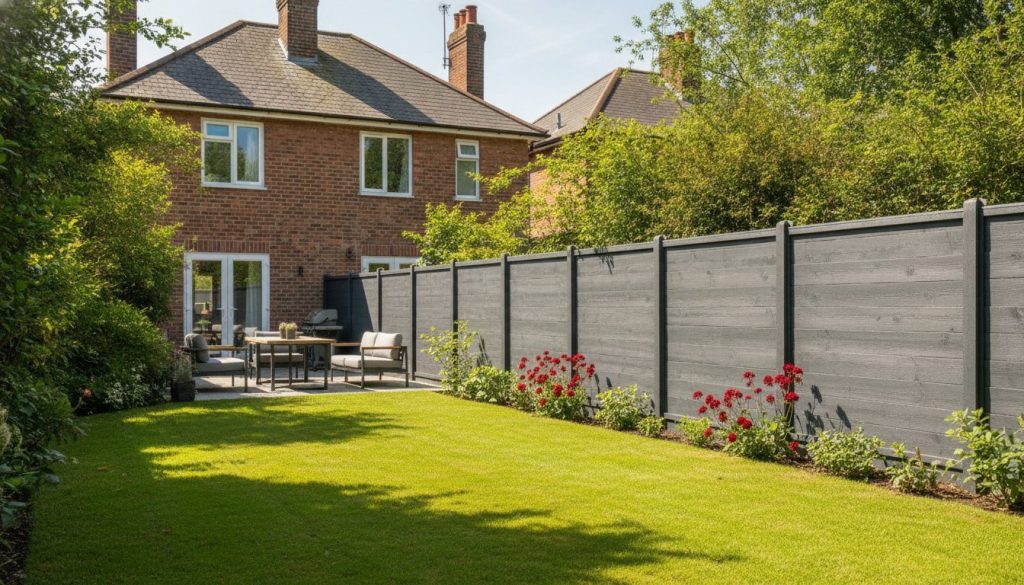
How Much Value Does a New Fence Add to a House in the UK? (2026 Guide)
Could a simple boundary upgrade really increase your property’s market price by as much as 20%? Most UK homeowners are all too familiar with the annual cycle of painting timber or the frustration of chasing a blown-out panel down the street after a typical winter storm. When asking, “does replacing fence panels add value UK”, the answer lies in whether you’re choosing a temporary fix or a long-term asset. It’s easy to see a fence as a recurring chore, especially when rotting wood starts to drag down your garden’s aesthetic and kerb appeal.
In this 2026 guide, we’ll explore how strategic upgrades can transform your outdoor space into a secure, maintenance-free haven. You’ll discover how shifting toward durable materials can protect your home whilst significantly boosting its desirability to potential buyers. We’ll examine the latest market trends, from the rise of steel retrofitting solutions to the specific ways modern fencing eliminates the need for future treatments. By the end, you’ll understand how to turn a basic garden boundary into a high-yield investment that stands firm against the British weather and frees up your weekends for good.
Key Takeaways
- Learn how the latest market data answers the question: does replacing fence panels add value UK homeowners can actually see in their final sale price?
- Understand why maintenance-free materials attract premium buyers who prioritise time-freedom and long-term durability over traditional timber upkeep.
- Identify how enhancing your garden’s privacy and acoustic insulation directly impacts your property’s desirability in urban and suburban areas.
- Avoid common devaluing mistakes by adhering to the 2-metre height rule and selecting styles that complement your home’s existing aesthetic.
- Discover how retrofitting steel panels into existing concrete posts provides a high-quality upgrade whilst significantly reducing labour costs.
Calculating the Return on Investment (ROI) for UK Garden Fencing
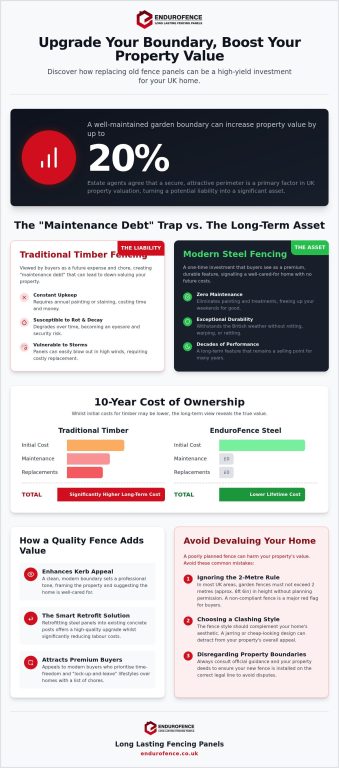
When considering a home renovation project, the garden boundary is frequently overlooked. However, UK estate agents generally agree that a secure and attractive perimeter is a primary factor in property valuation. Fence ROI is defined as the ratio of installation cost to the increase in property valuation. A dilapidated fence often leads to “down-valuing” during a survey because it signals general neglect. Buyers immediately subtract the potential cost of repairs or replacement from their offer. In contrast, a modern, sturdy boundary contributes to the 20% value increase often attributed to well-maintained gardens in the current UK market.
The Impact of Kerb Appeal on Valuation
First impressions are formed within seconds of a viewer arriving at your property. A clean, modern boundary sets a professional tone for the entire house. It provides a sense of security and order that resonates psychologically with prospective buyers. Traditional timber can look heavy and dated, especially as it begins to grey or rot over time. Modern steel panels offer a sleeker visual weight that complements contemporary garden trends. This aesthetic consistency suggests a home that is well-cared for, which often justifies a higher asking price. A well-chosen fence doesn’t just mark a line; it frames the entire property investment.
Avoiding the “Maintenance Debt” Trap
Maintenance debt refers to the future work and costs a buyer must inherit when they purchase a home. For many, a timber fence is viewed as a liability rather than an asset. They see a future of weekends spent painting or the inevitable cost of replacing panels after a storm. Does replacing fence panels add value UK buyers actually care about? The answer is a firm yes, but specifically when those panels remove the maintenance chore.
Maintenance-free solutions flip the script for surveyors and buyers alike. Instead of noting a future expense, they record a durable, long-term feature that requires zero upkeep. Moving away from timber ensures your boundary remains a selling point for decades. It changes the conversation from “how much will this cost to fix?” to “I’m glad I don’t have to worry about that.”
- Visual Clarity: Clean lines suggest a larger, more organised outdoor space.
- Security Assurance: A robust fence implies a safe environment for families and pets.
- Cost Certainty: Buyers appreciate knowing they won’t face fencing bills for the next 20 years.
Why Maintenance-Free Materials Add the Most Resale Value
Modern UK homebuyers increasingly prioritise “lock-up-and-leave” lifestyles. They seek properties that offer immediate comfort without a long list of pending chores. A traditional timber fence, whilst charming when new, represents a future commitment of time and money. Many homeowners ask, does replacing fence panels add value UK buyers will pay more for? The answer is tied directly to the future effort required by the new owner. A fence that requires zero painting or treatment for decades is a significant selling point that traditional wood simply cannot match.
When planning your upgrade, consult the official government guidance on property boundaries to ensure your new installation respects legal lines. Choosing a material that carries a long-term durability guarantee provides peace of mind for both the current owner and the next. High-quality steel panels with an insulated core offer a premium, solid feel. They don’t rattle in the wind or warp in the sun. This sense of permanence is exactly what surveyors look for when assessing the overall quality of a property’s exterior.
Steel vs. Timber: A Financial Comparison
Initial costs for timber are often lower, but the 10-year lifecycle expense tells a different story. Timber requires regular staining, brushes, and specialized treatments to prevent rot. These costs add up, alongside the lost weekends spent performing the labour. Steel panels eliminate these recurring expenses entirely. They maintain their structural integrity and appearance without intervention. Over a decade, the “cheaper” timber option often becomes the more expensive choice once you factor in maintenance and the inevitable replacement of blown-out panels. A simple panel swap to a maintenance-free alternative can stop this financial drain immediately.
The Aesthetic Appeal of Modern Steel
A common misconception is that steel fencing looks industrial or cold. In reality, modern finishes are designed to complement classic UK brickwork and garden trends. Popular shades like anthracite grey or olive green blend seamlessly into natural surroundings. These panels provide a contemporary, architectural finish that elevates the entire garden’s design.
- Colour Consistency: Unlike wood, which fades and greys, steel retains its vibrant finish for years.
- Clean Lines: The precision of steel manufacturing ensures a perfectly level, tidy boundary.
- Durability: Steel resists the damp UK climate, preventing the unsightly green algae growth common on damp timber.
Aesthetics play a massive role in the final sale price. A garden that looks sharp and professionally finished suggests the interior of the home is equally well-maintained. By choosing modern materials, you remove the “shabby” look of rotting wood and replace it with a high-end feature that justifies a premium valuation.
Enhancing Property Value Through Security and Privacy
In the current UK property market, a garden is viewed as a vital extension of the home’s living space. Privacy consistently ranks as a top-three requirement for potential buyers, especially in densely populated suburban areas. When homeowners ask, “does replacing fence panels add value UK”, they often focus on aesthetics; however, the psychological premium of a private sanctuary is equally significant. A secure, solid boundary creates a sense of safe ownership that immediately influences a buyer’s perception of the entire property.
Acoustic Insulation and Noise Reduction
Noise pollution is a major deterrent for buyers looking at homes near busy roads or schools. Traditional timber fences are often porous; sound travels through gaps between slats or through the thin wood itself. Steel panels featuring a high-density insulated core provide a functional sound barrier that timber cannot replicate. This construction dampens external noise, significantly improving the “peace and quiet” score of a garden. Creating a garden sanctuary through sound-blocking materials can be a major selling point. It transforms an otherwise noisy outdoor area into a tranquil space, which can justify a higher valuation in urban environments.
Modern Security Features
A property’s security profile is a key consideration during the survey process. Timber panels are often vulnerable to opportunistic crime because they can be easily kicked through or lifted out of concrete posts. Steel panels offer a much higher level of resistance and are significantly harder to breach. Their weight and precision fit ensure they remain rattle-free, even in high winds. This solidity provides a tangible sense of safety that reassures families with young children or pets.
- Visual Deterrent: A robust, high-quality fence suggests that the property is well-protected.
- Breach Resistance: Steel construction prevents the common issue of panels being removed or destroyed by intruders.
- Structural Integrity: Panels that don’t rattle or flex create a feeling of permanent, high-end security.
While home insurance providers look at the overall safety of a postcode, a surveyor will specifically note the quality of the boundaries. A secure fence acts as a first line of defence, whilst reducing the perceived risk of trespassing. By investing in a boundary that prioritises security, you’re not just buying a fence; you’re adding a layer of protection that buyers value highly in a post-pandemic world where home safety is paramount.
Avoiding Common Fencing Mistakes That Devalue Your Home
While many homeowners ask, “does replacing fence panels add value UK”, the reality is that poor choices can actually have the opposite effect. Cheap, flimsy timber panels often warp or discolour within a single season. This creates an immediate impression of low quality that can lead a buyer to suspect other hidden issues throughout the property. Choosing materials that look temporary or fragile is a false economy that rarely pays off at the point of sale.
Planning Permission and Boundary Laws
As of September 2026, you generally do not need planning permission for a fence up to 2 metres high in a rear garden. However, if the boundary is adjacent to a highway used by vehicles, including the footpath, the limit drops to 1 metre. Ignoring these regulations is a costly mistake. A buyer’s solicitor will identify illegal structures during the conveyancing process; this often leads to demands for retrospective permission or immediate removal. Identifying the correct boundary owner is equally vital. Upgrading a fence that belongs to a neighbour without their written consent can trigger legal disputes that stall a sale for months.
Installation Quality and Structural Integrity
Quality of fit is just as important as the material itself. Leaning or sagging fences suggest a lack of care and structural neglect. Using undersized posts for heavy panels is a common error that leads to premature failure during high winds. The “rattle factor” is another subtle but powerful deterrent. Panels that bang against posts in the wind feel temporary and insecure. This noise is often a sign of poor sizing or aged timber shrinking over time.
For a professional finish, you can upgrade your garden with maintenance-free fence panels that are designed to fit securely into existing concrete posts. This ensures a precision fit that eliminates noise and maintains structural integrity, even during the frequent storms typical of the UK climate. A DIY project should still result in a professional-grade finish that adds to the home’s solidity.
Mismatched fencing styles also negatively impact the street scene. If every house on the road uses a similar aesthetic and you install a drastically different, low-quality alternative, it breaks the visual harmony. This visual clutter can make the whole area feel less desirable. Investing in a consistent, high-end boundary ensures your home fits perfectly into its surroundings whilst standing out for its superior quality and durability.
Maximising Value with EnduroFence Retrofit Steel Panels
Many homeowners hesitate to upgrade because they fear the cost and upheaval of removing concrete posts. However, the financial logic of a “Retrofit” is clear. You save significantly on labour and disposal fees, which allows you to invest that budget into higher quality materials instead. When asking, does replacing fence panels add value UK buyers will notice, the answer is often found in the speed and quality of the transformation. EnduroFence panels are engineered to slide directly into your existing concrete post slots. This turns a daunting construction project into a manageable weekend task.
These panels aren’t just thin metal sheets. They feature profiled steel construction with a high-density insulated core. This combination provides the structural rigidity and premium feel that buyers associate with high-end property development. By utilising the existing infrastructure, you avoid the mess and expense of a traditional garden overhaul. You achieve a look that suggests a complete professional redesign whilst keeping the process simple and efficient.
The Panel Swap Process
Upgrading your garden boundary is a straightforward process that doesn’t require specialised tools. It can be completed in three logical steps:
- Step 1: Remove old panels. Lift out the rotting timber panels from your concrete posts. This immediately removes the “maintenance debt” from your property.
- Step 2: Measure and order. Take precise measurements of the gap between your posts. The maintenance-free panels are then ordered to fit these specific dimensions.
- Step 3: Slide in the new panels. The steel panels slide into the existing slots. They lock into place, providing an instant, rattle-free boundary that stands up to UK winds.
Completing the Look with Post Covers
Even with new panels, weathered or cracked concrete posts can still detract from the overall value. To solve this, steel post covers can be fitted over the existing concrete. This creates a seamless, uniform appearance where the posts match the panels perfectly. It provides a high-end, architectural finish without the need for digging new holes or pouring fresh concrete. This final touch ensures your garden looks professionally designed. It’s a major factor in driving up kerb appeal and justifying a higher valuation.
If you’re ready to stop the cycle of timber maintenance and boost your home’s resale price, get a free quote for your EnduroFence upgrade today. It’s the most efficient way to secure your boundary and ensure your garden remains an asset rather than a chore.
Future-Proof Your Property Value and Outdoor Space
Replacing a tired garden boundary is one of the most effective ways to boost your home’s market appeal and security. The modern UK buyer prioritises durability and “time-freedom” over the constant upkeep required by traditional timber. By choosing maintenance-free materials, you effectively eliminate the maintenance debt that often leads to lower survey valuations. When homeowners ask, does replacing fence panels add value UK, the evidence points to a high return on investment when those panels are built to last.
Strategic upgrades like retrofitting insulated steel panels into existing concrete posts provide a high-end look without the disruption of a full site clearance. These panels require zero painting or treatment for life, ensuring your garden remains a sanctuary rather than a recurring chore. Whether you’re preparing for a sale or simply want to reclaim your weekends, a durable boundary is a sensible financial decision. It offers peace of mind for you and a clear benefit for future owners.
Calculate your maintenance-free fence cost with a free quote and start transforming your garden today.
Frequently Asked Questions
Does a new fence really add value to a house in the UK?
Yes, a well-maintained garden boundary can increase a property’s value by up to 20%. A new fence provides essential privacy and security, which are top priorities for modern homebuyers. It also eliminates the “maintenance debt” associated with old, rotting timber. By providing a clean and secure perimeter, you create a sense of order that reassures surveyors and potential buyers that the entire property is well-cared for.
What type of fencing adds the most value to a property?
Maintenance-free materials like steel panels with insulated cores tend to add the most value in the current market. Modern buyers prioritises convenience and time-freedom; they don’t want to inherit a list of annual painting and treatment chores. Fencing that offers high durability, acoustic insulation, and contemporary aesthetics suggests a premium home. These features provide long-term cost certainty, making the property far more attractive than one with traditional timber boundaries.
How much does it cost to replace a fence UK 2026?
For a standard UK garden of approximately 15 metres, a full fence installation typically costs between £1,000 and £1,800. This estimate includes standard materials and professional labour. If you choose premium materials or more complex designs, costs can range from £110 to £200 per metre. However, you can significantly reduce these expenses by opting for a retrofit solution that utilises your existing concrete posts, avoiding the need for a full professional installation team.
Is planning permission required for a new garden fence?
In most instances, you won’t need planning permission for a rear garden fence up to 2 metres high. If the fence is adjacent to a highway used by vehicles, the height limit is restricted to 1 metre. Stricter regulations apply to listed buildings and properties within conservation areas, where permission is often mandatory regardless of height. Always verify the specific rules with your local planning office before starting your project to avoid legal complications during a sale.
Can I replace my fence panels without removing the concrete posts?
Yes, you can easily replace your panels whilst keeping your existing concrete posts. Retrofitting is a practical way to upgrade your garden’s look without the mess and expense of digging new holes. Maintenance-free steel panels are specifically designed to slide into standard concrete post slots. This “panel swap” approach saves on labour costs and allows you to complete the entire garden transformation over a single weekend using simple DIY methods.
Do buyers prefer wood or steel fencing in the UK?
While timber is a traditional choice, 2026 buyer behaviour shows a clear preference for steel and other maintenance-free materials. Wood is often viewed as a liability because it rots, warps, and requires constant upkeep. Steel panels offer a sleeker, architectural finish that doesn’t rattle in the wind or fade over time. Buyers appreciate the permanence of steel, knowing they won’t face the expense of replacing blown-out panels after a typical British winter storm.
How long do maintenance-free steel fence panels last?
Steel fence panels are built for extreme durability and typically last for decades without any structural degradation. Unlike wood, they are resistant to dampness, rot, and insect damage. The high-density insulated core provides extra rigidity, ensuring the panels remain straight and secure even in high winds. Because they don’t require annual staining or chemical treatments, they maintain their “new” look far longer than timber, providing a resilient and attractive boundary for life.
Will a new fence help my house sell faster?
A new fence significantly boosts kerb appeal, which is essential for making a strong first impression. When people ask, does replacing fence panels add value UK sellers should also consider the speed of the transaction. A secure, private garden is a major selling point that can help your property stand out in a crowded market. It suggests a home that is secure and ready for immediate move-in, attracting serious buyers who want to avoid post-purchase renovations.

Leave a Reply