

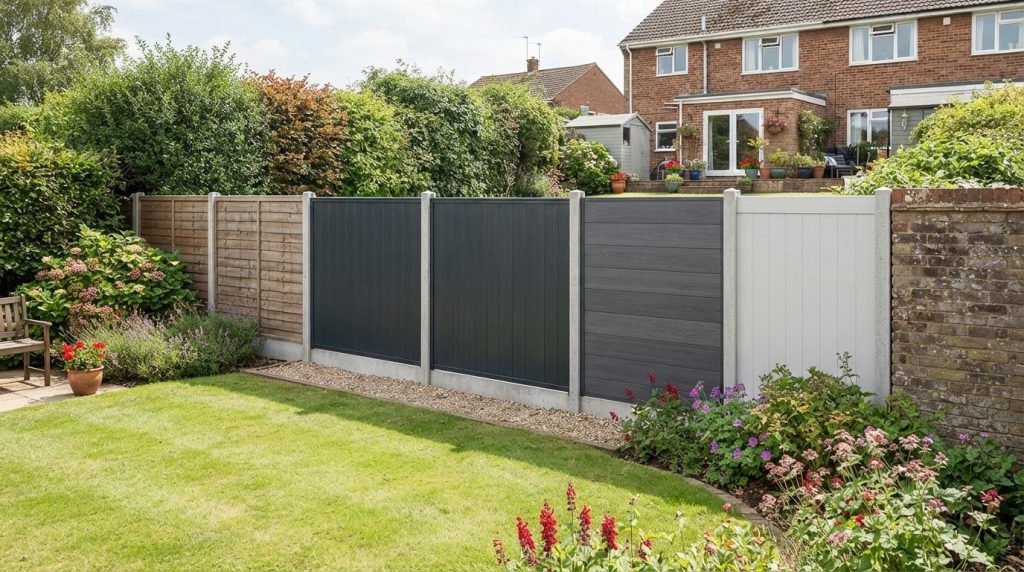
Alternatives to Wooden Fence Panels: A Practical UK Comparison
The best alternative to wooden fence panels may be the one that works with your existing posts, not simply the one that looks best in a brochure. If you’re tired of recurring painting or treatment, it’s understandable to want a fence that’s easier to look after. Appearance, privacy and the effort of fitting new panels matter too, so it helps to compare the practical details before choosing.
This guide compares timber, steel, composite and PVC panels, as well as masonry, which is a different type of boundary. Use the comparisons to weigh upkeep, appearance, privacy and fitting requirements against what matters in your garden.
Check fit before you buy. Some replacement panels are designed to work with existing concrete posts, but compatibility depends on the post condition and panel dimensions. We’ll cover the checks to make and explain when maintenance-free steel panels may be a practical option.
Key Takeaways
- Compare alternatives to wooden fence panels by balancing upkeep, appearance and privacy, rather than choosing on material alone.
- Use your garden’s priorities to narrow down options such as steel, composite, PVC or masonry. Timber may still suit if you like its appearance and accept its care requirements.
- Check panel dimensions, post condition, channels and fixings before ordering, as compatibility affects whether you can retain existing supports.
- Maintenance-free steel panels with profiled outer sheets and an insulated core may suit gardens with compatible concrete posts.
- Compare colour and finish options alongside practical details to find a panel that works with your boundary and garden style.
Why look for alternatives to wooden fence panels?
A fence that’s weathered, loose or in need of attention can prompt a rethink, particularly if replacing panels feels like the start of another cycle of upkeep. Timber isn’t automatically the wrong choice, though. Its suitability depends on the fence, the garden and how much maintenance you’re prepared to take on.
Looking at alternatives to wooden fence panels is a way to compare practical trade-offs, not a search for one material that works everywhere. A secluded garden may call for a solid screen, whilst a smaller space might suit a lighter-looking design. Existing posts also matter: a panel that matches your preferred style still needs to fit the supports safely.
What makes homeowners consider a fence-panel alternative?
Depending on the timber, finish and exposure, upkeep may include painting or treatment, as well as repairs to damaged boards or fixings. These aren’t universal requirements, but they can add work over time. Damp conditions, wind exposure and installation quality may also affect how a fence performs. Rather than relying on a general lifespan claim, check the specific panel’s product information and care guidance.
Alternatives vary too. Composite and PVC are synthetic options with different compositions and characteristics; Synthetic fence materials provides an overview of these categories. Steel is another panel material to consider. Compare the details for the exact product rather than assuming every panel in a material group looks or performs alike.
Which priorities should guide the comparison?
Before choosing, rank what matters most to you:
- Upkeep: How much time do you want to spend cleaning, treating or repairing panels?
- Privacy and appearance: Do you need a solid screen, or would a more open design suit the garden?
- Durability and fitting effort: What does the manufacturer say about care and installation, and what work will replacing the panels involve?
Assess the whole fence, not just the panel. Posts, channels and fixings affect what can be fitted. Worn or unsuitable supports may change the work required. Measure the openings and inspect the supports before choosing a replacement, then check compatibility with the panel supplier.
The right fence depends on your site and priorities: panel material, desired privacy, maintenance expectations and the condition of existing supports all matter. Compare those factors against your garden’s needs rather than relying on a material label alone.
How do the main alternatives to wooden fence panels compare?
The best alternatives to wooden fence panels depend on the finish you want, how much upkeep you’re comfortable with and whether you’re replacing panels or changing the whole boundary. Use this table as a starting point, then confirm product specifications and care instructions with the manufacturer. Designs and performance vary within each material.
| Material | Upkeep | Appearance | Likely considerations | May suit you if… |
|---|---|---|---|---|
| Timber | May need painting, treatment or repairs, depending on the product and exposure. | Familiar, natural grain and a range of styles. | Check care guidance and how the panel suits your garden conditions. | You prefer a traditional look and are comfortable with its maintenance needs. |
| Steel | Some panels require no painting or treatment. Check the specific product’s instructions. | Can have a clean, contemporary finish, with colours and profiles varying by product. | Construction, finish and fitting requirements differ. Check measurements and post compatibility. | You want a low-maintenance panel and your existing supports are suitable. |
| Composite | Care requirements vary by system and manufacturer. | Available in different colours and designs, sometimes with a timber-like appearance. | Check panel dimensions, fixings and stated cleaning guidance. | You want to compare a manufactured finish with a more natural-looking style. |
| PVC or vinyl | Refer to the maker’s cleaning and care instructions. | Often associated with a smooth, uniform finish, though designs differ. | Check the exact product’s appearance, construction and fitting system. | You prefer a consistent finish and can find a design suited to your garden. |
| Masonry | Depends on the structure and its condition. It doesn’t have panel-style upkeep. | Creates a solid, built boundary rather than a panelled fence. | It’s a different approach, with different design and construction considerations. Check relevant local planning guidance, including the Planning Portal guidance on fence planning permission for England and Wales. | You’re considering a more substantial boundary rather than a like-for-like panel swap. |
What are the trade-offs of steel, composite and PVC panels?
Composite and PVC offer manufactured finishes in a range of styles, whilst steel panels can provide a more defined, profiled appearance. Care needs and construction differ by product, so don’t assume every panel in a category is alike. EnduroFence panels, for example, have profiled steel outer sheets and a high-density insulated core, and don’t require painting or treatment. Check the product details, finish options and fitting requirements before comparing systems.
When might timber, masonry or another option still suit?
Timber may remain the right choice if its natural appearance matters to you and its upkeep is acceptable. Masonry is a different boundary design, not a replacement panel that slots into existing posts. Consider the look you want, the privacy you need and the conditions at the boundary. If you’re weighing steel against other panel materials, explore maintenance-free steel panels and check whether the system matches your supports.
Which fencing material best matches your garden and priorities?
Start with how you use the garden, then weigh that against the work involved in replacing the fence. A low-maintenance material isn’t automatically right for every boundary. A solid panel may suit a garden where privacy matters most, whilst colour or finish may be the priority if the fence is a prominent feature. Consider the site too, including exposure and the condition of the existing supports.
Rank your priorities before comparing products:
- Upkeep: Check what cleaning, inspection or treatment the manufacturer recommends.
- Appearance: Compare actual colours, textures and panel designs, rather than relying on material names alone.
- Privacy: Check how open or solid the panel is and whether it meets your needs along the boundary.
- Fit and effort: Consider whether existing posts can be retained and what the product requires for fixing.
Assess the panel and posts as one system. A replacement panel may be suitable in principle, but worn, damaged or incompatible supports can affect the choice and the work involved. Before buying, check the opening dimensions, panel dimensions, fixing method and manufacturer’s installation guidance. If the replacement would also change the fence’s height or structure, consult relevant local guidance, including the Planning Portal’s information on planning permission for fences.
What if you want less ongoing fence maintenance?
Compare care instructions for specific products rather than assuming every panel made from the same material needs identical attention. Painting and treatment are only part of the picture: check whether the panels also need cleaning or periodic inspection, and follow the manufacturer’s recommendations. EnduroFence steel panels don’t require painting or treatment, but review the product guidance and decide whether the finish suits your garden.
Can you keep existing concrete fence posts?
Possibly, if they’re in suitable condition and the replacement system is designed to fit them. Measure the posts and panel openings, inspect channels and fixings, then confirm compatibility with the manufacturer before ordering. EnduroFence panels are designed for existing concrete posts, but suitability depends on the specific supports and measurements. Check the fitting details for the exact system before making a decision.
The most suitable alternatives to wooden fence panels are the ones that meet your priorities and work with the boundary you have. Confirming dimensions, fixing requirements and care guidance first can help you avoid choosing a panel that looks right but isn’t a practical fit.
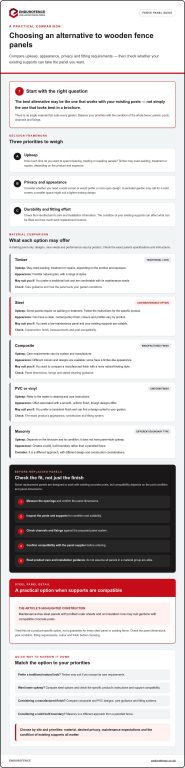
What should you check before replacing wooden fence panels?
A careful check before ordering can help you avoid panels that don’t fit or supports that aren’t suitable to retain. Use this checklist to assess the fence, confirm product details and plan the work. Fitting requirements can differ between alternatives to wooden fence panels, so check the exact system you’re considering.
How do you assess the existing fence structure?
Look over the whole boundary before deciding to keep its posts. Check for visible cracks, movement, leaning or misalignment, and note whether channels and fixings are damaged or obstructed. Measure each panel opening separately, as dimensions may vary along the fence. Record the post type and how the current panels are arranged. If you’re unsure about structural condition or boundary requirements, seek suitable professional advice before proceeding.
What should you confirm before ordering panels?
Compare your measurements with the manufacturer’s specifications, then check the configuration, fixing method and compatibility guidance for the exact panel. A product intended for existing concrete posts still needs to match your posts and openings. Read the installation and handling instructions before starting, including whether the work calls for tools or assistance you don’t have. Requirements vary by product and fence layout, so don’t assume every replacement takes the same time or follows the same process.
- Measure: Record the width and height of each opening, including any differences between bays.
- Inspect: Check posts, channels and fixings for visible damage, movement and alignment.
- Identify: Note the post type and existing panel arrangement, including how panels are held in place.
- Verify: Confirm dimensions, configuration, colour or finish, and stated compatibility with the manufacturer.
- Prepare: Read fitting and handling guidance, and check what tools and practical help the job requires.
EnduroFence sells maintenance-free steel panels designed to fit existing concrete posts, but compatibility needs to be confirmed for the specific posts. The company sells panels, not concrete-post installation or professional fitting services. Its product information describes straightforward homeowner installation without specialised tools or qualifications. Read the instructions for the particular panel before deciding whether you’re comfortable doing the work yourself.
If your measurements and post checks suggest the system could be suitable, request an EnduroFence panel quote and confirm the fit details before ordering.
Could EnduroFence steel panels be your alternative to wooden fence panels?
Steel is one option if you want panels that don’t need painting or treatment and are interested in keeping compatible existing concrete posts. EnduroFence panels are designed with this retrofit use in mind. They won’t suit every boundary, so compare product details with your garden’s needs and check the measurements and condition of your supports before deciding.
What does EnduroFence offer as a timber-panel alternative?
The panels are made with profiled steel outer sheets and a high-density insulated core. They’re available in a range of colours and finishes, giving you options to consider alongside your garden’s style and the level of privacy you want. The panels don’t require painting or treatment, though you should read the product guidance for any cleaning or inspection recommendations.
Existing concrete posts may be reusable, but don’t assume every post will fit. Measure the openings and supports, then check the manufacturer’s compatibility information for your specific fence. Post condition matters too: damaged, loose or misaligned supports may affect whether retaining them is appropriate. Confirm the fit before ordering rather than relying on the material description alone.
How can you decide whether to explore this option?
Match the product against the priorities you’ve identified. Consider whether the profiled finish and available colours work for your garden, whether the panel suits your privacy needs and whether the existing posts meet the stated fitting requirements. Compare those details with other alternatives to wooden fence panels, including their care instructions and installation needs. No single material is automatically right for every garden.
EnduroFence describes installation as straightforward for homeowners, without specialised tools or qualifications. This is not a professional fitting service, so review the installation and handling guidance before ordering and decide whether you’re comfortable undertaking the work. If the structure or fit is unclear, seek appropriate advice before proceeding.
Review the product information and check compatibility against your measurements before making a decision. If the panels appear suitable, explore EnduroFence panels and request a free quote.
Choose a fence that fits your garden and routine
The best alternatives to wooden fence panels depend on what matters most at your boundary: less upkeep, a particular appearance, greater privacy or the ability to reuse existing supports. Compare materials by their care guidance and fitting requirements, then measure the openings and inspect the posts before ordering. A suitable panel still needs sound, compatible supports.
If steel is on your shortlist, EnduroFence panels are designed for existing concrete posts, subject to confirming fit against your measurements. Their profiled steel outer sheets and high-density insulated core need no painting or treatment. Installation is designed to be straightforward for homeowners, without specialised tools or qualifications, but check the product guidance before starting.
Explore the details and colour and finish options, then decide whether they suit your garden and priorities. Explore EnduroFence panels and request a free quote. With a few practical checks, you can choose your next fence with greater confidence.
Frequently Asked Questions
What are the best alternatives to wooden fence panels?
Steel, composite and PVC panels are common alternatives, whilst masonry offers a different kind of boundary rather than a like-for-like panel swap. The right choice depends on the appearance you want, privacy, care requirements and whether the panels will fit your existing supports. Compare specifications and fitting guidance for individual products, as materials can vary. These alternatives to wooden fence panels don’t all suit every garden or fence layout.
Are steel fence panels better than wooden panels?
Steel panels aren’t automatically better than timber; they offer different practical and visual qualities. Some steel panels, including EnduroFence panels, don’t need painting or treatment, which may suit homeowners looking to reduce those upkeep tasks. Timber may appeal if you prefer its natural appearance. Compare the specific panel’s care guidance, finish and fitting requirements, and check whether it’s compatible with your posts before choosing.
Do composite fence panels need maintenance?
Composite panels may still need care, but requirements depend on the product. Don’t assume every panel needs painting or treatment, or that none needs cleaning or inspection. Read the manufacturer’s care instructions for the exact system, including recommended cleaning methods and any limits on products or tools. Check fitting details too, since the panel, fixings and posts need to work together as a fence.
Can you replace wooden fence panels without replacing concrete posts?
You may be able to keep existing concrete posts if they’re sound and compatible with the replacement panels. Inspect them for visible damage, movement and alignment, then measure the openings and check the post channels and fixings. Some systems are designed for existing posts, including EnduroFence steel panels, but confirm the required dimensions and fit against your own fence before ordering. If the posts are damaged, seek suitable advice.
Are steel fence panels difficult to install?
Installation depends on the panel system, fence layout and condition of the supports. EnduroFence describes its panels as suitable for straightforward homeowner installation without specialised tools or qualifications, but this doesn’t mean every steel panel installs in the same way. Read the specific product’s fitting and handling guidance before starting, check what tools are needed, and make sure you’re comfortable carrying out the work. EnduroFence sells panels, not professional fitting services.
Which fence-panel alternative needs the least maintenance?
There isn’t one material that can be called the lowest-maintenance choice for every product and garden. Compare manufacturers’ care instructions, including whether panels need painting or treatment and what cleaning or inspection is recommended. EnduroFence steel panels don’t require painting or treatment, but check the product guidance for other care information. Focus on the exact panel rather than assuming all steel, composite or PVC systems have identical requirements.
How do I choose an alternative to timber fence panels?
Start by ranking your priorities: upkeep, appearance, privacy and installation effort. Then check the panel dimensions, fixing method and manufacturer’s fitting guidance against your existing posts and fence arrangement. Inspect supports for damage or movement before deciding to reuse them. Compare individual products rather than relying on material labels alone. This helps you choose an option that suits both your garden and the practical requirements of your boundary.

Leave a Reply