

Annual Fence Maintenance Cost UK: What to Budget in 2026
Your fence doesn’t need the same maintenance budget every year. The annual fence maintenance cost UK homeowners should allow for depends on the material, its condition and the work that is actually due, not a one-size-fits-all average.
Recurring painting, treatment or repairs can be difficult to plan for when it’s unclear how often work is needed. Start with the fence you have: note its length, panel and post condition, visible wear, access and whether you’ll do suitable tasks yourself or get quotes for help.
This guide shows how to list upkeep tasks, estimate their cost and compare repairs with replacement. It also explains what to check when considering panels designed not to need painting or treatment. For example, maintenance-free steel panels can fit existing concrete posts when the dimensions and condition are suitable. By the end, you’ll have a practical way to assess your options and decide whether ongoing upkeep or a lower-maintenance alternative makes more sense.
Key Takeaways
- Work out your annual fence maintenance cost UK by listing the jobs, materials, frequency and any labour your fence actually needs.
- Use the fence’s length, condition, access and your DIY plans to build an estimate, then check it against current supplier prices and contractor quotes.
- Check care guidance for your fence material before deciding how often it needs attention. Don’t assume every panel requires the same upkeep.
- Keep a simple inspection record to track changes and distinguish routine marks from issues that may need attention.
- Consider whether panels designed not to need painting or treatment suit your existing posts, preferred appearance and maintenance priorities.
What makes up the annual fence maintenance cost in the UK?
Your annual fence maintenance cost is the yearly value of materials, paid labour and your own time spent keeping the fence serviceable. It may include planned care, such as cleaning or protective treatment, and repairs needed during the year. Panel replacement is an occasional cost rather than routine annual maintenance, but you may want to allow for it in longer-term planning.
There’s no single UK figure that accurately represents every garden fence. A short, accessible run in good condition has different needs from a long fence with worn panels, restricted access or signs of movement. The different types of fence also vary in materials and care requirements, so base your estimate on the fence you have rather than a generic average.
Which recurring tasks can add to a fence budget?
Some work is planned, while other jobs follow a change you’ve noticed. Regular checks help you identify issues, but a mark does not automatically mean a repair is needed. Depending on the fence and its condition, tasks may include:
- Inspecting posts, panels, edges and fixings for movement or damage.
- Cleaning accumulated dirt and managing vegetation that traps moisture or blocks access.
- Tightening or replacing loose fixings where needed.
- Applying a suitable protective treatment to timber when the product guidance and its condition call for it.
Separate routine care from repairs following damage, movement or persistent damp. Tightening a loose fixing may be a small job, while a broken or shifted panel may need more substantial attention. Treat panel replacement as a separate, occasional cost rather than assuming it will be needed every year.
Why can two similar fences have different annual costs?
Material, age and condition all affect the work a fence needs. Exposure to weather can influence how quickly a material or finish shows wear. Length matters too: a longer run means more panels to inspect and potentially more materials or labour if work is required. Restricted access can also make a job more involved.
Your approach affects the estimate. For suitable DIY work, count the materials and your time. If you’re asking a tradesperson to help, use a quote based on the actual job and access. Estimate recurring care and condition-led repairs for your own fence rather than relying on a national average.
For a useful budget, record planned tasks separately from repairs and eventual replacement. Review the fence’s condition as part of your upkeep, then update your estimate to reflect what is actually needed.
How to calculate your own annual fence maintenance cost
A useful estimate starts with your fence, not a national average. List the work required, how often each task is due, the materials needed and whether you’ll do the work yourself or pay for labour. Check current supplier prices and quotes for the job. This makes your annual fence maintenance cost UK figure specific to your property and easier to review as the fence’s condition changes.
Build a simple annual maintenance worksheet
Record the fence material, approximate length, panel count and visible condition. Add separate lines for inspection, cleaning, treatment, minor repairs and paid labour. For each task, note how often it may be needed, the materials required and where your estimate came from, such as a current supplier price or contractor quote.
For timber, check the manufacturer’s guidance before budgeting for protective products. Treatment requirements depend on the product and existing finish. The Wood Protection Association’s information on industry standards for timber preservation can help you understand what to check. Don’t assume a fixed treatment interval without relevant guidance.
Count your own time separately from cash spending. If cleaning and checking the fence takes an afternoon, record those hours even if you don’t pay anyone. You can then compare the money spent with the effort involved instead of treating DIY work as cost-free.
Separate annual upkeep from unpredictable repairs
Keep regular care separate from repairs that may not be needed every year. Your worksheet might list cleaning as a planned task, while a loose panel or damaged fixing belongs under condition-led repairs. Record what you observe and update the estimate if the fence changes.
For a task that is planned less often, divide its estimated cost by the number of years between occurrences to create a yearly allowance. For example, if product guidance indicates suitable treatment is due every N years, divide the current materials and labour estimate by N. This is a budgeting method, not a prediction that the task will fall due on schedule.
A contingency for unexpected work is a personal choice, not a fixed industry rule. Set one only if it suits your household budget, and keep it separate from the regular upkeep total. Use your own measurements and current quotes, then revise the estimate when tasks or conditions change.
If your worksheet shows repeated painting or treatment taking up a substantial part of the workload, compare it with maintenance-free steel fence panels. They’re designed not to need painting or treatment and to fit existing concrete posts. Check that your posts are suitable before considering a panel swap.
Timber, steel and other fences: compare the upkeep, not just the material
Material affects which panel-care tasks belong in your annual fence maintenance cost UK estimate. Compare the work involved, and check product guidance before assuming one fence needs the same treatment or schedule as another.
| Upkeep category | Timber panels | EnduroFence steel panels | Other panel materials |
|---|---|---|---|
| Inspection | Check panels, edges and finish for visible changes. | Check panels and the wider fence, including posts and fixings. | Check the product guidance for material-specific checks. |
| Cleaning | Consider cleaning where dirt or vegetation builds up; check suitable methods. | Check for dirt or obstruction as part of general fence care. | Cleaning method and frequency require product-specific verification. |
| Painting or treatment | Only if the product guidance and current condition indicate it’s appropriate. | Panels are designed not to need painting or treatment. | Verify requirements with the manufacturer. |
What upkeep should homeowners consider with timber panels?
Inspect timber for damage and check the existing finish before applying anything. Cleaning may be appropriate, but the method should suit the product. Don’t assume every timber panel needs the same work. Its condition, finish and manufacturer’s instructions determine whether further protective treatment is suitable. The Wood Protection Association’s guidance on industry standards for timber preservation offers context when checking treatment information.
Keep the plan practical: note what you observe and follow the relevant product instructions rather than applying treatment automatically on a fixed schedule.
What changes with maintenance-free steel panels?
EnduroFence panels have profiled steel outer sheets and a high-density insulated core. They’re designed to resist weather without painting or treatment, so those panel-care tasks are not required. The wider fence still needs checks: inspect posts, fixings and surrounding areas, and assess any concerns on their own merits.
The panels are designed to fit existing concrete posts, but compatibility depends on the posts’ dimensions and condition. Check both before considering a panel swap. A planned inspection approach can also help organise wider property upkeep, in line with the principles discussed in the RICS guidance on professional standards for planned maintenance.
A practical annual fence inspection and upkeep plan
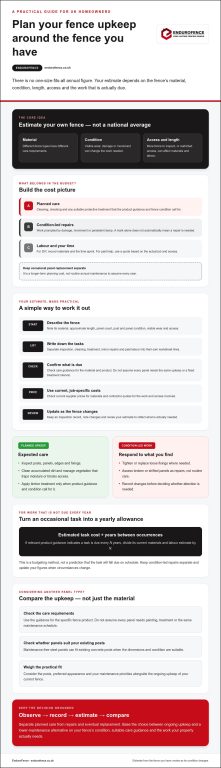
A consistent inspection helps you spot changes without treating every mark as a repair job. Choose a time to check the fence, follow care guidance for its material and record what you find. This gives you a clearer basis for updating your annual fence maintenance cost UK estimate and deciding what needs attention.
What to check during a routine fence inspection
Walk along the fence and check each part in a consistent sequence. Look for movement, damage or signs of persistent moisture, and note anything that has changed since your last inspection.
- Posts: Look for movement, visible damage or changes around the base.
- Panels and edges: Check for loose sections, cracks, splits or signs that a panel has shifted.
- Fixings: Look for missing, damaged or loose fasteners.
- Ground contact: Check for persistent dampness or material in contact with the ground, following the relevant product guidance.
- Vegetation and access: Notice whether plants are pressing against panels or making it difficult to inspect the fence.
Take dated photographs from similar positions each time. A mark that remains unchanged may simply be part of the material’s appearance; a new or growing change gives you more reason to investigate. Keep a short record of cleaning, treatment or repairs, including when they were carried out.
When should you repair, maintain or replace a panel?
Base your decision on the cause and extent of the issue, whether the affected part can be repaired, and the condition of the surrounding fence. Follow material-specific instructions for routine care. Address clear damage rather than leaving it unchecked, but don’t assume a small mark means a panel needs replacing.
If a panel is loose, a post has moved, or you’re unsure about the fence’s stability or safety, seek an assessment from a competent tradesperson. Don’t attempt work beyond your ability. A repair may be suitable when the problem is limited; more widespread damage or deterioration may make replacement worth considering. The right decision depends on the fence’s condition.
For a lower-maintenance panel option, EnduroFence steel panels are designed not to need painting or treatment and to fit existing concrete posts. Check the posts’ dimensions and condition before deciding whether a panel swap is suitable. Explore maintenance-free fence panels to see whether reducing repeat panel-care tasks fits your priorities.
Could maintenance-free fence panels reduce your recurring workload?
If repeat painting or treatment takes time and effort, changing the panel material may be worth considering. It can remove specific recurring panel-care tasks from your annual fence maintenance cost UK estimate. The right choice depends on the existing fence, compatibility with its posts, the appearance you want and how much you value reducing upkeep.
When does switching panels make sense?
Look at the pattern, not just one maintenance job. If the panels regularly need attention, show visible deterioration or take more time to care for than you’d like, compare alternatives using their product information. Switching isn’t automatically the answer. Consider whether the existing fence structure is suitable and whether repair or routine care would address the issue.
EnduroFence sells maintenance-free steel fence panels and post covers. Its panels are designed to fit existing concrete posts, but check the posts’ dimensions and condition before considering a retrofit panel swap. EnduroFence doesn’t provide professional installation or concrete-post installation, so make sure you understand how any panel change will be carried out.
How to assess a lower-maintenance option
Compare the specific tasks each panel requires rather than relying on a broad label or assumed lifespan. EnduroFence panels have profiled steel outer sheets and a high-density insulated core. They’re designed to resist weather without painting or treatment, reducing those panel-care requirements. This doesn’t mean every part of the fence becomes maintenance-free. Posts, fixings and the surrounding area still need appropriate checks.
Before deciding, confirm the panel dimensions and compatibility with your existing posts. Then consider colour and finish alongside your garden’s appearance and your priorities. A lower-maintenance panel may suit you if avoiding repeat painting or treatment matters more than keeping the current panel material. If appearance, repairability or another practical consideration matters more, include it in your comparison.
To see whether this type of panel could suit your fence, explore EnduroFence maintenance-free panels. If you’d like to check suitability for your project, request a free online quote.
Make your next fence-care decision with confidence
A realistic annual fence maintenance cost UK estimate comes from your fence’s material, condition, size and access, not a generic figure. List the care tasks that are actually due, use current quotes for paid work, and keep planned upkeep separate from repairs. A dated inspection record can help you spot changes and adjust your budget over time.
If repeat painting or treatment is a regular part of your workload, compare the effort with a lower-maintenance panel option. EnduroFence steel panels are designed not to need painting or treatment and to fit existing concrete posts. Check post dimensions and condition, along with the panel’s colour and finish, before deciding whether they suit your garden and priorities.
Explore EnduroFence maintenance-free steel panels and request a free quote through the website to assess whether they could suit your fence. With a clear view of upkeep and compatibility, you can choose a practical next step.
Frequently Asked Questions
How much does annual fence maintenance cost in the UK?
There’s no single figure that applies to every garden, so calculate the annual fence maintenance cost UK homeowners should budget from their own fence and current quotes. List the material, length, condition and tasks due, then include supplies, paid labour and your own time. Separate routine care, such as cleaning or treatment where appropriate, from repairs that may not be needed every year. Supplier prices and contractor quotes help make the estimate realistic.
What maintenance does a wooden fence need each year?
A wooden fence may need inspection, cleaning, vegetation management and attention to loose or damaged fixings. Check the panels and existing finish for visible changes, but don’t assume every fence needs treatment every year. Whether protective treatment is suitable depends on the timber’s condition, finish and manufacturer guidance. Record maintenance and follow the product instructions. Budget for repairs separately if they’re needed, as they are different from routine care.
Do fence panels need treating every year?
No, fence panels don’t all need annual treatment. The material, finish, condition and manufacturer’s instructions determine whether treatment is needed and when. For timber, check the existing finish and product guidance before applying anything; a fixed yearly schedule may not be appropriate. EnduroFence steel panels are designed not to need painting or treatment. That applies to these panels, not automatically to every fence component, so continue to check posts and fixings.
Can I reduce my fence maintenance costs without replacing the posts?
Yes, a panel swap may reduce repeat panel-care tasks if your existing posts are suitable. EnduroFence steel panels are designed to fit existing concrete posts and don’t need painting or treatment. Before considering this option, check the posts’ dimensions and condition, and confirm panel compatibility. Reusing posts doesn’t make every part of the fence maintenance-free: inspect the posts, fixings and surrounding area, and account for any separate repairs.
Is a maintenance-free fence completely maintenance-free?
No fence should be treated as requiring no checks at all. EnduroFence steel panels are designed to resist weather without painting or treatment, removing those panel-care tasks. Posts, fixings and the wider fence may still need inspection, and damage or movement should be assessed. Follow relevant product guidance and keep a record of visible changes. “Maintenance-free” describes specific panel-care requirements, not a promise that the whole fence will never need attention.
How do I work out whether repair or replacement is better value?
Compare the extent and cause of the damage, whether the affected part can be repaired, and the condition of nearby panels and posts. Get a quote that sets out the proposed work, materials and any additional costs, then compare it with suitable replacement options. If stability or safety is uncertain, ask a competent tradesperson to assess the fence. There’s no single repair-versus-replacement rule that fits every fence or garden.
Does weather affect annual fence maintenance in the UK?
Weather exposure can affect how a fence’s materials and finish appear over time, but the effect varies with the fence and its setting. Check for persistent moisture, movement, damage and vegetation pressing against panels rather than assuming a task is due because of the season. Follow material-specific care instructions and record changes between inspections. This helps you respond to the fence’s actual condition instead of adding unnecessary work to your yearly budget.

Leave a Reply