

Do Metal Fences Rust? Causes, Prevention & What to Look For
What does “metal” tell you about how a fence will cope with wet weather? If you’re asking, “do metal fences rust?”, the answer is yes, some can. Steel contains iron and may rust when moisture reaches exposed metal, particularly if its protective finish is missing or damaged. Aluminium doesn’t rust, although it can corrode in other ways.
It’s understandable to worry that a new fence could soon look worn or leave you repainting it year after year. The material matters, but so do its protective finish and the conditions it faces. This guide explains what causes rust, how to spot early signs and how galvanising and powder coating can help protect metal. You’ll also learn what to consider when choosing a fence with manageable upkeep. EnduroFence steel panels are designed to be weather-resistant and require no painting or treatment. That makes them a practical low-maintenance option, not a promise that steel can never corrode. We’ll look at what this means for everyday care, so you can weigh durability and maintenance with realistic expectations.
Key Takeaways
- Find out why the answer to “do metal fences rust” depends on the metal, its finish and whether that finish is damaged.
- Learn how to spot early warning signs on panel surfaces, cut edges, fixings and joints.
- Compare how steel and aluminium behave when exposed to moisture, and why protective finishes matter.
- Use a simple inspection routine and clear away debris that can hold moisture against a fence.
- See what low maintenance means in practice, including how EnduroFence steel panels are designed and cared for.
Do metal fences rust? The short answer for garden owners
Yes, some metal fences rust. The risk depends on the metal, its protective finish, any damage to that finish and the conditions around the fence. Steel can rust if moisture and oxygen reach its iron; aluminium can corrode, but it does not form iron rust.
Rust is the reddish-brown corrosion that forms when iron or an iron-based metal reacts with oxygen and moisture. For a straightforward explanation of what rust is, see Wikipedia’s overview of the process. A small rust spot doesn’t automatically mean the whole fence is failing. It does mean the area deserves a closer look, particularly if the finish is flaking or the metal appears to be changing shape.
What does rust on a metal fence look like?
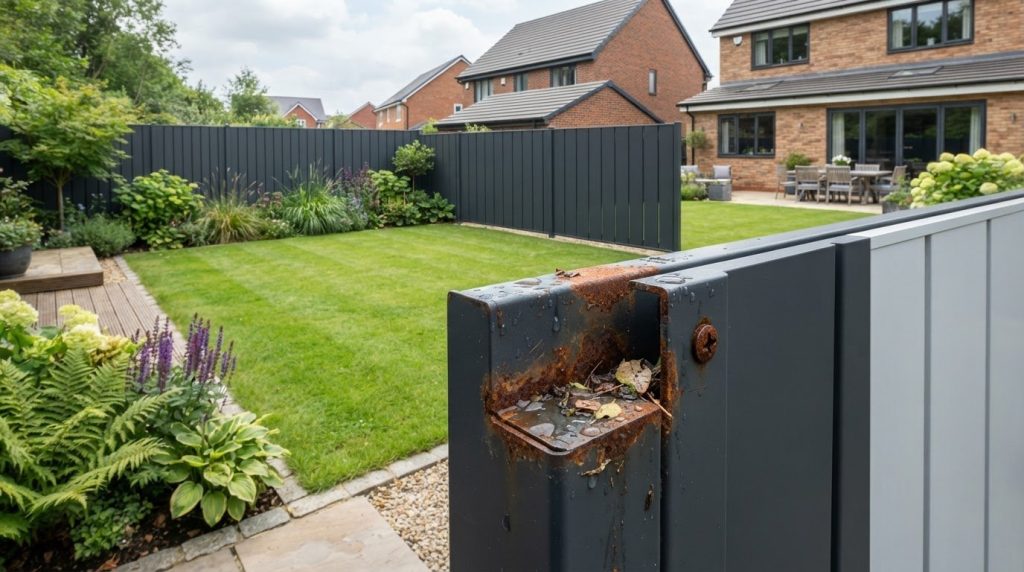
Look for reddish-brown marks, bubbling or blistering beneath the finish, and patches of paint or coating that are flaking away. These signs can indicate that moisture has reached iron-based metal, but appearance alone can’t confirm how deep the damage goes.
A surface mark may be limited to discolouration, while deeper corrosion can involve material loss, pitting or a weakened area. Check joints, edges and scratches more closely, as finishes can be thinner or damaged there, leaving the underlying metal more exposed. If a spot returns or spreads after cleaning, note its size and check the surrounding finish.
Does every metal fence rust in the same way?
No. Iron-based metals such as steel can develop rust, whereas aluminium corrodes differently and does not produce iron rust. Aluminium forms a thin oxide layer when exposed to air, which can help protect the metal beneath it. That doesn’t mean every aluminium fence is immune to surface changes, or that all steel fences have the same rust risk.
The word “metal” alone doesn’t tell you how well a finished fence will resist corrosion. A protective coating can act as a barrier, but its performance depends on the product, the material beneath it and whether the finish stays intact. When comparing fences, look at the stated material, finish and care requirements. Don’t assume a fence is rust-proof or judge its durability from appearance or colour alone.
For garden owners, the practical takeaway is simple: identify the metal, look for damage to the finish and treat rust marks as a prompt to inspect, not proof that the whole fence needs replacing. The next step is understanding how water, oxygen and everyday wear can create the conditions for corrosion.
What causes metal fence panels to rust or corrode?
Rain alone doesn’t make a steel fence rust straight away. Rust develops gradually when iron in the steel is exposed to oxygen and moisture. A protective finish is designed to separate the metal from those conditions. If that barrier is damaged, the exposed area may be more vulnerable.
How moisture and oxygen lead to rust
Iron rusts when it is exposed to both oxygen and water, with prolonged or repeated dampness giving the reaction more opportunity to occur. A passing shower followed by drying is different from moisture that remains on a surface or collects in a sheltered spot. In the UK, changing weather can repeatedly wet fence panels, so drainage and how quickly surfaces dry can affect exposure.
Steel corrosion is an electrochemical process, and surrounding conditions influence how it develops. That’s why there’s no reliable universal timeline for rust. Material, construction, protective finish, damage and exposure all vary between fences.
Why damage and fence details matter
A chip, scratch or cut edge can interrupt a protective finish and leave the metal beneath more exposed. Damage might happen during handling, fitting or everyday use. Even a small mark doesn’t mean rust will appear immediately, but it’s a useful place to check after wet weather and during routine inspections.
Moisture can also linger where water drains poorly or where dirt and debris collect against the panel. Leaves caught at the base, for example, may stay damp and keep the surface wet for longer. Joints and fixings deserve attention too, as their shapes can create sheltered spots where water and grime are harder to clear.
Inspect the whole panel, not just its broad, flat face. Look along edges, around joints and fixings, and wherever the finish appears chipped or scratched. Clear away accumulated leaves and dirt, and note whether water sits in a particular area. These checks help you spot conditions that could increase exposure without assuming every mark signals serious damage.
If you’re considering steel panels and want to reduce routine upkeep, explore maintenance-free steel fence panels. EnduroFence panels are designed to be weather-resistant and require no painting or treatment. This maintenance benefit doesn’t mean steel can never corrode.
Steel, aluminium and protective finishes: what changes rust risk?
If you’re asking “do metal fences rust?”, the material is only part of the answer. Steel and aluminium behave differently, and a panel’s finish can affect how well its surface is protected. Use the comparison below as a general guide, then consider the care information for the specific product.
| Material | How it behaves | What to consider |
|---|---|---|
| Steel | Iron-based steel can form rust if moisture and oxygen reach it. | Check what protective finish is used and whether it is intact, especially around edges and fixings. |
| Aluminium | Aluminium doesn’t form iron rust, but it can corrode. Its natural oxide layer can help protect the metal beneath. | It isn’t immune to environmental wear or surface damage. Consider the condition and finish of the complete product. |
Steel versus aluminium fencing: is rust the same concern?
No. Rust specifically affects iron and iron-based metals such as steel. Aluminium corrosion is different and doesn’t produce the familiar reddish-brown iron rust. This distinction helps explain why the word “metal” alone can’t tell you what signs to look for or how a fence may respond to exposure.
Neither material should be treated as immune to wear. A finish can be scratched, and surrounding conditions still matter. Compare the panel construction and product information rather than relying on a broad claim about steel or aluminium.
How a protective finish affects steel fence rust
A finish can act as a barrier between steel and the moisture and oxygen that contribute to rust. Products may use different protective systems, and a coating’s name alone doesn’t establish how well a specific fence will perform. If a protective layer is chipped or scratched, the exposed area may be more vulnerable than the intact surface around it.
Look for clear, product-specific information about coatings or corrosion resistance. Don’t assume that a steel fence is galvanised or powder-coated unless its product information says so, and don’t treat a particular finish as a guarantee against rust.
EnduroFence panels have profiled steel outer sheets and a high-density insulated core. They’re designed to be weather-resistant and require no painting or treatment, which describes their practical upkeep. It doesn’t establish a particular coating type or mean steel can never corrode. Consider the stated maintenance requirements when comparing panels.
How to inspect a metal fence and reduce avoidable rust
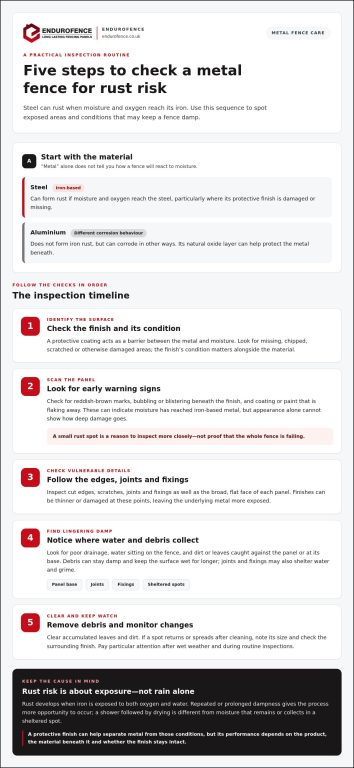
A quick visual check can help you spot changes before they become harder to assess. If you’re wondering “do metal fences rust?”, remember that an inspection can reveal warning signs and moisture traps, but it can’t guarantee against corrosion. Check the fence periodically, particularly if you notice damage or areas that stay damp.
A straightforward visual check for rust
Walk along both accessible sides of the fence and look for reddish-brown discolouration, bubbling, flaking or scratches in the surface finish. Pay close attention to lower edges, joints and fixings, as well as places where water or garden debris may collect. A small mark may be superficial, but its appearance alone won’t show how far any corrosion extends.
Use this simple routine:
- Scan the panel faces. Look for colour changes, blisters, flakes, dents or scratches in the finish.
- Check edges and joins. Examine cut or lower edges, panel joints and fixings for damage, staining or signs that moisture lingers.
- Clear moisture-holding debris. Remove leaves and accumulated dirt from against the fence, especially around its base and sheltered details.
- Keep an eye on changes. Note where marks appear and whether they spread, return or are accompanied by flaking or visible surface damage.
What to do when you find a rust spot
First, identify the panel material and refer to its manufacturer’s care instructions. Cleaning methods and suitable repairs vary by product. Avoid automatically sanding or painting a mark: abrasive work may damage a protective finish, while an unsuitable coating could affect the panel’s intended care or appearance.
A small, isolated mark isn’t proof that the whole fence is failing. More extensive flaking, repeated rust staining or visible material loss warrants closer attention, but a visual check can’t establish the full condition of the metal. Follow product-specific guidance rather than applying a universal treatment, and don’t assume regular maintenance can prevent every form of corrosion.
If you’d prefer steel fencing designed to avoid routine painting or treatment, explore maintenance-free fence panels. EnduroFence panels are designed to be weather-resistant, though this upkeep benefit isn’t a guarantee that steel can never corrode.
Can steel fence panels be a low-maintenance choice?
Yes. Steel’s potential to rust and a panel’s day-to-day maintenance requirements are related, but they aren’t the same thing. Steel is iron-based, so corrosion is possible if conditions allow it. A panel described as requiring no painting or treatment has different routine care expectations from one that needs regular repainting. That description shouldn’t be read as a promise that rust can never occur.
What low-maintenance steel fencing means in practice
EnduroFence panels have profiled steel outer sheets and a high-density insulated core. They’re designed to be weather-resistant and require no painting or treatment, so routine upkeep doesn’t involve repainting or surface treatment. This can make maintenance simpler, but it’s still worth checking the fence occasionally.
Keep the distinction practical: no painting or treatment is a stated maintenance benefit, not a guarantee against corrosion or a reason to ignore visible damage. If a panel is scratched or marked, or has debris held against it, follow the care guidance for that product. Avoid adding paint or applying treatments unless the manufacturer’s instructions recommend them. This keeps upkeep aligned with the panel’s specified requirements rather than assumptions about steel fencing in general.
How EnduroFence panels fit existing concrete posts
EnduroFence panels are designed to fit into existing concrete posts, making them an option when replacing fence panels while keeping those posts. Installation is designed to be straightforward and doesn’t require specialised tools or qualifications. The focus is on a practical panel swap, rather than adding a new concrete-post installation to the project.
Choosing a low-maintenance panel still involves considering the existing fence structure and the product’s care information. A panel’s material, construction and stated maintenance requirements give a clearer picture than the word “metal” alone. If you’re still asking “do metal fences rust?”, the answer for steel remains that rust is possible, but the appropriate finish and care instructions matter to how a specific panel should be looked after. Avoid relying on broad claims about lifespan or corrosion resistance when choosing a panel. Look at its stated features and care requirements instead.
For a lower-upkeep approach, EnduroFence steel panels offer the stated benefit of no painting or treatment and are designed to fit existing concrete posts. Explore the available panel colours and finishes to see the options for your garden.
Choose a fence that suits your garden and upkeep plans
So, do metal fences rust? Steel can rust if moisture reaches its iron, while aluminium corrodes differently. The risk depends on the material, protective finish, damage and exposure, so treat a rust mark as a reason to inspect rather than assume the whole fence is failing.
Look closely at edges, joints and fixings, where damage or trapped debris can keep areas damp. Follow the care instructions for the specific panel, and avoid assuming that every metal fence needs the same treatment. A low-maintenance specification can reduce routine work, but it isn’t a guarantee against corrosion.
EnduroFence panels have profiled steel outer sheets and a high-density insulated core. They’re designed to fit existing concrete posts and are described as weather-resistant, with no painting or treatment required. If you’re looking for a practical steel fencing option, explore EnduroFence maintenance-free steel fence panels and their available colours and finishes. Choose a panel based on its construction and care requirements, then visit EnduroFence to explore the range.
Frequently Asked Questions
Do metal fences rust?
Yes, some metal fences rust, particularly those made from iron-based metals such as steel when moisture and oxygen reach the metal. The risk depends on the material, protective finish, damage and exposure. Aluminium doesn’t form iron rust, although it can corrode in other ways. Check the fence’s material and care information, and inspect marks or damaged finishes rather than assuming every metal fence behaves alike.
Can steel fences rust in the rain?
Yes, steel can rust if rainwater reaches exposed iron and the surface stays damp. A protective finish helps separate the steel from moisture, but scratches, chips or damaged edges may leave areas more vulnerable. Rain alone doesn’t mean a fence will rust immediately. Repeated wetting, poor drainage and debris holding water against the panel can all affect exposure, so check sheltered joints and lower edges too.
How do I stop a metal fence from rusting?
You can reduce avoidable rust risk, but no general maintenance routine can guarantee that corrosion won’t occur. Keep leaves and dirt from building up against the fence, and look for scratches, chips, flaking or rust marks during occasional checks. Identify the panel material and follow its manufacturer’s care instructions if the finish is damaged. Avoid applying paint or treatment unless the product guidance recommends it.
Does galvanised steel fencing rust?
Yes, galvanised steel can rust if its protective zinc layer is damaged or no longer protects the underlying steel. Galvanising helps guard steel against corrosion, but it shouldn’t be treated as an absolute guarantee. The level of protection depends on the specific product and its condition. Look for manufacturer information about the galvanised finish, and pay particular attention to scratches, cut edges and joints during inspections.
Is aluminium fencing rust-proof?
Aluminium doesn’t rust in the iron-based sense, because it contains no iron to form rust. It can still corrode or show surface wear, so “rust-proof” can be misleading if it suggests the fence is immune to environmental effects or damage. Aluminium naturally develops an oxide layer that can help protect the metal beneath. The finish and care guidance for the particular fence remain useful considerations.
What should I do if I find rust on my fence?
First, identify the fence material and check the manufacturer’s care guidance. A small rust mark doesn’t automatically mean the whole fence is failing, but note whether it spreads, returns or appears alongside flaking or visible material loss. Don’t automatically sand or paint the area, as an unsuitable repair could damage the finish. For more extensive corrosion, use product-specific guidance rather than relying on appearance alone to judge the damage.
Do steel fence panels need painting?
It depends on the panel and its stated maintenance requirements. Some steel panels may need protective treatment or repainting, while others are designed not to require it. EnduroFence panels have profiled steel outer sheets and a high-density insulated core, and are described as weather-resistant with no painting or treatment required. That’s a maintenance benefit, not a guarantee that steel can never corrode. Follow the care guidance for your panel.

Leave a Reply