

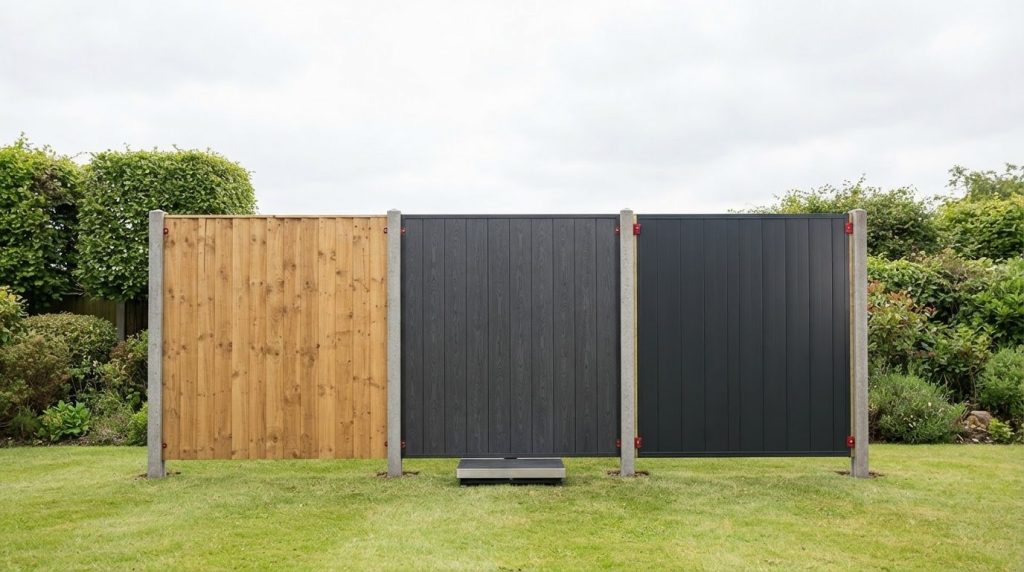
Fence Panel Weight Comparison: How to Compare Materials and Choose
The lightest fence panel isn’t automatically the easiest choice for a replacement. A useful fence panel weight comparison starts with matching dimensions and construction, because published figures can describe panels of different heights, widths and build-ups.
If you’re replacing a panel yourself, consider how manageable it will be to lift and position, as well as whether it will fit the posts already in place. Weight alone can’t answer either question. Panel shape, dimensions, fitting method and the existing fence layout all matter.
This guide explains how to compare timber, composite and steel panel weights fairly, what construction can mean for handling, and which details to check before choosing a replacement. It also covers compatibility with existing concrete posts. EnduroFence steel panels use profiled outer sheets with a high-density insulated core and are designed to fit existing concrete posts. They offer a maintenance-free option for homeowners replacing timber panels. By the end, you’ll have a practical checklist for assessing specifications and choosing a panel that suits your project.
Key Takeaways
- Make a fair fence panel weight comparison by matching panel dimensions and construction, not just material.
- Check what each stated weight includes, such as fixings or accessories, before comparing figures.
- Consider panel shape and size as well as weight when planning how to lift and manoeuvre it.
- Record the specification source and date so you can review product details consistently.
- Before choosing a replacement, check how its dimensions and construction fit your existing posts and fence layout.
Fence panel weight comparison: why the number needs context
A panel weight is the stated mass of one specified fence panel. It doesn’t automatically include the posts, fixings or other parts needed for a complete fence. Keep that distinction clear when planning what you’ll need to lift, carry and fit during a DIY replacement.
Panel weight is the mass of the panel alone, as described in its specification; total fence-system weight includes other components only when they’re explicitly counted. For a useful comparison, note the panel’s dimensions and construction alongside its weight. A figure without those details gives little basis for comparing products.
Fence designs vary, so a meaningful weight comparison depends on specifications for the particular panels you’re considering. General types of fences and materials differ in purpose and design, but material alone won’t tell you how much a panel weighs. A lighter panel isn’t automatically weaker or easier to install, and a heavier one isn’t automatically stronger. Shape, balance and the way a panel fits its posts can also affect handling.
What does a fence panel weight usually include?
Check whether the stated mass refers to the panel alone or includes fixings and accessories. Record its height and width, along with any stated thickness. These details help you spot when two figures refer to different-sized products or different amounts of material. Keep panel-only weights separate from figures for a complete fence system.
Why can two panels of the same material weigh differently?
Dimensions and design affect how much material goes into a panel. A taller or wider panel may contain more material than a smaller one, while variations in thickness, framing and infill can also change its mass. The material name alone doesn’t settle the comparison.
Solid, open and insulated designs have different constructions, so compare the specifications rather than assuming which will weigh more. EnduroFence panels, for example, have profiled steel outer sheets and a high-density insulated core. That describes their construction, but it isn’t a weight figure or a basis for an unsupported comparison with timber.
When comparing products, use stated weights for the exact panel dimensions and construction you’re considering. If a weight isn’t given, leave it out of the direct comparison rather than estimating. That keeps your fence panel weight comparison useful for assessing handling, compatibility and the fence layout.
Compare timber, steel, composite and concrete fence panels fairly
A useful fence panel weight comparison relies on product specifications that match in size and explain how each panel is built. Use the table as a checklist of the details to compare. Panel weights vary by product, so compare stated figures only when the dimensions and construction are clear.
| Material | Height and width | Construction | Panel-only weight |
|---|---|---|---|
| Timber | Record the exact product dimensions | Check the design, including framing and infill | Compare the stated weight for that panel |
| Insulated steel | Record the exact product dimensions | EnduroFence uses profiled steel outer sheets with a high-density insulated core | Compare the stated weight for that panel |
| Composite | Record the exact product dimensions | Check the design and build of the specific panel | Compare the stated weight for that panel |
| Concrete posts | Measure the existing post slots and panel opening | Posts are a separate component from the fence panel | Keep post weight separate from panel weight |
Concrete posts are a separate component, not a concrete fence panel. A historical reference on the construction of concrete fence posts describes post construction, while your comparison should focus on the dimensions and specification of the products in your fence layout.
Which details make a material comparison like-for-like?
Compare panels with the same height and width wherever possible. Record the construction too, such as whether a design is solid, slatted or insulated. Use the stated weight for the exact product and dimensions. If sizes or construction differ, make that clear instead of treating the figures as a direct comparison.
How does insulated steel construction differ from timber?
Material names don’t tell you enough to predict weight, handling effort or whether a panel suits your fence. Timber designs vary, just as steel panels vary by their build. EnduroFence panels have profiled steel outer sheets and a high-density insulated core. Compare their stated dimensions and weight with those of a specific timber panel before drawing a conclusion about which weighs more.
For a replacement, compare the panel specification with the posts and layout it needs to fit. EnduroFence panels are designed for existing concrete posts, and homeowners can replace timber panels without specialised tools or qualifications. Explore maintenance-free steel fence panels as one option for a retrofit.
What panel weight means for handling, posts and replacement
A panel’s stated weight helps you plan a replacement, but it’s only one part of the job. Its height, width and shape affect how easily you can carry it through a garden, turn it into position and align it with the posts. A broad panel can be awkward to manoeuvre, even when its listed mass seems manageable.
Panel weight alone can’t confirm that a post is suitable; compatibility depends on the panel dimensions, post condition, slot fit and the guidance for the complete system. Check these details before choosing a replacement. A panel’s similarity in weight to the old one doesn’t confirm that it will fit.
Does a heavier panel automatically need different posts?
Not necessarily. Post suitability depends on more than the panel’s mass. Inspect existing posts for visible damage or movement, measure the slot dimensions and compare them with the replacement panel’s profile and width. Check how the panel is secured and follow the product’s compatibility guidance. These details help you assess whether the panel is intended for your layout, alongside any product-specific structural information.
The complete fence system includes posts and fixings as well as panels, and ground and site conditions also form part of the installation. A standalone panel weight doesn’t describe the demands on the whole structure. General information about steel fence characteristics and benefits can help explain material considerations, but the fit of a particular panel depends on its specifications and your existing posts.
How can panel weight affect DIY handling?
Plan the route from where you’ll collect or receive the panel to the fence before you start. Check the panel’s stated weight and dimensions, then consider gates, steps, narrow paths and space to turn it upright. Bulky panels may be difficult to control in confined areas, regardless of material. Don’t assume one person can safely lift every panel. If the size or handling feels uncertain, arrange suitable help rather than trying to manage an awkward lift alone.
- Measure the opening and check the post slots before selecting a replacement.
- Use the panel’s exact dimensions and stated weight to plan its movement.
- Keep the panel and any included fixings or accessories distinct when reviewing specifications.
- Follow the fitting and compatibility guidance for the chosen panel.
For homeowners replacing timber panels in existing concrete posts, EnduroFence panels are designed for that retrofit layout. They use profiled steel outer sheets with a high-density insulated core. Consider the intended fit alongside handling and maintenance needs, rather than relying on weight as the deciding factor.
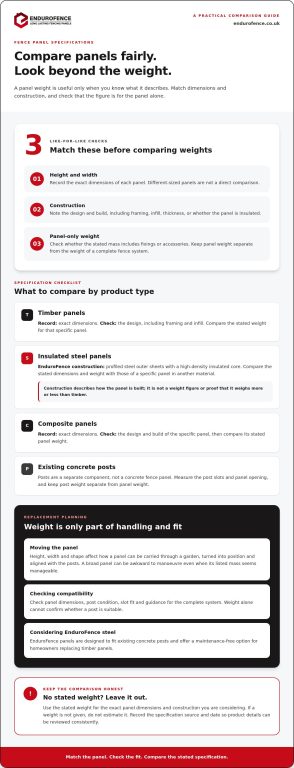
How to compare fence panel specifications before choosing
A consistent checklist helps you separate useful specifications from figures that aren’t directly comparable. For a practical fence panel weight comparison, run the same checks for each option, then shortlist panels that suit your fence layout and intended use.
A simple checklist for comparing panel specifications
- Match the dimensions. Record the panel’s height and width. Compare like-sized panels where possible, and flag differences rather than treating them as equivalents.
- Identify the construction. Note the material and design, such as solid, slatted or insulated. A material label alone doesn’t describe the full build.
- Check the stated weight. Use the product specification. Confirm whether the figure is for the panel alone or includes fixings and accessories.
- Assess compatibility. Compare the panel dimensions and fitting method with your existing posts and fence layout. Consider intended use alongside weight.
Keep the details together in one table so gaps are easy to spot:
- Panel: material and construction
- Size: height and width, plus thickness if stated
- Weight: stated figure and what it includes
- Reference: product specification source and the date you checked it
- Fit: post type, slot dimensions and fitting method
If the dimensions differ, keep the weights separate rather than presenting them as a direct comparison. Don’t fill gaps with an average or assume that a weight refers to a panel rather than a complete fence system. This keeps your shortlist grounded in specifications instead of guesswork.
When is retrofit compatibility more useful than weight alone?
If your existing concrete posts are suitable to retain, the replacement panel needs to fit their slots and your fence layout. A low weight won’t help if the dimensions or fitting method are incompatible. EnduroFence panels are designed to fit existing concrete posts, giving homeowners replacing timber panels a maintenance-free steel option. Their construction uses profiled steel outer sheets and a high-density insulated core.
When matching panels to concrete posts, compare the panel dimensions, post slots and fitting method as well as weight. Once you’ve recorded construction and fit, explore EnduroFence panel options as part of your retrofit shortlist.
Choosing a fence panel that suits your project and existing posts
A useful fence panel weight comparison can narrow your options, but the lowest or highest figure won’t choose the right panel for you. Balance the stated weight with the panel’s dimensions, construction, intended use and compatibility with your posts. A good match should suit the fence layout and your priorities for handling and maintenance.
When might a maintenance-free steel panel suit a replacement project?
If you’re replacing timber panels and want a low-maintenance alternative, steel is one option to consider. EnduroFence panels are made with profiled steel outer sheets and a high-density insulated core. They’re designed to fit existing concrete posts, making them relevant to homeowners whose current layout uses those posts.
That construction describes what the panels are made from, not how much they weigh or how easy they are to handle. Don’t infer weight, strength or installation effort from the material alone. Use the panel’s stated dimensions, weight and fitting guidance to decide whether it suits your project.
What should you do before making a final comparison?
Before settling on a panel, review each shortlisted option against the same practical checks:
- Confirm the dimensions. Match the stated height and width to the opening and existing fence layout.
- Check the construction. Note the material and whether the design is solid, open or insulated.
- Use a stated weight. Check the product specification and whether the figure applies to the panel alone or includes accessories.
- Assess the posts. Look at their condition, measure the slots and compare these with the chosen panel’s fitting requirements.
- Plan handling. Use the stated weight and dimensions to think through carrying, turning and positioning the panel. Neither figure alone tells the whole story.
When a weight or dimension doesn’t match the panel you need, don’t rely on an estimate to make a direct comparison. Base your decision on the details that apply to your fence, and weigh practical fit against your maintenance priorities.
For a timber-panel replacement in existing concrete posts, EnduroFence offers maintenance-free steel panels designed for that retrofit. View maintenance-free EnduroFence panels to see whether they suit your project.
Choose your next fence panel with confidence
A useful fence panel weight comparison starts with matching dimensions and construction, then checking what each stated weight includes. Those details make figures more meaningful, but weight alone can’t tell you whether a panel will be manageable to move or compatible with your existing posts.
Before choosing, compare the panel’s height, width and build with your fence layout. Check the condition and slot dimensions of existing posts, and use product specifications to plan handling. A panel that suits the posts and your maintenance needs may be a better fit than one chosen on weight alone.
For homeowners replacing timber panels in existing concrete posts, EnduroFence offers maintenance-free steel panels made with profiled steel outer sheets and a high-density insulated core. They’re designed to fit existing concrete posts. Explore maintenance-free EnduroFence panels to find an option for your replacement project. With these checks in place, you can make a considered choice that suits your fence layout.
Frequently Asked Questions
How much does a standard fence panel weigh?
There’s no single weight that applies to every standard fence panel. The figure varies with the panel’s dimensions, material and construction. Check the product specification and note the stated height and width beside the weight. For a fair fence panel weight comparison, compare panels of similar sizes and check whether each figure refers to the panel alone or includes fixings and accessories.
Is a heavier fence panel always stronger?
No. Weight alone doesn’t establish a panel’s strength, durability or suitability. These depend on factors such as its materials, design, construction and how the complete fence system is fitted. Compare product specifications rather than drawing conclusions from weight figures, especially if the panels have different dimensions or build-ups. A heavier panel isn’t automatically the better choice for your project.
Are steel fence panels heavier than timber panels?
There’s no reliable general answer without comparing specific panels of similar dimensions and construction. Steel and timber designs both vary, so the material name alone can’t tell you which panel weighs more. Check each product’s stated weight and confirm whether it applies to the panel alone. Treat comparisons between unmatched sizes or based only on broad assumptions about materials with caution.
Can existing concrete posts support replacement fence panels?
Compatibility depends on the posts’ condition and dimensions, the slot size and the replacement panel system. Compare the panel’s measurements with your existing layout, then follow the fitting guidance. EnduroFence panels are designed to fit existing concrete posts, making them an option to consider when replacing timber panels. Include post compatibility alongside weight when narrowing your choices.
Does fence panel weight include posts and fixings?
It depends on what the product specification describes. A weight may refer to the panel alone or to a wider system that includes posts, fixings or accessories. Read the specification carefully and record exactly what is included. For a fair comparison, keep panel-only figures separate from complete-system weights, rather than combining measurements that describe different products or components.
What happens if I compare panels with different dimensions?
The comparison may mislead you, because a larger panel can weigh more simply because it uses more material. Record each panel’s height and width beside its stated weight, and compare similar sizes where possible. If the dimensions differ, make that clear and don’t present the figures as a direct comparison of materials. Also check construction and whether accessories are included.

Leave a Reply