

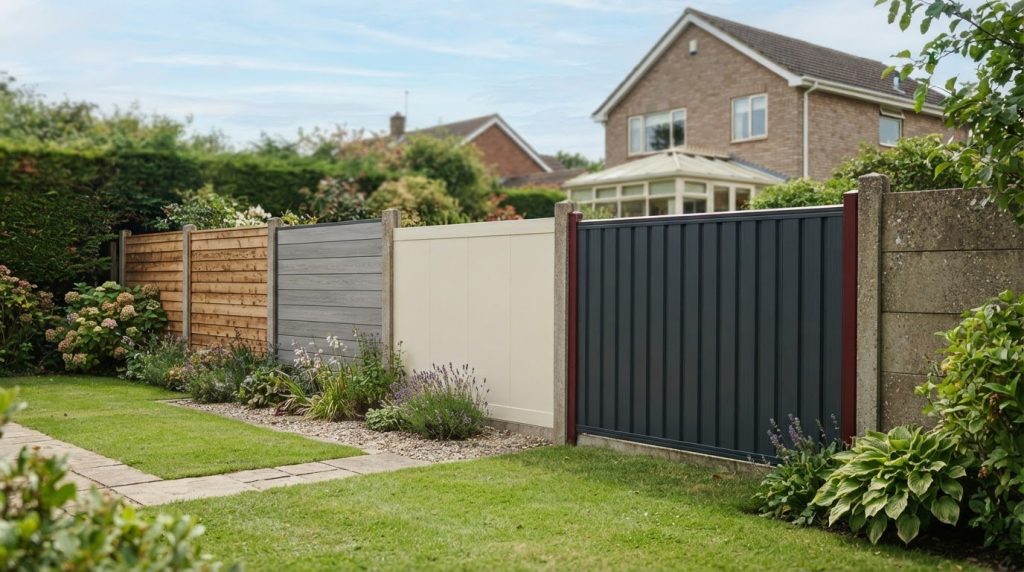
Best Material for Fence Panels: How to Choose the Right Option
Could the most familiar fence panel be the one that creates the most work? Timber has a traditional garden look, but regular painting or treatment can make upkeep a deciding factor. Choosing the best material for fence panels means balancing appearance with maintenance, privacy and how well replacement panels fit your existing boundary.
If you’re weighing up timber, composite and metal, a clear comparison can help you avoid taking on maintenance you would rather not do. Consider the finish you prefer, the screening you need and the time you’re willing to spend on care. Check your existing posts before choosing, too. EnduroFence steel panels have profiled steel outer sheets and a high-density insulated core. They’re designed to fit existing concrete posts and need no painting or treatment, making them an option for homeowners seeking a lower-maintenance replacement.
Key Takeaways
- The best material for fence panels depends on the balance you want between upkeep, appearance, privacy and fit with your existing boundary.
- Compare timber, composite, PVC and steel by their care requirements and appearance, rather than assuming one material suits every garden.
- Decide how much privacy you need and how much ongoing maintenance you’re prepared to take on before narrowing down your options.
- Measure your existing posts and panel space before choosing a replacement, so compatibility is part of the decision from the start.
- If reducing upkeep is a priority, EnduroFence steel panels are designed to fit existing concrete posts and need no painting or treatment.
Best material for fence panels: what should you consider first?
No material is best for every garden. The right choice depends on what you need the boundary to do, the appearance you want, how much upkeep you’ll take on, the privacy you need and whether new panels will fit the posts already in place.
Start with your priorities, not a material label. A natural finish may matter most in one garden, whilst another homeowner may put reduced maintenance first. Panel design affects privacy: the way boards or sections are arranged determines how much of the garden is screened. Durability also matters, but it depends on more than the material alone.
The right fence panel material suits its intended use, your maintenance preferences and the boundary it needs to fit. Material quality, panel construction, finish and fit all influence how a fence performs. Compare the complete panel rather than relying on broad claims about a material.
What does “best” mean for a garden fence?
Be clear about the outcomes you care about. Low maintenance means less time and effort spent keeping panels presentable. Service life is a separate consideration, influenced by the panel’s construction and how it is exposed and cared for. Privacy depends on the panel’s coverage, whilst appearance comes down to your garden style and personal preference.
These priorities don’t always point to the same choice. You might like the character of timber but want to avoid regular treatment, or prefer a clean, contemporary finish to a traditional look. Composite and PVC are synthetic fence options with different material properties; the synthetic fence overview discusses these categories. Compare each option with your own needs rather than searching for a universal winner.
Which garden and boundary details affect the choice?
Consider the conditions along the boundary. A fence in an exposed position faces different weather conditions from one sheltered by buildings or planting. Think about how much privacy you want and what you’d like to see from inside the garden. Then consider how the panel’s colour, texture and proportions will sit with the house, paving and planting.
Check what supports the existing fence before choosing replacement panels. Your boundary may have concrete posts or another support system. Panel dimensions and construction need to suit the available space and fit securely with those supports. A material that looks right but doesn’t meet the boundary’s requirements may create extra work.
Before comparing materials, note down:
- Whether privacy or an open, decorative boundary matters more.
- How much ongoing care you’re willing to do.
- The style and finish that will complement the garden.
- Whether existing posts will stay, and the panel measurements they require.
These priorities give you a practical basis for comparing timber, composite, PVC and steel, including the details that matter beyond appearance.
How timber, composite, PVC and steel fence panels differ
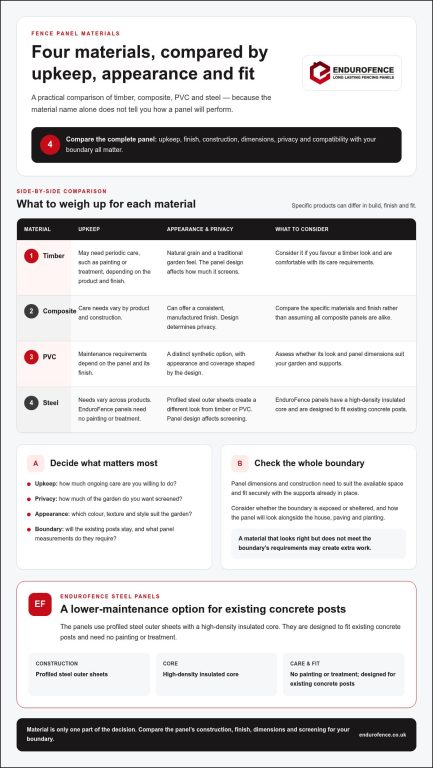
Each material offers a different balance of upkeep, appearance and construction. Timber has a familiar natural look, whilst composite, PVC and steel provide alternatives with their own finishes and design possibilities. The table is a starting point, not a guarantee of how a particular panel will perform. Products in the same category can differ in build, finish and fit.
Material labels alone don’t determine panel performance. Construction, finish, dimensions and suitability for the boundary matter too.
| Material | Upkeep | Appearance and privacy | Suitability to consider |
|---|---|---|---|
| Timber | May need periodic care, such as painting or treatment, depending on the product and finish. | Natural grain and a traditional garden feel; panel design affects screening. | Consider it if you favour a timber look and are comfortable with its care requirements. |
| Composite | Care needs vary by product and construction. | Can offer a consistent, manufactured finish; design determines privacy. | Compare the specific materials and finish rather than assuming all composite panels are alike. |
| PVC | Maintenance requirements depend on the panel and its finish. | A distinct synthetic option, with appearance and coverage shaped by the design. | Assess whether its look and panel dimensions suit your garden and supports. |
| Steel | Needs vary across products; EnduroFence panels need no painting or treatment. | Profiled steel outer sheets create a different look from timber or PVC; panel design affects screening. | EnduroFence panels are designed to fit existing concrete posts. |
Timber and composite panels: appearance versus upkeep
Timber’s grain and familiar garden style can make it appealing, but some panels need ongoing painting or treatment. Composite is a separate material category, not simply another name for plastic. Its composition, surface finish and construction vary between products, so compare the particular panel rather than relying on the category name alone.
PVC and steel panels: practical differences to weigh
PVC and steel have different visual finishes and panel construction. Steel panels can also vary, so don’t assume every metal fence has the same build or care requirements. EnduroFence panels use profiled steel outer sheets with a high-density insulated core. They’re designed to fit existing concrete posts and don’t need painting or treatment.
For a fair comparison, look beyond the material name. Check the panel’s construction, finish, dimensions and how its design delivers the privacy you want. Then check that it suits your existing support system. If you’re comparing steel as a lower-upkeep replacement, EnduroFence steel fence panels are designed for existing concrete posts.
Which fence panel material suits your priorities best?
Choose according to the job you need the fence to do, not an overall ranking of materials. A homeowner who wants to avoid routine panel care may decide differently from someone who values a natural finish or needs to screen a particular view. The best material for fence panels is the option that meets your priorities and works with the boundary you have.
Put your preferences in order. If two matter equally, look for a panel that addresses both, then check its size and construction against your supports. Think of the fence as a complete system: the material needs to give you the look and coverage you want, as well as fit the posts or other supports that will remain.
What material suits a low-maintenance garden?
Check the panel’s finish and stated care requirements, not only its base material. Panels made from the same material can differ in construction and finish, so the category alone won’t tell you how much attention a particular option needs.
Maintenance-free steel panels are worth considering if you want to reduce routine panel care. EnduroFence panels use profiled steel outer sheets with a high-density insulated core, and don’t need painting or treatment. This applies to these panels specifically, not every steel fence. If a natural appearance is your priority, weigh that preference against the care that the timber finish you choose may need.
Match the material to the outcome you value most:
- Less routine care: prioritise panels designed to avoid regular painting or treatment, and compare their specific care requirements.
- A natural garden appearance: consider timber, then weigh its look against the ongoing attention its finish may need.
- More screening: focus on the panel’s coverage and arrangement, since privacy depends on the design as well as the material.
- A particular garden style: compare the panel finish with nearby features such as the house, paving and planting.
These are starting points, not fixed rules. You may want a natural-looking boundary but have little time for upkeep, for example. That trade-off can help you decide which preference is essential and where you’re willing to be flexible.
What if you want to keep your existing concrete posts?
Make compatibility a selection criterion before settling on a panel material. Check the dimensions and construction needed to work with the posts already in place. A panel that doesn’t suit the existing supports may not be a practical replacement, even if its appearance and maintenance profile fit your plans.
Panels designed for existing concrete posts can offer a replacement option while retaining those supports. EnduroFence steel panels are designed to fit existing concrete posts, which may suit homeowners looking to keep that part of the boundary. Compare fit alongside appearance, privacy and care requirements. EnduroFence steel panels combine existing-post compatibility with reduced panel upkeep.
How to choose fence panels: a practical decision checklist
An ordered check can take you from general preferences to a panel that suits your boundary. Start with what the fence needs to do, then check the physical fit and compare the product details. This helps you judge the best material for fence panels for your garden, rather than choosing on appearance alone.
Start with your garden’s needs and existing supports
Write down why you’re replacing or adding panels. You might want more screening, a different look or less routine upkeep. Note which matters most. Then establish what is staying. If the existing concrete posts will remain, panel compatibility needs to be part of your choice from the outset.
- Set your priorities. Decide whether privacy, appearance, reduced upkeep or another practical need comes first. If you’re balancing several, rank them so you can compare options consistently.
- Choose the look and coverage. Consider how much of the boundary you want screened and which finishes will suit the house and garden. Panel design affects both appearance and privacy.
- Check the supports. Record whether concrete posts or another support system will remain. Don’t assume every panel material or design will suit the posts already in place.
- Measure the panel space. Measure the opening between supports and the required panel height. Note how the panel sits within or attaches to the supports, as construction and fit are part of the specification.
Compare product details before making a choice
With your priorities and measurements noted, compare actual panels rather than relying on broad material descriptions. Look for details about construction, finish, care requirements and intended support fit. If you’re considering a replacement designed for existing concrete posts, compare that compatibility alongside the look and upkeep you want.
- Read the construction and finish details. Check what the panel is made from and how its finish is described. Products in one material category can differ, so compare specific product information.
- Compare care requirements. Identify any stated painting, treatment or other routine care. Make sure the upkeep fits the time you’re willing to spend maintaining the boundary.
- Make a final fit-and-priority check. Revisit your measurements, supports and ranked needs. Set aside options that don’t suit the boundary, then choose from those that meet your key requirements.
Before choosing, match your priorities to the panel’s appearance, care requirements, construction, dimensions and existing supports. Keep installation planning separate from material selection, and use guidance specific to your chosen panel when preparing for a replacement. If reduced upkeep and compatibility with existing concrete posts are central to your checklist, explore EnduroFence steel panels.
EnduroFence steel fence panels: a low-maintenance option for existing posts
If you want to reduce routine panel upkeep and keep your existing concrete posts, EnduroFence steel fence panels are an option to consider. They have profiled steel outer sheets and a high-density insulated core, and are designed to fit existing concrete posts. No single material suits every garden, but these features may match the priorities you identified while comparing options.
How EnduroFence panels differ from conventional timber panels
Timber panels have a natural appearance, but their finish may need painting or treatment. EnduroFence panels take a different approach: profiled steel forms the outer sheets, with a high-density insulated core inside. They don’t need painting or treatment, which suits homeowners looking to avoid those recurring panel-care tasks. Consider them if reduced upkeep matters more to you than a timber finish.
What to expect when replacing panels in existing concrete posts
Keeping the posts can be an important part of your decision. EnduroFence panels are designed to fit existing concrete posts, offering a replacement option for homeowners whose boundary already uses that support system. Before choosing, check your measurements against the panel dimensions required for the space between your posts. Compatibility depends on the fit, not just the material.
Replacement is designed to be straightforward for homeowners, without specialised tools or qualifications. This may suit you if you’re replacing timber panels with a different material while retaining the concrete posts. The measurements and posts still need to suit the replacement panels, so use the checks in your decision process rather than assuming every existing boundary will match.
EnduroFence may suit your priorities if:
- You want panels that don’t need painting or treatment.
- Your boundary already has concrete posts you’d like to retain.
- You’re open to a steel finish instead of a traditional timber appearance.
- You prefer a replacement designed to be straightforward without specialised tools or qualifications.
These features don’t make steel the best material for fence panels in every garden. Your choice should still reflect the appearance you prefer, the privacy you need and whether the panel dimensions suit your boundary. If reducing panel upkeep and retaining existing concrete posts are high on your list, EnduroFence steel panels are a practical option to consider.
Plan a boundary that works with your garden
Before making your final choice, picture how the fence will sit in the garden once it’s in place. Consider the planting, seating areas and views you may want to keep or change. A fence is a significant part of the boundary, so its finish should work with the wider outdoor space rather than being chosen in isolation.
Look at the boundary from both sides and at different times of day. Notice which areas you want to screen, what you’d prefer to see from the house and how the fence will meet existing garden features. These observations can clarify your priorities and help you choose a panel that suits the space.
The best material for fence panels is the one that makes sense for your home and how you use your garden. If you’re considering a lower-maintenance steel option, explore EnduroFence maintenance-free steel fence panels and choose a finish that works for your boundary.
Frequently Asked Questions
What is the best material for fence panels?
There’s no single best material for every garden. The best material for fence panels depends on the appearance you prefer, the privacy you need and the amount of care you’re willing to take on. Timber may appeal if you want a traditional garden look; if you’d rather avoid painting, compare products designed for lower upkeep. Before deciding, consider how the panel will fit its supports.
Are steel fence panels better than timber?
Neither steel nor timber is automatically better. The right choice depends on the finish and practical features you value. Timber can suit a garden where a natural appearance is a priority, whilst some steel panels are designed to reduce routine care. EnduroFence panels have profiled steel outer sheets and a high-density insulated core, and need no painting or treatment. Compare the care guidance for specific panels, not just the material category.
Which fence panel material needs the least maintenance?
Maintenance depends on the individual panel’s finish and care instructions, so compare those details before choosing. A timber panel may need periodic painting or treatment, while another material may have different requirements. EnduroFence steel panels don’t need painting or treatment. Look for the stated care tasks and consider whether you’re happy to do them over time.
Can steel fence panels fit existing concrete posts?
Yes, some steel panels are designed to fit existing concrete posts, including EnduroFence panels. Fit depends on panel dimensions and the opening between the supports, so measure the space rather than relying on the material name. Record the width and height of the panel area, then compare these with the product details. This helps you identify suitable replacements while keeping the posts in place.
Are composite fence panels better than timber panels?
It depends on the particular panels and what you want from the boundary. Composite and timber differ in composition and appearance, and products in either category can have different finishes and care instructions. If you like timber’s natural look, weigh that preference against the maintenance stated for the panels. If you’re considering composite, compare its construction and finish with a specific timber option rather than treating either material as uniform.
Can I replace fence panels without replacing the posts?
Yes, provided the existing posts are suitable and the replacement panels are made to fit them. Check that the supports are usable and measure the panel space, including the opening between posts. EnduroFence panels are designed for existing concrete posts, offering an option if you want to retain those supports. Compare the panel dimensions with your boundary so your decision takes fit as well as appearance into account.
Do steel fence panels need painting or treatment?
Steel panels can have different care requirements, so follow the guidance for the specific product. EnduroFence steel panels don’t need painting or treatment, which reduces routine maintenance tasks. If you want to avoid repainting a boundary as part of regular garden upkeep, compare the stated finish and care instructions for each panel rather than assuming all steel fencing has the same requirements.

Leave a Reply