

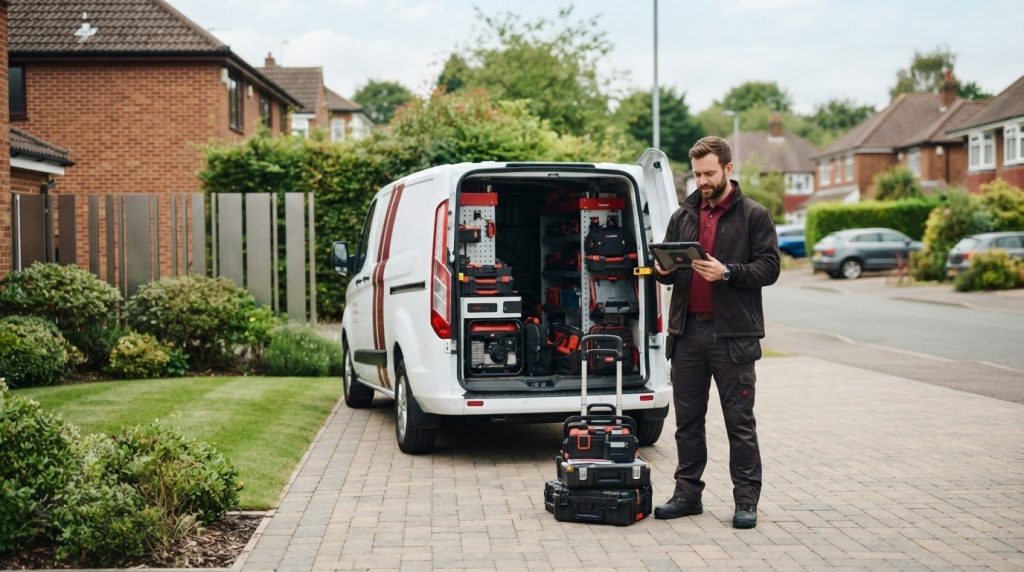
Van-based franchises: weigh the costs, support and fit
Van-based franchises account for 10% of UK franchise opportunities, but that figure doesn’t show whether one will suit your budget or working style. They can often be run locally and from home, without fixed business premises, yet vehicle costs, equipment and changing demand all affect the day-to-day picture. The best van-based franchises in the UK are the ones whose costs, training and ongoing support make sense for your circumstances, not simply the ones with the most appealing pitch.
If you’re considering the best van-based franchises in the UK, weigh the practical trade-offs before choosing an opportunity. Compare the total investment, franchisor support and day-to-day work with your skills, preferred workload and local demand. A van-based model can suit some businesses better than a shop or office, but the vehicle also brings costs and responsibilities. Judge each opportunity by how it works in practice, not just by the promise of being your own boss.
Key Takeaways
- Compare the franchise fee with setup costs, equipment and working capital to understand the full investment.
- Assess what training, day-to-day guidance and marketing support the franchisor provides, and how these fit your experience.
- Compare opportunities by sector, work pattern and equipment needs, not just by their advertised investment.
- Factor vehicle running costs, insurance, maintenance, weather and demand changes into your plans.
- Use conversations with existing franchisees to understand how the model works in practice before choosing an opportunity.
1. Pro’s and Con’s of running a van based franchise opportunity in the UK?
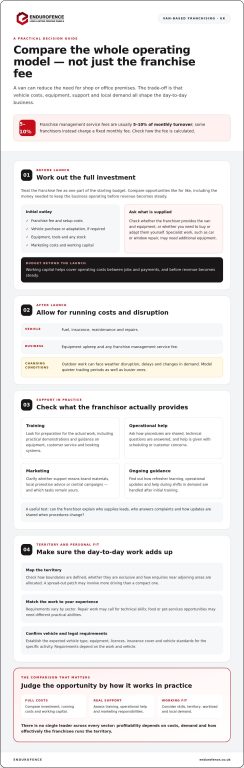
A van franchise can reduce the need for shop or office premises, and some operators work locally from home. The trade-off is that the vehicle becomes central to daily operations, bringing running costs, maintenance and repair risks. Before starting, compare the full investment with the working capital needed to keep the business operating between jobs and payments.
How do the leading UK van-based franchises compare on investment, support, brand recognition and profitability? There’s no single leader across every sector. Compare each opportunity’s total investment, training and operational support, customer recognition and evidence of trading performance. Profitability depends on costs, demand and how effectively the franchisee runs the territory.
That’s only one part of the starting budget: include setup costs, equipment and working capital. Compare like with like rather than treating the franchise fee as the full cost.
Ask whether the franchisor provides the vehicle and equipment, or whether you must buy or adapt them yourself. A car or window repair franchise, for example, may require specialist equipment in addition to a van. Fit-out needs can change the initial outlay, while stock, tools and marketing may add further expenses. Working capital helps cover operating costs before revenue becomes steady.
Running costs continue after launch. Allow for fuel, insurance, vehicle maintenance and repairs, alongside equipment upkeep and any franchise management service fees. These fees are usually 5-10% of monthly turnover, although some franchisors charge a fixed monthly fee. Check how each cost is calculated and model quieter trading periods, since outdoor work can face weather disruption, delays and demand fluctuations.
What qualifications, experience or vehicle requirements do UK van franchisees need? Requirements depend on the sector and the work involved: a repair franchise may call for technical skills, while a food or pet-services opportunity may require different practical abilities. Establish the expected experience, training, vehicle type and equipment, and whether the franchisor supplies the van.
What are the legal requirements for running a van franchise in the UK, including licences, insurance and vehicle rules? They depend on the activity and vehicle, so identify the licences, insurance cover and vehicle standards that apply to the specific work. Include suitable vehicle insurance and maintenance in your budget, then assess whether the opportunity’s costs and support suit your plans for a business of your own.
2. Franchisor training, operational support and marketing
Training should prepare you for the actual work, not just introduce the brand. Compare classroom learning, practical demonstrations and guidance on equipment, customer service and booking systems. For a pet-care franchise, assess the training and certifications provided, alongside the legal or regulatory requirements for that activity. A useful programme explains how to handle routine jobs and what to do when a customer raises an unfamiliar issue.
Operational support matters once you’re working alone in a vehicle. Find out how the franchisor shares operating procedures, answers technical questions and helps with scheduling or customer concerns. A window-cleaning operator, for example, may need clear processes for quoting, routing visits and recording completed work. Support is most useful when it addresses real tasks across the working week, rather than remaining a general promise in a brochure.
Marketing can help a new mobile business reach customers, but clarify what the franchisor actually provides. This might include approved brand materials, advice on local promotion or central campaigns. Understand which tasks remain yours, such as distributing leaflets or building relationships with local businesses. An established brand may give customers a recognisable name, but recognition alone doesn’t explain how local leads are generated or followed up.
Territory terms affect where you can work and how customer enquiries are allocated. Ask how boundaries are defined, whether they are exclusive and how the franchisor handles customers near an adjoining area. A territory with towns spread across a wide region may involve more driving than a compact area. Map the proposed patch against likely routes, customer locations and the time needed between appointments.
Compare opportunities using the same practical checklist. Request the training outline, support arrangements, marketing responsibilities and territory description in writing. Then relate each point to a typical working day: who supplies customer leads, who answers complaints, and how are updates shared when procedures change? These details help distinguish a clear operating system from brand language that sounds established but says little about everyday franchise work.
Brand recognition is only one part of the decision. Look at how consistently the franchisor presents its name, service standards and customer communications across the UK. Consider a coffee van: clear menus and consistent signage may help customers recognise the offer, while service quality still depends on the operator. Strong support should connect branding with practical tools, such as usable promotional materials and guidance for answering common customer questions.
Finally, assess whether support continues after initial training. Find out how refresher learning is delivered, how operational changes are communicated and what help is available when demand shifts. A franchisee in a seasonal sector, for instance, needs guidance for quieter periods as well as busy ones. Compare these arrangements with the territory and marketing terms to judge whether the model fits your skills and preferred way of working.
3. Van-based franchise opportunities
Van-based franchises account for 10% of UK franchise opportunities. They operate mainly from a vehicle, rather than fixed premises or a retail unit. This creates choices across service, distribution and food or drink models. Compare the daily work as well as the sector: a catering van, for example, involves different routines from a mobile repair business.
UK opportunities span window cleaning, car repair, catering, pet services, pest control, coffee, vending and signage. Oven cleaning is another service-based example to consider when comparing mobile work. Each model brings different customer interactions, equipment needs and working patterns. Decide whether you prefer a scheduled service, such as cleaning, or a product-led operation, such as a coffee van.
That range reflects different types of operation, so the headline amount alone doesn’t show what you receive. Compare the vehicle, equipment, training and working capital included in each opportunity. A vending operation and a car repair franchise may both use vans, yet their equipment and customer-handling requirements can differ substantially.
Franchise income depends on how the model earns revenue. A mobile service may charge for individual jobs or repeat visits, while a food van sells products directly. Assess customer frequency, territory size, travel time and operating costs together. For example, a route-based window-cleaning operation needs enough local bookings to make travel between appointments worthwhile.
Ownership can also involve a future resale decision. A franchise business’s appeal to a buyer may depend on its trading records, customer relationships, equipment condition and remaining franchise term. Review the agreement’s transfer process and any associated conditions before signing. This helps you understand what could affect a potential sale, rather than treating resale value as an automatic benefit.
Compare franchise opportunities by the work they involve, not just the vehicle branding. A pest-control operator may spend time diagnosing problems at customer sites, while a coffee van may depend on suitable trading locations and service periods. Consider your practical skills, comfort with customer-facing work and preferred routine. Those factors determine whether the operation fits your priorities.
To narrow your options, write down your preferred sector, working pattern and local customer base. Then compare each opportunity’s investment, equipment, training and revenue model against that list. A mobile service may suit someone who wants to travel directly to customers, while a food or beverage van may better fit someone who enjoys serving customers on the move. This comparison makes the differences between opportunities easier to judge.
4. Benefits and appeal of mobile franchising
Mobile working takes the business to customers, rather than asking them to visit a fixed location. For a home-visit service, that can mean completing work at a customer’s property and travelling directly to the next booking. This model suits people who prefer varied days and local travel. Its appeal depends on whether those journeys and customer interactions match your preferred working style.
A vehicle can also make a business visible as it moves around its area. In traffic-heavy areas, vehicles can be viewed by over 3,000 potential customers each hour. That visibility may help build familiarity with a brand, but the vehicle’s message needs to be clear. Consider whether its name and service are easy to recognise during a brief encounter.
Mobile coffee and food franchises bring the offer directly to customers. A coffee van might serve people near workplaces, while a mobile food business may attend events. These models combine travel with direct selling, so consider how you feel about serving customers and managing a vehicle-based operation. The right fit depends on the service, your routine and the places you can reach.
Event catering adds a different rhythm to mobile food work. An event can bring customers together in one location, while other trading days may require a different stop or route. Think through the practical sequence: travel to the site, prepare the offer, serve customers and pack away. The appeal lies in reaching people where they gather, rather than relying on a permanent shopfront.
Mobility can also help service operators work across a local area. A pet-care franchise, for example, may involve travelling to customers’ homes, while a repair service may visit different sites each day. Direct travel brings variety, but time behind the wheel becomes part of the working day. Map a sample route and consider how distance affects appointments and energy.
A mobile model can connect an operator with a wider customer network without a single fixed trading point. A signage franchise, for example, could work with customers at different premises, while a vending operation serves locations along a route. The business’s appeal rests on matching its offer to customer access. Consider where customers need the service and how the vehicle helps deliver it.
Before choosing, sketch a typical week for the specific franchise. Include travel, customer-facing work, vehicle preparation and any event or site visits. A coffee franchise and a mobile repair business may both use a van, yet their daily routines differ. Compare those routines with your preferred hours, travel and working environment to judge whether mobile franchising suits you.
5. Choosing a suitable franchise
Start with your priorities, then compare each opportunity against the same criteria. Write down your preferred sector, working pattern and investment capacity. A home-services franchise, for example, involves visiting customers, while delivery work centres on collecting and transporting goods. Decide which daily tasks suit your experience, energy and preferred level of customer contact. This first step narrows your shortlist to models you can picture yourself running.
Assess local demand before settling on a territory. Consider the customers each service needs and where they are likely to be found. A home-improvement franchise may depend on households needing work at their properties, while a street-based food business needs suitable places to trade. Also consider the distance between likely jobs. A broad territory can mean longer journeys, affecting how many appointments fit into a working day.
Speak with at least five existing franchisees during due diligence. Ask each about their normal working week, the support they use most and how customer demand varies. Compare answers across operators rather than relying on one account. For example, ask a franchisee in a similar area how they balance travel with bookings. Their experience can help you understand how the model works beyond its sales description.
Match the role to your skills and preferred routine. A mobile repair business may involve diagnosing faults at customer sites, while a delivery franchise centres on reliable collections and drop-offs. Home services can require regular customer communication and work inside or around properties. Think through a typical day, including travel, administration and hands-on tasks. A realistic picture helps distinguish an appealing idea from work you’ll enjoy doing consistently.
Read the franchise agreement and compare its practical terms before deciding. Note the territory boundaries, training arrangements, ongoing fees and any limits on how the service operates. Make a separate list of questions about marketing responsibilities and customer enquiries. For example, establish how bookings are allocated when a job falls near a territory boundary. Clear written terms make it easier to compare opportunities on equal terms.
Build a simple comparison table for your shortlist. Give each opportunity its own column, then record investment requirements, vehicle and equipment needs, territory, support and expected working pattern. Add evidence from franchisee conversations beside promotional claims. This helps you see which model best fits your priorities, rather than choosing by brand familiarity alone. Keep the table focused on factors that affect your ability to operate locally.
Make the final choice by testing the strongest option against your priorities again. Check that its customer base, daily tasks and territory suit your circumstances. If franchise ownership is your next step, explore franchise opportunities and consider how the model aligns with the working life you want.
EnduroFence: Maintenance-Free Fence Panels
EnduroFence offers a franchise opportunity in the home-improvement sector, alongside Maintenance-Free Fence Panels, Post Covers and Retro Fitting Panel Swap. Its steel panels are designed to fit existing concrete posts, giving homeowners a way to replace timber fence panels without painting or treatment. The panels have profiled steel outer sheets and a high-density insulated core, designed for durability, weather resistance and security.
This is relevant if you’re considering franchise ownership in fencing or home improvement, rather than comparing mobile service models alone. The panel replacement option may appeal to homeowners looking to replace timber panels without painting or treatment. Explore EnduroFence if this sector matches your interests, and visit endurofence.co.uk to find out more.
Choose a franchise path that fits your next move
Make your shortlist work for you by deciding what kind of business you want to build, not just which opportunity looks appealing. The best van-based franchises in the UK may suit people who value mobile work, while a home-improvement franchise offers a different route into business ownership. Choose the model that aligns with the customers and work you want to focus on.
EnduroFence offers a franchise alongside Maintenance-Free Fence Panels, Post Covers and Retro Fitting Panel Swap. Its panels are designed to fit existing concrete posts, giving homeowners a way to replace timber fence panels without painting or treatment. If this home improvement opportunity feels closer to your goals, take the next step and contact EnduroFence to discuss your options.
Whichever direction you choose, let your priorities guide the decision. A clear fit is a practical place to begin building your future.
Frequently Asked Questions
What are the pros and cons of running a van-based franchise opportunity in the UK?
A van-based franchise can offer a structured way to run a business without a customer-facing shop, but the vehicle also creates ongoing responsibilities. For example, a breakdown can disrupt appointments and mean rescheduling customers. Before choosing, consider how you’d handle vehicle downtime, route changes and customer communication. Compare these demands with the benefit of taking a service directly to customers and working across a defined area.
Are there disadvantages to owning a van-based franchise?
Yes. Vehicle dependence, travel time and outdoor work can make the business less predictable than a fixed-site operation. Poor weather may affect an outdoor service, while a mechanical fault can interrupt scheduled work. You’ll also need to manage practical tasks around the franchise, such as organising appointments and maintaining customer relationships. Consider whether these responsibilities suit your preferred working routine.
What are the main advantages of investing in a van-based franchise?
The main advantages are mobility, a defined business system and the ability to serve customers at their premises. For example, a repair operator can visit a customer’s vehicle rather than relying on them to travel to a workshop. A van can also make the business visible as it moves through its area. Consider whether local travel and direct customer contact are advantages for you personally.
What are the best van-based franchise opportunities in the UK in 2026?
There isn’t one best option for every buyer; the right choice depends on the sector, working pattern and support that fit your needs. UK opportunities include window cleaning, car repair, catering, pet services, pest control, coffee, vending and signage. Compare the work involved, customer demand and territory structure. Then assess which model suits your skills and how you want to spend a typical working day.
How much does it cost to start a UK van-based franchise, including franchise fees and working capital?
These are different measures, so compare what each figure includes. Build a complete budget that accounts for setup, equipment, the vehicle and working capital. The working-capital requirement depends on the timing of customer payments and ongoing operating costs before income becomes established.
Which UK van franchises offer the highest earning potential and typical franchisee income?
No single sector guarantees the highest income, and franchisee earnings vary with trading conditions and costs. Compare each opportunity’s revenue model: a service business may earn from booked jobs, while a coffee van sells products directly. Assess how customer demand, travel time, repeat business and operating expenses affect the remaining income. Use realistic assumptions for quiet periods as well as busy trading weeks.
What are the franchise fees, royalties and ongoing costs for popular UK van franchises?
Management service fees are usually 5-10% of monthly turnover, although some franchisors charge a fixed monthly fee. Franchise fees and other ongoing costs vary by opportunity, so read the cost schedule alongside the agreement. Include vehicle insurance, fuel, maintenance and repairs in your own operating forecast. Check whether payments are turnover-based or fixed, and how each charge affects cash flow when sales fluctuate.
Which van-based franchises in the UK offer territory exclusivity, and what areas are available?
Territory exclusivity and available areas depend on each franchise agreement; there’s no single national allocation that applies across brands. Review the territory map and the written rules for customer enquiries near its boundaries. For example, clarify how a booking is handled when the customer is just outside your patch. Consider travel distances within the area, since a large territory can still be difficult to serve efficiently.

Leave a Reply