

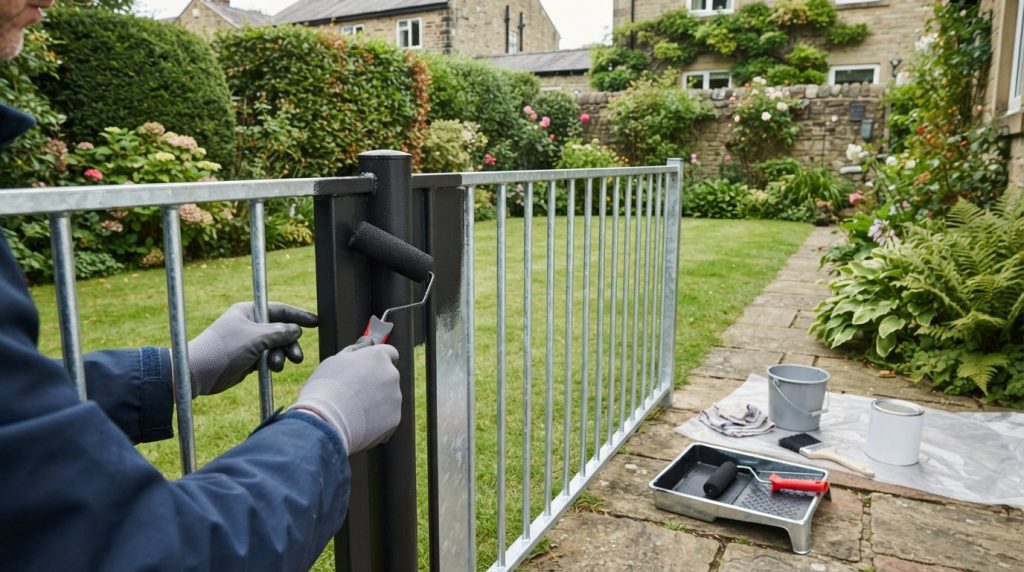
How to Paint Galvanised Steel Fencing with Suitable Paint
A fresh coat can change the look of a galvanised fence, but the wrong paint may peel or flake. The short answer to whether you can paint galvanised steel fencing is yes, provided you choose paint formulated for galvanised metal and prepare the zinc surface properly. Natural weathering can also prepare the surface, but new steel needs at least six months exposed to the atmosphere.
It’s understandable to expect paint to grip a metal fence as it does other surfaces. Galvanised steel has a smooth, non-porous zinc coating, so ordinary paint may not adhere well. Cleaning off oil, grease and dirt, then rinsing and letting the fence dry completely, gives you a sound starting point.
This guide explains when painting makes sense, how to prepare the zinc coating and how to apply suitable paint in even coats. It also covers what to consider before choosing a painted finish, so you can decide whether painting is the right approach for your fence.
Key Takeaways
- Choose paint formulated for galvanised steel, as ordinary paint may peel or flake from its smooth zinc coating.
- Remove oil, dirt and other contaminants, then rinse the surface and let it dry completely before painting.
- If using natural weathering as preparation, allow at least six months of atmospheric exposure before painting.
- Apply thin, even coats with a spray, roller or brush, following the paint manufacturer’s instructions and allowing each coat to dry.
- If you’d rather avoid repainting, EnduroFence Maintenance-Free Fence Panels are designed to fit existing concrete posts and need no painting or treatment.
Can you paint galvanized steel?
Yes, you can paint galvanised steel fencing, but preparation matters because paint may struggle to adhere to its smooth zinc coating. Clean the surface thoroughly, carefully remove white deposits and allow new galvanised steel time to weather.
-
Clean oil, dirt and contaminants
Start by removing oil, grease, dirt and other contaminants from every surface you plan to paint. These deposits can interfere with adhesion, even when the zinc coating looks clean from a distance. Work along the rails, posts and panel edges, checking joints and sheltered areas where grime can collect.
Use a cleaning method suited to the contamination and the fence, without damaging the zinc. Rinse the galvanised steel with clean water after washing, then let it dry completely. Don’t paint over detergent residue, moisture or visible dirt. A clean, dry surface gives the paint manufacturer’s specified system a sound starting point.
-
Remove white rust and zinc salts
Brush away wet storage staining, white rust or zinc salts with a stiff brush, taking care around the thin zinc layer. These pale deposits can form when moisture remains on newly galvanised steel. Inspect the whole fence in good light, especially around overlaps and sheltered sections, so no deposits remain hidden before painting.
After brushing, rinse the surface with clean water and let it dry completely. Avoid aggressive abrasion that could remove or damage the zinc coating. If you find red rust, remove it carefully while preserving the surrounding zinc. The aim is a clean surface, not bare steel. Check the fence again before moving to the next preparation step.
-
Allow new galvanised steel to weather
Leave new galvanised steel exposed to the atmosphere for at least six months before relying on natural weathering as preparation. Natural weathering can take 6-12 months in non-marine environments, and leaving the surface for 12 months or more is preferable where practical. The exposure helps the zinc surface become more compatible with paint.
Don’t use weathering as the preparation method in marine environments with high chloride levels. In other settings, assess the surface after exposure and still remove contaminants, brush away any wet storage staining, rinse and dry the steel. Weathering doesn’t replace cleaning. Follow the paint manufacturer’s preparation instructions, as the required surface condition depends on the paint system.
Protective properties of galvanised metal paint
Galvanised metal already has a zinc coating designed to resist weathering and corrosion. Paint can add colour and another surface layer, but how well it performs depends on matching the coating and preparation to the product.
- Choose paint made for galvanised steel. The zinc surface is smooth and non-porous, which can make ordinary paint difficult to adhere to. A coating designed for galvanised metal addresses this compatibility issue. Choose a paint formulated for galvanised steel and follow its preparation instructions. Compare the product label with your fence’s surface and intended finish before choosing.
- Decide whether the paint needs a primer. A primer isn’t essential for every galvanised steel project. Some direct-application paints are formulated to go onto galvanised metal without chemical or mechanical pre-treatment. Other paint systems specify a separate primer, so follow the manufacturer’s instructions for the exact product. Don’t add a general-purpose primer automatically, as the specified system determines which layers work together.
- Use the coating for the right protective purpose. Galvanising supplies the underlying corrosion protection, whilst paint can provide colour, camouflage or a visible finish. Painting may also be considered to extend a structure’s economic life or add protection in very aggressive environments. However, ordinary paint can peel or flake if it doesn’t adhere to the zinc. Treat paint as a compatible coating system, not a substitute for sound galvanising.
- Apply spray paint as directed. A suitable galvanised-metal coating can be applied with a spray, roller or brush. For a spray, follow the manufacturer’s instructions on application and drying, and work towards an even, thin coat rather than a heavy layer. Use proper ventilation, protective gloves and a respirator when painting. Allow each coat to dry completely before applying another, as several thin coats can produce a more durable finish.
There’s no single lifespan for paint on galvanised fencing: the coating system, preparation and exposure all affect how well it holds up. Inspect the finish for damage, clean away surface dirt and address peeling or chipped areas with a compatible paint system. Follow its recoating instructions rather than applying a different paint over a failing layer.
A primer isn’t always essential for painting galvanised steel, because some direct-application products don’t require chemical or mechanical pre-treatment. The product’s specified application method matters: a direct-application coating and a paint system that calls for primer aren’t interchangeable. Before starting, check the directions for the exact coating and confirm that it’s intended for the galvanised surface and finish you want.
If a separate primer is specified, treat that instruction as part of the coating system rather than substituting a general-purpose layer. If the product allows direct application, follow its instructions for application and drying. Choose the approach specified for the coating, rather than treating priming as a fixed step for every galvanised fence. The aim is a compatible finish over sound zinc, with any repainting done using a compatible paint system.
Applying paint with a spray, roller or brush
Apply compatible galvanised-steel paint with a spray, roller or brush, following the manufacturer’s instructions. Build the finish with thin, even coats, letting each coat dry completely before applying the next.
-
Choose a spray, roller or brush
Choose an application method suited to the fence’s shape and the paint instructions. A spray can help cover broad, open panel faces, while a brush reaches narrow edges, joints and areas around fixings. A roller can cover accessible flat sections. Use one method or combine them, keeping the coating consistent across adjoining areas.
Before painting, check that your equipment is clean and suitable for the product. Stir the paint as directed, then test your method on an inconspicuous section. Look for an even flow without missed edges, heavy patches or drips. For spray application, maintain ventilation and wear protective gloves and a respirator.
-
Apply paint in even coats
Work methodically across the fence, applying a thin, even layer rather than trying to cover the zinc with one heavy coat. On each panel, complete one section at a time and lightly overlap brush or roller strokes to avoid obvious bands. When spraying, keep your movement steady and cover the edges as well as the main face.
Check the surface from different angles as you work. Look for runs, dry patches and uncovered corners, correcting them while the paint is workable and in line with its instructions. Avoid letting paint build up around joints or fixings. Several thin coats can give a more durable finish than one thick application, helping protect the surface without obscuring details.
-
Apply topcoats and allow them to dry
Let each coat dry completely before applying the next. The paint manufacturer’s instructions provide the drying guidance for that product, so follow them rather than judging readiness by the surface alone. Rushing a topcoat over paint that hasn’t dried can disturb the layer beneath and leave an uneven finish.
Apply further thin coats as directed, keeping each pass even across rails, posts and panel edges. After the final coat, inspect the fence for missed areas, drips or thin coverage. To correct a flaw, let the paint dry and follow the product instructions for recoating. A carefully applied system creates a consistent appearance and adds a protective layer against weathering and corrosion.
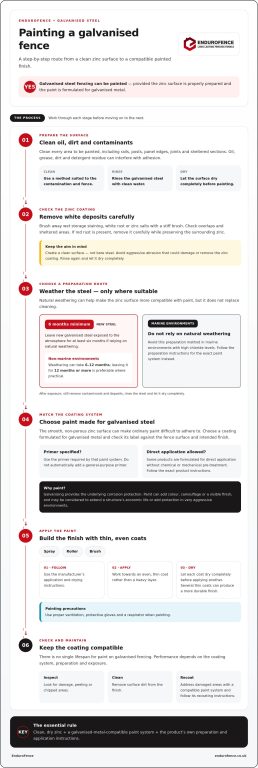
Etching the zinc coating to improve paint compatibility
Etching can make the smooth zinc coating more compatible with paint by creating a surface the coating can grip. Choose a preparation method suited to the fence and paint system, then follow the product instructions.
-
Etch the zinc coating
Use an etching treatment only when the paint system calls for it. Etching roughens the zinc surface to improve paint compatibility, but the aim is to prepare the coating, not strip it away. T-Wash is one named treatment; its listed composition includes 9.0% phosphoric acid and 1.0% copper carbonate.
Follow the T-Wash and paint manufacturers’ instructions for application and subsequent coating. T-Washed galvanised steel can be left for up to 30 days before painting and still achieve good adhesion. Don’t substitute an unapproved solvent or abrasive method: the wrong preparation can damage the zinc or leave residues that interfere with the finish.
-
Remove rust without damaging the zinc
Remove red rust carefully, taking care not to abrade the thin zinc layer around it. Work in a controlled way and inspect the surrounding galvanised metal as you go. The aim is to clear corrosion without exposing more steel, since damaging the zinc reduces the protection where it remains intact.
For small affected areas, stop and inspect frequently rather than scrubbing the whole fence aggressively. Brush away loose material, then prepare the surface according to the selected paint system. If the zinc is damaged, a compatible repair coating may suit that area. Keep it separate from the general paint finish and follow the manufacturer’s directions.
- For a localised damaged patch, consider a cold-galvanising repair coating only if its instructions suit the substrate and intended overcoat. Treat it as a repair step, not a substitute for surface preparation or paint-system compatibility. Check that the next coating is specified for use over the repair product, as incompatible layers can undermine adhesion.
Heat-resistant coatings are a separate option for surfaces exposed to heat. Don’t select one simply because the fence is galvanised; match the coating to the actual exposure and the manufacturer’s stated use. Whether using a repair coating, an etch treatment or a heat-resistant finish, preserve the zinc wherever possible and follow the full coating instructions.
Focus rust removal on the affected area, and avoid forceful or prolonged abrasion that could wear through the zinc. Remove rust from galvanised metal without damaging its thin zinc layer. If the zinc begins to look worn or exposed during the work, stop rather than continuing to abrade the surface. Preserving the remaining zinc helps retain the protection of the galvanised coating.
Paint suitability for galvanised steel fencing
Paint suitability depends on compatibility with zinc, not simply an exterior label. Before choosing paint for a galvanised fence, check the product’s stated substrate and intended use.
-
Assess exterior metal paint suitability
Choose exterior metal paint only if its manufacturer says it’s suitable for galvanised steel. “Exterior” describes the intended exposure, but doesn’t establish adhesion to zinc. Check the product information for galvanised metal, required preparation and primer instructions. Oil-based direct-to-metal paint and acrylic latex paint can both suit prepared galvanised steel when formulated for that substrate.
Avoid products intended only for bare ferrous metal. Their coating may not adhere to zinc, even if the tin describes it as durable or weather-resistant. Check whether the system calls for an etching treatment or a dedicated primer, then follow those instructions consistently.
- To estimate painting costs in the UK, measure the fence area and assess its condition. The work involved depends on the amount of preparation, access to both sides, paint system and application method. Grease, dirt, damaged areas and complex rails can add preparation steps. Consider these factors when planning material use and labour, rather than relying on a single assumed rate.
Include preparation as well as paint in your estimate. A cheaper coating that isn’t suitable for zinc can peel and lead to extra work. Choose paint based on substrate compatibility and the complete system required, not just the exterior label or tin size.
-
Assess spray paint suitability
Use spray paint only if its manufacturer specifies galvanised steel as a suitable surface. Spray describes how paint is applied, not whether its formula adheres to zinc. Before starting, check the product label for substrate compatibility, surface preparation and application instructions.
A spray can reach rails and edges, but coverage still needs to be even across the fence. Protect surrounding surfaces, maintain proper ventilation and wear protective gloves and a respirator. If the spray product is intended only for another metal, choose a compatible galvanised-steel paint instead.
- Match the full coating system to the fence’s condition and setting. For example, a sound zinc surface that needs a colour change calls for a compatible topcoat; a damaged area may need a suitable repair coating first. Choose a system formulated for galvanised steel and apply it according to the manufacturer’s recommendations.
Before buying, check the label for galvanised-steel suitability, required preparation, primer requirements and application method. This helps you avoid choosing paint based only on colour, exterior use or convenience.
If you’re considering an alternative around fence posts, explore fence post covers.
EnduroFence: Maintenance-Free Fence Panels
EnduroFence offers Maintenance-Free Fence Panels for homeowners who would rather replace timber fencing than prepare and repaint a galvanised surface. Designed to fit existing concrete posts, the panels make a panel swap a practical option when the posts are staying in place.
Each panel has profiled steel outer sheets and a high-density insulated core. The panels offer weather resistance and security, with no painting or treating needed. Replacing timber panels is straightforward and no training or qualification is needed, so you can avoid the task of repainting.
If your fence posts are sound but the panels need replacing, consider EnduroFence’s Retro Fitting Panel Swap. Explore the Maintenance-Free Fence Panels and choose a colour and finish for your project.
Choose the right next step for your fence
Your next decision is whether to keep the existing fence and repaint it, or replace the panels to avoid the task of painting. If you’re deciding whether you can paint galvanised steel fencing or choose another approach, consider the condition of the current panels and how you want to finish your fence.
EnduroFence offers Maintenance-Free Fence Panels, a Retro Fitting Panel Swap designed for existing concrete posts, and Post Covers. These options may suit a garden project where replacing panels or updating the look of the posts makes more sense than repainting.
Choose the route that fits your fence and the work you’re prepared to maintain. To discuss an option for your fencing, contact EnduroFence about your fencing. A clear next step can make improving your garden fence feel straightforward.
Frequently Asked Questions
Can you paint galvanised steel fencing?
Yes, galvanised steel fencing can be painted with a coating designed for zinc surfaces. Painting can change the fence’s colour, help it blend into its surroundings or add a further protective layer in aggressive environments. Preserve the underlying zinc coating wherever possible. If the fence is already painted, identify the existing coating before choosing a compatible repainting system.
How do you prepare galvanised steel before painting?
Remove surface contamination and loose deposits, then rinse the steel and let it dry fully. Pay particular attention to panel edges, overlaps and sheltered rail faces, where dirt or moisture can remain. Inspect the fence in good light before painting. If you handle the prepared surface afterwards, check again for fingerprints or fresh dirt that could affect the coating.
What paint is suitable for galvanised steel fencing in the UK?
Choose exterior metal paint whose manufacturer specifically identifies galvanised steel as a suitable substrate. Oil-based direct-to-metal paint and acrylic latex paint can suit prepared galvanised steel if the product instructions match the surface and preparation method. Check whether the specified system needs a primer, and use compatible layers throughout. A general exterior label alone doesn’t show that paint will adhere to zinc.
What causes paint to peel off galvanised steel and how can it be prevented?
Paint can peel if it doesn’t adhere to the smooth zinc surface, or if grease, dirt or moisture remains beneath the coating. An incompatible product or applying another coat before the previous one has dried can also undermine the finish. Choose paint for galvanised steel and follow its preparation and drying instructions. If peeling appears, address the affected area carefully without damaging sound zinc nearby.
How many coats of paint are needed on galvanised steel fencing?
Apply several thin, even coats, letting each dry completely and following the paint manufacturer’s instructions.

Leave a Reply