

Fence staining cost and how long treatments last
When calculating the cost to treat a fence every year in the UK, account for the time between treatments as well as the price of each job. The total depends on the fence’s length, condition and preparation needs.
It’s sensible to want a clear figure before deciding whether to stain, paint or leave your fence as it is. There’s no single average that suits every garden, and treatment does not necessarily need repeating each year.
This article covers typical staining costs, what affects the total, how long treatments tend to last and when painted fences may need repainting. It also explains how weather exposure and timber condition affect the schedule, helping you plan upkeep without assuming it is an annual expense.
Key Takeaways
- Estimate staining costs by considering the fence’s size, condition, access and whether one or both sides need treating.
- Paint and stain have different recoat intervals; weather exposure and preparation can affect how long protection lasts.
- Use signs such as peeling paint or water soaking into timber to judge when maintenance is due, rather than relying only on the calendar.
- If you want to avoid repeated painting or staining, explore maintenance-free panels designed to fit existing concrete posts.
How often painted fences need repainting
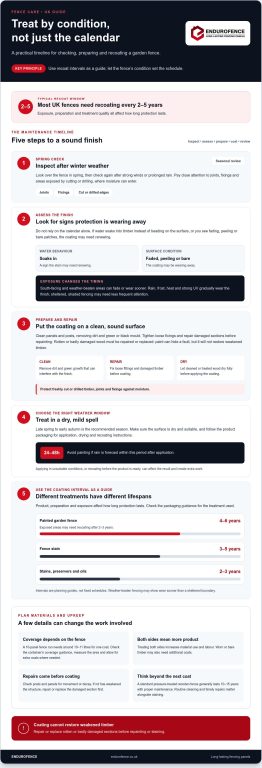
In the UK, a painted garden fence may need repainting every 4-6 years, though exposed areas can need recoating after 2-3 years. Rain, frost, heat and high UV gradually wear the finish. A south-facing boundary receives stronger sunlight, which can fade paint and leave timber less protected. Use the interval as a guide, then judge the fence by its condition.
Late spring to early autumn is the recommended season for treating a garden fence. Choose a dry, mild spell and avoid applying paint when rain is forecast within 24-48 hours. Inspect the fence in spring after winter weather, then look again after strong winds or prolonged rain. Check joints, fixings and areas exposed by cutting or drilling, as moisture can enter through these vulnerable points. Protect exposed timber to reduce the risk of water damage.
Include cleaning and repairs in routine upkeep. Clean panels and posts, removing dirt and green or black mould before they affect the finish. Check for loose fixings, damaged panels and signs of pests. Tighten loose fittings and repair damaged sections before repainting, so the coating goes on a sound surface rather than hiding an ongoing problem. A clean, dry fence also gives paint a better surface to adhere to.
Repair rotten or badly damaged wood before applying another coat. Paint can cover the appearance of a fault, but it won’t restore weakened timber. Replace sections that have deteriorated, and protect any freshly cut or drilled areas against moisture. If you find signs of pests, identify the affected area and repair the timber before repainting. Once repairs are complete, let cleaned or treated wood dry fully; then apply the coating according to its packaging. Regular seasonal checks help you spot changes early and decide whether the fence needs maintenance or repainting.
How Much Does Staining a Fence Cost?
To compare quotes, consider both the cost of each treatment and how often the coating needs renewing.
Treatment Reapplication Intervals
Reapplication intervals estimate how long a coating protects timber before another treatment is due. Fence stains typically last 3-5 years, while stains, preservers and oils may be reapplied every 2-3 years. The product, preparation and exposure affect the interval, so follow the packaging guidance for the treatment applied. Recoating at the right time helps maintain protection and appearance without treating sound timber too soon.
Annual Treatment Cost per Metre
Annual cost per metre spreads the treatment price across the fence length and the years between applications. There is no single annual average that applies to every fence.
Product choice also affects the bill. Paint gives an opaque colour, while stain lets more of the timber’s appearance show through. Compare the finish with the fence’s condition and the look you want.
Coverage determines how much product to buy. A 10-panel fence run needs around 10-11 litres for one coat. Measure the area, check the container’s coverage guidance and account for any extra coats. Treating both sides increases material use and labour, while worn or bare timber may also need additional coats. If the fence is badly damaged, repair or replacement can affect the overall budget more than the coating itself.
Factors affecting the final price
If you have plants or pets, follow the treatment packaging instructions and any precautions for outdoor use. If the fence belongs to your neighbour, get their permission before painting it.
Labour and access can affect the total. A narrow path, obstacles or difficult access can also make preparation and application take longer.
Preparation adds to the bill, particularly if panels are dirty or the old finish is failing. The quantity needed depends on the fence’s surface area and the number of coats, so a larger or more absorbent wooden fence uses more product.
Weather and exposure affect the work required. A shaded, sheltered fence may need less frequent attention than a boundary exposed to rain and strong sunlight. Check that the surface is dry and suitable before treatment. Applying products in unsuitable conditions can affect the finish and create extra work.
Replacing panels is a separate cost from treating existing timber, but it matters if sections are damaged. Panel style and material can change the repair budget.
Compare quotes by checking what preparation, coating and clean-up they include. A quote for painting alone may not cover cleaning or repairing damaged panels, so compare like with like before deciding.
Fence treatment lifespans and recoat intervals
Most UK fences need recoating every 2-5 years, depending on exposure, preparation and treatment quality. Good-quality treatment with additional wood preserver can protect panels and posts for up to five years. That interval is a planning guide, not a fixed schedule: weather-beaten fencing may show wear sooner than a sheltered boundary.
Assess the finish as well as the calendar. If water soaks into the timber instead of beading on the surface, the stain may need renewing. Fading, peeling or bare patches can also indicate that the coating is wearing away. South-facing fencing receives stronger UV exposure, which can fade colour and shorten the time between treatments. Inspect these areas more closely during routine garden checks.
Preparation affects how well a new coat performs. Cleaning removes dirt and green growth that can interfere with the finish, while dry timber provides a better surface for treatment. Protect joints, fixings and cut edges, where moisture can enter exposed wood. Follow the product instructions for drying and recoating, as applying another coat too soon can affect the result.
Recoat intervals also affect the average upkeep over a fence’s life. A standard pressure-treated wooden fence generally lasts 10-15 years with proper maintenance, so routine cleaning and timely repairs matter alongside staining. Check posts and panels for movement or decay before spending labour on a fresh finish. If rot has weakened the structure, coating alone won’t restore it; repair or replace the damaged section first. Keep treatment away from nearby plants as directed on the packaging, and choose suitable weather for application. These checks help distinguish a fence that needs a new coat from one that needs more substantial work.
EnduroFence: Maintenance-Free Fence Panels
EnduroFence offers Maintenance-Free Fence Panels for homeowners who want to avoid repeated painting and staining. The profiled steel panels slot into existing concrete posts, making them a practical replacement when timber panels need replacing and the posts are still usable.
Each panel has profiled steel outer sheets and a high-density insulated core, designed for durability, weather resistance and security without painting or treatment. The panel swap is straightforward and requires no specialised tools or qualifications, so homeowners can replace timber fencing without arranging professional installation through EnduroFence.
Choose this route when reducing ongoing fence maintenance matters more than keeping a timber finish. For details about the panels or a Retro Fitting Panel Swap, contact EnduroFence.
Choose the upkeep that suits your garden
Use your next maintenance check to decide what you want from the boundary: keep the existing timber and maintain its finish, or reduce the repeated work involved in coating it. Thinking about the annual cost of treating a fence in the UK is useful, but time spent preparing and repainting can matter just as much to your decision.
If you’re considering a change, EnduroFence offers Maintenance-Free Fence Panels, Post Covers and Retro Fitting Panel Swap. Replacing timber panels with steel panels that fit existing concrete posts can help you move away from regular fence treatment. The right option depends on your current fence and the result you want for your garden.
Explore the options and decide whether a panel swap fits your plans. Contact EnduroFence for advice and take a practical next step towards a fence that works for your home.
Frequently Asked Questions
What is the best way to maintain wooden panel fences?
Keep wooden fence panels clear of trapped leaves and soil, especially where the timber meets the ground. During an inspection, look for bowed panels, cracked boards, loose fixings and soft spots near the base. Address faults before they spread to neighbouring sections. After washing, let the wood dry fully before applying a coating, and use a treatment suitable for exterior timber.
Why is garden fence protection so important?
Suitable care helps limit the effects of rain, frost, heat and UV exposure on garden fencing. Timber can absorb moisture, rot or warp, affecting its appearance and stability. Joints, fixings and cut edges are often vulnerable because water can enter exposed wood. Protecting these areas helps maintain the fence’s condition and can reduce the chance of panel repairs.
How much does it cost to treat a wooden fence in the UK?
The cost to treat a fence each year in the UK depends on how often it needs recoating, rather than being an automatic annual charge. Fence length, access, surface condition and whether both sides need treatment all affect the total. Include preparation and repair work in your budget too.
How much do fence stains, paints and wood preservatives cost in the UK?
The amount needed depends on the fence’s surface area and the number of coats specified for the product. Check the packaging coverage before buying to estimate how much you’ll need.
How much does it cost to hire a professional to treat a fence in the UK?
Labour may be charged by the day or by the panel, and the scope of work affects the final quote. For a clearer comparison, check whether it includes cleaning, preparation, coating and tidying up. Treating both sides or preparing a worn surface can increase the work involved.
How often should a wooden fence be treated in the UK?
Most UK fences need recoating every 2-5 years, depending on exposure, product quality and preparation. Stains typically last 3-5 years, while treatment in exposed places can wear sooner. Check the fence’s condition as well as the calendar: peeling, bare patches or timber that absorbs water can indicate the finish needs attention. Follow the product instructions when planning the next application.

Leave a Reply