

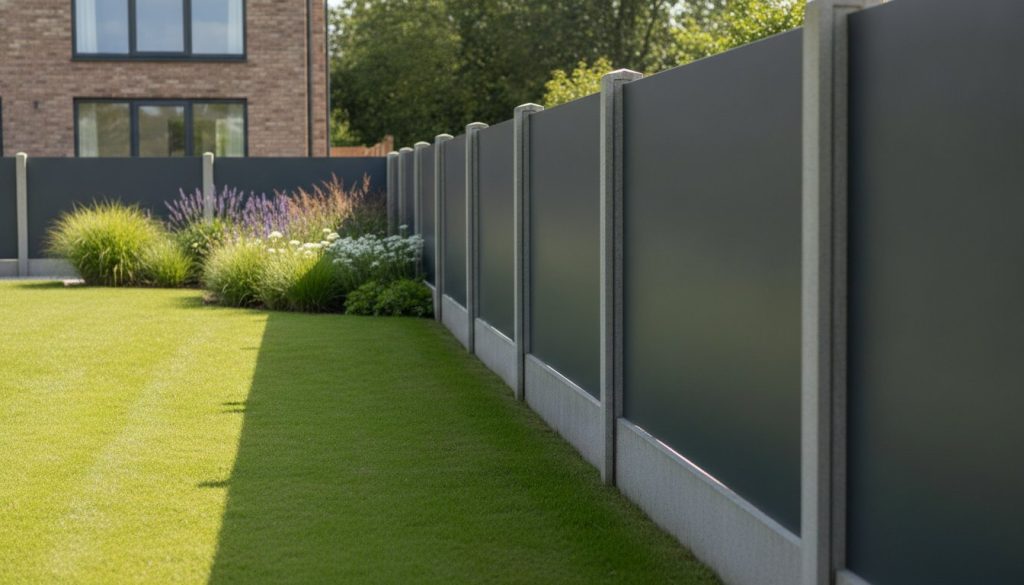
Heavy Duty Garden Fence Panels: A UK Buyer’s Guide to Secure Fencing
Why do we spend every other spring painting timber panels that will inevitably rattle in the next storm or rot from the ground up? It’s a frustrating cycle of maintenance that many UK homeowners accept as the norm. You want a garden that feels like a private sanctuary, yet standard panels often fail at the first sign of a gale or a determined intruder. Finding reliable, secure garden fencing UK wide shouldn’t feel like a temporary fix that needs revisiting every few years.
This guide helps you break that cycle by identifying the most durable, heavy duty garden fence panels available today. You’ll discover how to achieve a secure, private perimeter that requires zero maintenance for over 20 years whilst actually enhancing your home’s modern aesthetic. We will explore the technical differences between materials, the benefits of insulated cores for noise reduction, and how you can retrofit high-quality panels into your existing concrete posts to save on installation costs. By the end of this article, you will have a clear path toward a permanent, stylish solution for your property.
Key Takeaways
- Learn why modern steel construction outlasts traditional timber and composite, providing a 20+ year lifespan without the need for annual painting or staining.
- Understand how smooth surface profiles and specific height regulations contribute to secure garden fencing UK homeowners can rely on to deter intruders.
- Discover the technical benefits of insulated cores that reduce garden noise and ensure your panels won’t rattle or blow out during high winds.
- Master the process of retrofitting heavy duty panels into your existing concrete posts, avoiding the effort and expense of digging out old foundations.
- Explore how to match your perimeter to your home’s modern aesthetic with a range of colours that complement contemporary window frames and doors.
What Defines Heavy Duty Garden Fence Panels in the UK?
In the UK, the term “heavy duty” is often used loosely to describe any fence panel that feels substantial to lift. However, true durability is measured by how a material resists environmental pressure over decades. For homeowners looking for secure garden fencing UK weather won’t destroy, the focus has shifted from mere thickness to material integrity. Heavy-duty panels must offer high wind resistance and structural stability without becoming a maintenance burden. While timber was once the default choice, the increasing frequency of British storms has highlighted the need for non-porous, resilient materials that don’t degrade when exposed to constant moisture.
The Limitations of Traditional Timber
Timber panels are inherently porous. Even the “heavy duty” varieties absorb moisture during wet UK winters, which causes the wood fibres to expand and eventually warp. As the wood dries out in summer, it contracts, leading to structural weakness and unsightly gaps. This cycle is particularly problematic when timber panels are used with concrete posts. Because wood shrinks, panels often begin to rattle during high winds, creating a noise nuisance and increasing the risk of the panel blowing out entirely. Ultimately, timber heavy duty is often a temporary solution because organic materials cannot indefinitely resist the natural process of decay in a damp climate.
The Rise of Steel and Insulated Core Panels
Modern steel panels represent a significant evolution in Perimeter security fencing for the residential market. Unlike wood, steel offers an exceptional strength-to-weight ratio, meaning the panels are incredibly rigid without being impossible to handle. High-quality options often feature a profiled design that adds structural “folds” to the metal, significantly increasing its resistance to impact and bending. The addition of an insulated core takes this a step further. This core provides internal support that prevents the steel skins from denting or vibrating, resulting in a panel that feels solid and remains silent even in a gale.
A heavy-duty fence serves a dual purpose: structural longevity and home security. A flimsy fence is a liability, providing easy access for intruders and requiring frequent, costly repairs. By contrast, a robust steel system acts as a formidable deterrent. The smooth, hard surface makes it difficult to gain a foothold, whilst the sheer strength of the material ensures that the perimeter cannot be easily breached or dismantled. This combination of physical resilience and psychological deterrence is what defines a high-quality security solution for the modern home.
Comparing Materials: Why Steel Outperforms Timber and Composite
Choosing the right material for your perimeter involves looking past the initial appearance and considering how it will perform after a decade of exposure. For secure garden fencing UK homeowners often weigh the traditional look of timber against modern alternatives. Whilst timber is common, it requires regular intervention to prevent it from becoming brittle or structurally unsound. Composite materials offer an improvement in longevity but can still suffer from thermal expansion and colour fading. Steel, by contrast, provides a 20+ year solution that remains as stable on the day of installation as it does twenty winters later.
Maintenance is the primary hidden cost of timber. Every year, thousands of UK residents spend weekends painting or staining wood to stave off rot. These treatments contain chemicals that can leach into the soil, and the brushes and tins used contribute to household waste. Steel panels with a powder-coated finish eliminate this labour entirely. They are also fully recyclable at the end of their long life, making them a more circular choice compared to pressure-treated wood, which often cannot be recycled due to the chemical preservatives embedded in the fibres.
Durability Against British Weather
Steel panels are engineered to handle the specific pressures of the British climate. High wind loads that would cause timber to snap or composite to bow are easily managed by the rigidity of steel. It is entirely resistant to fungal decay, rot, and insect infestations that plague organic materials. To ensure your garden maintains its aesthetic appeal, look for panels with UV-stable coatings. This technology ensures the colour doesn’t leach or fade under direct sunlight, preserving the contemporary look of your home without the need for touch-ups. Following UK police guidance on security fences, choosing a material that cannot be easily cut or climbed is essential for a truly secure perimeter.
Long-Term Cost-Benefit Analysis
Whilst the initial investment in steel may be higher than a budget timber panel, the total cost of ownership over 25 years is significantly lower. You won’t need to purchase annual maintenance kits, nor will you face the expense of replacing panels every five to seven years after a particularly bad storm. High-quality, heavy-duty fencing also acts as a permanent upgrade to your property, potentially increasing kerb appeal and overall value. If you’re looking for a way to upgrade your existing boundaries without a full overhaul, exploring a maintenance-free fence panel system is a practical next step. This shift from a “repair and replace” mindset to a “fit and forget” approach provides peace of mind and reclaims your free time.
Advanced Security Features: Anti-Climb and Privacy
Home security is often a compromise between visibility and protection. While industrial mesh systems offer high levels of security, they leave your private life on display to every passerby. For most residents, the ideal secure garden fencing UK solution must combine a formidable physical barrier with total visual privacy. Solid steel panels achieve this by presenting a continuous, opaque surface that prevents “casing” of the property whilst making it physically difficult to breach the perimeter. Unlike traditional timber, which often features horizontal rails that create a “ladder effect,” modern steel panels are designed with vertical profiles. This removes the natural footholds that intruders rely on to scale a boundary. Additionally, the inherent rigidity of steel prevents the common tactic of peeling back the bottom corner of a panel, a vulnerability often found in wire mesh or thin wooden slats.
Deterring Intruders with Vertical Profiles
The science of intruder deterrence relies heavily on friction and grip. Smooth, vertical steel surfaces offer almost no purchase for hands or feet, making them significantly harder to climb than textured wood. This aligns with the principles of Secured by Design, an initiative that encourages the use of materials and layouts that naturally reduce crime. A solid steel barrier removes the ladder effect of timber by providing a smooth, vertical surface with no horizontal rails for footholds. To further enhance this, choosing a flat panel top instead of decorative caps can remove another potential handhold. When installing these systems, remember that UK planning regulations generally allow for a height of up to 2 metres in rear gardens without needing special permission, providing ample height to deter most climbing attempts.
Acoustic Insulation and Garden Privacy
Security isn’t just about physical protection; it’s also about the psychological comfort of knowing your garden is a secluded sanctuary. High-quality heavy-duty panels often feature an insulated core that serves a dual purpose. Beyond adding structural rigidity, this core acts as a highly effective sound barrier, dampening the drone of nearby road traffic or noisy neighbours. This acoustic insulation transforms your outdoor space into a quieter, more private environment. By blocking both sightlines and sound, you create a perimeter that feels as solid as a wall whilst maintaining the sleek, modern aesthetic of a contemporary garden fence. This combination of structural strength and acoustic dampening ensures your garden remains a peaceful, protected space for your family.
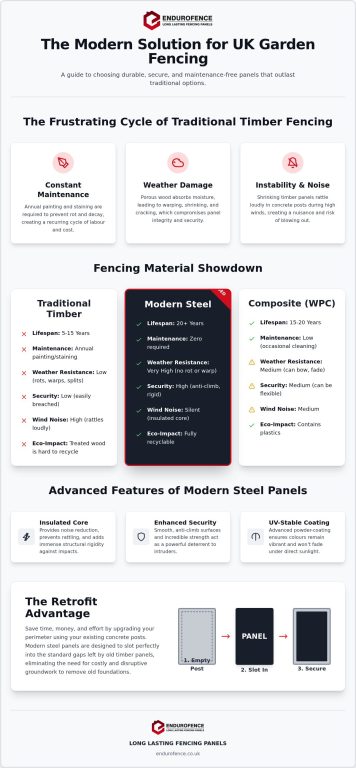
The Retrofit Advantage: Upgrading Existing Concrete Posts
For many UK homeowners, the most daunting part of a garden upgrade is the prospect of digging out concrete posts. This labour-intensive task often requires professional machinery and significant physical effort. However, if your existing posts are structurally sound, you can bypass this stage entirely. A Retro Fitting Panel Swap allows you to slide high-quality steel panels directly into your current concrete slots. This approach provides secure garden fencing UK residents can install themselves, saving both time and the substantial cost of new groundworks.
Measuring and Preparing Your Posts
Standard UK concrete posts typically feature a 50mm slot designed for timber panels. Steel systems are engineered specifically to match these dimensions, ensuring a straightforward transition. Before ordering, check that your posts aren’t leaning or suffering from “spalling,” where the internal steel reinforcement has rusted and cracked the concrete. You won’t need specialised qualifications or heavy machinery to complete the upgrade. A standard tape measure, a pair of work gloves, and a basic level are usually the only tools required to assess your perimeter and prepare for the new panels.
The 5-Step Installation Process
The installation follows a logical path that most DIY enthusiasts can complete in a weekend. Follow these steps for a professional result:
- Removal: Remove the old timber panels safely. These are often heavy and waterlogged, so they may require two people to lift.
- Cleaning: Use a stiff brush or a screwdriver to clear moss, stones, and debris from the concrete post channels.
- Base Channel: Insert the base channel into the bottom of the slots. This provides a level, protective foundation for the steel.
- Sliding Panels: Slide the profiled steel sections down the slots. Because steel is lighter than wet timber, this part of the process is significantly safer and faster.
- Capping: Secure the top capping once all panels are in place. This creates a weather-tight seal and provides a clean, contemporary finish.
One of the biggest frustrations with timber panels in concrete posts is the constant rattling during windy weather. Because wood shrinks as it dries, it inevitably leaves a gap in the slot. Steel panel fencing for residential gardens solves this by using an insulated core and precision-engineered profiles that provide a snug, rattle-free fit. This rigidity ensures the perimeter remains silent and secure even during the most severe British storms. If you are ready to move away from temporary timber fixes, you can start your project by browsing our range of maintenance-free fence panels today.
Finding Your Perfect Match: Style, Colour, and Next Steps
Transitioning to a permanent perimeter solution is about more than just physical security; it is about reclaiming your time. For many, the annual ritual of sanding and staining timber is a chore they would gladly leave behind. By choosing locally designed steel solutions, you support UK innovation whilst ensuring your boundary meets the specific demands of our climate. This shift allows you to enjoy a garden that remains pristine without the constant cycle of repair and replacement that timber necessitates.
Coordinating Colours for Kerb Appeal
Modern secure garden fencing UK homeowners select often mirrors the architectural trends of the home. Anthracite Grey has become a staple for contemporary properties, perfectly matching modern window frames and bifold doors. Other popular choices amongst UK residents include Goosewing Grey and Merlin Grey, which offer a softer, neutral palette that complements natural stone and brickwork. To achieve a truly seamless look, you can coordinate your panels with matching post covers. These covers hide weathered concrete or timber posts, creating a unified appearance that significantly boosts kerb appeal. High-quality powder coating is essential here, as it provides the long-term colour retention needed to keep the garden looking fresh for decades without intervention.
Reclaiming Your Weekends from Maintenance
The move toward a maintenance-free lifestyle begins with a simple assessment of your property. You can request a free quote by providing the total linear metres of your boundary and the height of your existing posts. Calculating the number of panels required is usually straightforward, as most UK concrete posts are set at standard intervals. Once you have placed your order, consider the delivery and lead times for national UK supply to ensure your project stays on schedule. Most DIY enthusiasts find they can transform their entire garden in a single weekend, leaving the paintbrush in the shed for good.
Before placing your order for heavy-duty fencing, use this final checklist to verify your requirements:
- Confirm the structural integrity of your existing concrete posts to ensure they can support the new system.
- Measure the internal slot width of your posts to ensure a standard fit.
- Check the height of each section across the boundary, as ground levels often vary.
- Decide if you require matching post covers to complete the aesthetic transformation.
Investing in a heavy-duty system is a pragmatic decision that pays dividends in both security and leisure time. You won’t have to worry about panels rattling in the wind or the steady decay of organic materials. Instead, you can enjoy a private, protected space that looks as good in twenty years as it does on day one. View our range of maintenance-free steel fence panels at EnduroFence to discover the ideal fit for your property.
Build a Permanent Perimeter for Your Home
Choosing the right boundary is an investment in your property’s security and your own peace of mind. By moving away from high-maintenance timber and opting for a maintenance-free steel design, you eliminate the constant cycle of painting and repairs. These heavy-duty panels don’t just offer a contemporary aesthetic; they provide a formidable barrier against intruders and the unpredictable British weather. Whether you are looking for secure garden fencing UK homeowners can trust or simply want to dampen road noise with an insulated core, modern steel systems deliver a lifetime of reliability whilst enhancing your home’s value.
The ability to retrofit these panels into your existing concrete posts makes the transition faster and more cost-effective than a total replacement. It’s a practical solution for anyone who values their weekends and wants a garden that remains private and protected. If you’re ready to swap rattling timber for a silent, robust alternative, take the first step toward a hassle-free garden today.
Upgrade your garden with our maintenance-free steel panels and enjoy a secure, stylish perimeter for years to come.
Frequently Asked Questions
Are heavy duty steel fence panels noisier than timber in the wind?
No, the opposite is actually true. High-quality steel panels with a high-density insulated core are designed to dampen sound and prevent vibration. Unlike timber panels that shrink and rattle within concrete slots during a storm, these profiled steel sheets provide a snug, stable fit. This ensures your perimeter remains silent even in high winds, providing a much quieter environment than traditional wood that has warped or dried out.
Can I fit heavy duty steel panels into my existing concrete posts?
Yes, you can. These panels are specifically engineered to fit into standard 50mm slots found in existing UK concrete posts. This design allows for a straightforward Retro Fitting Panel Swap without the need for professional installation. You simply remove the old, weathered timber and slide the new steel sections into the existing channels, making it an ideal weekend project for any DIY enthusiast who wants to avoid digging.
Do heavy duty garden fence panels require planning permission in the UK?
In the UK, you generally don’t need planning permission for a rear garden fence that is up to 2 metres high. If the fence is next to a highway or footpath used by vehicles, the height limit is typically 1 metre. These rules are current for 2026. If your home is a listed building or situated in a conservation area, you should check with your local council before starting work.
How do I stop my heavy duty fence panels from rattling in the wind?
Rattling is usually caused by timber panels shrinking as they age, which creates a loose fit in the concrete post. The most effective way to stop this is to upgrade to a steel system. Profiled steel panels don’t shrink or warp, and their insulated core provides the necessary rigidity to stay firmly in place. For those seeking secure garden fencing UK weather can’t shift, this snug fit is a permanent fix.
Is steel fencing more expensive than heavy duty timber?
Whilst the upfront cost of steel is higher than budget timber, it’s significantly cheaper over a 20-year period. You won’t have to spend money on annual stains, treatments, or replacement panels after a gale. When you factor in the total cost of ownership and the time saved on maintenance, steel is a much more economical choice. It represents a long-term investment that adds permanent value and kerb appeal to your property.
Will steel fence panels rust if I live near the UK coast?
Modern steel panels are protected by galvanised layers and high-quality powder coatings that are specifically designed to resist corrosion. These finishes act as a resilient barrier against the salt spray and moisture common in coastal areas. Unlike timber, which can quickly degrade and rot in damp sea air, powder-coated steel maintains its structural integrity and colour for decades, ensuring your perimeter stays looking new without any risk of rusting.
Are these panels truly anti-climb for home security?
These panels are designed with security in mind. The smooth, vertical profile offers no footholds or horizontal rails, making it nearly impossible for an intruder to gain a purchase. This design is far more effective than traditional timber or mesh, which often provide natural climbing points. It provides the robust level of secure garden fencing UK homeowners require to keep their families and possessions safe from trespassers.
Do I need special tools to install steel fence panels myself?
You won’t need any specialised tools or professional qualifications to complete the installation yourself. A standard tape measure, a spirit level, and a pair of protective work gloves are usually sufficient. Because the panels are designed to slide easily into existing concrete post channels, the process is much simpler than traditional fencing methods. Most homeowners find they can transform their entire garden boundary in just a few hours with minimal effort.

Leave a Reply