

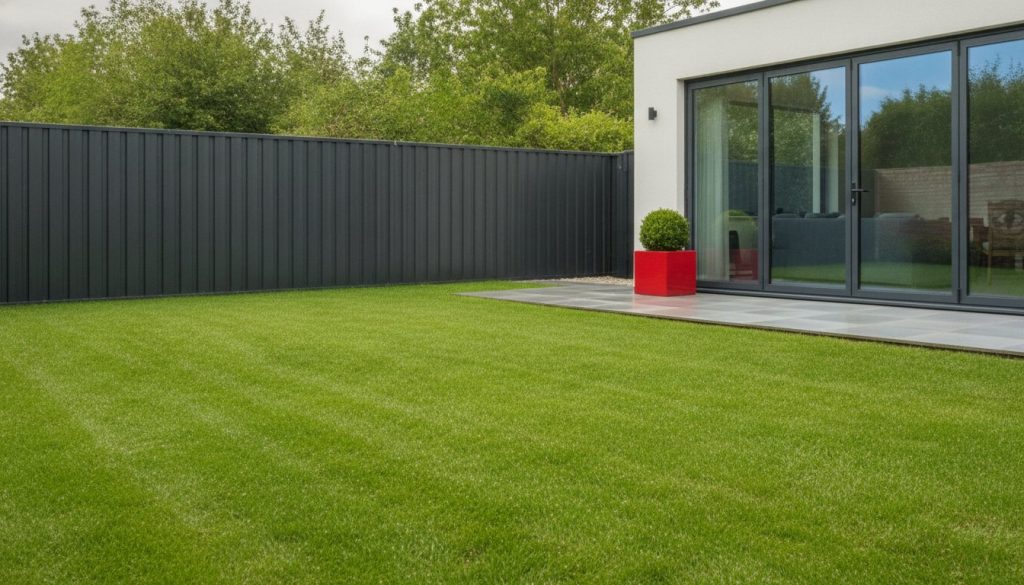
Steel Panel Fencing: Maintenance-Free Garden Security
How much of your life have you spent painting, patching, or picking up timber fence panels after a typical British gale? It’s a frustrating cycle that many homeowners simply accept as part of garden ownership. You spend your weekends applying expensive treatments, only to find the base of the wood rotting or the panels rattling during the next storm. It’s time to stop treating your boundary as a temporary fixture. Choosing steel panel fencing residential systems transforms your garden from a high-maintenance chore into a secure, permanent retreat.
You deserve a fence that looks as good in ten years as it does on the day it’s installed, without ever needing a paintbrush. We’ll show you how modern steel fencing provides a stylish, architectural aesthetic that complements your home whilst offering the durability timber simply cannot match. From retrofitting into your existing concrete posts to benefiting from a high-density insulated core, you’ll discover how to achieve a maintenance-free garden that stays silent in the wind and adds genuine value to your property.
Key Takeaways
- Discover how a high-density insulated core provides superior durability and sound dampening compared to traditional timber or thin, single-sheet metal alternatives.
- Learn why steel panel fencing residential upgrades offer significant long-term savings by removing the ongoing labour and cost of annual painting and rot treatments.
- Master the “Panel Swap” method to transform your garden boundary in a single afternoon; this process uses your existing concrete posts for a straightforward DIY installation.
- Understand how modern steel designs are engineered to withstand harsh UK winds, providing a secure and quiet boundary that won’t rattle or blow out during storms.
- See how to coordinate your garden aesthetic with contemporary home features like bifold doors and modern window frames to create a cohesive and valuable property look.
Why Residential Steel Panel Fencing is Replacing Timber in UK Gardens
The traditional British garden has long been defined by the overlap of timber slats. However, a significant shift is occurring amongst homeowners who are weary of the constant battle against the elements. The rise of steel panel fencing residential systems is a direct response to the “disposable” nature of modern timber. Whilst wood was once the only accessible option, it often fails to meet the demands of the damp, windy UK climate. Modern steel panels offer a “fit and forget” alternative that combines architectural clean lines with a level of resilience timber cannot match.
Choosing a permanent material also offers a quieter environmental benefit. Timber fences are often replaced every five to ten years due to structural failure, leading to a cycle of waste and chemical treatments. In contrast, a steel boundary is designed to stay in place for decades. It doesn’t warp, it doesn’t host wood-boring insects, and it remains upright when storms batter the neighbourhood. For many, the move to steel is a pragmatic decision to secure their property once, rather than repeatedly.
The Problem with the Traditional Timber Cycle
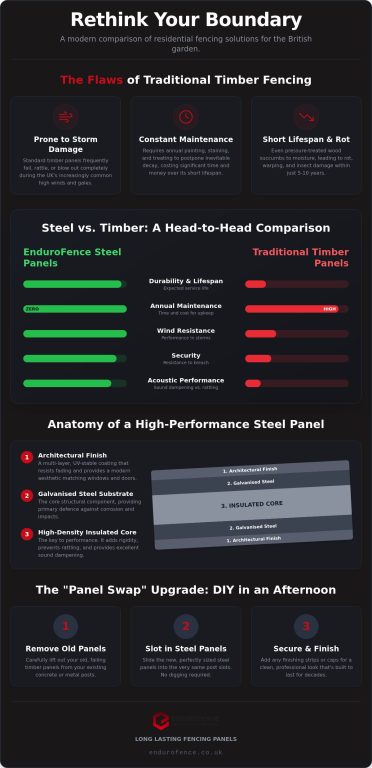
Timber fails. It’s that simple. Even panels sold as “pressure-treated” eventually succumb to the moisture trapped at the base of the fence. This leads to the familiar sight of rotting gravel boards and panels that rattle in the slightest breeze. The hidden cost of timber is the relentless maintenance. Between the price of quality wood stains and the hours of labour spent every spring, the “cheap” option quickly becomes expensive. When you factor in the high frequency of fence panels blowing out of concrete posts in UK gales, the convenience of a maintenance-free steel alternative becomes clear.
Residential vs. Industrial Steel: Knowing the Difference
It’s a common misconception that metal fencing must look like a warehouse perimeter. Whilst industrial sites often use high-strength steel mesh for security, residential panels are designed with home aesthetics in mind. These systems prioritise privacy and style, often featuring a high-density insulated core that provides incredible rigidity without the industrial “clank”.
This construction ensures the panels are silent and solid. They meet the British Standard BS 1722-14:2017 for performance, ensuring they can handle the weight and wind loads expected in a domestic setting. Because they are available in modern finishes that match bifold doors and window frames, they act as a contemporary backdrop for your plants rather than a distracting eyesore. You get the security of a 2-metre high boundary without compromising the warmth and character of your garden.
The Anatomy of High-Performance Steel Fence Panels
Understanding what goes into a high-quality panel helps explain why it outperforms timber over several decades. Modern steel panel fencing residential systems are not simply thin sheets of metal; they are engineered components designed to meet fencing industry professional standards for safety and longevity. The construction typically involves a galvanised steel substrate, which provides the primary defence against corrosion, followed by multiple layers of primer and a high-grade architectural finish.
This multi-layer approach ensures that the fence remains impervious to the damp UK climate. Whilst timber absorbs water and eventually rots from the inside out, steel provides a permanent barrier. This structural reliability also translates to improved security. It is significantly harder to breach or kick through a solid steel panel than it is to snap a wooden slat, providing homeowners with greater peace of mind.
Why an Insulated Core Matters for Homeowners
The high-density insulated core is the defining feature of a premium panel. Without it, metal fencing can suffer from a “drumming” effect during heavy rain or high winds. The core acts as a structural spine, giving the panel a solid, heavy-duty feel that doesn’t rattle in the posts. It also offers sound-dampening qualities, helping to create a quieter garden environment. On a smaller scale, these thermal properties can help regulate garden microclimates by reducing the amount of radiant heat lost through the boundary.
Durable Finishes and Colour Options
One of the biggest advantages of modern steel is the finish. Unlike timber, which requires annual staining to keep its colour, steel panels use UV-stable coatings. These are designed to resist fading even in direct sunlight. Popular choices amongst UK homeowners include Anthracite Grey, Slate, and classic Ivy Green, which allow the fence to blend seamlessly with modern bifold doors and window frames. You can explore these maintenance-free fence panels to find a style that matches your home’s existing exterior.
Because the colour is baked into the coating during manufacturing, it stays vibrant for years. You won’t find yourself spending your weekends with a paintbrush or dealing with the patchy, weathered look that timber develops after just one season. This permanence is a key reason why steel is becoming the preferred choice for those looking to upgrade their garden boundary once and for all.
Steel vs. Timber and Composite: A Long-Term Value Comparison
When evaluating a new boundary, it is easy to focus on the initial receipt. Timber is undeniably the cheapest option at the point of sale, but that lower entry price is effectively a down payment on future labour. A 20-year lifetime value analysis shows that steel panel fencing residential investments often pay for themselves within the first decade. Whilst wood requires constant attention to prevent decay, steel remains structurally sound and aesthetically identical to the day it was fitted.
Unlike timber, which relies on organic fibres that inevitably break down, steel is immune to common garden pests, mould, and fungal decay. It doesn’t “silver” or fade into a weathered grey as it ages. In high-wind areas, steel panels are particularly effective. They don’t have the flex and snap points of wooden slats, meaning they rarely blow out during a typical British storm. Because steel doesn’t absorb moisture, it won’t double in weight during a downpour, putting less stress on your posts and ensuring the structure remains upright for decades.
Steel vs. Composite Fencing
Composite fencing has gained popularity as a low-maintenance alternative, but it often carries a significantly higher price tag than steel. Steel offers superior structural strength, especially when spanning larger gaps. Some composite boards can sag or warp over time if they are not supported by an extensive internal frame. Steel panels are also lighter and easier to handle during installation. They are designed to slide into existing concrete posts without requiring specialised lifting equipment or the complex clip systems often associated with premium composite brands.
The “Hidden” Costs of Timber Maintenance
The true cost of a wooden fence is hidden in the maintenance aisle of your local DIY store. Over ten years, the cumulative cost of high-quality brushes, sanders, and multiple coats of treatment adds up. Then there is the value of your time. Eliminating the need for annual painting recovers entire weekends that would otherwise be lost to manual labour. A pristine, colour-fast steel fence also maintains your property’s kerb appeal. A rotting or leaning timber fence can detract from a home’s value, whereas a permanent, modern steel boundary signals to potential buyers that the property is well-maintained and secure.
How to Retrofit Steel Panels into Existing Concrete Posts
Many homeowners assume that switching to metal requires a complete garden overhaul, including the removal of heavy concrete posts. In reality, your existing posts are the ideal foundation for a modern upgrade. Most steel panel fencing residential systems are specifically engineered to utilise the standard H-slot channels found in UK concrete posts. This makes the transition a straightforward “Panel Swap” that you can complete in a single afternoon without hiring professional installers or renting heavy machinery.
You only need basic tools for this project: a tape measure, a spirit level, and a pair of sturdy work gloves. Because the steel panels are lightweight compared to timber or concrete alternatives, they are easy to manoeuvre. The most critical step is measuring the width between your posts to ensure a snug fit. If your posts have shifted slightly over the years, you can easily adjust the panel position to ensure they sit level and don’t rattle during high winds. This DIY-friendly approach removes the stress of a major construction project whilst delivering a professional-grade result.
Step-by-Step: Removing Timber and Sliding in Steel
Start by removing your old timber panels. If they’ve swollen with moisture or rotted at the base, you might need a pry bar to ease them out of the concrete channels. Once the old wood is gone, use a stiff brush or a scraper to clear out any debris, moss, or old paint from the post slots. A clean channel ensures the new steel panels slide down smoothly without snagging. Inserting the new panels is a simple case of lifting them into the slots and letting gravity do the work. Always use your spirit level to check the horizontal alignment as you go to ensure a perfectly straight boundary.
Dealing with Concrete Post Covers
Whilst the steel panels look modern, weathered or stained concrete posts can sometimes look out of place next to a fresh finish. You can solve this by using post covers. These are slim steel sleeves that slide over your existing concrete, hiding the grey surface and creating a unified, architectural look. These covers are a major aesthetic benefit, transforming an old-fashioned fence into a contemporary feature. They require no drilling into the concrete and stay secure once the panels are in place. If you’re ready to transform your garden boundary, you can order a Retro Fitting Panel Swap kit to get everything you need for a weekend project.
Designing Your Garden: Choosing the Right Style and Finish
Modern garden design treats the boundary as an extension of the home’s interior. When selecting steel panel fencing residential finishes, you should consider the existing architectural details of your property. If you have recently installed anthracite bifold doors or slate-coloured window frames, choosing a matching fence colour creates a seamless transition from your kitchen to the patio. This level of coordination makes the garden feel like a deliberate outdoor room, often increasing the perceived size and value of the property.
Privacy is another critical design factor. Unlike traditional timber overlap panels that can warp or shrink to create gaps, solid steel panels offer total seclusion. There are no knot-holes to peer through and no slats that will pull apart over time. This makes steel an excellent choice for gardens overlooked by neighbours or those adjacent to public footpaths. By planning your layout to include matching post covers and integrated gates, you can achieve a unified perimeter that looks professional and intentional rather than a collection of mismatched parts.
Creating a Modern Aesthetic with Anthracite Grey
Dark grey has become the definitive choice for contemporary UK garden design. This popularity is rooted in practical design logic. Darker backgrounds make the natural green of your foliage appear more vibrant and lush. Whilst a light-coloured fence can draw the eye directly to the boundary, a dark grey panel recedes into the background, making a small garden feel more expansive. It also coordinates effortlessly with modern outdoor furniture and grey porcelain paving, providing a clean, high-end finish that stays sharp for years without fading.
Next Steps: Getting a Quote and Planning Your Project
Planning your installation is a straightforward process that begins with a tape measure. Start by measuring the total run of your boundary in metres. If you are using existing concrete posts, simply count the number of bays between them. Most standard UK bays are 6 feet wide, which aligns with standard steel panel dimensions. Once you have your total count, you can calculate the number of post covers and gravel boards required to complete the transformation.
Ordering your materials online for national delivery removes the logistical stress of visiting multiple builders’ merchants. You can transform your garden with EnduroFence maintenance-free panels and enjoy a boundary that never needs painting again. Taking the time to measure accurately now ensures your project runs smoothly and your new fence provides the permanent security and style your home deserves.
Secure Your Garden with a Permanent Solution
Upgrading your garden boundary shouldn’t be an annual chore. By choosing steel panel fencing residential systems, you move away from the frustrating cycle of rotting timber and wind damage. These panels are designed specifically for UK gardens, offering a high-density insulated core for superior strength and sound dampening. Because they fit directly into your existing concrete posts, you can achieve a professional, modern look without the upheaval of a full reconstruction. It’s a pragmatic investment that pays for itself through recovered labour and improved property value.
You can finally enjoy a garden that looks pristine year-round, regardless of the weather. Whether you want to match your anthracite window frames or simply want a fence that stays silent in a storm, steel provides the definitive answer. This is the “fit and forget” solution that modern homeowners have been looking for. Start planning your project now to secure your property with a stylish, maintenance-free boundary that stands the test of time. It’s time to stop painting and start enjoying your outdoor space.
Get a Free Quote for Your Maintenance-Free Steel Fencing
Frequently Asked Questions
Will steel fence panels rust over time?
No, high-quality steel panels are engineered to resist corrosion even in the damp UK climate. They feature a galvanised steel substrate protected by multiple layers of primer and a UV-stable architectural coating. This multi-stage finish ensures the metal remains impervious to rust and oxidation for decades. Whilst timber boundaries eventually rot from ground moisture, these steel systems provide a permanent, weather-resistant barrier that maintains its structural integrity without the risk of decay.
Can I install steel panels into my existing concrete posts?
Yes, you can easily retrofit these panels into your existing concrete posts. Most UK garden boundaries use standard H-slot concrete posts, and our steel panels are designed to slide directly into these channels. This “Panel Swap” method allows you to upgrade your garden boundary in a single afternoon without the need for specialised tools or professional installation. It is a straightforward DIY project that utilises your existing foundations to create a modern, secure perimeter.
Do steel fence panels make a lot of noise when it rains?
No, modern steel panels are remarkably quiet during heavy rain or hail. Unlike single-sheet metal cladding which can suffer from a “drumming” effect, premium steel panel fencing residential systems feature a high-density insulated core. This internal layer acts as a sound dampener, absorbing vibrations and ensuring the panels remain silent. This construction provides a solid, premium feel that is often quieter than traditional timber slats which can rattle or creak in the wind.
How do I stop my fence panels from rattling in the wind?
Rattling is usually caused by loose-fitting timber panels or thin metal sheets. You can prevent this by choosing panels with an insulated core, which provides the necessary rigidity and weight to sit securely in the post channels. If your concrete posts have widened over time, you can use simple foam inserts or wedges to ensure a snug fit. Once installed, the structural integrity of the steel ensures the boundary remains silent and stable during UK gales.
Are steel fence panels more expensive than timber?
The initial purchase price of steel is higher than basic timber, but it offers significantly better long-term value. When you factor in the recurring cost of wood stains, brushes, and the inevitable replacement of rotted timber every few years, steel becomes the more economical choice. It removes the “hidden costs” of maintenance and provides a permanent solution. Over a ten-year period, the total expenditure on a steel boundary is typically lower than maintaining a wooden one.
What colours are available for residential steel fencing?
Residential steel panels are available in a variety of contemporary colours designed to complement modern UK homes. Anthracite Grey is currently the most popular choice, as it matches bifold doors and window frames perfectly. Other options include Slate Grey and classic Ivy Green, which blend naturally into garden landscapes. Because these colours are baked into the UV-stable coating during manufacturing, they won’t fade or peel, ensuring your garden maintains a fresh, professional look for years.
Can I cut steel fence panels to a custom size myself?
Yes, you can cut these panels to fit specific gaps using standard power tools. A circular saw or angle grinder fitted with a metal-cutting blade will allow you to adjust the width or height of a panel for a custom fit. It is essential to treat any cut edges with a matching touch-up paint or sealant to maintain the integrity of the weather-resistant coating. This flexibility ensures you can achieve a perfect, gap-free boundary across your entire garden.
Do steel fence panels require any annual maintenance or painting?
No, one of the primary benefits of steel panel fencing residential systems is that they are entirely maintenance-free. You never need to paint, stain, or apply rot-prevention treatments to the panels. The architectural coating is designed to withstand the elements without peeling or fading. Aside from an occasional wipe down with soapy water to remove dust or garden debris, the fence requires no ongoing labour, allowing you to recover your weekends and enjoy your garden.

Leave a Reply