

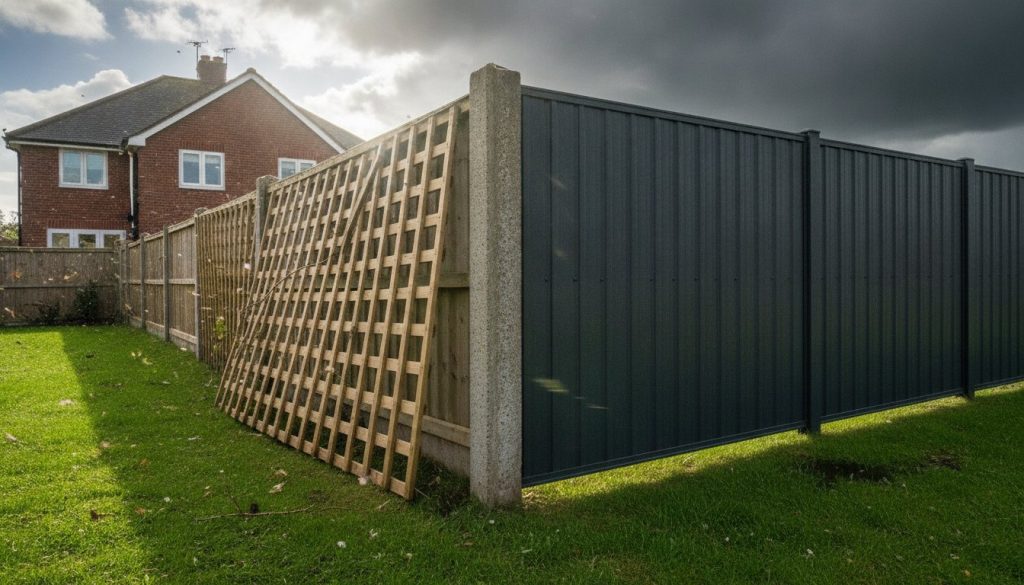
Why Fence Panels Blow Out of Concrete Posts & How to Stop It Permanently
Imagine waking up after a restless night of wind and rain to find your garden boundary has literally vanished. It is a common sight across the UK, where the sound of timber rattling against stone often precedes the sight of fence panels blowing out of concrete posts. You aren’t alone in this frustration; recent data indicates that over a fifth of UK homes have faced storm damage in the last five years, with property insurance payouts reaching record highs in 2025 due to extreme weather.
It is exhausting to constantly lift heavy, sodden timber back into place, especially when you know the next storm will likely cause the same “bow and pop” failure. We understand that you want a garden that feels like a sanctuary, not a source of ongoing labour and expense. This article explains the structural flaws that cause these blow-outs and introduces modern retrofit solutions designed to fit your existing concrete posts. You will learn how to transition to a maintenance-free boundary that withstands the harshest British weather without ever needing a paintbrush or a repair kit.
Key Takeaways
- Identify how the “Wind Sail” effect and gaps in the post recess lead to fence panels blowing out of concrete posts during high winds.
- Understand why temporary DIY fixes like wooden wedges or metal clips often fail to provide a long-term solution against the elements.
- Discover the structural benefits of profiled steel panels, which use rigidity to eliminate the “bow and pop” mechanic common in timber.
- Learn the essential steps for inspecting and measuring your existing concrete posts to prepare for a successful retrofit.
- Explore how maintenance-free steel panels offer a permanent, storm-resistant boundary that requires no ongoing painting or treatment.
Understanding Why Fence Panels Blow Out of Concrete Posts
To solve the problem of garden boundaries failing during a storm, you must first understand the physics at play. A standard six-foot timber fence panel presents nearly three square metres of solid surface area to the wind. When a gale hits, the panel acts exactly like a sail on a ship, capturing air and converting it into hundreds of pounds of kinetic pressure. Since the concrete posts are immovable, this energy has to go somewhere. It forces the panel to flex and strain against its fixings.
This pressure leads to the “bow and pop” mechanic. Because timber is naturally flexible, it curves under intense wind loads. As the centre of the panel bows outward, the horizontal width of the panel effectively shortens. If the wind is strong enough to bend the wood beyond the depth of the concrete channel, the edge of the panel simply slips out. This is the primary reason for fence panels blowing out of concrete posts; the material’s flexibility, often cited as a benefit, is actually its greatest structural weakness.
The Role of the Concrete Post Slot
Most standard UK concrete posts are manufactured with a fixed channel width, usually designed to accommodate various panel thicknesses. This often results in a 5-10mm “rattle gap” between the timber and the concrete. Whilst this gap makes initial installation easier, it creates a structural liability. Wind gusts don’t just push the panel; they create a rapid vacuum effect on the leeward side that pulls the panel back and forth within the track. This constant vibration, or rattling, gradually rounds off the edges of the timber, making it even easier for the panel to escape the slot during the next high-wind event. Understanding the basics of fence construction helps clarify why these tolerances matter so much in volatile British weather.
Why Timber is Particularly Vulnerable
Timber is a biological material that constantly reacts to its environment. During a dry British summer, wood fibres lose moisture and shrink. This contraction can reduce the width of a panel by several millimetres, significantly widening the gap within the concrete post and increasing the risk of fence panels blowing out of concrete posts when autumn storms arrive.
Repeated exposure to moisture also causes “edge rot” inside the concrete channel. Because the slot traps water against the end grain of the wood, the edges soften over time. This material fatigue means the wood no longer has the structural integrity to “grip” the concrete rebate. Even a heavy panel will fail if its edges have softened or if it lacks the internal rigidity to resist bowing when the wind speed picks up.
Common Temporary Fixes for Rattling and Moving Panels
When homeowners first notice the tell-tale rattle of a loose boundary, they often reach for the quickest tool to hand. This usually involves “chocking” the gap between the timber and the concrete. Whilst these methods might provide a quiet night during a light breeze, they rarely prevent fence panels blowing out of concrete posts during a full UK storm. In fact, many of these DIY patches introduce new structural risks that can lead to more expensive repairs later.
Common tactics include jamming wooden wedges or plastic shims into the post slot. The problem is that wood is a dynamic material. A wedge that feels tight in November will likely shrink and fall out during a dry July, leaving the panel loose just as the autumn winds begin. Others try metal clips or expanding foam. Clips often rust or bend under the immense pressure of a gale, whilst chemical foams are nearly impossible to remove when you eventually decide on a retro fitting panel swap. Some even attempt to screw the panels directly into the concrete, which frequently leads to the post cracking or “spalling,” compromising the entire boundary.
The Danger of “Chocking” Your Fence
Rigidly wedging a panel might seem sensible, but it ignores the need for structural flexibility. If a panel is held too tightly at the edges by a wedge, the wind pressure has nowhere to go. This often results in the timber splitting down the centre. In high-velocity wind zones, engineering standards like those found in official building codes emphasise that structures must be designed to withstand specific lateral loads. When you jam a wedge into a concrete post, you’re essentially bypassing the safety tolerances of the original design. This can lead to “flying panels” that don’t just pop out, but actually break apart and cause damage to nearby property or vehicles.
Why Maintenance Becomes a Cycle
Relying on temporary fixes creates a recurring chore. Every season requires a walk of the perimeter to replace fallen wedges or tighten rusted clips. This happens because these methods only address the rattle (the symptom) rather than the lack of rigidity (the cause). Material fatigue in garden fencing is the progressive weakening of timber fibres caused by repeated cycles of wind-induced stress and vibration. Instead of spending your weekends on ladder-work, it’s more efficient to look for a permanent solution that eliminates the gap entirely and provides the structural strength your garden needs.
The Structural Superiority of Steel for Storm Resistance
Whilst timber’s flexibility is often marketed as a benefit, it is the primary cause of fence panels blowing out of concrete posts. Steel offers a fundamentally different mechanical response to wind pressure. Because steel is inherently rigid, it resists the bending and bowing that allow timber panels to slip out of their tracks. This rigidity ensures that the panel maintains its full width against the concrete rebate, even when subjected to intense gale-force gusts.
The strength of modern steel fencing comes from profiled sheets. By folding the metal into specific ridges and channels, manufacturers create immense structural integrity without the need for heavy, bulky materials. These profiles act like internal beams, preventing the panel from deforming under load. When combined with a high-density insulated core, the result is a sandwich construction that provides exceptional sound dampening and rigidity. This solid core prevents the “drum effect” often associated with thin metal sheets, creating a garden boundary that feels as substantial as a brick wall.
Steel vs. Timber: A Comparison of Wind Load
When wind hits a rigid steel surface, the pressure is distributed evenly across the entire vertical length of the concrete post. Timber panels concentrate stress at the centre point where they bow most deeply, which often leads to the wood snapping or popping out. Steel is also a non-porous material. It doesn’t absorb moisture during a wet British winter or shrink during a heatwave. This dimensional stability is crucial; it means the precision fit achieved during installation remains constant for decades. Whilst timber often begins to rot or lose its structural integrity within five years, steel remains secure and maintenance-free.
Eliminating the Rattle Permanently
The constant rattling of a loose fence is more than just an annoyance; it is a sign of ongoing material wear. Because insulated steel panels are manufactured to much tighter tolerances than mass-produced timber, they provide a snugger fit within standard UK concrete post slots. This precision, combined with the natural density of the insulated core, significantly reduces wind-vibration. It is an ideal solution for exposed or coastal gardens where salt air and persistent winds quickly degrade traditional materials. You get a fence that stays perfectly aligned amongst the posts, providing a clean, architectural look that doesn’t require you to chase panels down the street after a storm.

How to Secure Your Fencing Against Future Storms
Securing your garden isn’t just about choosing a better material; it’s about a methodical approach to the installation process. By following a structured plan, you can eliminate the risk of fence panels blowing out of concrete posts for good. The transition from high-maintenance timber to a permanent steel solution is straightforward and can be completed by most homeowners over a single weekend.
- Step 1: Inspect the posts. Check your existing concrete posts for hairline cracks or a significant lean. If the concrete is crumbling at the base, it may need attention before you fit new panels.
- Step 2: Measure the recess. Use a tape measure to check the depth and width of the post channels. Whilst most UK posts are standard, knowing the exact dimensions ensures your new panels will slide in without resistance.
- Step 3: Remove the old timber. This is usually a two-person job, especially if the panels are waterlogged and heavy. Carefully lift them out of the tracks, being mindful of any old nails or rusted clips.
- Step 4: Slide in the retrofit panels. Position the new rigid panels at the top of the posts and guide them down the channels. Because they don’t bow like timber, they should move smoothly to the base.
- Step 5: Final seating check. Ensure each panel is sitting flush against the gravel board. This prevents wind from getting underneath and creating the upward pressure that leads to blow-outs.
Assessing Your Existing Infrastructure
Your concrete posts are the skeleton of your garden boundary. Before installing new panels, take the time to clean the post channels. Use a stiff brush or a flat-head screwdriver to remove old wooden wedges, moss, or debris that has accumulated over the years. This ensures a snug, rattle-free fit. You should also check that your gravel boards are level and stable. If a gravel board has shifted, it can leave a gap that allows wind to enter, potentially causing even the strongest fence panels blowing out of concrete posts if the pressure is high enough.
Choosing the Right Replacement Panel
When selecting your new materials, focus on a high strength-to-weight ratio. Traditional timber sizes often vary by several millimetres due to moisture content, but steel retrofit panels offer consistent precision. This precision is what stops the “rattle and pop” cycle. Many homeowners now choose modern colours like anthracite grey to give their garden a contemporary feel whilst simultaneously upgrading its structural integrity. If you’re tired of the annual cycle of repairs, consider a Retro Fitting Panel Swap to secure your boundary permanently.
The EnduroFence Solution: Retrofitting for Peace of Mind
EnduroFence provides a practical answer to the structural failures of traditional timber. Whilst wooden panels are prone to warping and rot, our maintenance-free steel panels are engineered to provide a permanent fix. They are designed specifically to fit standard UK concrete post slots, ensuring a snug and secure installation that eliminates the risk of fence panels blowing out of concrete posts. By utilizing your existing concrete infrastructure, you can upgrade your garden’s resilience without the upheaval of a full boundary replacement.
The core of this solution lies in the insulated sandwich construction. Each panel features profiled steel sheets bonded to a high-density core, creating a rigid unit that simply cannot bow like timber. This rigidity is what stops the “bow and pop” mechanic during high winds. Because the panels do not flex, they stay firmly seated within the concrete channels regardless of the wind speed. This is a DIY-friendly system that allows most homeowners to transform their garden security in a single afternoon.
Why Homeowners are Switching to Steel
The decision to switch to steel is often driven by a simple cost-benefit analysis. A standard timber fence panel currently costs between £45 and £55. When you factor in the cost of treatments and the high probability of replacement after a storm, timber becomes an expensive recurring cost. Steel offers a “once-and-for-all” solution that requires no painting or staining. Beyond the financial savings, there are significant security benefits. Steel panels are far more difficult to remove or damage than thin timber slats, providing a robust deterrent against intruders.
Sustainability is another key factor. By choosing a material that lasts for decades, you reduce the demand for frequent timber harvesting and the use of chemical preservatives. It is a more responsible way to manage your property whilst ensuring your garden remains a quiet, rattle-free sanctuary during the winter months.
Next Steps for a Storm-Proof Garden
Preparing your garden for the next storm is a straightforward process. Start by measuring the height and width of your current panels to ensure a perfect retrofit fit. Most standard UK concrete posts will accept these panels without any modification. Once you have your measurements, you can request a free quote tailored to your specific garden layout. This ensures you only order exactly what you need for a seamless transition to a maintenance-free boundary.
View the EnduroFence range and secure your garden today to end the cycle of storm damage and enjoy a permanent, professional finish for your home.
A Permanent Fix for Storm-Prone Gardens
Stop the cycle of rattling nights and costly repairs once and for all. We’ve explored how timber’s natural flexibility and the “wind sail” effect lead to fence panels blowing out of concrete posts, and why temporary fixes like wooden wedges eventually fail. By choosing a material designed for the modern British climate, you can eliminate these structural vulnerabilities and secure your boundary against future gales.
Retrofitting your existing concrete posts with steel panels provides a robust, long-term solution that doesn’t bow, rot, or shrink. Our maintenance-free steel construction is specifically engineered to fit standard UK posts perfectly, utilizing a high-density insulated core to ensure maximum rigidity and sound dampening. It is a straightforward upgrade that transforms your garden’s security and aesthetic in a single afternoon without the need for professional installation.
You don’t have to wait for the next storm to act. Take control of your garden boundary now and enjoy the peace of mind that comes with a truly resilient, maintenance-free fence. Upgrade to storm-resistant, maintenance-free steel fencing today and protect your home for the long term.
Frequently Asked Questions
Why do my fence panels rattle so much in concrete posts?
Fence panels rattle because of a structural mismatch between timber and concrete. Most standard UK concrete posts leave a 5-10mm gap to allow for easy installation. Over time, timber shrinks as it dries, which widens this gap and allows the wind to move the panel back and forth. This constant vibration not only creates noise but also wears down the edges of the wood, making it far more likely to fail during a storm.
Can I stop my fence panels from blowing out without replacing the posts?
You can absolutely stop panels from escaping without removing your concrete posts. The most effective method is a retrofit panel swap. By sliding rigid steel panels into your existing concrete tracks, you eliminate the flexibility that causes blow-outs. This approach utilises your current infrastructure whilst upgrading the boundary material to something that won’t bow or flex, providing a permanent solution without the cost of new concrete installation.
Are steel fence panels more wind-resistant than timber?
Steel panels are significantly more wind-resistant than timber because they lack the “bow and pop” mechanic. Timber is flexible and curves under pressure, which effectively shortens its width until it clears the post rebate. In contrast, rigid steel panels maintain their shape and stay firmly within the channel. This structural rigidity is the primary way to prevent fence panels blowing out of concrete posts during high-velocity wind events across the UK.
Do I need special tools to install retrofit steel fence panels?
No specialised tools or professional qualifications are required for installation. The system is designed specifically for straightforward DIY use by homeowners. Once you have removed your old timber panels and cleaned any debris from the concrete channels, the new steel panels simply slide into place. This allows you to transform your garden’s security and appearance in a single afternoon using only basic household equipment like a tape measure and a pair of gloves.
Will steel fence panels fit my existing concrete posts if they are old?
Most steel retrofit panels are engineered to fit standard UK concrete posts, regardless of their age. As long as the posts are structurally sound and not leaning excessively, the new panels will slide into the existing channels perfectly. It is important to clear the tracks of any old wooden wedges, moss, or dirt before you begin. This ensures a smooth fit and maximises the sound-dampening benefits of the insulated core.
How much wind can a steel fence panel withstand compared to wood?
While specific wind ratings can vary, steel panels are fundamentally more resilient because they distribute wind pressure evenly across the concrete post. Timber panels often fail at wind speeds that cause significant bowing, as the wood fibres reach their fatigue point. Steel’s profiled design and insulated core provide the rigidity needed to withstand gale-force gusts that would typically result in fence panels blowing out of concrete posts or snapping the timber slats entirely.
Is it better to wedge fence panels or replace them entirely?
Replacing panels with a rigid alternative is always better than using wedges. Wedging is a temporary fix that often causes more harm than good. Rigidly chocking a flexible timber panel can cause it to split down the centre when the wind hits, as the wood has no room to move. A permanent replacement with steel eliminates the need for wedges entirely, providing a rattle-free boundary that remains secure through every season without ongoing adjustments.
Do steel fence panels require annual maintenance like timber does?
Steel fence panels are completely maintenance-free and don’t require the annual painting, staining, or chemical treatments that timber demands. The profiled steel sheets are highly resistant to the British weather and won’t rot, warp, or crack over time. This removes the ongoing labour and expense associated with garden boundaries, allowing you to enjoy a clean, professional finish for decades without ever needing to pick up a paintbrush or a hammer.

Leave a Reply