

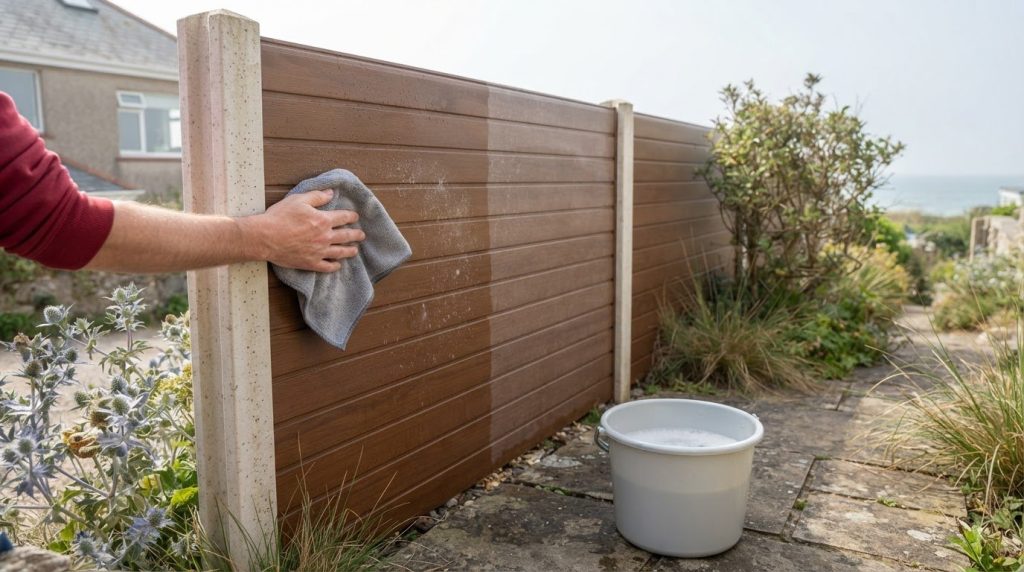
How to clean powder coated fence panels with mild detergent
Could a stronger cleaner leave a powder-coated fence looking worse? The safest starting point for how to clean powder coated fence panels is warm water mixed with mild detergent, applied with a soft cloth or non-abrasive brush. Rinse thoroughly with clean water, and avoid rubbing dry dirt across the finish.
A gentle wash is straightforward, but the right routine depends on the coating’s care instructions and the conditions around your fence. Check the guidance for the finish before choosing a detergent or dilution, and wash more often where coastal salt or industrial deposits collect. Use a mild cleaner, test your method on a discreet patch, and avoid abrasives, unsuitable chemicals and excessive force. These steps help remove everyday grime while protecting the coating.
Key Takeaways
- Use mild detergent with a soft, non-abrasive cloth or brush to lift dirt without roughing up the finish.
- Match the cleaner and dilution to the coating’s care instructions, and test your method on an inconspicuous patch first.
- Set a cleaning routine around the fence’s exposure, paying particular attention to coastal salt and industrial deposits.
- Avoid harsh chemicals, abrasive tools and excessive water pressure, which can damage the coating or force water into joints.
1. Choosing a mild detergent
Choose a mild detergent that suits the installed coating, and dilute it according to the care instructions. For routine washing, use warm water, mild soap and a soft cloth or non-abrasive brush. Abrasive pads, stiff brushes and dry rubbing can scratch the finish by dragging loose grit across it. Work on a cool surface and wet deposits first so they loosen more easily. Test the method on a discreet patch, then check the dried area for any change in colour or sheen.
For mould, algae or lichen, wet the growth with the mild detergent solution and gently loosen it with a soft brush. Clean a small area at a time, using light pressure instead of scraping or applying unapproved chemicals. Rinse each section thoroughly with fresh water so detergent and loosened deposits do not remain on the coating. The same approach works for coastal salt: lift the residue with a sponge or soft brush rather than scouring.
Rust-coloured marks may be deposits on an intact finish, rather than corrosion beneath the coating. Start with warm water and mild soap, rinse, then let the patch dry before assessing it. If the mark remains, don’t assume a stronger chemical or abrasive is safe. Check the coating’s care instructions before trying another method. If a chip exposes metal, clean the damaged area with mild soap and water, then rinse thoroughly to remove residue.
Use only a gentle cleaning method approved for the finish, and stop if the coating lifts, blisters or continues peeling. Rinse panels thoroughly with clean water after washing; detergent residue can leave visible marks as the surface dries. Let the fence dry naturally or finish with a clean cloth. Regular, careful cleaning removes dirt and salt before they build up, helping extend the effective service life of the coating. If a stubborn mark persists after a test-cleaned patch, treat it as a coating-care issue, not a reason to scrub harder.
2. Identifying the coating and checking its care instructions
Start with the product paperwork, installation records or care label to identify the coating and its maker. Powder coatings vary, so don’t assume every outdoor finish accepts the same detergent, dilution or repair product. Follow the instructions for the finish actually installed, including any touch-up guidance. Dulux Powder Coatings recommends gently removing loose deposits, using a soft, non-abrasive tool with mild detergent, then rinsing with clean water.
UK fence manufacturers may provide care instructions for their powder-coated panels, including suitable cleaners and maintenance methods. Follow the guidance for the coating actually fitted, rather than applying a universal schedule or using solvents without checking their suitability. This matters when a fence has been repainted or repaired, as the surface may no longer have only its original finish.
Assess a mark after gentle cleaning and once the surface has dried. Dirt or an orange deposit may sit on an intact coating, while a scratch or chip may expose the material beneath it. Examine the affected patch and surrounding finish, including joints and cut edges. Note whether the damage is a small chip, scratch, bubbling, blistering or wider peeling. A scratch can penetrate the coating even if it looks clean; repeated peeling needs attention to its extent and cause.
For a touch-up, choose the coating maker’s recommended product or an approved equivalent, suitable for outdoor use. Match both colour and sheen, then test it on a hidden area and assess the result in daylight. A repair may weather differently from the factory finish, so a close colour match alone doesn’t guarantee an identical appearance. Record the damage’s location and size, and photograph the surrounding finish for comparison. If corrosion appears at a joint, or the coating lifts around a chip, treat it as more than ordinary surface dirt before deciding on a repair.

3. Adjusting cleaning frequency to site exposure
Set a cleaning routine based on the fence’s surroundings, not a universal calendar. Salt, industrial contamination and heavy use can leave deposits on an exposed powder coat sooner than on one in a sheltered garden. Follow the coating’s care recommendations, adjusting the routine if exposure changes. A clean surface helps preserve the finish’s appearance and makes new damage easier to spot.
Use these environment-based intervals as a starting point for cleaning and checking powder-coated surfaces:
- In a non-hazardous environment, clean and check every 12 months.
- In a tropical environment, clean and check every 9 months.
- In high-traffic areas and around swimming or leisure pools, clean and check every 6 months.
- In marine or industrial environments, clean and check every 3 months.
- For highly critical powder-coated metal parts, clean weekly.
For a typical UK garden, consider what reaches the fence. Coastal salt can build up and dull the colour, so remove deposits rather than leaving them on the surface for long periods. Salt-exposed ironwork should be cleaned at least once a year; marine exposure can call for the shorter three-month interval above. Industrial contamination also calls for more frequent cleaning than a sheltered, non-hazardous setting.
Inspect the fence at least yearly, preferably every six months, and note where deposits collect. Check sheltered corners, joints and areas exposed to road spray or frequent activity. If the appearance changes between planned washes, clean it sooner and review the site conditions. More frequent cleaning does not mean using stronger solvents or scrubbing harder. Follow the coating’s care instructions and record each clean so the routine can adapt to changing exposure.
4. Avoiding abrasives, unapproved chemicals and excessive cleaning force
Protect the powder coat by lifting loose dirt before wiping the fence. Rubbing dry grit across the finish can scratch it, especially around joints and edges. Use a soft cloth or non-abrasive brush, and let the cleaning solution loosen deposits before moving them. Avoid abrasive pads, wire brushes and scouring powders, which can mark the surface and leave visible damage after rinsing.
Keep solvents, petroleum-based products and harsh chemical cleaners away from the coating unless their suitability has been established. An unsuitable cleaner can damage the finish instead of removing the mark. Transport Scotland’s specification rules out grit-blasting, water jetting and chemical cleaners likely to have long-term effects on the substrate. For a stubborn stain, pause and check the coating’s care instructions before trying another product. If the finish lifts, blisters or keeps peeling, stop cleaning and consider a suitable repair.
Pressure washing can force water into fence joints, so don’t use pressure or steam cleaning unless the installed coating’s instructions allow it. If pressure washing is approved, use a low-pressure setting and filtered water. Unfiltered water can degrade the coating or leave stains. Keep the spray away from joints and water-sensitive components. For ordinary garden dirt, a soft brush and hose rinse offer more control.
A non-abrasive generic car wax can be used on powder-coated metal, but avoid compound-type waxes. Apply only a thin layer to a clean, dry surface, and follow the wax and coating instructions. Test it on a hidden patch first, then check the dried finish for changes in colour or sheen. Wax won’t repair scratches or replace damaged powder coating. If exposed fence posts also need attention, explore Post Covers as a separate practical option.
EnduroFence: Maintenance-Free Fence Panels
EnduroFence sells Maintenance-Free Fence Panels for homeowners replacing timber panels while keeping their existing concrete posts. Each panel has profiled steel outer sheets on both sides and a high-density insulated core. The panels are powder-coated, weather-resistant and maintenance-free, with no painting or treating needed.
These panels won’t remove the need to wash away dirt, salt or other deposits, but their finish avoids the regular painting and treatment associated with timber. If your current fence panels need replacing, the Retro Fitting Panel Swap provides a way to update the panels within existing concrete posts. Post Covers are another option for refreshing the appearance of fence posts.
Keep fence care aligned with your garden
Fence care can also be a chance to consider whether the boundary still suits your garden. Think beyond the next wash: privacy, appearance and how the fence fits the space can all shape your decision. Knowing how to clean powder coated fence panels helps you care for the existing finish, but cleaning won’t address a fence that no longer meets your needs. Base any change on the fence’s condition and what you want from your outdoor space.
Use what you’ve learned about how to clean powder coated fence panels as part of a wider plan for the garden. If a coating concern leaves you unsure about the next sensible step, contact EnduroFence for cleaning advice. You can describe what you’ve noticed and discuss a practical way forward. A considered decision keeps fence care manageable and helps you make changes with confidence.
Frequently Asked Questions
What cleaning products are safe for powder coated fence panels?
Use mild soap or detergent with water if it suits the coating’s care instructions. For routine dirt, a small amount of mild detergent in warm water is a practical option when the finish guidance allows it. Don’t mix cleaners or add solvents. If a gate operator or electrical enclosure is nearby, keep rinse water away from those components.
Can you use a pressure washer on powder coated fencing?
Use a pressure washer only if the coating instructions approve it. Excessive pressure can damage the finish or drive water into joints. If permitted, use a low-pressure setting and filtered water, directing the spray away from joints and water-sensitive components. For a powered gate, follow its operating instructions before cleaning near moving parts.
What should you avoid when cleaning powder coated fence panels?
Avoid wire brushes, scouring powders, abrasive pads, solvents and petroleum-based cleaners, which can scratch or affect the coating. Don’t scrub loose grit across a dry panel; wet it first so the particles can be lifted away. If cleaning reveals a crack, unstable support or damaged weld, stop treating it as a surface mark and arrange an assessment of the affected structure.
How often should powder coated fence panels be cleaned?
Base the interval on site exposure and the coating’s care guidance. A non-hazardous environment calls for cleaning and checking every 12 months; marine and industrial environments call for every 3 months. Salt, road spray and industrial deposits can build up faster than garden dust, so inspect the fence between cleans and bring forward washing if deposits collect.
How do you protect powder coated fence panels after cleaning?
Rinse away detergent, then let the panels dry naturally or use a clean, soft cloth. This prevents residue from remaining on the finish. Don’t apply wax, touch-up coating or another treatment automatically; first make sure it suits the installed finish and its care instructions. Keep sprinklers and other water sources from repeatedly leaving deposits on the cleaned surface.

Leave a Reply