

The Complete Guide to Retrofit Fence Panels for UK Gardens
Why spend your bank holiday weekends painting timber or wrestling with heavy, rotting panels that rattle in the slightest breeze? Most homeowners across the UK accept the cycle of sanding, staining, and eventually replacing timber as an unavoidable chore. If you’re looking for a permanent solution, retro fit fence panels offer a way to upgrade your boundary without the mess and cost of removing existing concrete posts.
We understand the frustration of a garden that feels like a constant work in progress. You want a secure, attractive space to enjoy, not a list of maintenance tasks that never seems to end. The good news is that you can achieve a modern, maintenance-free finish whilst keeping your current infrastructure intact. It’s a straightforward swap that prioritises your time and provides a result that lasts for decades rather than just a few seasons.
This guide explains everything you need to know about making the switch. We’ll cover the practical benefits of steel-core panels, from improved wind resistance to better security, and show you how this simple DIY project can be finished in a single weekend. You’ll discover how to achieve a professional, long-lasting finish without the need for specialised tools or ongoing labour.
Key Takeaways
- Learn how to upgrade your garden boundary by sliding retro fit fence panels directly into existing concrete posts, avoiding the cost and mess of full removal.
- Compare the lifespans of different materials to see why steel offers a 25-plus year solution that outperforms traditional timber and composite alternatives.
- Understand the functional benefits of an insulated core, which provides enhanced sound dampening and thermal properties for a more private, peaceful outdoor space.
- Master the simple measuring and preparation steps required to ensure a perfect fit within your existing concrete post channels.
- Discover how to achieve a professional, modern aesthetic in a single weekend using basic DIY skills and no specialised tools.
Understanding Retro Fit Fence Panels: The Smart Way to Upgrade
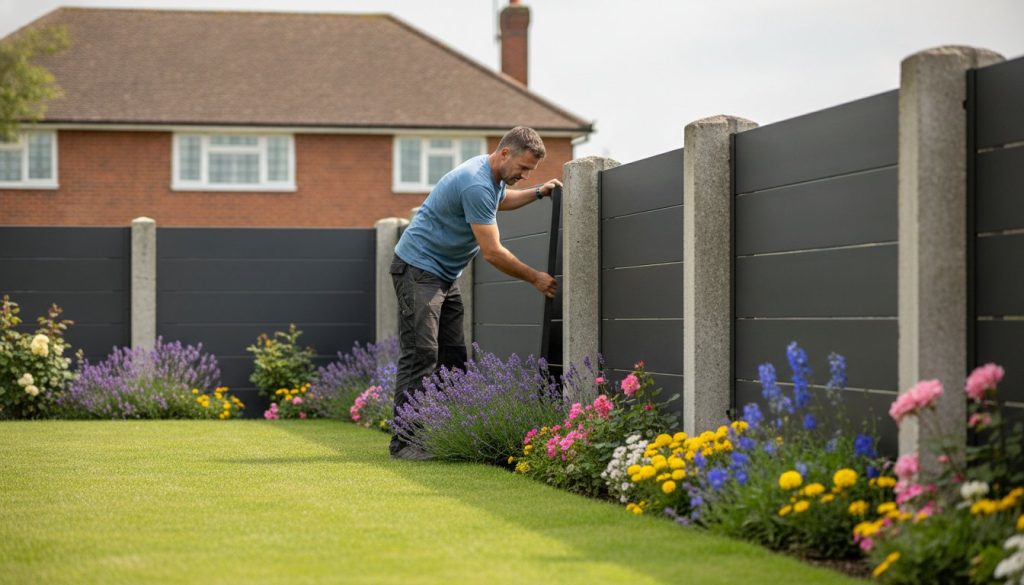
Retrofitting is a straightforward concept that solves a common garden headache. Instead of tearing out your entire boundary, you simply replace the old infill panels whilst retaining the existing concrete posts and gravel boards. This method is often called a “panel swap” and it’s the most practical way to modernise your outdoor space. By using retro fit fence panels, you avoid the heavy labour and high costs associated with a full installation from scratch.
Reusing your existing concrete infrastructure isn’t just about saving money; it’s a sensible environmental choice. Concrete production is carbon-intensive, and disposing of old posts creates significant waste for landfills. Keeping your posts in situ reduces the footprint of your project and preserves your garden’s established borders. For many, this represents a “fit and forget” solution that provides long-term peace of mind without the need for constant upkeep.
Why Homeowners are Choosing Retrofit Solutions
Choosing a retrofit approach significantly reduces the time and effort required for a garden upgrade. A full replacement usually requires digging out old foundations, which often involves heavy machinery and can cause damage to nearby plants and lawns. With a retrofit, you can often transform your entire boundary in a single afternoon without making a mess of your garden beds.
The reduction in labour costs is one of the most immediate benefits. Because the hard work of setting posts is already done, you’re only paying for the materials and a fraction of the time it would take to hire a professional team. This makes it an accessible project for DIY enthusiasts who want a professional result whilst keeping the budget under control. It’s a pragmatic way to get a high-end look with minimal disruption to your daily life.
The Limitations of Traditional Timber Replacements
Whilst there are different types of fencing available, many people find that traditional timber panels are a short-term fix. The UK weather is notoriously tough on wood. Constant cycles of rain and sun lead to rot, warping, and shrinking. When timber panels shrink, they often begin to rattle within the concrete post channels, which is both annoying and a security risk for your property.
The hidden costs of timber also add up quickly over time. Annual staining and treatment take time and money, yet they only delay the inevitable decay. Unlike steel or composite alternatives, timber requires constant attention to maintain its appearance and structural integrity. By choosing retro fit fence panels made from more durable materials, you eliminate these recurring chores and ensure your garden looks its best year after year. It’s a simple switch that provides a permanent fix for a recurring problem.
Steel vs Composite vs Timber: Selecting the Right Material
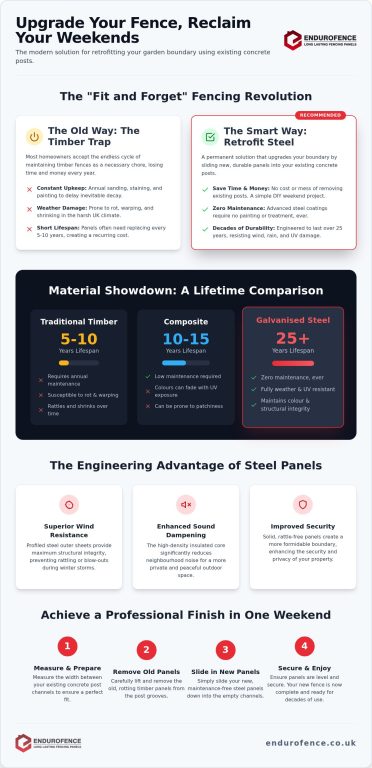
When choosing materials for your garden boundary, the decision usually comes down to a balance between initial cost and long-term durability. Timber has long been the standard choice, but it typically only serves for 5 to 10 years before rot and weather damage take their toll. Composite alternatives offer a step up, usually lasting between 10 and 15 years. However, for those seeking a “once-and-for-all” solution, steel panels are engineered to last 25 years or more. This longevity makes steel the most sustainable choice for retro fit fence panels when calculated over the lifetime of the product.
The difference in maintenance is equally stark. Timber demands annual staining or painting to delay the inevitable decay, which adds significant hidden costs in both time and money. Modern steel coatings, however, require no painting or treatment ever. These advanced coatings also maintain their colour far better than composite dyes, which can often fade or become patchy after prolonged exposure to direct sunlight. By selecting a material that resists UV degradation, you ensure your garden maintains a fresh, modern look for decades rather than just a few seasons.
The Engineering Advantage of Steel Panels
Profiled steel outer sheets provide superior wind resistance, which is a critical factor for UK gardens prone to winter storms. Unlike traditional panels that might rattle or blow out, these panels are designed for maximum structural integrity. The high-density insulated core plays a vital role here too. It provides excellent sound dampening properties, reducing neighbourhood noise and preventing the “hollow” sound often associated with metal fencing. As of 2026, the latest galvanised steel coatings provide an exceptionally resilient barrier against corrosion, ensuring the panels remain rust-free even in damp or coastal environments.
Why Composite Might Not Be the Final Answer
While composite slats are often promoted as a low-maintenance middle ground, they come with specific physical limitations. Over time, the weight of certain composite materials can lead to sagging or warping, particularly in wider spans or during extreme temperature fluctuations. Security is another area where steel holds the advantage. It is significantly harder to breach, cut, or damage than wood or plastic-based composites, providing a more robust barrier for your property. Aesthetically, steel offers a crisp, architectural finish that avoids the “plastic” feel of some cheaper composite brands. If you’re ready to move away from temporary fixes, you can explore the range of maintenance-free fence panels that provide a permanent upgrade for your home.
Preparation: Measuring and Planning Your Retrofit Project
Success with retro fit fence panels depends on the accuracy of your initial site survey. Unlike a brand new installation where you control every variable, a retrofit requires you to work within the existing framework of your garden. Taking the time to assess your concrete posts now will prevent frustration during the installation phase and ensure a professional, secure finish.
You should also evaluate the condition of your existing gravel boards. If they’re level and structurally sound, they can remain as the base for your new panels. However, if they’ve sunken or cracked over time, it’s best to replace them before you begin. Matching your new steel panels to the existing post height is equally important. Measure from the top of the gravel board to the top of the concrete post to determine exactly how many panels or sections you’ll need to reach the desired height.
The Crucial Measurement Guide
Don’t assume that every gap between your posts is identical. Over years of ground movement, concrete posts can shift slightly. You must measure the “clear span” between the internal channels of the posts at three different points: the top, the middle, and the bottom. Use the smallest of these three measurements when planning your panel widths to ensure they don’t bind as you slide them into place.
Check each post for plumbness using a spirit level. If a post is leaning significantly, it can make the channel too narrow for the panel to pass through smoothly. In cases where posts are slightly out of alignment, you might need to use specialised U-channel adapters or trim the panels slightly to accommodate the deviation. It’s better to identify these quirks now than when you’re halfway through the project.
Solving the Rattling Panel Problem
One of the biggest frustrations with traditional timber is the “clatter” they make during high British winds. This usually happens because the concrete channel is wider than the panel itself, leaving a gap that allows for movement. When installing retro fit fence panels, you can solve this once and for all by ensuring a snug fit from the outset.
If your concrete channels are particularly wide, you can use foam inserts or specialised U-channels to take up the slack. These components act as a buffer, gripping the panel firmly and preventing any lateral movement. This doesn’t just stop the noise; it also increases the wind resistance of the entire boundary. By eliminating the rattle, you create a more peaceful garden environment and a fence that feels solid and dependable regardless of the weather.
Step-by-Step Guide: How to Install Retro Fit Fence Panels
Once you’ve completed your measurements and selected your materials, the actual installation process is surprisingly fast. Because you’re performing a “panel swap” rather than a full excavation, most gardens can be completely transformed in a single weekend. The key to a professional finish lies in the preparation of the existing concrete channels and ensuring the base is perfectly level before you begin stacking your new sections.
Phase 1: Removal and Channel Preparation
Removing old timber panels is often the most physical part of the project. If panels have swollen due to damp, they might be wedged tightly into the concrete. A pry bar or a reciprocating saw can help break them down into manageable pieces without damaging the concrete infrastructure. Once the panels are removed, you must prepare the grooves for the new installation:
- Use a stiff wire brush to clear away moss, old paint, or debris from the concrete grooves.
- Check for any old nails or timber splinters that might be caught in the channel.
- Ensure the bottom of the channel is clear so the first panel can sit flush.
A clean channel is vital for a smooth slide-in installation, as even small obstructions can cause the new panels to bind or sit at an angle. Taking five minutes to scrub each post will save significant time and effort when you begin the retro fit fence panels insertion.
Phase 2: Positioning and Sealing
The positioning of your first section is critical for the success of the entire run. Ensure your gravel board or bottom rail is perfectly level, as this base provides the structural support for the entire stack. If the ground has shifted, you may need to shim the base or adjust the gravel board to compensate. Stacking the insulated panels allows you to reach your desired height quickly. Unlike heavy timber, these steel sections are lightweight and easy to handle alone. Simply slide each section down the channels, ensuring the tongue-and-groove joints click firmly into place.
To finish the project, add a top cap to the final panel. This provides a professional, weather-tight seal that protects the insulated core from the elements. If your concrete posts look weathered or don’t match your new colour scheme, you can use specialised Post Covers. These slide over the existing concrete to provide a uniform, modern look that matches your panels exactly. It’s the final step in turning a dated boundary into a contemporary feature that requires no future painting.
Ready to upgrade? You can browse the full range of Maintenance-Free Fence Panels to find the perfect style for your garden transformation.
Transforming Your Garden with EnduroFence Steel Solutions
Investing in a garden boundary shouldn’t be a recurring expense. By choosing steel, you’re opting for a permanent solution that eliminates the cycle of rot and repair. The long-term value of these retro fit fence panels lies in their resilience; they won’t warp, split, or succumb to the damp UK climate. This switch provides a wind-resistant, rot-proof barrier that keeps your garden secure and quiet whilst requiring zero ongoing maintenance.
The “Panel Swap” system is designed specifically for the practical homeowner. You don’t need a team of professionals or a week of clear weather to finish the job. Because the panels are lightweight and engineered to fit standard UK concrete posts, the installation is a straightforward DIY task. You get the satisfaction of a professional-grade result without the professional-grade labour costs, leaving you with more time to actually enjoy your outdoor space.
The Aesthetic Upgrade: Beyond Just a Fence
Modern garden design is as much about style as it is about function. Our steel panels come in a range of contemporary colours, allowing you to coordinate your boundary with existing outbuildings, decking, or patio furniture. This creates a cohesive outdoor living space that feels like an extension of your home rather than just a fenced-off plot. It’s an easy way to modernise an older garden without the upheaval of a full redesign.
To achieve a truly high-end finish, consider the impact of your existing concrete posts. Whilst they are structurally sound, they often look dated, stained, or simply out of place next to new materials. Using Post Covers allows you to hide the grey concrete and match your posts perfectly to your new panels. This small addition transforms the entire look of the boundary, creating a seamless, architectural appearance that adds genuine kerb appeal to your property.
Next Steps: Getting Your Free Quote
Starting your project is a simple process. Before you get in touch, ensure you have your measurements ready, specifically the clear span between your posts and the total height you wish to achieve. You can use our online calculator to get an immediate estimate of the materials required for your specific garden layout. This tool helps you plan your budget with confidence and ensures you order exactly what you need for a successful weekend project.
If you’re ready to leave timber maintenance behind, the EnduroFence team is here to help you finalise your plans. Whether you’re looking for a specific colour or need advice on non-standard post gaps, we provide the technical reassurance you need to proceed. Get your free maintenance-free fencing quote today and take the first step towards a garden that looks great year-round without the hard work.
Secure a Maintenance-Free Future for Your Garden
Upgrading your garden boundary doesn’t have to involve the mess of removing concrete posts or the endless cycle of painting timber. By choosing maintenance-free steel construction, you ensure a boundary that resists rot and stands up to the harshest UK winds. These retro fit fence panels are specifically designed for existing UK concrete posts, making the transition to a modern, durable finish a simple weekend project that any DIY enthusiast can manage.
Beyond the physical strength of profiled steel, the high-density insulated core provides a quieter, more private outdoor environment by significantly improving garden acoustics. It’s a practical investment that prioritises your time and provides long-term peace of mind. You can achieve a professional, high-end look that complements your home without the need for specialised tools or ongoing labour. It’s a straightforward way to add value and style to your property whilst reclaiming your weekends from garden chores.
Browse the EnduroFence range and transform your garden today
Take the first step toward a permanent solution and enjoy a garden that looks its best in every season.
Frequently Asked Questions
Will retro fit fence panels fit my existing concrete posts?
Yes, retro fit fence panels are specifically engineered to slide into standard UK concrete posts. Most concrete posts in British gardens have a channel width between 40mm and 50mm, which accommodates these panels perfectly. Before ordering, you should measure the internal width of your post channels at several points to ensure they are clear of old debris or cement snags that might obstruct the panel during the slide-in process.
How do I stop my new fence panels from rattling in the wind?
You can prevent noise by ensuring a snug fit within the concrete channel. Unlike timber, which shrinks and warps over time, steel panels maintain their shape and structural integrity. If your concrete channels are slightly wider than the panel, you can use specialised foam inserts or U-channel adapters to take up the slack. This creates a secure, rattle-free boundary that remains quiet even during the high winds common in the UK.
Do I need any special tools to install steel fence panels?
No specialised tools or professional qualifications are required for the installation. Most homeowners can complete the job using basic household tools such as a spirit level, a tape measure, and a screwdriver. Because the system is designed for a straightforward panel swap, you don’t need heavy machinery or digging equipment. The panels are lightweight enough for one or two people to handle without difficulty or specialised training.
Can I install these panels if my ground is on a slope?
Yes, these panels are highly adaptable for gardens with varying gradients. You can install them using the stepping method, where each panel is set slightly higher or lower than the previous one to follow the slope of the land. This ensures your boundary remains secure and aesthetically pleasing without leaving large gaps at the bottom. It’s a practical solution for the many sloped garden plots found across the country.
What maintenance do steel fence panels require over time?
These panels are designed to be entirely maintenance-free. The profiled steel outer sheets are treated with durable coatings that never require painting, staining, or annual treatments. To keep them looking their best, an occasional wash with soapy water and a garden hose is all that is needed to remove surface dust or moss. This saves you significant time and money compared to the ongoing upkeep and hidden costs of timber.
Are steel fence panels hotter than timber in the summer sun?
No, the high-density insulated core prevents the panels from becoming excessively hot or radiating heat into your garden. Whilst the steel surface may feel warm to the touch in direct sunlight, the core acts as a thermal barrier. This makes them a comfortable choice for gardens where plants or seating areas are located close to the boundary, as they don’t impact the microclimate of your outdoor space like solid metal would.
Can I cut the panels to size if my post spacing is non-standard?
Yes, you can easily cut retro fit fence panels to fit non-standard gaps between your posts. If your post spacing is narrower than the standard panel width, you can trim the steel sheets and the insulated core using a standard circular saw or angle grinder fitted with a metal-cutting blade. This flexibility allows you to achieve a professional finish regardless of any irregularities or ground movement in your existing garden infrastructure.
How long does a typical retro fit installation take for a standard garden?
A typical garden boundary can usually be transformed in a single weekend. For a standard run of five or six panels, the removal of old timber and the installation of the new steel system often takes just a few hours. Because no digging or concrete setting is required, the project moves much faster than a traditional fence replacement, allowing you to enjoy your modernised and secure garden almost immediately.

Leave a Reply