

Maintenance-Free Fence Panels: 2026 UK Garden Guide
UK homeowners spent an average of £3,047 on home and garden improvements in 2025, yet much of that investment literally rots away behind a layer of fading timber stain. You likely recognise the frustration of watching expensive wooden boards warp, rot, or rattle during the latest winter storm. It’s a cycle of seasonal sanding and staining that feels more like a recurring chore than a home improvement. If you’ve grown tired of the annual expense and effort, you’re not alone. This guide introduces a permanent alternative with maintenance free fence panels designed specifically for the British climate.
We’ll show you how to swap your failing timber for durable, retrofit steel panels that fit perfectly into your existing concrete posts. You can achieve a modern, high-end aesthetic that won’t fade or require professional installation. We’ll cover everything from the latest 2026 garden trends to the practical steps of a “fit and forget” DIY upgrade, helping you reclaim your weekends whilst ensuring your garden remains secure and stylish for decades to come.
Key Takeaways
- Learn why true maintenance free fence panels use engineered steel to eliminate the cycle of rotting, warping, and annual treatments.
- Discover how the combination of profiled steel and an insulated core provides structural rigidity that withstands harsh UK weather.
- Save time and money by retrofitting new panels into your existing concrete posts without the need for professional installation.
- Compare the long-term value of steel against timber to see how you can avoid the recurring costs of paint and repairs.
- Explore how to modernise your garden’s aesthetic using contemporary colours and post covers for a professional, seamless finish.
The End of the Painting Cycle: What are Maintenance-Free Fence Panels?
Maintenance free fence panels aren’t just a luxury; they’re a practical response to the limitations of traditional materials. Whilst timber is the historical standard for British gardens, it’s inherently flawed because it’s organic. True maintenance-free fencing uses non-organic materials, primarily steel, to break the cycle of decay. It’s a shift from products that require constant intervention to those engineered to exist without it. It’s about structural permanence.
Many products are marketed as “low maintenance,” such as pressure-treated timber. However, this is often a misnomer. These materials still absorb moisture and eventually succumb to the British weather. In contrast, maintenance free fence panels don’t just delay the rot; they eliminate the possibility of it entirely by using materials that moisture cannot penetrate. This engineering allows you to reclaim your weekends whilst maintaining a secure, attractive boundary.
Why Timber Fencing Fails in the UK
Our climate is particularly harsh on wood. Damp winters saturated with moisture followed by UV exposure in the summer create a cycle of expansion and contraction. This movement causes wood fibres to split and warp. Whilst annual staining might make a fence look better for a few months, it’s often just masking structural decay. Consider these common failure points:
- Moisture Absorption: Timber acts like a sponge, leading to internal rot that treatments cannot reach.
- UV Degradation: Sunlight breaks down the lignin in wood, causing it to turn grey and brittle over time.
- Fungal Growth: Wet wood is the perfect breeding ground for mould and fungi that eat away at the panel’s strength.
When you factor in the cost of treatments, brushes, and the inevitable replacement every few years, “cheap” timber becomes an expensive long-term burden. It’s a high-effort choice that rarely delivers lasting value.
The Material Shift: Steel vs. Composite and Plastic
When choosing an alternative to wood, it’s vital to understand the materials involved. Some homeowners look at the composition of wood-plastic composites as a solution. Whilst composites are an improvement over raw timber, they can still be prone to fading or sagging over long spans if they lack a metal core. Steel provides a level of structural integrity that PVC or thin composites simply cannot match. It doesn’t warp under heat and won’t become brittle in freezing temperatures.
Modern steel panels use colour-bonded finishes that are baked into the metal. This ensures your garden maintains its aesthetic for years without the risk of fading or “chalking” often seen in plastic alternatives. It’s a shift towards a more durable, professional garden aesthetic that enhances kerb appeal without demanding your labour in return.
The Science of Longevity: Why Profiled Steel and Insulated Cores Outperform Timber
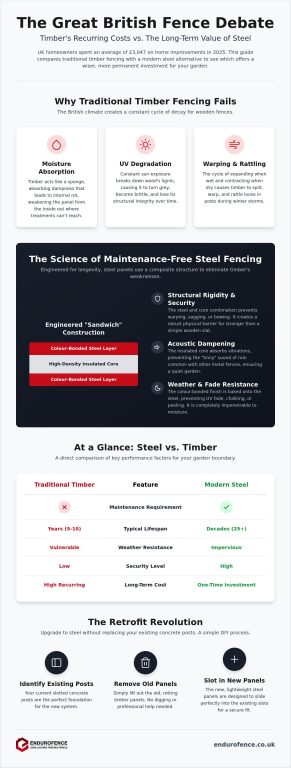
The durability of modern maintenance free fence panels stems from their engineered “sandwich” construction. Unlike a simple wooden board, these panels consist of two profiled steel outer sheets bonded to a high-density insulated core. This design creates exceptional structural rigidity. Whilst timber panels often bow or warp as they lose moisture, the steel-core combination remains perfectly straight. It’s a level of stability that traditional materials simply cannot match, providing a permanent boundary that doesn’t sag over time.
Security is another significant advantage of this material shift. A standard wooden fence panel is often the weakest point of a property boundary, easily breached by removing a few slats. In contrast, maintenance free fence panels are incredibly difficult to penetrate. They offer a robust physical barrier that provides peace of mind for homeowners concerned about garden security. This strength doesn’t come at the expense of weight; the panels are designed for easy handling during a DIY project.
The Role of the High-Density Insulated Core
The core serves several functions beyond structural support. One of the most noticeable benefits is acoustic dampening. Traditional metal fences can sound “tinny” during a heavy British downpour, but the high-density core absorbs vibrations, ensuring your garden remains quiet. It also provides essential thermal stability. Because the core insulates the steel, the panels don’t suffer from the extreme expansion and contraction cycles that cause timber fasteners to loosen. This stability ensures the fence remains silent and secure even during rapid temperature shifts.
Weatherproofing and Colour Retention
Resistance to the elements is baked into the manufacturing process. The steel sheets undergo a rigorous galvanisation process before a high-performance coating is applied. This multi-layered approach prevents rust and corrosion, even in the dampest UK conditions. Unlike traditional masonry paint or timber stains that eventually peel and flake, these finishes are bonded to the metal. This ensures a low-life cycle cost because you won’t spend money on paints or preservatives every few years.
Maintaining a consistent look amongst your garden landscape becomes effortless. The colours are designed to resist UV fading, keeping your anthracite or garden green panels as vibrant as the day they were installed. If you’re ready to see how these materials could transform your own space, you can request a free quote to start your garden upgrade.
Maintenance-Free vs. Traditional Fencing: A Long-Term Value Analysis
Whilst timber panels might appear as the most affordable option at the point of purchase, they often represent a significant long-term liability. Traditional fencing is cheap because it is temporary. In contrast, maintenance free fence panels are an investment in the infrastructure of your garden. When you choose steel, you’re opting for a solution that outlasts multiple generations of wooden slats. It’s a shift from a “buy and repair” mindset to a “fit and forget” philosophy that prioritises long-term financial and personal value.
The true cost of timber is often hidden in the “maintenance tax” homeowners pay every two years. Consider the recurring expense of high-quality wood stains, sandpaper, and replacement brushes. If you hire a professional to treat your fence, the labour costs alone can quickly exceed the original price of the panels. Steel removes these variables from your household budget entirely. Beyond the financial aspect, there is the impact on property value. Modern UK buyers increasingly look for low-maintenance features; a garden bounded by pristine, rot-proof steel is a far more attractive selling point than a weathered, leaning timber boundary.
The 10-Year Cost Comparison
If you calculate the cumulative cost of timber maintenance over a decade, the financial argument for steel becomes clear. A typical wooden fence requires at least five cycles of treatment within ten years to prevent structural failure. When you add the cost of these materials to the initial purchase price, steel fencing often pays for itself within the first five to seven years. It’s also vital to consider the value of your reclaimed weekends. Instead of spending your bank holidays painting fence boards, you can enjoy your outdoor space without a list of chores looming over you.
Durability in Extreme Weather
British storm seasons are becoming more frequent and intense, posing a constant threat to lightweight fencing. Timber panels are prone to “blowing out” because they lack structural rigidity and rely on small nails that pull through wet wood. Maintenance free fence panels provide peace of mind during high winds. Their profiled steel construction and secure fit within concrete posts make them far less likely to fail during a storm. Additionally, steel is the only 100% rot-proof and insect-proof option available. Whilst even the best-treated wood eventually succumbs to ground-level decay or wood-boring pests, steel remains impervious to these biological threats for decades.
The Retrofit Revolution: How to Upgrade Your Garden Without Removing Concrete Posts
Many homeowners delay upgrading their boundaries because they dread the labour of removing concrete posts. Digging out post-mix and heavy concrete is the most physically demanding part of any fencing project. However, if your existing posts are structurally sound and upright, there is no reason to remove them. Retrofitting maintenance free fence panels allows you to leverage your existing garden infrastructure whilst enjoying the benefits of modern materials. This “Retro Fitting Panel Swap” approach turns a week-long professional job into a straightforward weekend DIY project.
These panels are specifically engineered to be compatible with standard UK slotted concrete posts. Unlike timber, which can vary in thickness and quality, steel panels offer a precision fit. They are also significantly easier to handle. A traditional 6ft timber panel can become incredibly heavy when sodden with rain; in contrast, steel sections are lightweight and manageable for a single person to lift. You won’t need specialised tools or professional qualifications; a standard toolkit and a bit of time are usually all that’s required to complete the transformation.
Step-by-Step: Replacing Your Panels
To ensure a smooth transition, start by measuring the gaps between your existing posts. Whilst most UK posts are set at standard widths, it’s vital to check for any slight variations before ordering. Once you have your new panels, the removal of the old timber is the next step. Old wood often swells in the grooves, so you might need to carefully ease them out to avoid damaging the concrete. Once the channels are clear, installation is remarkably simple:
- Slide in the base: Position your first steel section at the bottom of the concrete post grooves.
- Build the height: Continue to stack the sections until you reach your desired height.
- Check alignment: Ensure each layer is seated correctly for a uniform look.
- Add Post Covers: To complete the transformation, use steel post covers to hide weathered concrete and create a seamless, modern finish.
Solving the “Rattling Fence” Problem
One of the most common complaints about traditional fencing is the noise. Timber is an organic material that shrinks as it ages and dries out, leaving gaps in the concrete slots. This results in panels that rattle or “bang” during high winds, which can be both annoying and damaging. Maintenance free fence panels solve this through precision engineering. Because steel doesn’t shrink or warp, the panels maintain a snugger fit within the posts. This creates a much quieter garden environment, even during the UK’s stormier months. If you’re ready to upgrade your boundary, you can request a free quote to discuss your specific garden requirements.
Designing Your Low-Maintenance Garden with EnduroFence
Designing a modern garden is no longer just about the plants; it’s about the architectural frame that surrounds them. High-quality maintenance free fence panels act as a canvas for your outdoor space. By choosing the right finish, you can make a small garden feel larger or turn a standard boundary into a contemporary feature. It’s about combining professional aesthetics with the “fit and forget” convenience that modern homeowners demand. A well-chosen boundary doesn’t just secure your property; it defines its character.
The versatility of steel means it works effectively amongst a variety of property styles. Whether you have a Victorian terrace with traditional red brickwork or a minimalist new-build, there is a configuration that fits. You don’t have to sacrifice style for durability. The goal is to create a seamless transition between your home’s exterior and your garden boundary, ensuring the landscape looks intentional and cared for without requiring your constant attention.
Popular Colours and Finishes
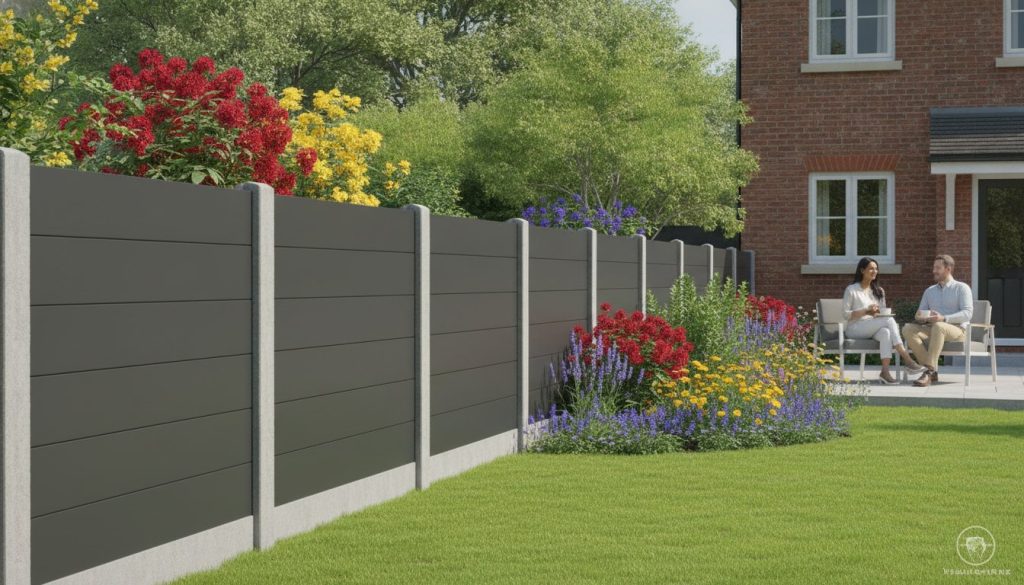
Anthracite grey has become the leading choice for modern UK garden architecture. Its neutral, dark tone provides a sharp contrast against green foliage, making your plants stand out visually. For those who prefer a more traditional aesthetic, woodgrain effects offer the warm appearance of timber with the structural strength of steel. You can also opt for classic garden greens that blend naturally into established, leafy landscapes. When selecting your colour, consider your home’s exterior. Darker maintenance free fence panels often complement lighter bricks, whilst neutral tones can soften a darker facade.
Beyond the Panel: Post Covers and Accessories
A common design hurdle is the presence of weathered, grey concrete posts. Even with new panels, exposed concrete can break the visual flow of a modern garden. Post covers provide an elegant and practical solution. These steel sleeves slide over your existing posts, matching your panels perfectly to create a uniform, high-end look. It’s a cost-effective way to achieve a premium appearance without the expense or mess of a full rebuild. This coordinated approach ensures your garden looks professional and complete.
Planning your upgrade is a straightforward process that starts with accurate measurements of your current boundary. Once you know your requirements, you can move forward with confidence. Request your free EnduroFence quote today and transform your garden.
Reclaim Your Weekends with a Permanent Garden Solution
Upgrading your garden boundary shouldn’t be a recurring chore that demands your time and money every spring. By switching to maintenance free fence panels, you eliminate the need for annual painting and treating whilst ensuring your property remains secure against the unpredictable British weather. These extremely tough and hard-wearing steel panels provide a modern aesthetic that won’t rot, warp, or fade over time.
The retrofit revolution means you don’t need to dig up your garden or hire expensive contractors. If your existing concrete posts are in good condition, you can simply slot in your new steel sections for an immediate transformation. It’s a pragmatic investment that pays for itself through longevity and the total removal of maintenance costs. You can start your journey towards a “fit and forget” garden today by reaching out for professional advice tailored to your specific outdoor space.
Get a FREE Quote for Maintenance-Free Fencing and discover how simple it is to secure a beautiful, lasting boundary for your home. We’re here to help you move beyond temporary timber and enjoy a garden that looks pristine for decades.
Frequently Asked Questions
Do maintenance-free fence panels really never need painting?
Maintenance free fence panels are engineered to eliminate the need for painting or staining entirely. The profiled steel outer sheets feature a durable, colour-bonded finish that is applied during the manufacturing process. Unlike timber, which absorbs moisture and requires annual treatments to prevent rot, these steel panels remain vibrant and structurally sound without any chemical preservatives. You’ll only need an occasional wipe down with soapy water to remove surface dust or garden debris.
Can I fit these steel panels into my existing concrete fence posts?
You can absolutely fit these panels into your existing concrete posts. They are specifically designed to be compatible with standard UK slotted concrete fence posts. This makes the “Retro Fitting Panel Swap” a straightforward DIY project. You simply slide out your old, weathered timber panels and slot the new steel sections into the same grooves. This approach allows you to upgrade your garden boundary whilst avoiding the heavy labour and cost of removing established concrete infrastructure.
Are metal fence panels noisy when it rains or in high winds?
These panels are remarkably quiet because they feature a high-density insulated core between the steel sheets. This sandwich construction provides excellent acoustic dampening, preventing the “tinny” sound often associated with single-sheet metal products during heavy rain. Additionally, the precision fit within the concrete post slots prevents the panels from rattling or banging in high winds. You’ll find they provide a much calmer and quieter garden environment than aging timber panels that have shrunk and loosened.
How do maintenance-free panels compare in price to timber over time?
Whilst the initial purchase price of steel is higher than basic timber, the long-term value is significantly better. Timber panels typically require replacement every seven to ten years and need biennial treatments that cost money for stains and brushes. Maintenance free fence panels are a one-time investment that removes these recurring expenses. Most homeowners find that the system pays for itself within five to seven years when factoring in the saved costs of maintenance materials and labour.
Do I need a professional to install EnduroFence panels?
You don’t need to hire a professional installer to fit EnduroFence panels. The system is designed for straightforward DIY installation and requires no specialised tools or qualifications. Because the steel sections are lightweight and designed to slot directly into existing posts, most homeowners can complete a full boundary swap over a single weekend. This ease of installation reduces your overall project cost as you won’t need to pay for professional labour or heavy plant hire.
What happens if a steel fence panel gets scratched?
If a panel suffers a deep scratch that penetrates the coating, you should apply a small amount of matching touch-up paint to seal the surface. The steel is galvanised to prevent corrosion, but sealing the scratch maintains the aesthetic finish and provides an extra layer of protection. For minor surface scuffs, the durable finish is generally resistant enough to withstand everyday garden activity. These panels are built to be hard-wearing and can handle the typical rigours of a family garden.
Will steel fence panels rust in the wet UK climate?
These panels will not rust in the wet UK climate because they undergo a rigorous galvanisation process. This involves coating the steel in a protective layer of zinc before the final colour finish is applied. This multi-layered defence is specifically engineered to withstand high moisture levels and coastal air. Unlike timber, which rots when exposed to ground-water, steel remains impervious to damp conditions. This ensures your garden boundary stays structurally sound and visually appealing for decades without any degradation.
Are these fence panels resistant to high winds and storms?
Steel panels offer superior resistance to high winds compared to traditional timber. Their profiled construction provides exceptional structural rigidity, making them far less likely to “blow out” during a storm. Because the panels don’t shrink like wood, they maintain a snug fit within the concrete posts, reducing the leverage that wind can apply. This durability provides essential peace of mind during the UK’s increasingly frequent storm seasons, ensuring your garden remains secure and your boundary intact.

Leave a Reply