

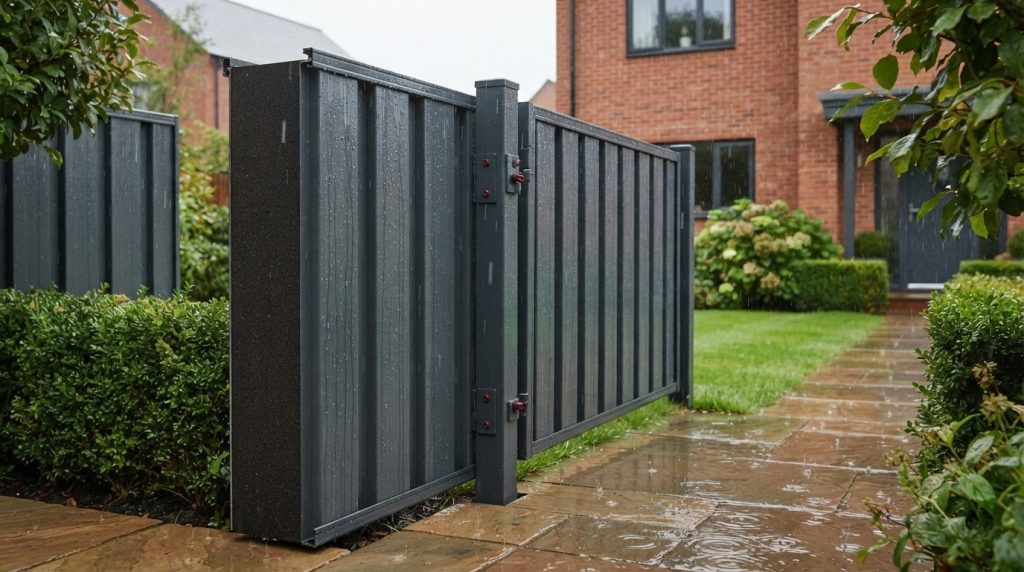
Are Metal Fences Noisy in Rain? What Homeowners Should Know
A metal fence doesn’t automatically turn a shower into a drum solo. If you’re wondering, are metal fences noisy in rain, the answer depends on the panel’s construction, how exposed it is and whether it’s securely fitted. A thin, unsupported sheet may sound different from a profiled panel with a solid core, while loose fixings can create a separate problem: rattling.
It’s a reasonable concern if the fence is close to a patio, bedroom or neighbour’s garden. But metal panels vary, and rain striking a surface is not the same sound as a panel moving or vibrating.
This guide explains what affects rain noise, how solid panels compare with open designs and what to check before choosing. It also compares metal with familiar alternatives such as timber, so you can weigh sound, upkeep and practical expectations. No fence should be assumed to make rainfall completely silent.
Key Takeaways
- Are metal fences noisy in rain? They can be audible, but the sound varies with panel design, exposure and how securely the fence is fitted.
- Look beyond the material: panel construction and support can affect what you hear during rainfall.
- Compare metal and timber by their design and condition, rather than assuming one material is always quieter.
- Before choosing, check the panel and fixings, consider how exposed the fence will be, and listen to a comparable installed panel in rain where practical.
- EnduroFence panels have profiled steel outer sheets and a high-density insulated core, but this construction is not a guarantee of reduced rain noise.
Are metal fences noisy in rain? The straightforward answer
Rain can be audible on a metal fence, but the sound varies with the panel’s design, its surroundings and the conditions. Metal fencing isn’t automatically loud, and no design should be assumed to make rainfall completely silent.
The sound depends on how rain hits the panel and how the panel responds. A light shower may create a soft patter, while heavier rain can make the tapping more noticeable. Exposure and the position of the listener also matter. For a basic explanation of what is rain and how it forms, see Wikipedia. For homeowners, the practical point is that rainfall reaches a fence with varying intensity.
What does rain sound like on a metal fence?
Some people notice a light patter; others may hear sharper taps, particularly in a downpour. There isn’t one sound that applies to every metal fence. Panel construction, nearby buildings or walls, and your position can all affect how prominent the sound seems. If the fence is beside a quiet seating area, consider how close you’ll be and how exposed the panel is to falling rain.
Is rain noise the same as fence rattling?
No. Rain-impact noise is caused by drops hitting the panel. Rattling comes from movement or vibration, which may happen if a panel or fixing is loose. The two can occur together, but they have different causes. A steady patter that follows the rainfall differs from a repeated clatter or vibration as the fence moves.
If you hear rattling, check for loose or moving parts rather than assuming the panel material is responsible. Look at the fixings and how the panel sits in its supports, taking care not to disturb anything unsafe. If movement-related noise is your main concern, a separate guide to fence rattling can help you focus on what to check.
So, are metal fences noisy in rain? They can make an audible sound, but that doesn’t mean every metal fence will be intrusive. First distinguish rain striking the panel from components moving. Then consider how the panel design and garden setting affect what you hear.
Why metal fence panels sound different when rain hits them
Rain noise depends on the panel’s shape and construction, its exposure, and where you’re listening from, not simply on whether it’s made of metal. These factors affect how rain reaches the surface and how noticeable the resulting sound is. That’s why two metal fences in different gardens can sound quite different in the same shower.
How panel shape and construction can affect rain noise
Profiling means shaping an outer sheet into ridges, grooves or other contours rather than leaving it flat. It describes the panel’s form, but doesn’t prove by itself that a fence will be quieter or louder. Overall construction matters too: a thin, exposed sheet is not the same build as a panel made from multiple layers. Without comparable acoustic testing, it’s not possible to claim that a particular design will reduce rain noise by a set amount.
EnduroFence panels have profiled steel outer sheets and a high-density insulated core. This gives you a specific construction to compare with other panels, but it isn’t evidence that the panels are soundproof or eliminate rain noise. Check what a panel is made from and how it is supported. Treat sound claims cautiously unless relevant test results are available.
NASA’s explanation of the sound of raindrops describes how impacts create sound. For a fence, what you hear also depends on the panel receiving those impacts and the conditions around it.
How weather and garden layout affect what you hear
A light shower may produce occasional, softer taps. Heavier rainfall means more drops striking the panel, so the patter may become more continuous or noticeable. The exact sound varies, and there’s no reliable sound level that applies to every fence without testing the specific panel in its setting.
Exposure and position matter too. A fence in an open part of the garden may receive rain differently from one sheltered by buildings or planting. Nearby hard surfaces, such as paving or a wall, may reflect sound towards a patio or window. Stand where you’re most concerned about noise, because the experience beside the fence can differ from indoors or farther away.
Listen for the source as well as the volume. Rain impact follows the rainfall; movement caused by wind or loose components is a separate issue. If you’re comparing options, you can review EnduroFence steel panel details, including their construction, and weigh them against your garden’s exposure and layout.
Metal, timber and other garden fences: comparing rain noise fairly
Material labels alone can’t tell you exactly what a fence will sound like in rainfall. A broad, solid panel and an open design behave differently, and products made from the same material can vary in construction and how securely they’re fixed. Use the comparison below as a checklist, not a ranking of which fence is quietest.
| Fence type | Rain-noise factors to consider |
|---|---|
| Metal panels | Check the panel’s shape and construction, how it is supported, and whether any parts can move. |
| Timber panels | Look at the panel design, condition and fixings. Timber fences also differ in how they’re built and maintained. |
| Open or mixed-material designs | Consider the gaps, exposed surfaces and how the fence sits within the garden. Different parts may respond differently to rainfall. |
Does timber make less noise in rain than metal?
Not in every case. A well-secured timber fence and a thin, loosely fixed metal sheet are not a like-for-like comparison, and neither material guarantees a particular sound. Panel structure and condition matter, as do the site and the listener’s position. Without tests comparing similar designs under the same conditions, avoid assuming timber is always quieter.
What should a fair fence comparison include?
Compare the details, not just the headline material. Check how each panel is constructed, how it attaches to posts or supports, and how exposed it will be to rain. If a supplier makes an acoustic claim, ask whether it relates to the complete fence system and whether comparable test evidence is available. A claim about one component may not describe the sound of the installed fence.
Where practical, assess a comparable panel in rainfall, with permission. Listen from the spot that matters to you, such as a patio or a room beside the garden. This gives a more relevant impression than judging from a product description alone.
Keep sound separate from other buying considerations. Appearance, upkeep and expected durability may influence your choice, but they don’t establish how a fence will sound in rain. EnduroFence steel panels have profiled outer sheets and a high-density insulated core. Consider those construction details on their own terms, without assuming they guarantee reduced rain noise. The fairest answer to “are metal fences noisy in rain?” depends on the specific panel, its fixings and its setting.
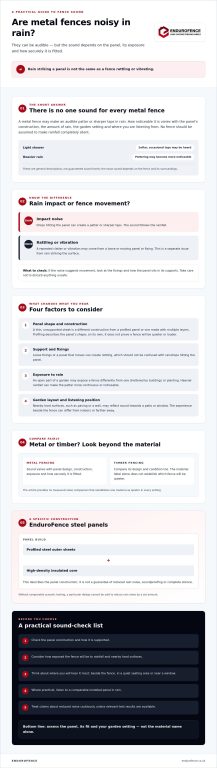
How to judge rain noise before choosing a metal fence
Make your choice more grounded than relying on a material label or a broad sound claim. Start by identifying where noise would matter most. Then check the panel’s construction, consider the garden’s exposure and ask what evidence supports any acoustic claims.
Questions to ask about a metal fence panel
Ask for clear details about the panel rather than assuming all steel fencing is built alike. An insulated core may be part of the construction, but it doesn’t automatically mean the panel is soundproof or that rain will be inaudible. If reduced noise is claimed, ask whether it was tested and what the evidence covers, such as the panel alone or a complete fence system.
- What is the panel made from? Ask how its outer sheets and core are constructed.
- What supports the acoustic claim? Request relevant test evidence and check which panel and installation it applies to.
- How is the panel fitted? Check whether it is designed for existing posts and how it should be secured.
- What should be checked before fitting? Confirm that your posts and openings suit the panel’s specified fit.
These questions help you compare like with like. A product description can explain materials and dimensions, but unless it includes relevant test evidence, don’t treat it as a promise about the sound you’ll hear in your garden.
What can you check in your own garden?
Stand where you’re most concerned about rain noise, perhaps beside a window, seating area or boundary shared with a neighbour. Note how exposed the fence is, how far it is from that spot, and whether nearby hard surfaces could affect what you hear. These observations won’t predict an exact sound level, but they help you judge which details matter in your setting.
If you can safely and practically listen to a comparable installed panel during ordinary rainfall, do so from the place where you expect to spend time. Check that it has a similar design and support; a different panel or garden layout may give a misleading impression. Don’t touch or test a fence in unsafe conditions.
Listen for the difference between rain hitting the surface and unusual movement. A panel that vibrates or clatters raises a separate question about its fixings, support or condition, rather than proving that metal itself is too noisy.
A quick comparison checklist
- Identify the location where sound matters most.
- Check the panel’s outer sheets, core, intended post fit and fixing details.
- Assess exposure and nearby hard surfaces.
- Ask for evidence behind acoustic claims, including what was tested.
- Listen to a comparable installed panel in rainfall if practical.
To assess a steel option against these points, explore EnduroFence panel details, including the construction and intended fit with existing concrete posts.
Choosing steel fencing with realistic expectations about rain
So, are metal fences noisy in rain? They can be audible, but the sound you notice depends on more than the material. Panel construction, how it is fitted, rainfall and the layout of your garden all play a part. Steel can still be a practical option if you choose with realistic expectations rather than assuming any panel will make rain silent.
What EnduroFence panel construction can and cannot tell you
EnduroFence panels have profiled steel outer sheets and a high-density insulated core. These details help you understand what the panel is made from and compare its construction with other options. They are not acoustic test results, though, and don’t establish that the panel prevents, absorbs or reduces the sound of rain. Treat noise claims as something to verify for the specific panel and installation.
This distinction matters if sound is a key concern. A product’s materials and structure provide useful information, but they can’t tell you exactly what you’ll hear beside a particular garden fence. Ask for relevant evidence if a supplier makes a specific acoustic claim, and check which panel or complete system the evidence covers.
A practical next step for your garden
If you’re considering replacing existing panels, first check whether the new panels are designed to fit your concrete posts. Then consider what matters for day-to-day use, including available colours and finishes, maintenance requirements and panel construction. Keep those benefits separate from your assessment of rain noise; one doesn’t prove the other.
Think about where the fence will sit and where you’re likely to hear rain from. A panel beside a window or seating area may matter more than one at a less-used boundary. If possible, listen to a comparable installed panel during rainfall, and ask about fit and fixings as well as materials.
EnduroFence offers maintenance-free steel fence panels designed to fit existing concrete posts, as well as a retro fitting panel swap option. These may be worth considering when assessing replacements, but neither should be treated as a guaranteed noise solution. Review the panel information, check how it suits your existing posts and garden, and request a quote if you’re ready to explore an option.
Choose a fence that suits your garden
So, are metal fences noisy in rain? Rain can be audible, but the sound depends on the panel’s construction, how securely it’s fitted and the conditions around it. Metal isn’t automatically too loud, and timber isn’t guaranteed to be quieter. Compare the specific designs and check any acoustic claims rather than relying on the material name alone.
EnduroFence steel panels have profiled outer sheets and a high-density insulated core, but those details aren’t proof that rain noise will be reduced or eliminated. The panels are designed to fit existing concrete posts and are described as maintenance-free, with a range of colours and finishes. Consider their construction, fit and upkeep alongside where the fence sits and how close it is to windows or seating.
If you’re weighing up a replacement, review the panel information and decide whether it suits your posts and priorities. Explore EnduroFence steel fence panels and request a quote. Check the details, compare your options and take the next step when you’re ready.
Frequently Asked Questions
Does rain make metal fences loud?
Rain can be audible as drops strike a metal panel, but that doesn’t mean every fence will sound loud. If you’re asking, are metal fences noisy in rain, the answer depends on the panel’s construction, the rainfall, nearby surfaces and where you’re listening. Compare the specific design you’re considering. Treat descriptions such as “quiet” as claims to check, not guarantees, unless relevant evidence supports them.
Are insulated metal fence panels quieter in rain?
An insulated core describes part of a panel’s construction, but it doesn’t by itself prove the panel reduces rain noise. Sound performance depends on the complete panel and how it is fitted. For example, EnduroFence panels have profiled steel outer sheets and a high-density insulated core, but those details are not acoustic test results. Check the product specifications and ask what any sound-related evidence measures before drawing a conclusion.
Is a metal fence noisier than a timber fence in rain?
Not necessarily. Material is only one factor in the sound you hear. Panel shape, construction, condition and fixings can all differ, as can the surroundings of each garden. Without comparable testing of the specific products, it isn’t reliable to say that every metal fence is noisier than every timber fence. Compare the actual designs, their condition and any substantiated acoustic information rather than relying on material labels alone.
Can I stop rain noise from a metal fence?
First work out whether you’re hearing rain hitting the panel or a separate rattle caused by movement. Check the fence’s condition and follow the manufacturer’s guidance for the panel and its fixings. If a panel appears loose or damaged, seek suitable advice before attempting a repair. Don’t assume that adding a treatment or adjusting a component will solve the noise until you’ve identified its source.
Do all metal fence panels sound the same in rain?
No. Metal panels vary in profile, construction, size and fixing, while exposure and garden layout also affect what you notice. A panel beside a hard surface or close to a window may be experienced differently from one in another setting. Product descriptions can help you understand construction, but they can’t predict the sound in every garden. Ask about the specific panel and look for relevant acoustic evidence if noise is a key concern.
Should I choose a metal fence if I am worried about rain noise?
You can still consider metal fencing, but assess the particular panel rather than assuming the material will be either quiet or noisy. Check how it is constructed, how it fits your existing posts, how exposed it will be and whether any acoustic claims have supporting evidence. Then weigh those points alongside upkeep, durability and appearance. This gives you a more realistic basis for deciding whether a metal fence suits your garden.
What should I ask a fence supplier about noise in rain?
Ask how the panel is constructed and whether any claim about reducing noise is backed by testing. Find out what was tested and whether the evidence applies to the panel alone or the complete fence system. Also check how the panel is secured and whether it is designed for your existing posts. A clear answer should separate verified acoustic performance from general descriptions of materials or insulation, without promising silence.

Leave a Reply