

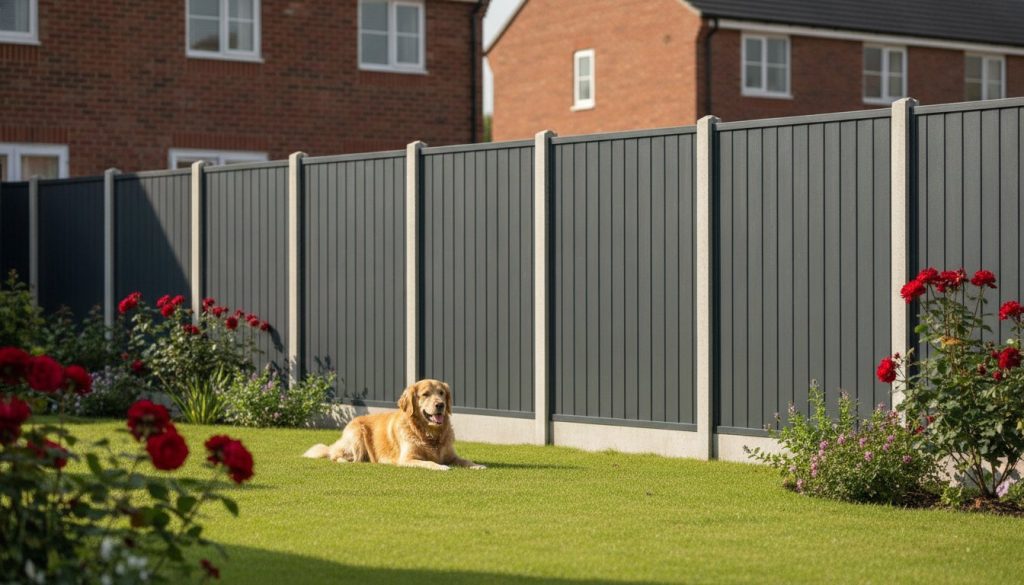
Best Dog Fences for UK Gardens: 2026 Security Guide
Did you know that 50% of UK dog owners express significant concern regarding pet theft, whilst thousands of garden breakouts are reported to national databases every year? It’s a common frustration for many of us. You want your dog to enjoy the garden, but the constant worry of them chewing through a flimsy wooden slat or a panel rattling loose in the wind makes it impossible to relax. Maintaining those old timber fences with annual staining is a chore nobody enjoys, especially when a single storm can blow them straight out of their concrete posts.
Finding the best fence to keep dog in garden doesn’t have to mean compromising on aesthetics or committing to endless DIY. We’ll show you how to secure your perimeter with durable, escape-proof solutions that modernise your garden using zero-maintenance materials. This guide explores the latest in steel panel technology, explaining how you can retrofit your existing concrete posts to create a quiet, puncture-proof barrier. You’ll learn how to stop fence-running, prevent digging, and finally enjoy a garden that’s as secure as it is beautiful.
Key Takeaways
- Identify the specific design features that make up the best fence to keep dog in garden, focusing on height and anti-dig foundations to prevent escapes.
- Understand why traditional timber panels often fail due to rot and chewing, and how steel provides a more durable, secure barrier for high-drive breeds.
- Learn how to simplify your garden upgrade by retrofitting maintenance-free steel panels directly into your existing concrete posts.
- Discover how high-density insulated cores can help reduce barking behaviour by blocking the sights and sounds of passing distractions.
- Explore the long-term benefits of weather-resistant materials that eliminate the need for annual painting or staining whilst providing lasting security.
Why Traditional Timber Fencing Often Fails Dog Owners
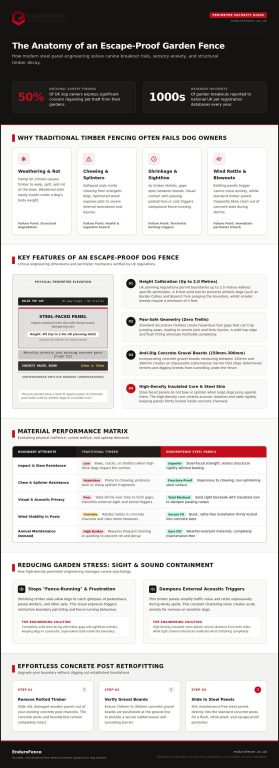
Traditional timber is the most common choice for UK boundaries, yet it frequently falls short for pet owners. Whilst it appears sturdy when first installed, the material is inherently susceptible to the elements and the physical demands of an active pet. Timber is surprisingly fragile. Over time, the structural integrity of wooden slats degrades, turning what should be a secure perimeter into a series of potential escape routes.
The Weakness of Weathered Wood
The UK’s damp climate creates a constant cycle of moisture absorption and drying. This process causes softwood panels to warp, split, and eventually rot at the base where they meet the ground or gravel board. If you are looking for the best fence to keep dog in garden, you’ll quickly realise that weathered timber becomes a safety hazard. Weakened slats are easily broken by a dog’s weight, and the resulting splinters can cause internal injuries if chewed. High winds also pose a risk; standard panels can blow out of their concrete channels entirely, leaving a garden open and unsecured.
Acoustic Triggers and Garden Privacy
Dogs rely heavily on their senses, and thin wooden panels provide poor insulation against external stimuli. Traditional perimeter fence construction and materials often leave small gaps as the wood shrinks over time. These gaps allow dogs to see passing cars, pedestrians, or other animals, which often triggers territorial barking and “fence-running.” Additionally, loose timber panels tend to rattle in the wind. This constant chattering sound can be a source of significant anxiety for nervous dogs, turning their safe space into a stressful environment.
Finally, the burden of maintenance is a significant drawback. To keep timber functional, it requires annual treatment with stains or paints to stave off rot. This maintenance fatigue often leads to owners skipping a year or two, which is all it takes for the wood to become brittle and insecure. A solid, modern alternative is often the best fence to keep dog in garden because it eliminates this ongoing labour whilst providing a much higher level of physical security and sensory calm for your pet.
Key Features of an Escapeproof Dog Fence
Whilst electronic collars and radio-frequency barriers are often marketed as high-tech solutions, they fail to provide the physical security and privacy essential for a calm garden environment. A reliable physical barrier is the most effective way to prevent escapes and protect your pet from external threats. When searching for the best fence to keep dog in garden, you must consider specific design features that address the physical capabilities of your breed.
Optimal Height for Different Breeds
For smaller breeds, a standard 3-foot fence might suffice, but larger or more athletic dogs require significant height. UK planning regulations generally allow for fences up to 2.0 metres on rear and side boundaries without specific permission. It’s best to opt for a 6-foot panel to discourage jumpers. Beyond height, the construction matters. Ensure the panels have a flush fit against the posts to eliminate natural paw-holds that athletic dogs, like Border Collies or Boxers, use to scramble over. A solid top edge is also far safer than a decorative trellis, which can trap paws and cause serious injury. Following Dogs Trust guidance on garden safety means regularly inspecting these boundaries for any developing gaps or weaknesses.
Strength and Impact Resistance
A secure fence must withstand more than just the weather. Large, high-drive breeds often throw their full weight against a perimeter when excited. Timber panels frequently crack or bow under this pressure, but steel-faced panels offer superior impact resistance. These panels don’t “give” or splinter when a dog jumps against them. The high-density insulated core within modern steel systems adds significant rigidity, ensuring the panel remains firmly in place within the concrete post channels. If you’re concerned about your current setup, consider how maintenance-free fence panels can provide the structural strength that traditional wood simply cannot match.
Physical security also involves what your dog can see. Solid panels prevent “fence-running” by blocking the sight of passing cats or pedestrians. This visual containment reduces barking and keeps your dog in a calmer state. To prevent digging, incorporate concrete gravel boards measuring 150mm to 300mm at the base. This creates a subterranean barrier that stops even the most determined terriers from tunnelling out.
Comparing Materials: Timber vs. Composite vs. Steel
Choosing the right material is a balance between initial investment and long-term reliability. Whilst budget often dictates the starting point, the best fence to keep dog in garden is one that doesn’t require replacement every few years. In the damp UK climate, material choice directly impacts how secure your perimeter remains over time.
Timber is the traditional entry-level choice. It’s affordable and widely available, but its lifespan is often limited to 5 to 8 years before rot sets in. For dog owners, the risks are high; moisture softens the wood, making it easy for pets to chew through or for panels to warp and create escape gaps. Composite fencing offers a step up in durability and won’t rot. However, some composite panels can become brittle in extreme cold and are often the most expensive option to replace if a single section is damaged.
Steel represents the most secure and long-lasting solution. Modern steel panels feature a galvanised outer skin and a high-density core, providing a structure that is practically impossible for a dog to penetrate. With an anti-corrosion guarantee of up to 25 years, steel far outlasts traditional alternatives. It provides a permanent barrier that won’t splinter, crack, or degrade under the pressure of a large, active dog.
Maintenance and Upkeep Costs
The phrase “maintenance-free” is often used loosely, but for steel, it’s a technical reality. Unlike timber, which requires annual staining or painting to prevent moisture ingress, powder-coated steel panels never need treatment. They don’t warp, shrink, or expand with the seasons. This stability ensures that the panels remain a flush fit within your posts, maintaining the security of your perimeter without any ongoing labour or hidden costs. It’s a “fit and forget” solution that stays as secure on day 1,000 as it was on day one.
Aesthetic Appeal in Modern Gardens
Upgrading your security doesn’t mean sacrificing style. While weathered timber often turns a patchy grey and looks dated, steel panels maintain their clean finish for decades. You can choose colours that complement your home’s exterior, from contemporary anthracite to traditional greens. Before you start your project, it’s worth checking the UK planning permission limits for garden fences to ensure your new boundary meets local height regulations. Steel provides a sleek, uniform look that instantly modernises a garden whilst offering the best fence to keep dog in garden for total peace of mind.
How to Secure Your Garden Using Existing Concrete Posts
Concrete posts are a staple in UK gardens because they outlast timber panels by decades. Instead of the labour-intensive task of digging up these reinforced structures, you can use them as the foundation for a much stronger boundary. This retrofit approach is often the best fence to keep dog in garden because it provides an immediate security upgrade without the mess of ground reinstatement. Most wet-cast reinforced posts used in the UK feature a 50mm slot, which is perfectly suited for modern, high-durability replacements.
The Simple Retrofit Process
The transition from timber to steel is straightforward. You begin by removing the old, rotted wooden panels, which often simply slide out or require minimal effort to break down. Once the channels are clear, you can measure the internal width between the posts. Most installations follow a standard 1800mm width. The modular nature of modern steel panels means they are delivered in sections. You slide these into the grooves one by one until you reach your desired height. This method requires no specialist tools or heavy machinery. If your garden has a slope, these modular sections allow you to “step” the fence effectively, maintaining a tight seal against the ground to prevent your dog from finding an exit point.
Eliminating Rattle and Gaps
As discussed earlier, the “rattle factor” of thin timber is a major trigger for barking and anxiety. Standard timber lap panels are often only 8mm to 10mm thick, leaving a massive gap in a 50mm concrete slot. Steel panels are manufactured to a thickness of 40mm to 50mm, creating a flush, secure fit that doesn’t vibrate in high winds. This snug seating makes it virtually impossible for a dog to get a muzzle or paw behind the panel to pry it loose. It also ensures that the panels cannot be easily lifted from the outside, providing a boost to your overall home security.
To achieve a truly professional finish, you can incorporate post covers. These are designed to slide directly over existing concrete posts, hiding cracks and weathering whilst matching the colour of your new panels. This creates a cohesive, high-security barrier that looks like a brand-new installation. If you want to transform your garden boundaries without the cost of a full rebuild, explore our Retro Fitting Panel Swap service for a fast and reliable solution.
Why EnduroFence Steel Panels Are the Ultimate Choice for Dog Owners
EnduroFence addresses the specific vulnerabilities of traditional boundaries by providing a professional-grade steel solution. If you’re searching for the best fence to keep dog in garden, you need a material that can’t be compromised by teeth or claws. Our panels use double-sided profiled steel skins that even the most determined chewer cannot penetrate. This structural strength is paired with a high-density insulated core. This core doesn’t just add rigidity; it effectively dampens the sound of passing traffic and neighbours. By reducing these acoustic triggers, you create a quieter environment that helps minimise territorial barking and anxiety. It’s a solution that prioritises both physical security and the mental wellbeing of your pet.
Built for the British Climate
We’ve engineered these panels specifically for the unique demands of the UK market. Unlike timber, which absorbs moisture and eventually rots, our steel construction is entirely weather-resistant. The abrasion-resistant coating protects against heavy rain, frost, and UV damage. You won’t have to deal with panels warping, twisting, or shrinking over time. This stability is crucial for maintaining a secure perimeter; there are no developing gaps for a dog to exploit. Because the panels fit snugly into existing concrete posts, you eliminate the common problem of rattling in high winds. It’s a pragmatic, maintenance-free solution that removes the need for annual staining or painting. You save time and money whilst ensuring your garden remains a safe haven.
A Solution That Grows with Your Home
Investing in high-quality materials provides better long-term value than repeated timber replacements. Every time a wooden panel fails, you face the cost of materials and the effort of installation. Steel panels offer a permanent fix that stays secure for decades. Beyond the immediate benefit to your pet, a secure and modern boundary increases the overall appeal of your property. Future buyers, especially those with pets, will appreciate a garden that is already escape-proof and aesthetically pleasing. You can Request a free quote for your dog-proof garden upgrade to see how easily this system can be integrated into your home. Choosing the best fence to keep dog in garden is an investment in your pet’s safety and your own peace of mind. It’s a straightforward way to modernise your outdoor space whilst solving a persistent problem.
Secure Your Garden for the Long Term
Securing your garden doesn’t have to involve the upheaval of a full rebuild or the frustration of annual timber maintenance. By choosing a material that withstands both the British weather and the physical demands of an active pet, you create a space where your dog can play safely. We’ve explored how retrofitting steel panels into your existing concrete posts provides a robust, rattle-free barrier that eliminates common escape triggers like noise and visual distractions.
Selecting the best fence to keep dog in garden means prioritising durability and sensory calm. Modern steel solutions offer an insulated core that reduces external noise whilst providing a surface that is impossible for even determined chewers to penetrate. This pragmatic approach ensures your perimeter remains secure without the need for constant repairs or staining. It’s a permanent fix for a recurring problem.
If you’re ready to move away from fragile wooden slats, you can upgrade your garden with EnduroFence maintenance-free steel panels. This system is designed to fit your existing concrete posts, offering a professional finish that modernises your home whilst keeping your pet safe. Enjoy the peace of mind that comes with a permanent, high-security solution.
Frequently Asked Questions
What is the best height for a dog fence to prevent jumping?
1.8 metres (approx 6ft) is the recommended height for athletic or large breeds to prevent jumping. Under UK permitted development rights, you can usually install a fence up to 2.0 metres high on side and rear boundaries without planning permission. A solid 6-foot panel is often the best fence to keep dog in garden, as it removes the footholds and visual triggers that encourage dogs to attempt a jump.
Can my dog chew through a steel fence panel?
It’s impossible for a dog to chew through high-quality steel panels. Whilst timber slats are easily splintered and destroyed by bored or anxious pets, the double-sided galvanised steel skins used in our panels provide a puncture-proof barrier. This durability ensures your perimeter remains secure for decades, protecting your pet from the risk of escaping or swallowing dangerous wooden splinters. It’s a permanent solution for even the most determined chewers.
How do I stop my dog from digging under the fence?
Digging is best prevented by installing concrete gravel boards at the base of your boundary. These boards should be seated firmly into the ground, ideally 150mm to 300mm deep, to create a subterranean barrier. When you combine these with steel panels that sit flush in the post channels, you eliminate the soft gaps that dogs often exploit to start tunnelling. This setup provides a secure, dig-proof foundation for any garden.
Will steel fence panels fit into my existing concrete posts?
Yes, these panels are specifically engineered to fit standard UK wet-cast concrete slotted posts. Most existing posts have a 50mm groove designed to hold timber panels. Our modular steel sections are manufactured to slide directly into these channels, creating a snug and rattle-free fit. This allows for a straightforward retrofit panel swap that upgrades your security without the need for heavy machinery or digging up your existing garden structures.
Do I need to paint or treat steel fencing?
You never need to paint, stain, or treat steel fencing. The panels are finished with an abrasion-resistant coating that is entirely weather-resistant and rot-proof. Whilst timber requires annual labour to prevent moisture damage and decay, steel maintains its structural integrity and colour for decades. This maintenance-free design saves you significant time and money over the lifespan of the fence, providing a “fit and forget” solution for busy pet owners.
Are steel fence panels noisy when the wind blows or the dog jumps on them?
Steel panels are remarkably quiet compared to traditional timber. Because they are 40mm to 50mm thick, they sit snugly in concrete post channels and don’t rattle during high winds. The high-density insulated core also acts as a sound dampener, absorbing the noise of impacts if a dog jumps against the surface. This acoustic technology helps reduce the sound of passing traffic, which can often trigger barking in reactive or nervous pets.
How long does it take to replace my old fence with steel panels?
Replacing a standard boundary with steel panels is a fast process that usually takes less than a day. Since the system is designed for a retrofit panel swap, you don’t need to dig new post holes or wait for concrete to set. You simply slide out the old, rotted timber and slide in the new modular steel sections. It’s a clean, efficient way to secure your garden without the mess of a full rebuild.
Is a solid fence better than a mesh fence for a reactive dog?
A solid fence is much more effective for reactive dogs than mesh or wire alternatives. Mesh allows your pet to see every passing distraction, which often leads to territorial barking and fence-running. A solid steel barrier provides total visual containment, meaning your dog stays calmer and more focused on their own garden. This “out of sight, out of mind” approach is the best fence to keep dog in garden for a peaceful outdoor experience.

Leave a Reply