

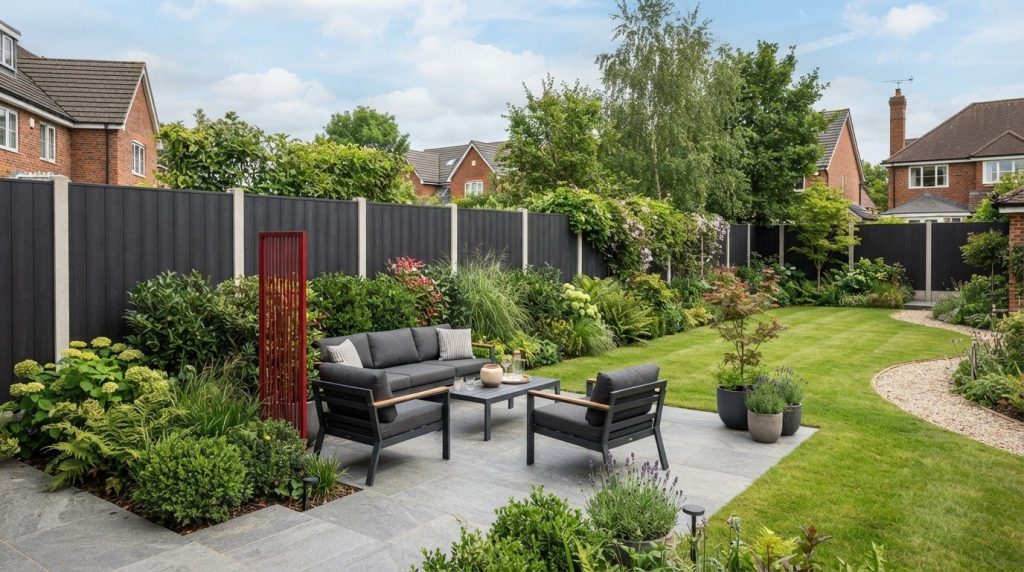
Best Fence for Privacy from Neighbours: 2026 UK Guide
The best fence for privacy from neighbours UK homeowners choose is not always the tallest. A higher boundary may reduce light or feel imposing, while a view from an upstairs window may need a more targeted screen.
If neighbours can see your seating area or garden, start by identifying where the sightline comes from. That helps you focus on the part of the garden that needs screening instead of adding height along the whole boundary.
This guide explains how to assess sightlines, compare privacy options and make practical checks before replacing or upgrading panels. It also covers height rules, which vary across the UK, and ways to balance screening with light and appearance. If your existing concrete posts are suitable to reuse, maintenance-free steel panels designed to fit them may be a retrofit option.
Key Takeaways
- Pinpoint the neighbour’s viewpoint and the garden area you want to screen before choosing a fence based on height alone.
- Compare panels, screens, planting and layered options to balance privacy, daylight, upkeep and available space.
- Before changing a boundary, assess its condition and check the planning rules that apply to your property.
- Use the sightline, existing boundary and maintenance you’re prepared to do to decide which option will work best for your garden.
- If suitable concrete posts are already in place, consider replacement panels, including maintenance-free steel panels with a high-density insulated core.
Best fence for privacy from neighbours: start with the view you need to block
Being overlooked can make a patio or favourite seat feel less comfortable, even when the rest of the garden is screened. Before choosing a taller fence, work out where the view comes from. This helps you compare options based on the privacy you need, rather than assuming one solution will suit every boundary.
The best fence for privacy from neighbours UK gardens need depends on the viewpoint, angle and area you want to protect. Someone looking through a gap at ground level presents a different problem from a neighbour looking down from an upstairs window. General guides to types of fences for privacy can introduce common forms, but your own sightlines are the best starting point.
How to map the garden sightlines that matter
Walk around the garden and pause at the places you use most, such as the patio table, a bench, the lawn or a path beside the house. From each spot, look out at your usual seated and standing eye level. Note which neighbouring windows, balconies or raised areas have a clear view, then mark them on a quick garden sketch.
Record which boundary, if any, sits between you and each viewpoint. A view straight through or over a boundary differs from one looking down into the garden. Note when you use the area and when overlooking is most noticeable. A seating spot used in the evening may need a different response from a garden used throughout the day.
- Mark the activity areas you want to make more private.
- Draw a line from each spot towards the overlooking window or raised area.
- Label whether the view is direct through the boundary or angled down from above.
- Note any existing fence sections, structures or planting that interrupt the view.
This map turns a general feeling of being overlooked into a specific screening task. It may also show that only one part of the garden needs attention.
Why privacy is not just a question of fence height
A boundary fence can screen ground-level views, but it may not block a view from an upper floor. Raising the whole boundary may therefore do little to solve the sightline you’ve identified. When the view comes from above, a screen closer to the seating area or a carefully placed feature may be more relevant. The best position depends on the angle between the observer and the area you want to screen.
Consider what a solid barrier would change around it. A tall, continuous fence could reduce daylight or make a compact garden feel enclosed. A partial screen may preserve more light and outlook, but leave some angles exposed. Compare the coverage you need with the garden’s proportions and how you use the space.
The right screening choice depends on the sightline it needs to interrupt. Once you know which views matter, you can assess fence panels, screens or planting against a clear purpose instead of choosing height first and hoping it solves the problem.
Privacy fence options in the UK: panels, screens, planting and layered solutions
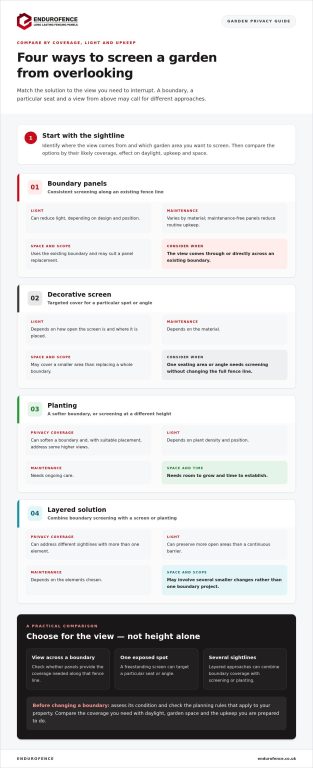
Once you’ve identified the view you want to interrupt, compare solutions by where they’ll work, how much light they’ll preserve and how much upkeep they involve. A boundary panel can provide consistent screening along an existing fence line. A freestanding screen can target one seating area, while planting may soften a boundary or add screening at a different height. Combining approaches can help when one barrier doesn’t address every angle.
There’s no single best material for every garden. Use your sightline map to decide whether you need coverage along a boundary, a local screen or a softer, layered effect. The comparison below is a starting point. Actual coverage depends on position, design and the views you’re trying to interrupt.
| Option | Privacy coverage | Light | Maintenance | Space and likely scope |
|---|---|---|---|---|
| Boundary panels | Consistent screening along a fence line | Can reduce light, depending on design and position | Varies by material; maintenance-free panels reduce routine upkeep | Uses the existing boundary; may suit a panel replacement |
| Decorative screen | Targeted cover for a particular spot or angle | Varies with the screen’s openness and placement | Depends on material | May cover a smaller area than replacing a whole boundary |
| Planting | Can soften a boundary and, with suitable placement, address some higher views | Depends on plant density and position | Needs ongoing care | Needs room to grow and time to establish |
| Layered solution | Combines boundary screening with a screen or planting for different sightlines | Can preserve more open areas than a continuous barrier | Depends on the elements chosen | May involve several smaller changes rather than one boundary project |
When a fence panel is the practical privacy choice
Panels can work well when the view comes through or directly across an existing boundary. Compare the appearance from both sides, durability, maintenance needs and whether the panels fit the posts already in place. A panel’s privacy effect depends on its design and fit, so check it against the gaps and angles on your sightline sketch. Replacing panels may be more proportionate than rebuilding the whole boundary.
When planting or a screen may solve a different problem
Planting can soften the garden and may help with views from above when placed near the area you use, but it takes space and time to establish. The RHS guide to privacy planting offers further advice on using plants for screening. A decorative screen can address one exposed seat without changing the full fence line. If the view comes from several directions, combining a boundary with planting or a separate screen may work better than relying on one barrier.
If boundary panels suit your sightline and your existing concrete posts can be reused, explore maintenance-free steel fence panels as a replacement option. Match your choice to the view you need to screen, the light you want to retain and the level of upkeep that suits your garden.
How to choose a privacy fence without losing light or overlooking UK rules
A privacy upgrade should address the view you’ve identified without making your garden dimmer or more enclosed than you want. Before settling on a design, work through the screening need, daylight, boundary condition and planning position. Rules differ across the UK, and adding height isn’t automatically permitted or guaranteed to stop a view from above.
- Define the view. Pinpoint the spot you want to screen and whether the view comes through the boundary or from above. This helps you judge whether changing the fence is relevant or whether screening nearer the activity area may work better.
- Assess the light. Notice where daylight falls and which parts of the garden you want to keep open. A solid panel may offer more coverage along a boundary, while a more open or partial screen can preserve some light but may not interrupt every view.
- Inspect the boundary. Look at the posts, panels and ground around them. If the existing concrete posts are sound and suitable, replacing panels may be more proportionate than rebuilding the whole boundary. Check that replacement panels are designed to fit the posts.
- Check responsibility and rules. Review relevant property documents to understand boundary ownership and responsibility, then check planning controls for your property. Height limits can depend on the nation, position and restrictions affecting the site.
- Select the solution. Compare options against the sightline, available light, boundary condition and maintenance you’re comfortable with. Choose the smallest effective change that addresses the problem you identified.
What to check before changing a fence boundary
Title deeds and other property documents can help clarify who is responsible for a boundary. Don’t rely on a general assumption about which side of a fence belongs to which neighbour. Ownership, shared arrangements and a conversation with a neighbour are separate matters from whether a screen will block a particular view. Planning conditions or other site restrictions may also apply, so check the details rather than treating general guidance as a ruling for every property.
How to balance privacy, daylight and garden feel
Opaque screening can provide a stronger visual barrier across the area it covers, but may reduce light or make a smaller garden feel more enclosed. Open or partial screening can keep the space feeling lighter, though some sightlines may remain. Before committing, mark the proposed position and height temporarily, then view it from your seating area and the relevant neighbouring angles.
Use the UK fence planning permission rules as a starting point, then check the relevant national guidance and local council requirements for your property. Controls can vary by nation and site, including where special restrictions apply. Check the boundary and applicable planning rules before increasing fence height. This lets you base your privacy decision on both the sightline and the conditions that apply to your garden.
Which privacy fence suits your garden? Compare fit, upkeep and practical effort
The right choice depends on what is already in place and how much change your garden needs. A full boundary rebuild may be unnecessary if the posts are sound and only the panels need replacing. A new fence line won’t necessarily address a view looking down from an upper window. Use this comparison to narrow down the practical options.
| Privacy need | Existing boundary | Maintenance preference | Light and space | Practical effort |
|---|---|---|---|---|
| Screen a direct view through a fence line | Sound posts with panels to replace | Prefer little routine upkeep | Consider how solid panels affect daylight | Panel replacement may avoid rebuilding the whole boundary |
| Screen a specific seat or patio area | Boundary is in good condition but doesn’t cover the key angle | Depends on the screen material | Targeted placement can leave other areas open | May involve a smaller, local change |
| Soften a boundary or add greenery | Fence can remain in place | Prepared to care for plants as they establish | Allow room for growth | Longer-term option rather than immediate coverage |
| Address a view from above | Fence may not be the main issue | Depends on the chosen combination | Consider a screen or planting near the activity area | Targeted or layered approach may be more relevant |
Choose an approach for your boundary and maintenance preference
If you have existing concrete posts, check panel compatibility early. Measure the panel opening and compare it with the replacement panel’s stated fit before deciding. This helps you assess whether a panel swap is a realistic alternative to removing and rebuilding the boundary. If the posts are damaged or the whole layout needs changing, a wider redesign may make more sense.
For a full redesign, weigh panels, screens and planting against the space available and the upkeep you want to take on. Panels can change the screening along a fence line, while planting needs room and time to establish. A screen can focus on one exposed area. The best fence for privacy from neighbours UK gardens need is the one that suits the boundary and sightline, not necessarily the most extensive option.
Decide whether an existing fence can be upgraded
Inspect the concrete posts for visible damage and check whether the existing boundary is suitable to retain. Measure the panel opening carefully, as compatibility matters when choosing replacements. EnduroFence steel panels are designed to fit existing concrete posts, making them an option where those posts can be reused. The panels have profiled steel outer sheets and a high-density insulated core, and are maintenance-free.
If a panel replacement looks practical for your boundary, explore maintenance-free panel options from EnduroFence. Homeowners can replace these panels without specialised tools or qualifications. A panel swap is one route, but it won’t suit every boundary or screening need.
Upgrade privacy with EnduroFence steel panels fitted to existing concrete posts
If the sightline you want to screen crosses an existing fence line, replacing its panels may be a practical alternative to rebuilding the whole boundary. EnduroFence supplies maintenance-free steel panels designed to fit existing concrete posts, so suitable posts can be retained. Check the boundary and panel opening before choosing replacements, then consider whether the panel design suits the privacy you need.
What EnduroFence panels offer for a privacy-focused boundary
Each panel has profiled steel outer sheets and a high-density insulated core. The panels are weather-resistant and maintenance-free, offering an alternative for homeowners who want to avoid routine fence-panel upkeep. A choice of colours and finishes lets you consider how the replacement will look alongside the garden and neighbouring boundary.
These panels are designed for existing concrete posts, but fit depends on the opening and posts in place. Measure the panel space and compare it with the relevant product information before selecting a replacement. A suitable panel can provide screening along its section of boundary, but the result depends on its fit and the sightline. It won’t necessarily block views from elevated windows or provide complete privacy throughout the garden.
Plan a straightforward retrofit panel swap
Start by checking the condition and position of the existing posts. Then measure the panel opening accurately and identify which sections need replacing. If the posts can be reused and the measurements suit the panels, a retrofit swap lets you focus on the boundary sections that need attention instead of starting again with the whole fence.
Panel replacement is designed to be straightforward for homeowners and can be carried out without specialised tools or qualifications. If the posts are unstable or the boundary needs structural work, factor that into your plans before relying on a panel swap.
To assess whether this approach could suit your garden, note the sections you want to screen, check the existing post openings and consider which finish will work with your outdoor space. The best fence for privacy from neighbours UK homeowners choose still needs to match the actual sightline. A panel replacement is most relevant when that view crosses a suitable existing boundary.
Get a free EnduroFence quote to explore a panel option for your boundary. A quote gives you a practical next step for considering replacement panels with your existing posts and privacy needs in mind.
Take the next step towards a more private garden
Use the sightline you identified as your brief: decide which part of the garden needs screening, what you want to preserve and whether the existing boundary can stay. This gives you a clear basis for comparing options instead of making a change that may prove too extensive, too dark or poorly placed.
The best fence for privacy from neighbours UK gardens need is one that works for the view and the way you use the space. If replacement panels seem suitable, take your measurements and boundary requirements into your next decision. A free website quote can help you explore EnduroFence panels, with colours and finishes to consider for your garden.
Explore EnduroFence panels and request a free quote. Take a considered next step towards a garden that feels more comfortable while preserving the light and character you value.
Frequently Asked Questions
Can my neighbour object if I replace a fence panel?
They may raise a concern, but whether you can replace a panel depends on who owns or is responsible for the boundary and any relevant agreements or restrictions. Check your title documents before removing or altering a fence that may belong to your neighbour or be shared. If the boundary is yours, keep any replacement within it. A calm conversation can also help prevent a practical change becoming a neighbour dispute.
Is there a UK-wide legal height for a garden privacy fence?
No, there isn’t one height that applies uniformly across the UK. Rules can differ between nations and depend on where the fence stands and whether the property has restrictions. In England, a rear-garden fence is typically permitted up to 2 metres, or 1 metre beside a vehicle highway or its footpath, without planning permission. Check current national guidance and your council’s requirements before deciding on a height.
What happens if a fence blocks too much light into my garden?
A fence that makes your garden feel gloomy may need a design or position change, but there isn’t a single rule that resolves every daylight concern. First note which area loses light and whether the issue affects a window, planting bed or seating space. Review property restrictions and planning conditions, and speak with your neighbour if the fence is shared. For a specific legal concern, seek independent advice rather than assuming a general rule applies.
Can a fence block the view from a neighbour’s upstairs window?
It may screen part of the view, but a boundary fence often won’t prevent someone looking down from an upper-floor window. Raising it may be subject to planning controls and could still miss the angle into a patio or seating area. A screen or planting nearer the spot you want to protect may address that particular view more directly. Consider the effect on your own light and check applicable rules before adding height.
Do I need to replace concrete posts when upgrading fence panels?
Not necessarily. If the existing posts are stable and the panel opening suits the replacement, you may be able to change the panels while retaining the posts. Check for movement, visible damage and the condition of the slots, then measure the opening accurately before selecting a panel. EnduroFence panels are designed to fit existing concrete posts, so measuring first helps you assess whether this retrofit option suits your boundary.
Will planting trees give privacy faster than installing a fence?
Usually, a fence provides screening as soon as the panels are in place, while trees need time to grow and fill out. The speed and coverage of planting depend on the species, size and conditions, so it’s not a quick substitute for every privacy need. Trees may suit a softer, longer-term screen, particularly where you have room for them. If you need privacy straight away, consider planting as a complement to an existing boundary.

Leave a Reply