

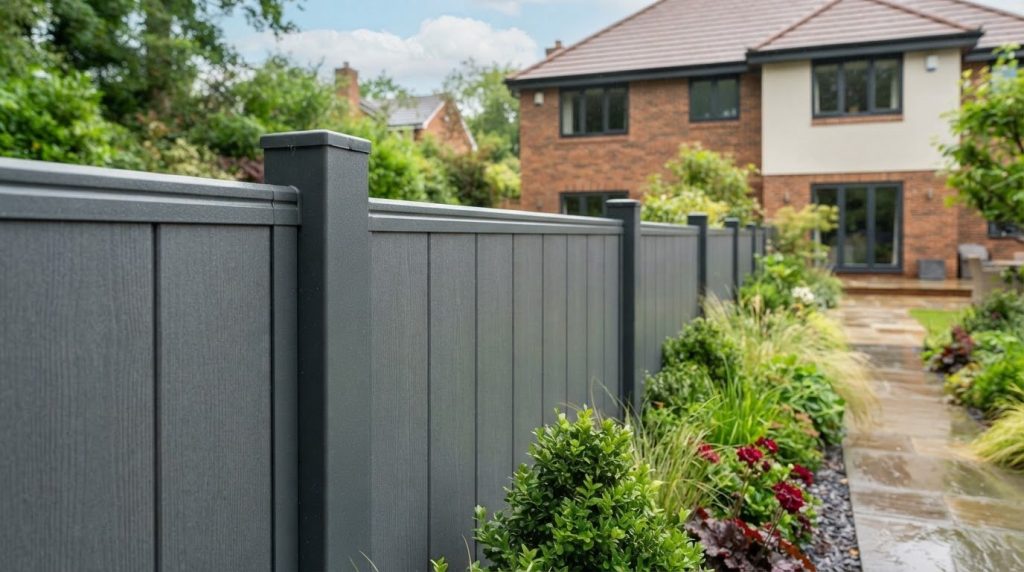
Coloured Metal Fencing for Gardens and Properties
Metal fencing doesn’t have to be plain: yes, you can get coloured metal fencing, with the RAL range commonly used to specify colours for metal products. Anthracite Grey is one example available in a UK aluminium fencing kit.
A coloured finish can help a fence sit more comfortably alongside your home, garden features or existing boundary. The choice is not just about colour, either. Panel design, posts and finishing details all affect the overall look and how the fence fits your property.
This guide explains how to choose a colour and panel design, coordinate fencing components and compare prefinished options. You’ll also learn how to match a fence to your boundary and what to consider when replacing panels in existing concrete posts.
Key Takeaways
- Use the RAL range as a practical reference when comparing colours for metal fencing and coordinating it with your property.
- Consider the panel design, posts and other components together so the finished boundary looks cohesive.
- Prefinished fencing offers a colour choice without needing to apply a finish yourself; compare the available options with your preferred look.
- Powder coating, painting and the choice of metal each affect the finish and overall appearance, so weigh these alongside the fence’s intended use.
- If you’re replacing timber panels in existing concrete posts, explore maintenance-free steel panels and a retro fitting panel swap as an alternative.
Fence colour and design choices
Yes, you can get coloured metal fencing. EnduroFence Maintenance-Free Fence Panels are available in a choice of colours, with wood-grain, textured and flat finishes, as well as mid-rib and multi-rib designs. Consider the panel profile and finish alongside the colour to find an option that suits your garden.
Start by considering the view from both sides of the fence. A dark shade such as Anthracite Grey can create a defined edge beside pale paving or brick, whilst a lighter colour may sit more quietly against planting. An aluminium fencing kit in Anthracite Grey is listed at 3 ft (900 mm) high and 1.8 m (6 ft) long. Treat this as one example, rather than a standard size for every system.
Think about the transformation you want. For example, replacing a weathered-looking boundary with uniform coloured panels can give a garden a more consistent appearance. A simple, uninterrupted design may suit a contemporary patio, whilst a more decorative metal pattern can add detail around a traditional home. Check the panel profile and spacing as well as the colour, since both affect how solid or open the boundary appears.
Panel height and width determine how the fence fits the space and how many sections are needed. Measure the boundary in a straight line, then note corners, slopes and openings before comparing panel sizes. The Anthracite Grey kit’s 900 mm height and 1.8 m length provide a concrete reference for planning, but the right dimensions depend on the layout and fencing system.
If you plan to keep existing concrete posts, choose panels designed to fit them. EnduroFence Maintenance-Free Fence Panels slot into existing concrete posts, making them an option for replacing timber panels without changing the posts. Check the panel height against your concrete post system, with or without gravel boards, before choosing.
There is no single cost per metre for coloured metal fencing in the UK. The total depends on the metal, panel dimensions, finish, number of posts, gates and installation method. A short run with several corners or an entrance can require a different combination of components from a long, straight boundary.
For a scratch, clean the affected area and let it dry before applying a touch-up product compatible with the fence’s finish. Avoid abrasive cleaning that could widen the damaged patch. If the metal is exposed or the scratch is deep, address it promptly to help protect the finish.
Matching panels, posts and gates can be bought as part of a coordinated fencing system. Compare the colour reference and finish across each component, then check that the gate dimensions and fittings suit the opening.
In the UK, coloured metal fencing is sold through fencing manufacturers and specialist suppliers. Installation options include fitting a suitable system yourself or arranging installation separately. Measure the boundary, list posts and openings, and use those details to compare panel designs and component combinations.
Colour options and mixing components
Plan the colour and components together. Compare the panel finish with existing posts, post covers and nearby materials before settling on a combination.
Custom Colour Choices
Choose a colour that complements your brickwork, render or garden features, or creates a deliberate contrast. EnduroFence panels come in a choice of colours, including wood-grain, textured and flat finishes. Decide whether you want the fence to blend into its setting or stand out as a visual feature.
Before choosing, view the colour in the place it will be installed. Daylight, shade and surrounding planting can change how a finish appears outdoors. Compare a sample against fixed features such as a rendered wall or dark window frames, then record the colour reference. This makes it easier to keep panels and related components visually consistent.
Powder-Coating and Painting
Powder-coating and painting are two ways to apply colour to metal. Powder coating applies dry coating material to the surface before it is cured, creating a finished layer. Painting uses liquid coating, applied to a prepared surface. The suitable approach depends on the metal, its existing finish and the intended use of the fence.
For either method, surface preparation affects how well the coating adheres. Dirt, rust or a damaged existing layer can compromise the result, so the metal needs appropriate preparation first. Consider the finish as well as the shade: a smooth surface reflects light differently from a textured one. Match the process to the fencing system rather than treating every metal surface alike.
Colour matching also involves the parts around the panels. Posts can either continue the panel colour for a uniform appearance or contrast with it to define the boundary. A charcoal panel with a matching post gives a restrained, contemporary look; a contrasting post can make the framework more noticeable. Check the effect against gates, adjoining walls and the view from inside the garden.
Post covers offer another way to finish existing posts without changing the overall layout. Choose a tone that complements the panels, then consider whether the cover’s profile and visible edges suit the design. The cover should fit its post and sit neatly beside the panel edges. A consistent finish across these details can make a mixed-component scheme look deliberate.
Mixing colours can work when each shade has a clear role. Use one main colour for the panels, then reserve a contrasting tone for posts or other accents. Repeating that accent on a nearby gate or garden feature can help the arrangement feel coordinated. Avoid selecting shades from memory; compare colour references or physical samples together before finalising the combination.
For an existing boundary, first identify which parts will stay and which will change. Note the post material and colour, then compare those details with potential panel finishes. If post covers are part of the plan, explore post cover options as one way to coordinate the finished boundary.
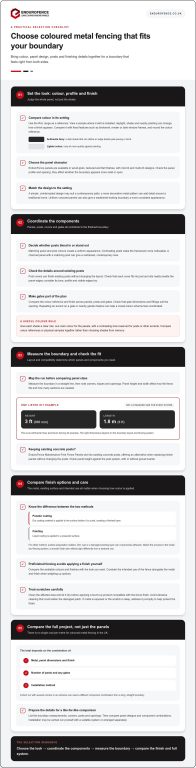
Prefinished fencing
Prefinished metal fencing arrives with its surface colour already applied, so you can plan the boundary around a chosen finish. Compare the coating, metal and maintenance needs before selecting a system for your garden.
Cost Compared with Galvanised Fencing
Coloured fencing and galvanised or uncoated fencing can differ in price, but there is no single UK cost comparison that applies to every system. The final amount depends on the metal, panel size, coating process, preparation and the posts or gates needed for the layout.
Compare like with like: consider the same panel dimensions, material and component list for each finish. A galvanised panel and a coloured panel may involve different surface treatments, whilst a bespoke shade can add steps to production. Include any future cleaning or touch-up work in your assessment, rather than judging only by the initial finish.
Coating Durability and Colour Life
Powder-coated metal fencing has a coloured surface layer, but its durability depends on coating quality, preparation and exposure. Weather conditions, direct sunlight, moisture and contact with garden tools can affect how the finish looks over time. The colour’s lifespan therefore varies by product and setting; avoid assuming a fixed number of years applies to every fence.
Keep the surface clean with a suitable, non-abrasive method, and inspect it after impact or routine garden work. A scratch can expose the material beneath the coating, so deal with damage using a repair product compatible with that finish. Follow the manufacturer’s care instructions for the specific panel.
In England, planning rules can affect fence height and position. According to the UK Government, a fence beside a highway used by vehicular traffic is not permitted development under Class A if it exceeds 1 metre, except for the stated school provision.
That rule concerns permitted development in England and the location described, rather than every garden boundary across the UK. Before planning a fence, identify whether it borders a highway used by vehicles and consider its proposed height. The distinction matters: a coloured coating does not change the planning rule, but the fence’s position and height may.
Prefinished steel fencing avoids the need to apply colour after purchase. Its factory-applied finish also means there is no on-site painting step, although panels still need careful handling during delivery and fitting. Plan storage and installation to reduce scraping against hard surfaces or tools.
Check the coating description and care guidance for the exact fencing system. Ask what preparation the metal receives, how the coating is applied, and which cleaning methods suit the finish. Those details help you compare products on practical grounds, including how well their colour and surface suit the garden’s exposure and everyday use.
For a boundary with existing posts, check how the panels will fit them. EnduroFence Maintenance-Free Fence Panels are designed to slot into existing concrete posts and are fully compatible with slotted concrete posts. Choose the height that suits the post system, with or without gravel boards.
Can metal fencing be powder-coated or painted in a custom colour?
Coloured metal fencing is available as a prefinished product, so you can choose a colour and finish without painting the panels after purchase. EnduroFence panels are powder-coated and maintenance-free, with no painting or treating needed.
Powder coating applies dry coating material to a prepared metal surface, which is then cured to form a finish. Painting uses liquid paint applied to the surface. Both can provide colour, but they involve different processes. For example, a new, unassembled panel may be easier to coat evenly than a fence already fixed between posts.
Custom colour selection starts with a clear reference. In the UK, the RAL range is commonly specified for metal products, so a RAL reference can help describe the shade consistently. Compare a sample against the garden’s brickwork, render or gate before committing. A colour viewed in a bright showroom may appear different beside shaded planting or a north-facing wall.
Preparation is central to the result. Remove dirt and loose material, then deal with rust or flaking coating before applying a new finish. The preparation method must suit the metal and its condition. Painting over a poorly prepared surface can leave an uneven appearance or weak adhesion, whilst a coating applied to clean, suitable metal has a better basis.
Before replacing a fence, check the existing posts and whether gravel boards are in place. EnduroFence Maintenance-Free Fence Panels come in two heights to suit concrete post systems with or without gravel boards. This helps you choose the panel height for your boundary.
Powder coating is generally carried out as a controlled coating process, so the size and construction of the fence affect whether treatment is practical. A large assembled boundary may need dismantling or specialist handling. Painting can be applied to installed metal, but protect nearby paving, plants and walls from drips or overspray. Follow the coating maker’s instructions for preparation, application and drying.
Before selecting either method, consider how the fence will be used. A gate that moves regularly, for example, has contact points where coating can wear through. Plan a suitable approach for hinges, edges and fasteners, rather than focusing only on visible panel surfaces. Use compatible products for repairs so the new finish adheres and blends as closely as possible.
Finally, compare the finished colour across every component. Panels, posts and gate frames may be treated separately, which can create visible shade differences. Coordinate the colour references and finish, then inspect the completed surface in natural light. This practical check helps ensure the custom colour works across the whole boundary.
What types of coloured metal fencing are available, such as steel, aluminium, and wrought iron?
Steel, aluminium and wrought iron can all be used for coloured fencing, but each creates a different look and feel. Compare the metal, panel construction and finish together. For example, a clean-lined steel panel suits a simple garden boundary, whilst decorative wrought iron can bring more detail around an entrance.
Steel fencing is available as solid panels or open designs, with colour applied as a surface finish. Profiled steel panels create a more continuous boundary than spaced rails. Consider the fence’s purpose first: a private garden screen calls for a different design from an open boundary where sightlines matter. Check how the panel edges meet the posts.
Aluminium fencing is often chosen for its crisp, contemporary appearance. Its panels can use horizontal or vertical lines, allowing you to echo details such as slatted garden screens or modern railings. Look at the finish across the panel and frame, then compare the colour with nearby materials. A contrasting post can make the structure more prominent.
Wrought iron fencing is associated with ornamental rails, bars and decorative details. A dark finish can emphasise the pattern without obscuring the view through the fence. For example, a traditional front boundary might use metalwork around an entrance, while a simpler panel design may suit the side garden. Check how decorative sections connect to gates and posts.
Material affects how the fence is made and finished, so don’t compare colour alone. Review the panel shape, openings, joints and edges. Then check whether the posts and gate are made from the same metal or use compatible components. These details matter where a straight run meets a corner, boundary wall or entrance.
For a practical comparison, list your requirements before choosing a type:
- Privacy: compare solid steel panels with open aluminium rails or wrought ironwork.
- Appearance: match a contemporary garden with clean lines, or choose decorative metalwork for a traditional setting.
- Components: compare panel, post and gate finishes as one scheme.
- Existing structure: note the post material and fixing points before selecting replacement panels.
Steel panels with a high-density insulated core offer another construction option for garden boundaries. Their profiled outer sheets provide a more enclosed appearance than open railings. Compare that style with aluminium or wrought iron before deciding which best fits the boundary’s purpose and the look of the property.
If you’re considering steel panels for an existing boundary, explore steel fence panel options as part of your comparison.
EnduroFence: Maintenance-Free Fence Panels
EnduroFence supplies Maintenance-Free Fence Panels for UK gardens, offering a practical option if you want to replace timber panels whilst keeping existing concrete posts. Each panel uses profiled steel outer sheets with a high-density insulated core, and needs no painting or treatment. This suits homeowners who want to reduce ongoing fence maintenance; it’s a different consideration from choosing a particular coloured finish.
EnduroFence’s Retro Fitting Panel Swap is designed for replacing panels in existing concrete posts. Installation requires no additional tools, qualifications or specialised training. EnduroSmart Post Covers offer another way to finish existing posts alongside a panel replacement.
To explore coloured, maintenance-free steel panels for existing concrete posts, visit EnduroFence online and choose the panel height, colour and finish that suit your boundary.
Make your next fencing decision with confidence
If you’re deciding whether you can get coloured metal fencing, focus next on how the boundary needs to work for your property. Consider what you want to screen, which parts of the existing structure you plan to keep, and how much upkeep you’re prepared to take on. These priorities help narrow the options before you settle on a design.
For a garden where existing concrete posts are staying, EnduroFence offers Maintenance-Free Fence Panels, Post Covers and Retro Fitting Panel Swap. These options can help shape your next step, whether you’re replacing panels or considering how the posts will look alongside them.
Share the details of your boundary and what you want to achieve with the finished fence. Contact EnduroFence about coloured fencing to explore a practical way forward. A clear plan for the layout and existing structure makes it easier to choose a fence that feels right for your property.
Frequently Asked Questions
What colours are available for metal fencing in the UK?
Metal fencing is available in a range of colours and finishes, depending on the fencing system. EnduroFence steel panels come in a choice of colours, including wood-grain, textured and flat finishes. Choose between mid-rib and multi-rib designs to vary the panel profile, and compare samples with nearby materials such as brickwork or paving.
How much does coloured metal fencing cost per metre in the UK?
There is no single cost per metre. The total depends on the metal, panel dimensions, finish, number of posts and gates, and installation method.

Leave a Reply