

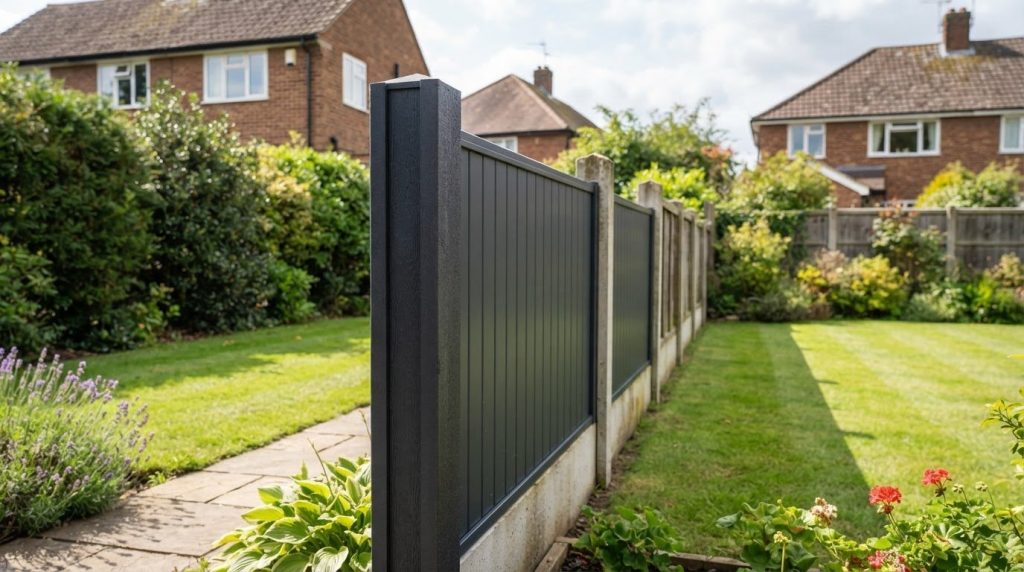
Concrete Post Covers: Refresh Your Garden Fence Without Replacing the Posts
What if you could refresh a tired fence line without pulling out the concrete posts? Concrete post covers change the visible finish of existing posts, so a weathered appearance doesn’t automatically mean replacing the whole fence.
Before choosing a cover, check that the posts are sound and compare their dimensions and shape with the product details. It’s also worth looking at how the panels meet the posts, as the fit of a cover depends on the whole arrangement, not just how the post looks from a distance.
This guide explains what post covers change, what to measure and look at when comparing options, and when covering existing posts may suit your fence. You’ll also learn how to assess fit and finish before choosing, and how a focused update can sit alongside other fencing options, including maintenance-free panels designed for existing concrete posts. These checks can help you decide whether covering the posts is a practical way to give your garden fence a more considered appearance.
Key Takeaways
- Post covers change the visible finish of an existing post, while caps sit on top and serve a different purpose.
- Check the post’s condition and how it meets the fence panels before deciding whether a cover is suitable.
- Concrete post covers can refresh the look of sound posts, but they won’t fix posts that are leaning, unstable or damaged.
- Measure the post and identify its profile, then compare those details with the product’s published specifications.
- Consider whether a focused post update is enough, or whether your wider fence would benefit from a panel refresh too.
What Are Concrete Post Covers, and What Do They Change?
Concrete post covers are outer coverings fitted around existing concrete fence posts to change their visible finish while leaving the original posts in place. They can give a fence line a more coordinated appearance without making post replacement part of the project by default. A cover is different from a concrete cap: a cover goes around the post, while a cap sits on top of it.
Posts help support a fence, whilst the panels create the boundary between them. If you’d like background on the role and types of fencing, that broader context can help clarify how each part contributes to the overall boundary. A post cover changes the appearance of one part, not the fence’s underlying structure.
What does a cover do to an existing concrete fence post?
The original post remains in place, with the cover changing the surface you see from the garden. This is a visual update, not a repair, reinforcement or replacement. For example, if sound concrete posts look stark beside refreshed planting, covers may help create a more consistent appearance along the boundary. They won’t straighten a leaning post or make a damaged one sound.
Keep the distinction clear: the cover alters the visible finish, while the existing post continues to support the fence. A cap, by contrast, sits on top rather than around the post. Neither should be assumed to correct a structural problem.
When might post covers suit a garden update?
Concrete post covers may suit a fence update when the posts look weathered or out of step with the garden, but remain stable and in suitable condition. You might be changing the garden’s colour scheme or refreshing the panels while keeping the existing posts. In those cases, a cover can be part of a focused visual improvement rather than a reason to replace the whole fence.
Look at the fence as a whole before deciding. Do the panels and posts both need a new look, or are the posts the main visual distraction? Maintenance-free fence panels designed for existing concrete posts can also be part of a wider update. If a post is loose, leaning or damaged, a cover won’t resolve the underlying issue. Assess its condition first, then decide whether a cosmetic change is the right next step.
How Concrete Post Covers Work with an Existing Fence
A cover sits around an existing post, while the post and its panels remain part of the fence arrangement. The post supports the panels; the cover changes how that post looks from the garden. For concrete post covers, suitability depends on the post’s dimensions and shape, as well as how the panels meet it. Posts that look similar from a distance may have different profiles or clearances.
Which details of an existing concrete post matter?
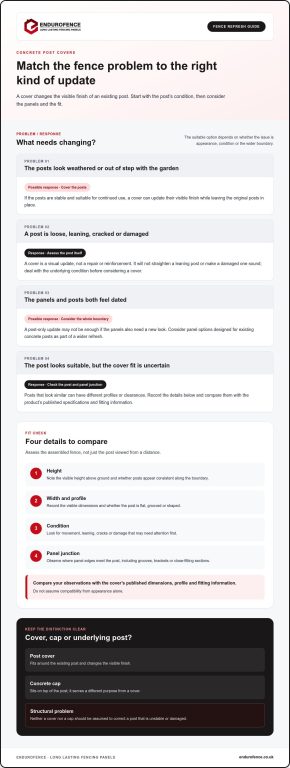
Before comparing options, take a close look at the posts and note what you can see. This is an assessment, not an installation guide: you’re gathering details to compare with the product’s published specifications.
- Height: Note the visible height above ground and whether posts appear consistent along the boundary.
- Width and profile: Record the visible dimensions and whether the post has a flat, grooved or shaped profile.
- Condition: Look for movement, leaning, cracks or damage that may need attention before a cover is considered.
- Panel junction: Observe where the panel edges meet the post, including any grooves, brackets or close-fitting sections that could affect the arrangement.
The panel-to-post junction matters because a cover has to work with the assembled fence, not just fit around the post in isolation. Don’t assume compatibility from appearance alone. Compare your observations with the chosen cover’s published dimensions, profile and fitting information. Avoid relying on a general claim about standard posts.
How do post covers relate to fence panels?
Posts and panels form one visible boundary, so consider their appearance together. A cover may sit alongside existing panels or be part of a broader panel refresh. If the panels are in good condition but the posts look out of place, focusing on the posts may be enough. If both parts feel dated, explore panel options designed for existing concrete posts, such as steel fence panels for concrete posts.
The American Fence Association offers a broader trade perspective on fencing, although its material reflects the US industry rather than UK product specifications. For your own fence, inspect the post, note the panel connection and compare those details against the cover’s published information.
You can consider post covers alongside EnduroFence’s fencing options for existing posts when planning a focused boundary refresh.
Concrete Post Covers Compared with Replacing or Leaving Posts
The right choice depends on what needs changing: the post’s appearance, its condition or the wider fence. Covering can update the look of posts that remain suitable for use, but it isn’t an alternative to replacement in every situation. Leaving sound posts as they are may also be reasonable if their appearance doesn’t bother you.
| Option | Potential benefit | Limit | May suit when |
|---|---|---|---|
| Cover the posts | Changes the visible finish while the existing posts stay in place. | Fit depends on the post and fence arrangement; a cover won’t repair structural problems. | Posts are stable and suitable for continued use, but their appearance needs an update. |
| Replace the posts | Addresses a post that is damaged, unstable or no longer fit for purpose. | It is a more substantial change than a visual update and may affect the surrounding fence. | The condition of the post, rather than its appearance alone, is the concern. |
| Leave them as they are | Avoids making a change if the posts are sound and their appearance is acceptable. | The existing look remains. | The fence is functioning as intended and there’s no pressing reason to alter it. |
When could covering be a practical alternative to replacement?
Consider concrete post covers if the posts are firm, upright and in suitable condition, and your main aim is to refresh the boundary’s appearance. The existing posts stay in place, but not every post or panel arrangement will suit every cover. Compare the actual post and fence layout with the selected product’s published details before deciding.
If the panels also need attention, a broader update may make more sense than changing the posts’ appearance alone. EnduroFence’s maintenance-free steel panels are designed for existing concrete posts. The retrofit panel replacement guide can help you consider that wider option alongside covering the posts.
When should the post itself take priority?
Visible movement, leaning, significant damage or instability changes the decision. A cover changes the outside appearance; it doesn’t make an unsound post stable or repair the underlying concrete. Assess the post’s condition before treating appearance as the main issue. The American Concrete Institute provides broader technical resources on concrete and repair, but a cover should not be mistaken for a repair method.
There isn’t one right route for every garden. Start with condition, then consider appearance and how much of the fence you want to refresh.
How to Choose Concrete Post Covers for Fit and Appearance
Choose in a practical order: check the post’s condition, record its dimensions, identify its profile and panel connections, then think about appearance. This helps you avoid choosing on colour or style alone. Concrete post covers need to suit the actual fence arrangement, and visual similarity isn’t proof that a cover will fit.
What should you measure before selecting a cover?
Measure the visible height and cross-section of the post, recording its width and depth rather than estimating by eye. Note whether the sides are flat, grooved or shaped, and look at how the panels meet the post. These details may affect the space and arrangement available for a cover.
Use your notes to compare the post with the selected cover’s published specifications. Check the product information for the relevant dimensions, profile and fitting details; don’t assume a general or standard measurement will apply to your fence. If posts differ along the boundary, record those differences too. One measurement may not represent every post.
How can covers coordinate with garden fencing?
Once you’ve considered fit, look at the boundary as a whole. A finish that matches the panels can create a consistent, understated effect. A contrasting finish may make the posts more noticeable and give the fence a stronger visual outline. Neither approach is automatically better. Consider the panels, nearby walls, paving and garden features, as well as the overall colour scheme.
If you’re also planning to update panels, decide whether the posts should blend in or stand apart before comparing finishes. The guide to coordinating garden fencing colours can help you think through that choice. EnduroFence offers concrete post covers alongside maintenance-free steel panels designed for existing concrete posts, so you can consider the post finish and panel appearance together. Assess the product details separately rather than assuming the covers and panels share the same materials or specifications.
For a quick selection check, make sure you have:
- Looked over the post’s condition.
- Recorded its height and cross-section.
- Noted its shape and how the panels connect.
- Compared those details with the chosen product’s published specifications.
- Considered whether the finish should match or contrast with the fence and garden.
With those details in hand, you can explore EnduroFence concrete post covers as part of your fence refresh and request a free quote through the website.
Explore EnduroFence Concrete Post Covers for a Refreshed Boundary
A post-cover update can be a focused way to refresh a garden boundary, provided the existing posts are in suitable condition and the cover fits their shape and dimensions. Before choosing, bring together what you’ve observed: whether the posts are upright and stable, how they meet the panels, the measurements you recorded and the finish you want to achieve.
What makes EnduroFence relevant to an existing-post upgrade?
EnduroFence sells concrete post covers alongside maintenance-free steel fence panels. The covers are an option if you want to change the visible appearance of existing posts rather than replace the whole fence by default. Their suitability depends on your fence, so compare the cover’s published details with your post and panel arrangement.
If the panels also need an update, EnduroFence’s maintenance-free steel panels are designed to fit existing concrete posts. This is another route to consider if your plans go beyond the posts alone. Treat the two decisions separately: panel details don’t establish the material, dimensions or fitting details of a cover. Use the relevant product information for each option.
What is the next step if covers suit your fence?
Start with the posts’ condition. Covers change appearance; they don’t correct movement, instability or damage. If the posts are sound, compare your recorded measurements and profile with the published cover specifications. Then consider the finish in context: decide whether you want the posts to blend with the panels or create a contrast, and whether you’re refreshing just the posts or the wider boundary.
This check keeps the decision practical. If a cover suits your posts and the visual change matches your plans, EnduroFence’s concrete post covers are one option for your refresh. If you’re considering a broader update, look at the panel options alongside them, assessing each product on its own details.
Explore EnduroFence concrete post covers and request a free quote to take the next step towards a refreshed boundary.
Refresh Your Fence Line with a Clear Plan
Concrete post covers can give sound, existing posts a refreshed appearance without making replacement the default. First assess their condition, then compare your measurements and post profile with the product’s published specifications. Finally, consider how the finish will sit alongside your panels and garden.
A cover is a visual update, not a repair. If posts are leaning, unstable or damaged, their condition needs attention before appearance. If the posts are suitable and it’s mainly their look you want to change, a focused update may fit your plans. For a broader refresh, EnduroFence also offers maintenance-free steel fence panels designed for existing concrete posts.
EnduroFence sells concrete post covers, and you can request a free quote through its website. Explore EnduroFence concrete post covers and request a free quote to plan your fence refresh.
Frequently Asked Questions
What are concrete post covers?
Concrete post covers fit around existing concrete fence posts to change their visible appearance. They leave the original post in place, provided it’s suitable for use and the cover is compatible with its dimensions and profile. A cover differs from a cap, which sits on top of a post. It’s a visual update, not a repair or structural reinforcement, so it won’t resolve an underlying fault in the post.
Can you cover existing concrete fence posts without replacing them?
Yes. Covers are designed to go around existing posts, so replacement may not be needed if the posts remain suitable and the chosen cover fits. Check each post’s condition, dimensions and profile, along with how the fence panels connect to it. Compatibility can vary between products and fence arrangements. A cover won’t make an unstable, leaning or damaged post sound, so assess the post itself before focusing on its appearance.
How do you measure a concrete post for a cover?
Record the post’s visible height and cross-section, including its width and depth, and note its profile, such as whether it has grooves or shaped sides. Also observe how the panels meet the post, since this junction can affect the arrangement. Don’t estimate from appearance alone. Compare your measurements and observations with the selected cover’s published specifications, as dimensions and suitable profiles can differ between products.
Do concrete post covers work with every fence panel?
No. Compatibility depends on the post’s dimensions and profile, the cover’s design, and how the panels meet the post. Assess the complete post-and-panel arrangement rather than judging by appearance alone. Then compare what you’ve observed with the product’s published specifications and fitting information. A suitable cover changes the visible finish; it shouldn’t be assumed to alter the fence’s structural performance or suit every existing fence.
Are concrete post covers better than replacing fence posts?
Neither option is best for every fence. Covers may suit a visual update if the existing posts are stable, serviceable and compatible with the selected cover. Replacement may be more appropriate if a post is unstable or significantly damaged. The key distinction is appearance versus condition: a cover changes how a post looks, but won’t correct structural faults. Base your choice on the state of the posts and the scope of your fence update.
Can concrete post covers improve the look of a garden fence?
Yes. Covers can change the visible finish of existing posts and help create a more coordinated boundary. Consider how the post profile and cover appearance will sit alongside the panels, nearby boundaries and wider garden. A matching finish can make the fence feel more consistent, while a contrasting one can make the posts stand out. The result depends on the selected product and its fit, so don’t assume a particular finish or effect.
Do concrete post covers need professional installation?
Fitting requirements vary by cover design and the existing fence arrangement, so use the product’s published instructions to understand what’s involved. Check that the post is in suitable condition and that its measurements and profile align with the product details before proceeding. Don’t assume all covers use the same fitting method or require the same tools. If the post is unstable or damaged, a cover won’t resolve that underlying issue.

Leave a Reply