

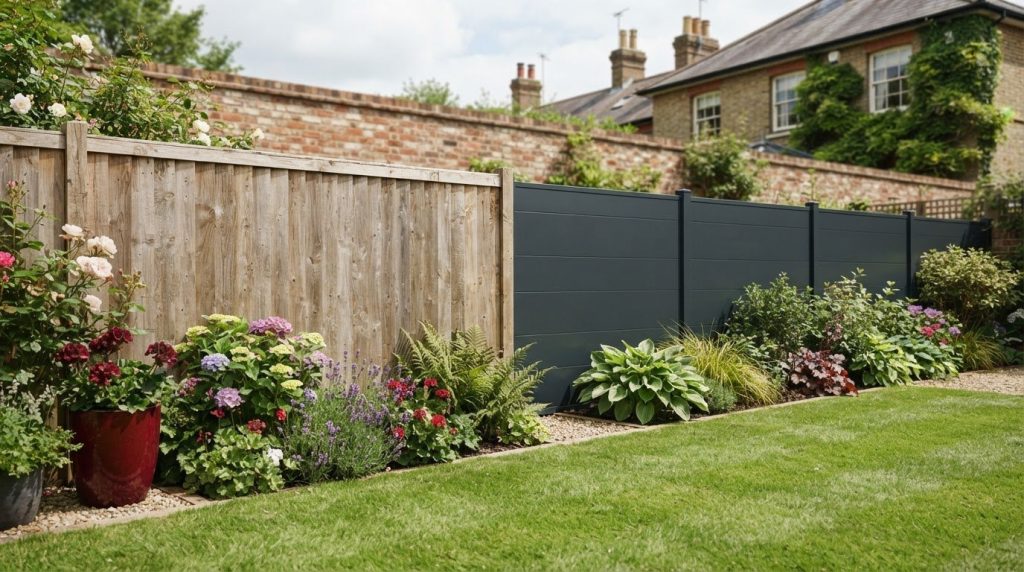
Cost of steel fencing vs wood UK: compare prices and upkeep
Timber usually costs less upfront, but it may need repeat treatment, whilst steel fencing avoids routine painting. Comparing the cost of steel fencing vs wood in the UK means weighing those ongoing tasks against the initial spend and the finish you want. The right choice depends on your budget, garden and willingness to maintain the fence.
It’s sensible to compare more than the purchase price, especially when replacing a long garden boundary. This guide looks at the cost of steel fencing vs wood in the UK alongside upkeep, installation, appearance and suitability, then considers alternatives such as composite and concrete. You’ll have a clearer basis for choosing a material that fits your priorities and plans for your garden.
Key Takeaways
- Compare the full cost of ownership, not just the initial materials bill: upkeep and replacement can change which option offers better value.
- Factor in installation labour as well as panel prices, since the time and complexity of fitting affect the overall spend.
- Choose between timber, metal, concrete and composite by weighing durability and maintenance against the look you want for your garden.
- If you have sound concrete posts and want to reduce ongoing fence care, consider a panel replacement designed to fit the existing posts.
Long-term maintenance costs
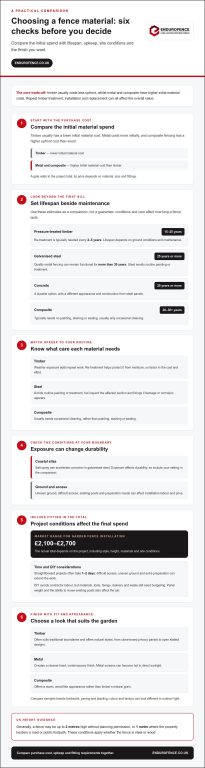
Timber usually costs less upfront, but weather exposure adds repeat work. Steel avoids routine painting or treatment, although galvanised steel can corrode faster where coastal salt spray reaches it. Compare upkeep alongside the initial cost, not as an afterthought.
The market range for garden fence installation is £2,100-£2,700, but the actual total depends on the project.
| Option | Materials | Upkeep | Cost consideration |
|---|---|---|---|
| Timber | Periodic treatment | Lower initial material cost | |
| Metal | Coastal exposure can accelerate corrosion | Higher initial material cost | |
| Composite fencing | Higher upfront cost than wood | Occasional cleaning | Compare long-term care with purchase cost |
A gate adds to the project total; its price depends on material, size and fittings.
UK planning rules can affect fence height: generally, a fence may be up to 2 metres high without planning permission, or 1 metre where the property borders a road or public footpath. These conditions apply regardless of whether the fence is steel or wood.
Style, height, materials and site conditions all influence installation prices. Taller or more detailed designs need different materials and fitting work, whilst uneven ground, difficult access and existing posts can affect preparation and labour. Choose by balancing the material cost, upkeep and fitting requirements for your boundary.
Wood vs Metal Fencing: Which One is Better?
Installation labour can narrow the gap between timber and metal. Straightforward projects often take 1-2 days; difficult access, uneven ground and extra preparation can extend the work.
DIY avoids contractor labour, but homeowners still need to budget for materials, tools, fixings, delivery and waste. That figure is a project estimate, not a universal price. The final spend depends on fence length, ground condition and whether existing posts can be reused.
Panel weight matters when fitting a fence yourself. WPC panels are lighter than metal panels, making them easier to handle during DIY installation. Metal sections can require more effort to position accurately, particularly along a long boundary. Timber boards may be easier to carry individually, but assembling and aligning panels still takes careful measuring. Plan the lifting and fixing stages before ordering materials.
Repair needs also differ. A damaged timber board may be replaceable without disturbing the whole panel, while staining or treatment can help protect exposed wood. With metal fencing, inspect the affected section and its fixings; damage or corrosion can influence whether a component or larger section needs attention. Match replacement parts to the original panel style and dimensions to keep the fence aligned.
Choose based on the job you can manage, not just the material. If you’re comparing panel weights and fitting approaches, explore fence panel options alongside your DIY plans.
Timber, metal, concrete and composite fencing materials
Material affects upfront cost, upkeep and lifespan. In the UK climate, pressure-treated timber can last 15-25 years, whilst galvanised steel can last 25 years or more.
Timber fencing
Pressure-treated timber can last 15-25 years, depending on ground conditions and maintenance. Re-treatment is typically needed every 2-5 years, so factor in the cost and effort of protecting timber from moisture. For a more sustainable choice, look for timber sourced from managed forests: wood is renewable when forests are managed responsibly.
Metal fencing
Steel offers a longer potential lifespan than timber, but the environment matters. Galvanised steel can last 25 years or more; coastal salt spray can accelerate corrosion, so exposure affects durability. Quality metal fencing can remain functional for more than 30 years. Concrete fencing can also last 25 years or more, making it a durable option, though its appearance and construction differ from steel panels.
Composite fencing costs more upfront than timber, but typically needs no painting, staining or sealing. Composite fencing has an estimated lifespan of 20-30+ years, and usually needs only occasional cleaning. Compare its higher purchase cost with timber’s repeat treatment needs and the upkeep you’re willing to do.
They can support timber or composite panels, so assess the whole combination rather than comparing panel prices alone. To choose, weigh expected lifespan, exposure to moisture, maintenance and appearance against the upfront spend.
Appearance and customisation
A fence shapes how a garden looks from indoors and outside. Timber often suits traditional boundaries, whilst metal screens create a contemporary, architectural finish. Composite fencing offers a warm, wood-like appearance. Compare samples beside your home’s brickwork, paving and planting before choosing, because colour and texture can look different in outdoor light.
Wooden panels offer a familiar, natural finish, with styles ranging from close-board privacy panels to open slatted designs. Painting or staining can change their colour, but timber needs regular treatment to protect it from weathering. For a slatted example, western red cedar uses 18 x 45mm slats; a 45mm slat with a 10mm gap creates a repeated pattern. This suits gardens where airflow and partial screening matter.
Metal fencing gives a cleaner-lined appearance and can suit modern extensions or formal garden layouts. Powder-coated metal screens need occasional cleaning with soapy water. Check how the finish relates to gates, railings and other metalwork, then consider whether a solid screen or a more open design best suits the boundary. Metal screens can become hot in direct sunlight, which matters beside seating or planting.
Composite combines wood fibres and plastic, with a warm, wood-like finish rather than timber’s natural grain. It usually doesn’t need painting, staining or sealing, so its appearance requires less ongoing upkeep. Compare the initial look with the garden’s existing materials: a timber-style surface may blend with wooden decking, whilst a contemporary metal screen can provide a sharper contrast.
Make the choice practical: view the fence from key windows, consider privacy and airflow, then compare finishes against fixed features such as brick walls. A 6ft fence creates a substantial privacy boundary, so its colour and pattern will influence the whole garden. Select a design that complements the property and fits the level of upkeep you’re comfortable with.
EnduroFence: Maintenance-Free Fence Panels
EnduroFence offers Maintenance-Free Fence Panels for homeowners weighing timber upkeep against steel durability. The panels use profiled steel outer sheets with a high-density insulated core, providing weather resistance and security without painting or treatment. They’re designed to fit existing concrete posts, making them relevant when timber panels need replacing but the posts remain in place.
The Retro Fitting Panel Swap offers a way to replace panels within existing concrete posts. Installation is straightforward and needs no specialised tools or qualifications, so homeowners can carry out the work themselves. Post Covers are another option for finishing existing fence posts. These panels are a practical fit for anyone prioritising reduced maintenance; timber may suit better if a natural wood finish is essential.
To explore the panel options for your garden, visit EnduroFence.
Choose a fence that fits your next steps
Your decision about the cost of steel fencing versus wood in the UK should reflect how you use your garden, the finish you want and the maintenance you’re willing to take on. Before choosing, decide which matters most: a natural timber appearance, less routine treatment or a design that complements your home. That priority gives you a practical way to narrow the options without focusing on the initial spend alone.
If you’re considering a lower-maintenance steel alternative, EnduroFence offers Maintenance-Free Fence Panels, Post Covers and Retro Fitting Panel Swap. These options are relevant for homeowners looking to update a garden boundary, particularly where existing concrete posts can be used for a panel swap.
Take the next step by matching your preferred look and upkeep expectations to the right fencing option. Discuss your fencing options with EnduroFence and move forward with a choice that suits your garden.
Frequently Asked Questions
How Much Does Garden Fencing Cost in the UK?
The market range for garden fence installation is £2,100-£2,700, whilst the final bill depends on boundary length, panel type, access and preparation. For a useful estimate, measure the fence run and note whether posts, gates or removal of an existing fence are also involved.
How Much Does a Metal Fence Cost?
These figures cover different ways of comparing cost, so account for fence length, design and site work when estimating a project. Intricate patterns can cost more because they require additional cutting.
What are the pros and cons of wooden fence panels?
Wooden fence panels usually have a lower initial materials cost and suit gardens where a natural finish is preferred. They can also be painted or stained to alter their appearance. The trade-off is ongoing care: timber needs treatment to help protect it from weathering and decay. Its condition depends on exposure and upkeep, so inspect for damaged boards and worn treatment as part of routine garden maintenance.
How much does steel fencing cost per metre in the UK, including installation?
A single steel price per metre including installation depends on the panel specification, fence height and fitting requirements. For a project estimate, include the full boundary length and any preparation or removal work, rather than treating the panel material figure as the installed total.
How much does wooden fencing cost per metre in the UK, including installation?
Wood fencing materials cost around £20-£50 per metre, and installation is approximately £25-£40 per metre. The final amount depends on the fence design and site preparation. Allow separately for items such as posts, gravel boards, gates or removal if they form part of the job.
What are the UK supply-only prices for steel fence panels and wooden fence panels?
These figures use different units and material categories, so compare like-for-like panel dimensions and specifications. Check whether posts, rails and fixings are included when assessing a supply-only materials budget.

Leave a Reply