

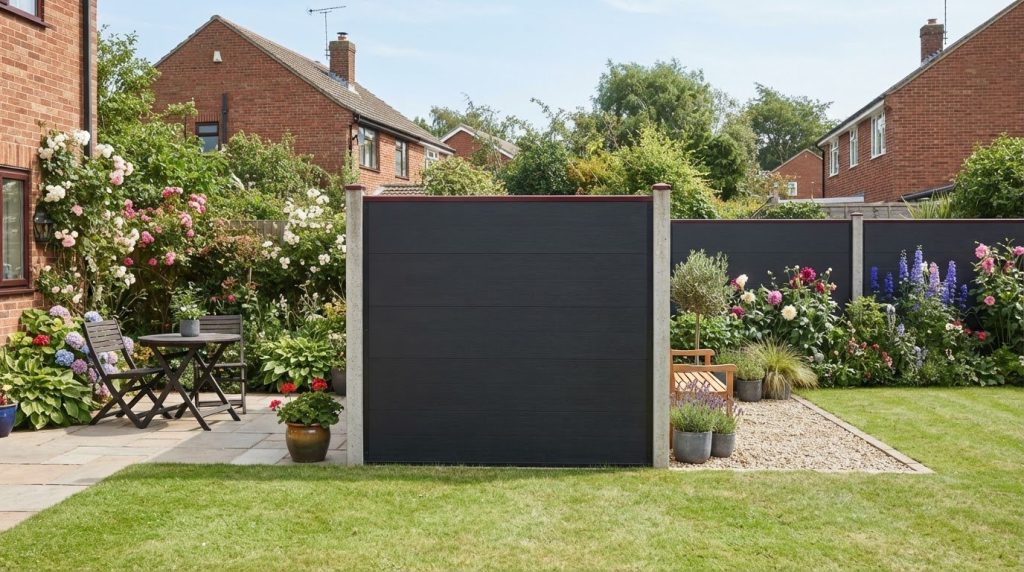
Double-Sided Fence Panels: Make Your Neighbour’s Side Look Good Too
What if a fence didn’t have to give one garden the “good” side and the other the rails? If you’re searching for double sided fence panels so neighbours side looks good, you’re likely weighing more than appearance. You want the boundary to feel considered from both gardens and suit the amount of upkeep you’re prepared to take on.
Start by thinking about both faces, then compare styles and materials. Hit-and-miss, slatted and closeboard panels each create a different look and level of privacy, while timber and steel have different maintenance needs. Your choice will depend on the finish you want, how much care you’re willing to give it and how the fence will sit alongside each garden.
This guide compares common double-sided panel styles and practical features to help you narrow down your options. It also looks at maintenance-free steel panels, made with profiled outer sheets and a high-density insulated core, and explains how a retrofit panel swap can refresh a boundary while retaining suitable existing concrete posts.
Key Takeaways
- “Double-sided” can describe a panel’s design or overall appearance, so look beyond the label when comparing options.
- Compare timber, slatted, composite and steel styles for privacy, upkeep and the view from each garden.
- Check both faces, including visible fixings, edges, colour and panel profile.
- Choose double sided fence panels so neighbours side looks good by weighing both gardens’ appearance against privacy and maintenance needs.
- A retrofit panel swap can refresh a boundary while making use of suitable existing concrete posts.
Double-sided fence panels: what does “good on both sides” really mean?
A double-sided-looking fence presents a neat, considered appearance from either adjoining garden, rather than leaving one side looking like the unfinished back of a panel. A search for double sided fence panels so neighbours side looks good is really about achieving that balanced result, not necessarily finding two identical faces.
“Double-sided” can refer to a panel’s appearance, construction or a particular design. Some styles use alternating patterns or concealed rails to create a similar view on both faces. Others have a more finished front and a less decorative reverse. The label alone won’t tell you exactly what you’ll see from your garden, so check the details of the individual panel.
Why the neighbour-facing side matters
A boundary forms part of both gardens, so its appearance can affect the view from a patio, kitchen window or favourite seating spot on either side. Think about where you regularly see the fence and whether the neighbour-facing view is prominent too. Considering both perspectives can help you choose a panel that feels like a thoughtful part of the shared outlook, without assuming there’s a disagreement to resolve.
Appearance on both faces versus a named panel type
Separate the result you want from the construction used to achieve it. “Double-sided” may describe a visual effect, but it doesn’t automatically mean identical finishes, concealed fixings or matching details on the front and reverse. Rails or fixings that are unobtrusive from one garden may be more visible from the other.
Don’t judge a panel from a single product photograph. Look for views of both faces, including the edges and joins, and check descriptions for information about profiles, colours and visible fixings. If only one face is shown, treat the image as evidence of that face, not proof of how the reverse looks. General descriptions of different types of fences can explain how designs and construction vary, but your buying decision should rest on the details of the panel itself.
Compare both sides at the angles you’ll see them in the garden. Look for differences in the pattern, finish, rails and fixings, then decide whether they matter from either viewpoint. This makes it easier to choose double sided fence panels so neighbours side looks good in practice, rather than relying on a label or one carefully chosen photograph.
Which fence panel styles create a neater view from both gardens?
The right panel balances appearance with what the boundary needs to do. A solid design can offer more screening, while slats may feel lighter but allow some light and sight through. Materials also affect upkeep, so compare the view from both gardens with how much ongoing care you want to take on.
Solid, slatted and overlapping panels: what changes visually?
Solid panels create a continuous backdrop and can offer more privacy, though they may feel visually substantial in a smaller garden. Slatted panels bring a more open, linear look. Gaps let light and air through, but also mean less screening. Overlapping boards create a layered face, and the pattern or supporting rails may look different from the reverse. Compare views of both faces, not just the side shown most prominently.
Timber, composite and steel: compare upkeep as well as looks
Timber has a natural appearance, but its care needs depend on the product and finish. Composite panels vary in construction and upkeep, so check the details rather than assuming every panel behaves alike. EnduroFence steel panels use profiled steel outer sheets with a high-density insulated core. They don’t need painting or treatment, making them a practical option if you want to reduce routine maintenance.
| Panel type | Appearance and privacy | Upkeep to consider |
|---|---|---|
| Timber | Natural character; board layout affects how finished each face looks. | Care depends on the timber and finish. |
| Slatted | Open, lined appearance; gaps can reduce privacy and let light through. | Check the material and finish for care requirements. |
| Composite | Consistent, manufactured appearance; face details vary by panel. | Requirements depend on the product. |
| Steel | Profiled outer sheets create a defined surface; compare both faces and available finishes. | EnduroFence steel panels don’t need painting or treatment. |
Use the table as a starting point, then assess the actual panel details. For a shared boundary, consider the view from patios and windows on both sides, the screening you need and the time you want to spend on maintenance. If the project changes a fence’s height, the Planning Portal provides planning guidance for fences, gates and garden walls.
If you’re looking for double sided fence panels so neighbours side looks good, EnduroFence steel panels offer a maintenance-free option designed to fit existing concrete posts. Explore maintenance-free steel fence panels as one way to refresh the boundary without replacing suitable posts.
Do both sides of a fence panel look the same? Checks before you buy
Not necessarily. “Double-sided” can describe a panel intended to look balanced from either garden, but it doesn’t guarantee that the front and reverse are identical in profile, colour, fixings or finish. Check what the term means for the specific design before you decide. A photograph of one face alone won’t tell you how the other side will look.
Before ordering, compare both faces, the panel edges and joins, the profile direction, colour consistency and any visible fixings. These details can shape the view of the whole boundary, particularly if the fence runs alongside a patio or is visible from a window.
How to inspect the front and reverse of a panel
Look for clear views of the front and reverse, as well as close-ups of the edges and joins. Check whether rails, screws or other fixings show on either side, and whether the panel’s profile follows a consistent pattern. If the product information describes one face specifically, don’t assume that description applies to both. Use photographs and specifications to understand the actual panel rather than relying on the “double-sided” label.
- Profile: Compare the shape and direction of the visible pattern on each face.
- Colour: Look for any stated or visible difference between the two sides.
- Fixings and edges: Check for exposed rails, screws, joins or unfinished-looking edges.
- Viewing distance: Assess the panel close up and from further away, as you would from a seating area or window.
How colour and sightlines affect the shared boundary
A colour that looks subtle in a product photograph may appear different beside your paving, planting, house walls or garden furniture. Think about the fence from the places you use most, and include the neighbour-facing view in your decision. A panel can look different in direct light and shade, so compare product images or colour samples with the garden’s lighting where possible.
When choosing double sided fence panels so neighbours side looks good, aim for a considered view from both gardens, not necessarily two perfectly identical faces. Check the details from the angles and distances that matter in everyday use. That practical comparison can reveal differences a single close-up or front-on image might miss.
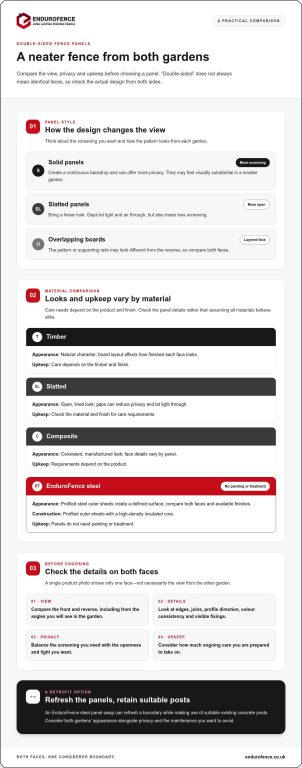
How to choose two-sided-looking fence panels for your garden
A clear selection process helps you balance a smart view from both gardens with privacy, upkeep and the condition of the existing boundary. Work through these steps before settling on a panel.
- Define the boundary’s job. Decide how much screening you need, which views matter most and whether you want a solid or more open appearance. Consider what you’ll see from patios, windows and seating areas on both sides.
- Measure the opening and note the posts. Record the panel space between the existing posts and how they’re arranged. Compare your measurements with the panel dimensions and fit details, particularly if you want to retain suitable concrete posts.
- Rank your priorities. Put privacy, a balanced appearance and low upkeep in order of importance. This makes designs easier to compare. For example, a panel with gaps may feel lighter but won’t provide the same screening as a solid face.
- Compare both faces and finishes. Look at the profile, visible fixings, edges and colour on each side. Consider how the finish will sit alongside paving, planting, walls and other garden features, rather than choosing from a product image in isolation.
- Match the panel to your maintenance preference. Think about the care you’re comfortable doing over time. EnduroFence steel panels are maintenance-free and don’t need painting or treatment. They’re made with profiled steel outer sheets and a high-density insulated core, and come in a range of colours and finishes.
Check whether a panel swap suits the boundary
If the existing concrete posts are suitable, a retrofit panel swap can refresh the fence while retaining them. EnduroFence panels are designed to fit existing concrete posts. Compare your measurements with the relevant panel details before deciding. The condition of the posts is a separate consideration from choosing replacement panels.
For double sided fence panels so neighbours side looks good, assess practical fit and appearance together. A balanced-looking finish is only useful if the panel also suits the boundary’s screening needs and your preferred level of upkeep.
Explore EnduroFence panel options to see maintenance-free panels designed for existing concrete posts.
EnduroFence steel panels: a practical way to refresh both sides
If you want a smarter boundary without replacing suitable existing concrete posts, EnduroFence steel panels offer a practical retrofit option. They’re designed to fit existing concrete posts, allowing you to refresh the panels while retaining suitable posts. The aim is a considered appearance from both gardens, alongside a material that doesn’t need painting or treatment.
What EnduroFence steel fence panels offer
Each panel is made with profiled steel outer sheets and a high-density insulated core. The profiled surface gives the panel its defined appearance, while the core forms part of its construction. A range of colours and finishes helps you choose a look that sits comfortably with paving, planting and other features around the boundary.
Maintenance-free construction is useful if you’d rather not add fence painting or treatment to your regular garden tasks. Don’t assume the two faces have identical profiles or finishes simply because you’re comparing panels for a shared boundary. Look at the available product details for both sides and consider how each face will appear from your usual garden viewpoints.
When a retrofit panel swap may suit your garden
A panel swap may suit you if the existing concrete posts are in suitable condition and you want to update the boundary without replacing them. Before choosing panels, measure the opening and compare it with the panel dimensions and fit requirements. A compatible fit depends on the measurements and the existing post arrangement, so take these details into account before purchase.
Think about what you want the replacement to improve. If the old panels look tired, a new colour or finish can refresh the overall view. If regular upkeep is the concern, maintenance-free steel offers an alternative that doesn’t need painting or treatment. Weigh those aims against your need for privacy and check how the panel looks from both sides. That’s the useful distinction between simply replacing a panel and choosing one that better suits the shared boundary.
For double sided fence panels so neighbours side looks good, consider appearance, fit and upkeep together. EnduroFence panels are designed for existing concrete posts and come in a range of colours and finishes, offering a practical way to update a suitable boundary while keeping the posts in place.
Explore EnduroFence panels and request a quote to see the available panel options.
Choose a boundary that works from both gardens
A well-chosen fence should suit the view from either side while meeting your needs for privacy and upkeep. Compare panel styles for how open or screened they feel, then look closely at both faces. “Double-sided” doesn’t always mean identical, so check the profiles, visible fixings, edges and colour before choosing.
Think about the boundary as a whole, too. Measure the opening and consider whether suitable existing concrete posts can be retained. If you want to reduce ongoing maintenance, EnduroFence steel panels have profiled outer sheets and a high-density insulated core, don’t need painting or treatment, and come in a range of colours and finishes. They’re designed to fit existing concrete posts, offering a retrofit option for a considered refresh.
For double sided fence panels so neighbours side looks good, balance appearance, fit and practical care. A few checks can help you choose with confidence. Explore EnduroFence panels and request a free quote to take the next step towards a boundary that feels right from both gardens.
Frequently Asked Questions
Do double-sided fence panels look the same on both sides?
Not always. “Double-sided” may describe the intended overall appearance, but it doesn’t guarantee identical faces. Look for clear views of the front, reverse, edges and fixings before choosing. Compare the profile and colour, too. If possible, assess how the panel looks from normal garden viewpoints, such as a patio or window, and from closer to the boundary. This gives you a more realistic sense of how both sides will appear.
What is the best fence panel for a neighbour-facing boundary?
The best panel depends on the privacy you need, the appearance you want from both gardens and the upkeep you’re prepared to do. Solid styles provide more screening, while slatted designs allow more light and sight through. Overlapping panels create a layered look that can differ between faces. Compare views of both sides, then weigh the material’s care requirements against your priorities before selecting a style for the shared boundary.
Can I replace fence panels without replacing concrete posts?
Yes, existing concrete posts can often remain if they’re suitable and the replacement panels fit the openings. Measure the gaps and note the post arrangement before comparing panel dimensions. EnduroFence panels are designed to fit existing concrete posts, providing a retrofit option for a boundary refresh. The posts’ condition and the panel’s compatibility still matter, so assess both before choosing. Replacing panels and installing new posts are separate decisions.
How do I make my side of a shared fence look better?
Start with the views you notice most, such as the outlook from your patio, window or garden seat. Compare the panel’s colour and profile with nearby paving, planting and structures. Check the reverse as carefully as the garden-facing side, including visible fixings and edges. If your aim is double sided fence panels so neighbours side looks good, balance the appearance from both gardens with the privacy you need and the upkeep you’re willing to take on.
Are steel fence panels a good option for both sides of a garden boundary?
Steel panels can suit buyers looking for a low-maintenance boundary, but check the appearance of each face rather than assuming they’re identical. EnduroFence panels have profiled steel outer sheets and a high-density insulated core. They don’t need painting or treatment and are available in a range of colours and finishes. Compare the product details for both sides, including profile, colour and visible fixings, with the look you want in each garden.
Do fence panels need painting or treatment?
It depends on the material and the care guidance for the specific panel. Timber may need ongoing treatment, while EnduroFence steel panels don’t need painting or treatment. Check the product’s care information before choosing, as requirements can vary between materials and finishes. Include maintenance in your decision alongside appearance and privacy. That way, the boundary can suit both the garden’s look and the amount of routine care you want to take on.
How can I choose a fence colour that looks good from both gardens?
Compare the fence colour with features on both sides, including paving, planting, sheds and nearby walls. Look at clear product views, and use a sample if one is available so you can see how the colour sits in your garden’s light. Check the view from different angles and distances, not only close up. EnduroFence panels come in a range of colours and finishes, giving you options to consider alongside your garden palette.

Leave a Reply