

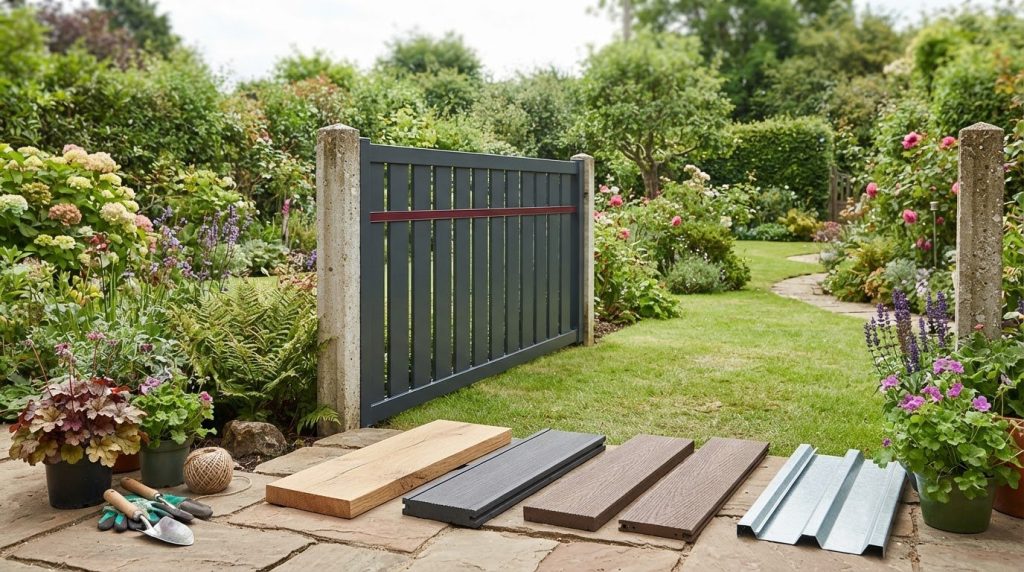
Eco-Friendly Fencing Options UK: Compare Materials and Choose Well
A fence made from a material that sounds green isn’t automatically the most sustainable choice. When comparing eco-friendly fencing options UK homeowners can consider, look beyond the label: useful life, maintenance needs and whether existing parts can be reused all affect the environmental case.
It’s understandable to want a durable replacement that needs little upkeep and avoids wasting usable materials. This guide compares timber, composite, recycled plastic and steel using practical factors including durability, maintenance, reuse and installation. It also explains why claims about recycled content, sourcing and end-of-life handling need product-specific evidence.
Use the comparisons to weigh each option against your garden and priorities, rather than assuming one material suits every situation. If your concrete posts are still sound, replacing panels alone may avoid unnecessary work. We’ll also look at steel panels designed to fit existing concrete posts and require no painting or treatment. Low upkeep is worth considering, but it doesn’t prove a lower overall environmental impact.
Key Takeaways
- Compare eco-friendly fencing options UK by useful life, upkeep, sourcing and end-of-life evidence, not by material label alone.
- When weighing timber, composite, recycled plastic and steel, look for product-specific details on sourcing, treatment and durability.
- Check whether existing posts are suitable to keep before planning a full fence replacement.
- Match your choice to your garden’s privacy, appearance and exposure needs, as well as the upkeep you’re prepared to do.
- Steel panels with profiled outer sheets and an insulated core can fit existing concrete posts, offering a panel-only replacement option without painting or treatment.
What makes fencing an eco-friendly choice in the UK?
No fencing material is automatically the greenest. A fair comparison looks at the fence across its service life: where the materials come from, how long the product remains useful, what care it needs, whether it can be repaired and what happens when it is removed. Transport and end-of-life options matter too, though evidence can vary between products.
This is part of a wider approach to garden design. Sustainable landscaping principles consider how choices work together in their setting. For fencing, that means weighing environmental evidence alongside practical needs such as privacy, exposure to weather and the condition of the existing structure.
What should an environmental fencing comparison include?
Start with facts about the specific product, not broad assumptions about its material. Timber is a renewable material category, for example, but its environmental case depends on details such as sourcing and treatment. A claim that a product contains recycled material should also be backed by product-specific evidence.
Next, consider what happens while the fence is in use. Maintenance may involve treatment or replacement parts, while a shorter useful life could mean replacing the fence sooner. Transport and end-of-life handling are relevant too, although they can be difficult to compare without information about the product and its supply chain.
A lifecycle assessment can help compare impacts across defined stages, but the results are meaningful only when the scope and assumptions are clear. Treat environmental claims as questions to investigate, not proof that one material is always better.
Why does the whole service life matter?
Different materials can have different needs after installation. One fence may need periodic treatment, while another may need less routine upkeep. Consider these differences alongside expected durability and repair options, rather than judging a fence by its initial material alone.
Whole-life fencing impact is the effect of sourcing, making, using, maintaining and eventually disposing of a fence over the time it serves your garden.
Before planning a complete replacement, check the structure already in place. If concrete posts are sound and suit the chosen panels, keeping them may avoid removing and replacing more of the fence than necessary. Panel-only replacement can be a practical approach. Maintenance-free steel panels, for example, are designed to fit existing concrete posts and require no painting or treatment. That reduced upkeep is one factor to weigh, not proof of a lower overall impact.
The most suitable eco-friendly fencing options UK homeowners consider will depend on the product evidence, garden conditions and which existing parts remain usable. The next step is to compare materials on those terms.
Eco-friendly fencing materials compared: timber, composite, plastic and steel
Each material has different strengths, but its label alone won’t tell you how a particular fence will perform or what its environmental impact may be. Use this comparison to identify the product details that matter for your garden, then look for evidence behind any sustainability claims.
| Material | Upkeep and durability | Post compatibility | Evidence to seek |
|---|---|---|---|
| Timber | Upkeep depends on the timber and any treatment. Check the care guidance and what protection is used. | Depends on panel dimensions and the existing post system. | Sourcing information, treatment details and repair or end-of-life guidance. |
| Composite | Composition and care requirements vary between products. Check how the manufacturer describes service life and maintenance. | Check panel dimensions and fixing method against your posts. | Material composition, documented recycled content, maintenance and end-of-life information. |
| Recycled plastic | Products don’t all have the same durability or upkeep needs. Use product-specific performance and care information. | Check dimensions, weight and fixing requirements for your fence structure. | Evidence for recycled content, expected service life and end-of-life arrangements. |
| Steel | Assess the product’s stated durability and maintenance needs, including whether it requires painting or treatment. | Compatibility depends on the panel design and post system. | Product-specific information on manufacturing, maintenance and end-of-life handling. |
How do timber and composite fencing compare?
Timber is a renewable material, but that fact alone doesn’t establish the impact of a particular fence. Check where the wood comes from and how it has been treated. The FSC-certified timber scheme is one sourcing reference readers may encounter; check that any claim applies to the product being considered.
Composite is a broad category. Products can differ in ingredients, proportions and manufacturing, so don’t assume all contain recycled wood or plastic. For both materials, compare the care instructions and check what product-specific information says about repair and disposal.
Can steel or recycled plastic be an eco-friendly option?
Both are options to assess, not automatic environmental winners. For steel, weigh the stated service life and upkeep against verified information about manufacturing and end-of-life handling. For recycled plastic, look for documented recycled content rather than relying on a general marketing description. Check what happens to either product when it reaches the end of its use.
EnduroFence steel panels are designed to fit existing concrete posts. They have profiled steel outer sheets and a high-density insulated core, and require no painting or treatment. These details make them an option to include in a comparison, but don’t prove a lower whole-life impact. Explore maintenance-free steel fence panels as one option among eco-friendly fencing options UK homeowners can consider.
How to judge fencing sustainability claims without being misled
Environmental wording can sound clear while leaving out the details needed to compare products. “Natural”, “recycled” and “recyclable” each describe one aspect of a material, not the full impact of a fence. A renewable material may still involve treatment or frequent replacement. Recycled content doesn’t, by itself, show how long a product lasts or what happens to it at the end of use.
Apply the same questions to each option. Check which product a claim refers to, what it measures and whether it covers the stages relevant to your decision. Broad statements about a material category aren’t a substitute for evidence about the particular panel you’re considering.
Which evidence helps verify an eco-friendly fence claim?
Look for documentation that identifies the product and explains the scope and method behind the claim. Independent checking can add confidence, but only if you can see what was reviewed and what the review covers. A sourcing claim, for example, doesn’t automatically tell you about maintenance or disposal.
For a whole-life comparison, check whether the evidence addresses:
- Sourcing: where the materials come from and whether claims such as recycled content or responsible timber sourcing relate to this product.
- Manufacture and transport: what information is available about production and how the product reaches its destination.
- Use: stated durability, care instructions, repair options and any treatment needed over time.
- End of life: whether the product or its components can be reused, recycled or otherwise managed, and under what conditions.
A lifecycle assessment evaluates impacts across defined stages. Its usefulness depends on the boundaries, assumptions and data used. Comparisons are clearer when they cover similar stages and products intended for similar use. Don’t treat a single figure as a complete answer if its scope isn’t explained. Standards such as ISO 14040 and ISO 14044 should only be relied on where the relevant assessment and its conformity are clearly documented.
Does maintenance-free automatically mean sustainable?
No. Less painting or treatment can reduce routine work and material inputs, but it doesn’t establish a product’s total environmental impact. Check product-specific evidence for durability and expected useful life, as well as the assumptions behind those claims. “Maintenance-free” should describe care requirements, not stand in for a lifecycle comparison.
Low maintenance is a practical benefit; it isn’t, on its own, proof of a lower environmental impact. Steel panels designed to need no painting or treatment may suit someone seeking less upkeep, but that fact alone doesn’t establish lower carbon impact, recycled content or end-of-life performance.
Use this evidence-first approach to compare eco-friendly fencing options UK products without relying on a green label as the deciding factor. If key information is missing, record that uncertainty rather than assuming a claim applies more widely than the evidence shows.
How to choose eco-friendly fencing for your garden
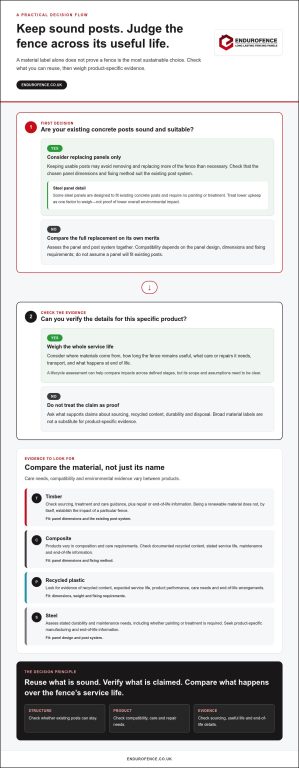
Start with the fence you have, not just the material you’re considering. Check the existing structure, decide what the boundary needs to do, then compare panels for fit, upkeep and product-specific environmental evidence. This order can help you avoid replacing parts that are still useful.
Should you replace the whole fence or just the panels?
Inspect your concrete posts before planning a full replacement. Check whether they’re stable, aligned and in sound condition, and whether the existing layout can take a replacement panel. If the posts remain suitable, changing the panels alone may avoid unnecessary removal and replacement of the structure.
Panel compatibility matters: a panel must suit the post arrangement as well as the height and width you need. EnduroFence steel panels are designed to fit existing concrete posts, providing a panel-only replacement option. Their profiled steel outer sheets and high-density insulated core are product details, but they don’t by themselves prove a lower environmental impact.
What should you check before choosing fence panels?
Work through these points before comparing products. Keep the evidence tied to the specific panel instead of relying on a broad claim about its material.
- Existing structure: Measure the gap between posts and the usable panel height. Check that the posts are sound and the panel format matches the current arrangement.
- Purpose and appearance: Decide how much privacy you need, whether the fence must screen a particular view, and which finish and colour will suit the garden.
- Exposure and durability: Consider how exposed the boundary is to wind and weather. Use product information to assess weather resistance and expected useful life, without assuming every panel in a material category performs the same way.
- Upkeep and installation effort: Compare care instructions, including whether painting or treatment is needed, and consider the work involved in replacing the panels.
- Environmental evidence: Look for product-specific information about sourcing, manufacture, maintenance and end of life. Keep claims about recycled content, recyclability or carbon impact within the limits of the evidence.
For example, EnduroFence panels require no painting or treatment, which may suit a garden where reducing ongoing upkeep is a priority. Treat this as a practical advantage, not a complete environmental assessment. Homeowners can replace the panels without specialised tools or qualifications, and the range includes different colours and finishes.
Once you’ve checked your posts and worked through the comparison, explore EnduroFence fence panels as a panel-only replacement option. Compare the fit and upkeep with the environmental evidence available for your chosen product.
EnduroFence steel panels: a practical option for upgrading existing fencing
If your concrete fence posts are still suitable, replacing the panels rather than the whole structure can avoid unnecessary removal. EnduroFence panels are designed to fit existing concrete posts, making them an option to consider when comparing eco-friendly fencing options UK homeowners can use to update an existing boundary.
What are the practical benefits of EnduroFence panels?
The panels have profiled steel outer sheets and a high-density insulated core. They’re designed to resist weather and don’t require painting or treatment, reducing ongoing maintenance tasks. These are useful product features to weigh against the available environmental evidence, not proof of a lower carbon impact or superior environmental footprint.
A panel-only retrofit can also help retain suitable posts. Before choosing this approach, check that the existing posts are stable and that the panel format fits their arrangement. If they’re sound, replacing only the panels avoids removing parts of the fence that can remain in use.
Homeowners can replace the panels without specialised tools or qualifications, making the work more straightforward for those planning a DIY update. EnduroFence panels are available in a range of colours and finishes, so you can consider appearance alongside practical requirements such as privacy and upkeep.
How can you take the next step?
Use the checklist from the previous section to compare the panels with your garden’s needs. Check the dimensions and condition of your posts, consider the privacy and appearance you want, and review the product information on maintenance and weather resistance. For a sustainability comparison, keep claims within the evidence available for the specific product. The lack of painting or treatment is a maintenance benefit, but it doesn’t establish recycled content, recyclability or a lower whole-life impact.
If the panel format suits your existing posts, explore EnduroFence panels and their colours and finishes. This gives you a practical option to assess alongside other materials, with the potential to update the fence while keeping suitable existing posts in place.
Choose a fence that works for your garden and priorities
The most suitable eco-friendly fencing options UK homeowners can choose depend on more than material. Compare sourcing, useful life, maintenance and end-of-life evidence for the specific product. Don’t treat labels such as “natural” or “recycled” as proof of lower environmental impact.
Check what can stay, too. If your existing concrete posts are suitable, replacing panels alone may avoid removing parts of the fence that remain usable. EnduroFence steel panels are designed to fit existing concrete posts, resist weather and require no painting or treatment. Homeowners can install them without specialised tools or qualifications. These practical features can inform your decision, but they don’t establish a lower whole-life environmental impact.
Compare panel dimensions, finish and upkeep with your garden’s needs, then explore the option and request a free quote. Explore EnduroFence panels and request a free quote.
A careful comparison can help you make a confident choice and avoid replacing more than you need to.
Frequently Asked Questions
What is the most eco-friendly fencing material?
No single fencing material is automatically the most eco-friendly in every situation. Compare product-specific evidence for sourcing, manufacture, expected useful life, maintenance and end-of-life handling, and assess products on a similar basis. A fence suited to its site may help avoid premature replacement, but that alone doesn’t prove a lower environmental impact. To compare eco-friendly fencing options UK homeowners may consider, weigh the evidence alongside the garden’s practical needs.
Is steel fencing environmentally friendly?
Steel fencing can be assessed for durability, maintenance, manufacturing information and end-of-life handling, but the material name alone doesn’t establish its environmental impact. Check what evidence applies to the specific product and which lifecycle stages it covers. EnduroFence panels have profiled steel outer sheets and a high-density insulated core, and require no painting or treatment. These are practical product facts, not evidence of carbon savings or a lower overall footprint.
Is timber fencing more eco-friendly than composite fencing?
It depends on the products being compared. Timber sourcing, treatment and maintenance vary, while composite products can differ in material mix and manufacturing. Don’t assume that a natural material or a composite label automatically means a better environmental outcome. Compare evidence for sourcing, expected useful life, upkeep and end-of-life handling. If comparable product information isn’t available, don’t treat broad claims as proof that one option has a lower impact.
Can I replace fence panels without replacing concrete posts?
Yes, panel-only replacement can work if your existing concrete posts are suitable and compatible with the new panels. Check their condition and arrangement, then measure the available space so the replacement format fits. Keeping sound posts may avoid removing parts of the fence unnecessarily, although the right approach depends on their condition. EnduroFence panels are designed to fit into existing concrete posts, making them an option for this type of update.
How do I know whether a fence is genuinely sustainable?
Look beyond words such as “green”, “natural” or “recyclable”. Seek product-specific information on sourcing, manufacture, maintenance, useful life and end-of-life handling. Check that any assessment has a clear scope and method, and whether it has been independently reviewed. If two products lack comparable evidence, don’t assume a broad marketing claim proves one has a lower environmental impact. Treat missing information as uncertainty, not evidence of an advantage.
Does maintenance-free fencing have a lower environmental impact?
Not necessarily. Less painting or treatment can reduce maintenance effort, but it doesn’t establish a lower total environmental impact. Manufacturing, useful life, repair needs and end-of-life handling also matter. Compare evidence for the complete product rather than relying on one feature. EnduroFence panels require no painting or treatment, which is a practical upkeep benefit; it shouldn’t be taken as proof of lower carbon impact or a superior environmental footprint.

Leave a Reply