

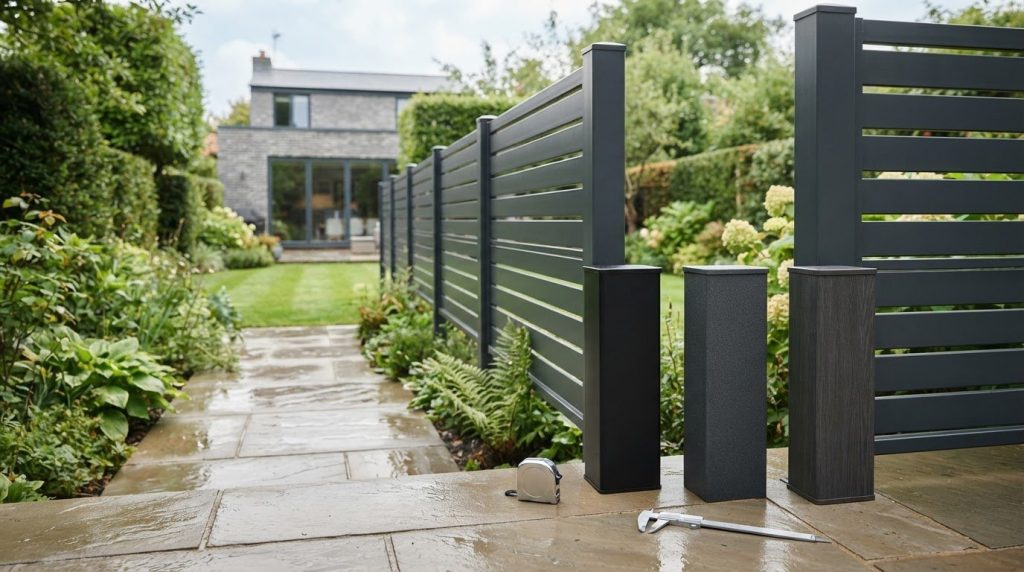
Fence Post Covers UK: How to Choose the Right Fit and Finish
What if the right fence post cover matters more than its colour? A cover that looks ideal online may not suit the shape or dimensions of your existing posts, or the way your fence panels meet them. Choosing fence post covers UK homeowners can use with confidence starts with fit and fence layout, then moves on to finish.
If your posts are sound, a decorative update doesn’t have to mean replacing the whole fence. It’s understandable to be unsure whether a sleeve, groove cover or another format will work, especially when products can look similar at first glance. The key is to match the cover to the post you have, not simply to choose a style you like.
This guide explains common cover formats and what they’re intended for, then shows how to compare post dimensions, fence configuration and appearance. You’ll also find a practical way to plan a garden update without making the project more complicated than it needs to be.
Key Takeaways
- A post cover refreshes the appearance of an existing fence post; it doesn’t replace the post itself.
- Before choosing fence post covers UK, identify your post’s shape and measure its width, depth and height.
- Sleeves, one-sided covers and groove covers suit different fence layouts, so compare the format with your post and panels.
- Assess post condition and fence configuration before settling on a finish that works with the garden around it.
- Use your measurements and preferred look to narrow down the post covers that could suit your garden update.
What are fence post covers, and what can they change in a UK garden?
A fence post cover fits around or onto a post to change its appearance as part of the finished fence. It can give a row of posts a more consistent look, particularly where the existing posts stand out against the panels. A cover is a visual update, not a replacement post: the post remains the structural support, while the cover sits over or against it.
That distinction matters. A cover won’t make a damaged or unstable post sound, and you shouldn’t assume that every cover protects against weather or repairs the surface beneath it. Those functions depend on the product’s design. First decide what you want to change, then check how the cover is intended to fit and be used.
What is a fence post cover used for?
Posts support the fence, while panels or rails form the sections between them. If you’re comparing types of fences and their components, remember that post shape and position vary with the fence arrangement. A cover can visually tie posts into the rest of the garden, but it isn’t the same as the post itself. It also differs from a decorative post cap, which sits on top rather than covering the post’s sides.
For example, a row of visible posts that contrasts sharply with the panels may look more unified with a suitable cover. That’s an appearance choice, not proof that the cover is structural or provides weatherproofing.
Which fence post cover formats might you come across?
Names such as sleeve, one-sided cover and groove cover describe broad formats, not a guarantee of fit. Their intended uses differ, and the same label doesn’t establish compatibility with every post. Use this comparison as a starting point, then match the product’s fitting guidance to your fence.
| Format | Common intended use | Fit consideration |
|---|---|---|
| Sleeve | Encloses a post, often where several faces need a consistent finish. | Check the post’s shape and dimensions, along with how the sleeve is fitted. |
| One-sided cover | Finishes a selected face, which may suit a post viewed mainly from one side. | Consider which sides are exposed and how the cover meets the panels. |
| Groove cover | Fits into or over a channel in a compatible post arrangement. | Check the groove’s position and profile against the product guidance. |
These are general examples. A format alone doesn’t tell you a cover’s dimensions, fixing method or suitability for your post. Fence post covers UK buyers compare can look similar in photographs yet differ in how they sit against posts and panels.
The fence line matters too. A post between two panels may need a different coverage arrangement from an end post with one exposed side. Identify your post’s shape and position, then measure it before narrowing down the format and finish.
How to check whether fence post covers will suit your existing posts
A reliable fit starts with the post in your garden, not a guess based on a product photo. Covers with similar names may be designed for different shapes, positions or fitting arrangements. Work through these checks before choosing a format.
Which post measurements and details should you note?
Record the post’s width, depth and exposed height, then note its material and shape. A square post, a rectangular post and a grooved post present different surfaces and clearances. Measure the post itself rather than estimating from the fence panel or relying on a nominal size that may not match its finished dimensions.
Use this numbered check for each post type along the fence:
- Identify the post. Note whether it’s concrete, timber or part of a proprietary post system. Don’t assume a cover intended for one material or system will suit another.
- Measure the visible section. Record the width and depth across the post, plus the height you want covered. If the post varies in size or shape, note the difference rather than relying on one measurement.
- Check the fitting space. Look for grooves, projections, caps or other features that may affect how a cover sits. Note where adjoining panels meet the post, as they can limit the available space.
- Mark the post’s position. Identify end, corner and intermediate posts. Their exposed sides and panel connections may differ, even within the same fence run.
- Compare product guidance. Match your notes against the product’s stated dimensions, intended post type and fitting information. The format name alone isn’t enough to establish a fit.
How does fence layout affect cover choice?
A post viewed mainly from one side has a different visible area from one exposed on several sides. On a boundary, you may prioritise the garden-facing side; at a corner, two faces may be prominent. An end post can also have a side without a panel beside it, while an intermediate post sits between adjoining sections.
Changes in direction deserve a closer look. At a corner, panel edges and post faces meet at an angle, so a cover that suits a straight run may not sit neatly in the same way. Check the clearances around the post and decide which faces you want covered before comparing formats.
Keep a simple record of measurements and positions, especially if the fence includes different post types. Compare each post with the sizing and fitting information for the cover you’re considering. This helps narrow down options without assuming that a sleeve, one-sided cover or groove cover will fit every post.
With your post details to hand, compare EnduroFence post covers with your existing fence and preferred finish.
Fence post cover types compared: match the format to your fence
Cover formats differ in how much of a post they cover and how they meet adjoining panels. A sleeve may give several visible faces a consistent finish, while a one-sided cover focuses on a selected face. A groove cover is shaped for a compatible post channel. These descriptions help you compare designs, but the names alone don’t confirm that a product will suit your post.
| Format | Intended use | What to consider |
|---|---|---|
| Sleeve-style cover | Often used to cover several faces of a post. | Check the post’s dimensions, shape and clearance beside connected panels. |
| One-sided cover | Designed to finish a chosen visible face. | Consider which sides can be seen and how the edges meet the fence. |
| Groove cover | Made for a post arrangement with a compatible channel. | Compare the channel’s position and profile with the product’s fitting guidance. |
Use this as a neutral guide, not a ranking. A format doesn’t establish a cover’s material, durability, protective performance or suitability for a particular post. Those details depend on the individual product. Compare fence post covers against the actual post and fence layout, rather than choosing by label or appearance alone.
When might a sleeve-style or one-sided cover make sense?
Start with the faces you want to finish. A sleeve-style design may suit a post with several visible sides if you want coverage around them. A one-sided design may suit a post viewed mainly from one direction, but consider boundaries, corners and neighbouring gardens before deciding.
Panel connections matter too. An intermediate post may sit between panels, while an end post can have a face without a panel beside it. At a corner, the post may be visible from two directions. Consider how the cover would meet panel edges and whether any uncovered faces would remain in view.
What is different about a groove cover?
A groove cover is designed around a channel in a compatible post system, so its shape and fit depend on that channel. For example, a cover designed for an aluminium post channel may not suit a different post system. The example illustrates why the post type matters; it doesn’t mean that groove covers generally fit concrete posts or other systems.
Before comparing covers, check the intended post type, dimensions and fitting arrangement in the product information. If the post has no matching channel, a groove format may not be relevant. A sleeve or one-sided cover isn’t automatically suitable just because its name sounds right. Match the product guidance to your measured post and the way panels meet it.
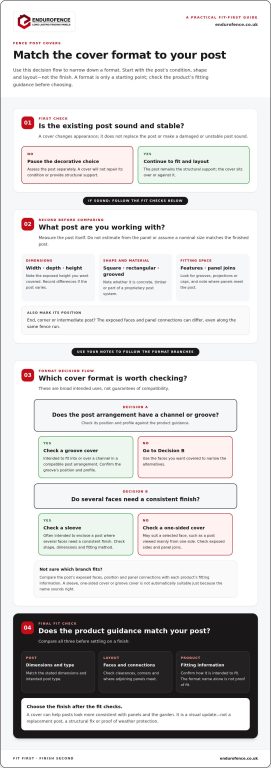
How to plan a tidy fence post cover update
A little preparation helps keep a post-cover update focused. Before choosing a finish, assess the posts, their condition and the way the fence runs through the garden. This gives you a practical plan and helps avoid treating a cover as a solution to a separate structural problem.
Use this checklist before selecting fence post covers for your garden:
- Check post condition. Look for movement, visible damage or anything that could obstruct a cover. Don’t use a cover to disguise a post that may need attention.
- Keep a record of dimensions. Note each relevant post’s width, depth and exposed height, including differences along the fence.
- Map the layout. Mark end, corner and intermediate posts, and note which faces are visible and where panels meet them.
- Decide on a finish. Compare the cover’s appearance with the panels and other garden materials before settling on a consistent look.
This is general planning, not a fitting method. Once you’ve selected a cover, follow its product information for preparation and fitting. Instructions can differ, so don’t assume that the same tools, fixings or steps apply to every format.
What should you check before fitting a cover?
Start with a close visual check of each post. If it moves, has visible damage or has an obstruction where the cover needs to sit, pause before covering it. A cover changes the post’s appearance; it shouldn’t be treated as a repair or as evidence that the post is sound.
Then compare the post and available space with the product’s dimensions and fitting guidance. Follow those instructions for preparation and fitting rather than borrowing a method from another cover. Keep the post’s condition in view throughout the decision.
How can covers create a coordinated fence-line finish?
Look at the fence as part of the whole garden. Compare the cover’s colour with the panels, paving, brickwork, decking, planting and other nearby features. A close match can help the posts blend in; a deliberate contrast can make them a more noticeable part of the design. Consider the view from both sides of the boundary where relevant.
Consistency can also help a mixed fence line feel more considered. If panels or posts vary in appearance, repeating one suitable finish across the visible posts may create a clearer visual rhythm. Check the effect against the full run, not just one post, and remember that a screen colour can look different in changing light.
Once you’ve noted the post condition, measurements, layout and preferred finish, browse EnduroFence post covers as an option for planning your update.
Explore EnduroFence post covers for a considered garden update
A post-cover update can refresh the look of existing posts without turning into a full fence replacement project. EnduroFence sells post covers directly for UK garden projects, giving you a product option to consider once you’ve identified your post type, measured it and decided on the finish you want.
Keep the decision grounded in your fence as it is. A cover changes the appearance of a post, so the post’s condition, the way it meets the panels and the product’s fitting information still matter. Use those details to narrow your browsing rather than choosing on colour or a product image alone.
What can you consider alongside post covers?
Posts and panels have separate roles in a fence. Covers address the appearance of the posts; panels form the sections between them. If your panels already suit the garden, focusing on the posts may be a straightforward way to create a more considered finish. If you’re reviewing a wider fence update, EnduroFence also supplies maintenance-free steel fence panels designed to fit existing concrete posts.
Retrofit panel swaps are another distinct option for updating existing fencing. They relate to the panels, not to fitting a post cover, so consider them separately according to what you want to change. First decide whether the posts, panels or both are part of your plan.
What is the simplest next step?
Before browsing, bring three details together: your post dimensions, the fence layout and your preferred finish. Note any differences between posts, including corners and end posts, then compare the product’s stated dimensions and fitting guidance with your setup. This gives you a practical basis for assessing the options without assuming that every format will suit every post.
- Dimensions: Keep your measurements to hand.
- Layout: Note exposed faces and panel connections.
- Finish: Consider how the cover will look beside panels and garden features.
With those checks complete, Explore EnduroFence post covers through the product shop and compare the product information with your fence. A measured choice helps you plan a focused garden update while leaving sound posts and panels in place where they still meet your needs.
Give your fence update a clear next step
A considered garden update doesn’t need to start with replacing everything. Treat the posts, panels and overall finish as separate decisions, and make each change only where it supports the result you want. This keeps the project focused and helps you make better use of the fence you already have.
If you’re ready to explore fence post covers UK options, take your measurements and preferred finish with you as you browse. EnduroFence sells post covers directly through its online shop, alongside maintenance-free steel fence panels and retrofit panel swaps as separate ways to update existing fencing.
Explore EnduroFence post covers and compare the product details with your fence. Start with what fits your garden, then choose a focused update that suits the posts you already have.
Frequently Asked Questions
Is planning permission needed to add fence post covers in the UK?
It depends on whether the covers change the fence’s height or appearance in a way that affects planning rules. Planning Portal guidance says fences generally fall within permitted development limits up to one metre beside a highway used by vehicles, or two metres elsewhere, but restrictions can apply to listed buildings and conservation areas. Measure the finished fence, including covers, and check current guidance with your local planning authority if in doubt.
Can fence post covers be used on a shared boundary fence?
They may be suitable, but first establish who owns or is responsible for the boundary fence. Check your property documents and discuss the proposed change with your neighbour before altering a fence you share or that may belong to them. This is particularly sensible if fitting a cover affects a face visible from their side or requires access to their garden. Agreement can prevent a minor garden update becoming a boundary dispute.
Will fence post covers change the finished height of a fence?
They can, depending on the cover’s shape and how it sits on the post. A cover that projects above the existing post may increase the fence’s overall height, while one fitted within the existing profile may not. Measure from ground level to the highest point after fitting, including any gravel board and post cap. If the change could affect planning limits, check the applicable guidance before proceeding.
How much do fence post covers cost in the UK?
The price depends on the specific cover and its product options, so there isn’t one figure that applies to every fence. Check the current product listing for the cover you’re considering, and compare its specification with your post before assessing value. Consider how many posts need covering and whether your fence has different post types, as these details affect which products may suit the project.
What should I do if a concrete fence post is cracked?
Don’t use a cover to hide or compensate for a cracked post. First look for movement, widening cracks or signs that the post no longer supports the panels securely. If its stability is uncertain, keep people clear of the affected section and arrange for the post to be assessed and repaired or replaced before choosing a cover. A cosmetic finish should come after the post’s condition has been dealt with.
Do fence post covers stop water getting into a post?
Not necessarily. Don’t assume a post cover makes a post waterproof or prevents water ingress; that depends on the product’s design and fitting details. Check the product information for any stated protective function, and don’t treat a cover as a substitute for addressing existing damp or damage. If water is collecting around a post or entering a gap, deal with the cause rather than relying on a decorative cover alone.

Leave a Reply