

Fencing Ideas for Modern Homes in the UK: 7 Ways to Update Your Garden
A taller, solid fence isn’t always the best way to gain privacy. The right design can screen overlooked areas whilst keeping light and a sense of space in your garden. These fencing ideas for modern homes UK show how to match clean lines, colours and materials to your property and the way you use the space.
Start by deciding where you need screening and where you want to keep an open view. Then consider how the fence will look from indoors, how it will meet gates and existing structures, and how much upkeep you want. This guide compares seven contemporary approaches and explains how proportions, materials and maintenance affect the finished result.
You’ll find ideas ranging from slatted designs and mixed materials to steel panels that can refresh suitable existing concrete posts. Each offers a different way to update a boundary, whether you want a stronger architectural look or a simpler change. Before choosing, note which views you want to screen, which garden areas you use most and what is already in place. That gives you a practical starting point for a fence that looks considered and works for your home.
Key Takeaways
- Use a three-part design test to find fencing ideas for modern homes UK: match the house, suit the garden and meet everyday needs.
- Compare solid, open-looking and mixed boundary treatments to balance privacy with light and a sense of space.
- Explore seven contemporary approaches, from clean-lined panels to coordinated posts and softened fence edges.
- Before refreshing a boundary, measure it and note the posts, levels, gates and nearby features.
- Steel panels with profiled outer sheets and an insulated core can offer a practical way to update suitable existing concrete-post fencing.
Fencing Ideas for Modern Homes: Start with the House and Garden
A fence does more than mark where your garden ends. It forms a strong visual line, frames views from inside the house and can either tie the outdoor space together or make it feel disconnected. The most effective fencing ideas for modern homes UK begin with the property and garden, rather than a panel style picked in isolation. Treat the boundary as part of the overall design: its height, colour and pattern will sit alongside the house, planting, paths and outdoor furniture.
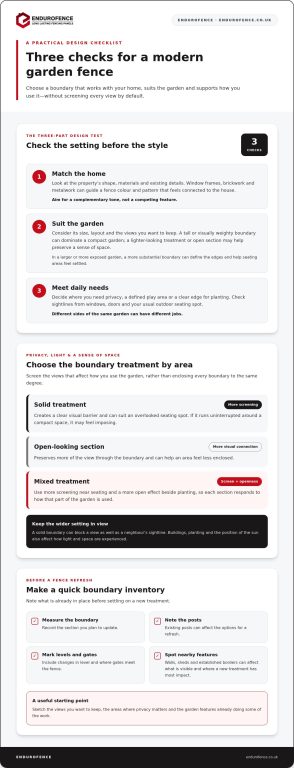
Use this three-part test to narrow your options:
- Match the home: Look at its shape, materials and existing details, such as window frames, brickwork or metalwork.
- Suit the garden: Consider its size, layout and the views you want to keep open.
- Meet daily needs: Decide where you need privacy, a defined play area or a clear edge for planting.
Choose a modern fence by checking that it complements the house, fits the garden’s proportions and supports the way you use the space.
These checks help you assess a design in context. A fence that feels balanced along a long, open boundary may look visually heavy in a compact garden. Existing structures matter too: a wall, gate, shed or established border can affect how much fencing is visible and where a different treatment will have the most impact. Fences have long served both practical and visual purposes; a general overview of types of fences and their history provides useful background, but your own setting should guide the choice.
Match fence lines to the home’s architecture
Clean, simple lines often sit comfortably beside contemporary exteriors, but there’s no single look that suits every home. Notice whether the property has strong horizontal features, crisp metalwork or a more textured finish. Brick, render and timber details can all help you choose a boundary colour and pattern that feels connected to the house.
A restrained palette usually makes this easier. Pick a tone that complements a visible feature rather than competing with it, and consider how the fence will look against both the building and the garden. Repeating one or two existing colours can create cohesion without making the boundary the main attraction.
Let garden size and use guide the design
In a compact garden, a tall or visually weighty boundary can dominate the view. A lighter-looking treatment or a carefully placed open section may help preserve a sense of space. In a larger or more exposed garden, a more substantial boundary can define the edges and make seating areas feel settled.
Plan around specific activities. A seating area may need screening from a direct view, whilst a play space benefits from a clear, practical boundary and planting borders may look better with a quieter backdrop. Check sightlines from windows, doors and your main outdoor seating spot. A quick sketch marking these views, existing structures and the areas you use most can show where privacy matters and where openness is more valuable.
How Modern Fencing Balances Privacy, Light and a Sense of Space
A boundary can give you privacy without making the whole garden feel shut in. First decide where screening matters, then consider how each section affects daylight, views and the garden’s proportions. A solid treatment creates a clear visual barrier, which can suit an overlooked seating spot but may feel imposing if it runs uninterrupted around a compact space. More open-looking sections preserve views through the boundary, whilst a mix of solid and open treatments can screen one area and keep another feeling lighter.
Each choice changes what you notice from indoors and outside. A solid boundary can block a view as well as a neighbour’s sightline; an open-looking one preserves more visual connection beyond the garden. Neither automatically makes a space brighter or larger. Existing buildings, planting and the position of the sun also affect how light and space are experienced. Consider how the fence relates to those features before settling on a design.
Privacy is about screening the views that affect how you use the garden, not enclosing every boundary to the same degree.
Choose privacy according to how each garden area is used
Start with the spots where you spend time. If neighbouring windows overlook a dining area, prioritise screening along that sightline. A planting border or side boundary may need less privacy, particularly if an open view helps the garden feel connected to its surroundings. Needs can differ from one side of the same garden to another, so avoid treating every boundary as though it has the same job.
Check the views from your usual routines: sitting at the table, opening the back door or relaxing by a window. A simple sketch can mark where privacy matters and where you’d rather keep a view open. The UK government guidance on garden design offers a wider perspective on how green space fits into planned communities, though your own sightlines and habits should guide decisions within your garden.
Keep a contemporary boundary from feeling too heavy
Where openness matters, consider a boundary with a lighter visual presence rather than a continuous, imposing line. You could vary treatments by section, using more screening near seating and a more open effect beside planting. Existing features, such as a wall, established shrubs or a change in level, may already provide some definition or screening, so account for them before adding more visual weight.
Plants can soften the edge of a fence and help it sit comfortably within the garden. Consider how much space they need as they grow, and avoid blocking a view you want to keep. The aim isn’t to make every garden feel larger, but to choose proportions and sightlines that work in your space. For a practical refresh that retains suitable existing concrete posts, explore maintenance-free steel fence panels.
Seven Fencing Ideas for Modern UK Homes
A contemporary boundary doesn’t need to make every part of the garden look the same. Use a consistent line for a calm backdrop, or vary selected sections to suit different areas and functions. These fencing ideas for modern homes UK offer a practical starting point: consider the house, the garden’s layout and the amount of screening each spot needs. For architectural inspiration, browse RIBA award-winning modern home designs and notice how materials and clean lines work together.
The options below focus on overall effect rather than a fixed palette. Choose colours that sit comfortably with your home and planting. Once you’ve settled on a design direction, compare specific finishes against the materials and colours already in the garden.
Ideas for a clean, structured garden
For a more ordered look, repeat a simple boundary treatment and keep its lines consistent around the garden. Coordinated details help the fence feel considered, whilst a change in treatment can mark out a separate area without making the whole space feel unrelated.
- Clean-lined panels: Use an uninterrupted run of simple panels as a quiet backdrop to contemporary exterior details. This can suit a garden with clear paths, neat planting beds or a pared-back patio.
- Horizontal emphasis: Choose a panel layout with strong horizontal lines to echo the shape of a low extension, wide windows or long garden borders. It can draw the eye along a narrow space, though the effect depends on the garden’s proportions.
- Coordinated posts: Bring posts into the same visual scheme as the panels, rather than treating them as an afterthought. Repeating the boundary’s material or tone at these structural points creates a more unified finish.
- A restrained backdrop: Keep one boundary treatment consistent behind planting or seating. A simpler background lets garden furniture, pots and foliage provide interest without competing patterns along the perimeter.
Ideas for a softer or more individual boundary
Variation can make a boundary feel tailored to the garden rather than applied as a single solution. Keep changes deliberate: repeat a detail or material where sections meet so the overall design still feels connected.
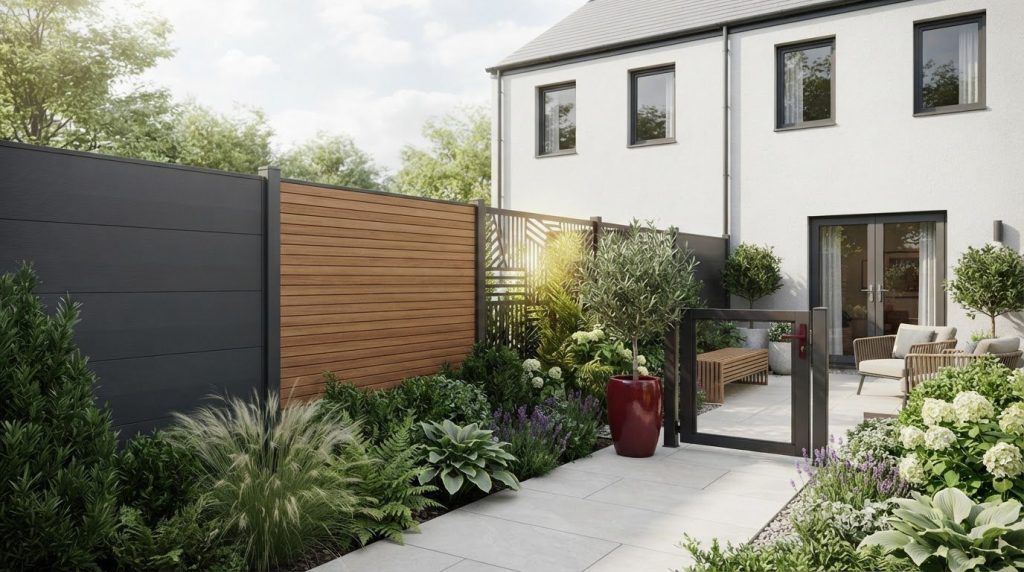
- Contrasting sections: Use a change in panel appearance to distinguish a seating area from a play space or utility corner. A clear transition can give each zone its own character without adding another barrier.
- Softened fence edges: Add planting alongside selected stretches to soften the line and connect the boundary with the garden. Leave room for plants to grow, and avoid obscuring gates or views you want to keep.
- Steel panel refresh: If suitable concrete posts are already in place, steel panels offer one way to update the fence whilst retaining them. EnduroFence panels have profiled steel outer sheets and a high-density insulated core, and are designed to fit existing concrete posts.
Use the shortlist to identify the idea that best fits the area you want to change. A single repeated treatment can bring order; a carefully chosen contrast can make the garden more useful and distinctive.
Plan a Modern Fence Refresh Without Overcomplicating the Garden
A clear plan helps you focus the refresh on what needs to change, rather than replacing parts of the boundary that may still be suitable. Start with the practical purpose, then record what’s already there before choosing a finish. This keeps design decisions grounded in the shape and condition of your garden.
Define the purpose, assess the boundary, choose a look, then plan the refresh. Use that sequence as a checklist before settling on materials or details.
Assess what can stay before choosing a new look
Walk the full boundary and note the condition and spacing of the posts, the state of each section and any changes in ground level. Measure the length and height, and mark gates, corners, walls and features that meet the fence. These details help you distinguish a panel refresh from replacing the whole boundary, which is a broader project.
Keeping existing posts may be an option if they’re in suitable condition and compatible with the replacement panels. Don’t assume that every old post can be retained: its stability, spacing and condition matter. Where concrete posts are suitable, replacement panels designed to fit them can update the boundary without changing those posts. EnduroFence steel panels are designed for existing concrete posts, making them an option for a panel swap.
Turn inspiration into a cohesive garden plan
Set a visual direction before choosing individual colours or details. For example, decide whether the boundary should read as a quiet backdrop or a more defined feature, then consider how that look meets the gate, walls, planting and neighbouring sections. This helps separate broad style decisions from detailed colour coordination and prevents each part of the fence from feeling like a different project.
Use a simple sketch to map the boundary and adjoining features. Mark where the level changes, where a gate opens and where planting may soften the edge. If only one section needs attention, consider how its lines and finish will sit beside the parts that remain. A consistent transition can make a partial refresh feel deliberate rather than unfinished.
For a practical planning checklist, work through these steps in order:
- Define the purpose. Note what the refresh needs to do, such as update a tired-looking run or improve screening in one area.
- Assess the boundary. Measure it and record post spacing, condition, levels, gates and adjoining features.
- Choose a look. Set a consistent visual direction that works with the house and existing garden details.
- Plan the refresh. Decide which sections need changing and whether suitable posts can remain.
These checks give your fencing ideas for modern homes UK a practical starting point, whether you’re planning a complete boundary change or focusing on panels. If suitable concrete posts are already in place, explore a retrofitting panel swap to refresh the fence whilst retaining them.
Refresh Existing Concrete-Post Fencing with EnduroFence Panels
A modern boundary refresh doesn’t always mean replacing every part of the fence. If your existing concrete posts are suitable, replacing the panels can change the look of the garden whilst retaining those posts. EnduroFence steel panels are designed to fit existing concrete posts, offering a practical option for homeowners who want to update an established boundary rather than start again from scratch.
The panels have profiled steel outer sheets and a high-density insulated core. They’re weather-resistant and don’t need painting or treatment, so the finished boundary avoids those regular upkeep tasks. A range of colours and finishes is available, making it easier to choose a look that sits comfortably with the house, garden and other boundary features. Keep the overall scheme in mind so the refreshed fence feels connected to the rest of the space.
What a steel-panel refresh can change
Replacing the panels can give a tired-looking run a cleaner, more contemporary appearance without removing suitable existing concrete posts. Before planning a swap, assess the posts’ condition and spacing, and consider how the fence meets gates, walls and changes in ground level. Retaining existing structures depends on their condition and compatibility with the new panels.
The panel finish also affects how the boundary relates to its surroundings. Compare the available colours and finishes with nearby brickwork, render, planting and paving. A considered choice can help the fence feel like part of the garden design, rather than an isolated new feature.
A straightforward next step for your garden
Start by measuring the fence run and noting the position and spacing of the concrete posts. Record any gates, uneven levels or adjoining structures too. These details help you understand the scope of the refresh and whether you’re looking at a panel replacement or a more extensive boundary change. Check the posts themselves: if their condition or spacing isn’t suitable, retaining them may not be the right approach.
EnduroFence panels are designed for straightforward replacement, with no specialist tools or qualifications required. This gives you a practical route to consider if you’re planning a panel swap yourself. Keep your measurements and notes to hand as you explore the panels and post covers, and compare the available colours and finishes against the design direction you’ve chosen for the garden.
If this approach suits your boundary, explore EnduroFence fencing options and find a panel style for your planned refresh.
Take the First Step Towards a More Considered Boundary
Choose one stretch of fence to assess first. Note what you want it to do, how it sits alongside the house and garden, and whether existing posts could remain. This small starting point makes it easier to compare fencing ideas for modern homes UK with the needs of your own space, rather than trying to redesign every boundary at once.
If a panel refresh is the right fit, EnduroFence steel panels are designed for suitable existing concrete posts and come in a range of colours and finishes. Their weather-resistant construction doesn’t need painting or treatment, which can help keep ongoing fence care simple. Consider how the chosen finish will sit against your home and planting, then explore the available options.
Explore EnduroFence fencing options and take a practical next step towards a garden boundary that feels right for your home.
Frequently Asked Questions
What fencing looks modern on a UK home?
Simple lines and a coordinated finish often give a fence a contemporary feel. Match the panel proportions to details already on the house, such as broad window frames, brick courses or metal railings. For example, a home with strong horizontal features may suit a boundary with a similar visual rhythm, whilst a more traditional exterior could benefit from a restrained, uncluttered design. Choose by considering the property and garden together.
How can I make a small garden look more modern with fencing?
Choose a calm, consistent boundary and avoid too many competing patterns or abrupt changes in finish. In a narrow garden, repeating the same panel lines along the longest edge can create a more orderly view. Keep gates and storage areas visually integrated where possible, and plan planting so it doesn’t crowd the walking route. A clear floor layout and considered fence design can make a compact space feel more organised without promising it will look larger.
Can modern fencing give privacy without making a garden feel closed in?
Yes. Focus screening on the views that matter, rather than enclosing every side equally. For instance, a seating area overlooked from nearby windows may need more screening than a planting border facing an open view. You can also arrange seating so it faces towards the garden instead of directly towards a boundary. Check the garden at the times you use it most, as changing light and activity can affect which sightlines feel intrusive.
Is steel fencing suitable for a modern garden?
Steel can suit a modern garden if its finish and panel profile work with the house and surrounding materials. Consider how it will look beside brick, paving, planting and any existing metal details, then decide whether you want the boundary to blend in or stand out. A clean, consistent appearance can complement a structured layout, whilst softer planting nearby can help balance the harder surface. Assess the overall effect in the setting, not in isolation.
Can I update fence panels without replacing concrete posts?
Yes, panel replacement can be an option if the existing concrete posts are sound and the new panels are compatible with their spacing and arrangement. Measure between the posts and note any changes in ground level before planning the work. If posts are leaning, damaged or unevenly spaced, replacing panels alone may not be suitable. EnduroFence steel panels are designed to fit existing concrete posts, offering one route for a compatible refresh.
Do modern fence panels need painting or treatment?
It depends on the panel material and its care requirements. Some fencing needs periodic painting or treatment, whilst other options are designed to avoid those tasks. Check the product’s maintenance guidance before choosing, and consider whether you’re comfortable with occasional upkeep or prefer a lower-maintenance boundary. EnduroFence steel panels are weather-resistant and don’t need painting or treatment, which can help simplify routine fence care.
How can I make a fence look less plain?
Add interest selectively rather than layering on lots of competing details. Planting along part of the boundary can soften a straight edge, whilst a carefully chosen change in panel appearance can distinguish a dining spot from a utility area. You could also repeat a detail from the house or garden furniture to make the fence feel connected to its surroundings. Keep gates and corners in the same visual scheme so the overall effect stays deliberate.

Leave a Reply