

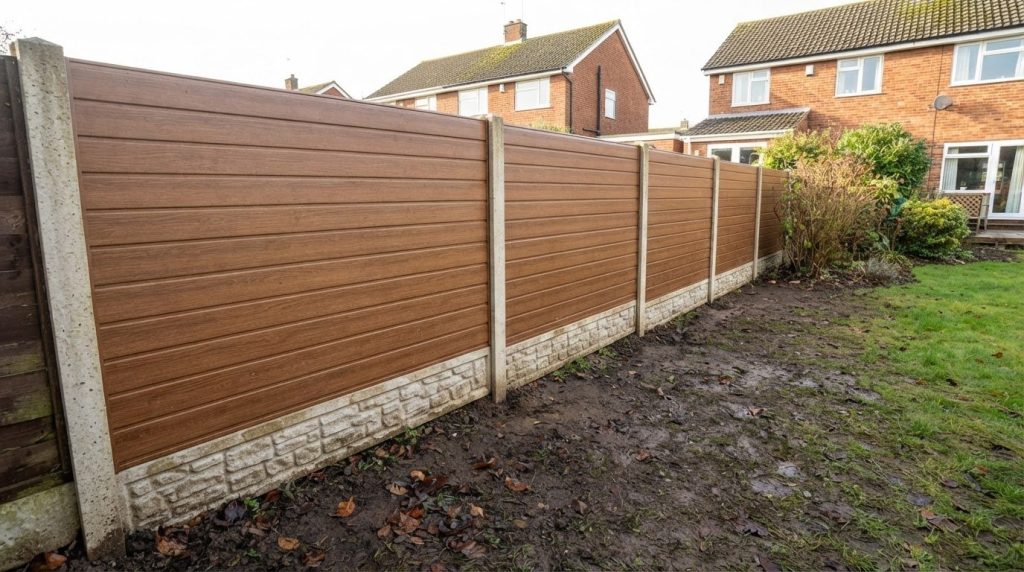
Fit and Forget Garden Fencing with Gravel Boards
The panels matter, but the posts and ground beneath them matter too. Fit and forget garden fencing starts with a sound base, suitable posts and, where needed, a gravel board that keeps panels clear of wet ground. Dip-treated timber panels should not touch the soil.
Before choosing a replacement, assess the garden, especially if you plan to reuse existing posts or minimise disruption. Check the boundary, your privacy needs and the look you want. This makes it easier to choose panels that suit the space and fit the existing structure.
This guide covers how to prepare the garden, choose a fence style and compare materials. It also explains how gravel boards separate panels from ground moisture and what to check before reusing existing posts.
Key Takeaways
- Assess the boundary and existing posts before choosing replacement panels, and factor in the fence height rules that apply to your garden.
- Match the fence style and height to the privacy, security and appearance you want.
- Compare timber, recycled plastic and composite fencing by considering their upkeep and how they suit your garden.
- Use a gravel board to separate panels from wet ground and help limit moisture exposure.
How do I prepare my garden for new fences?
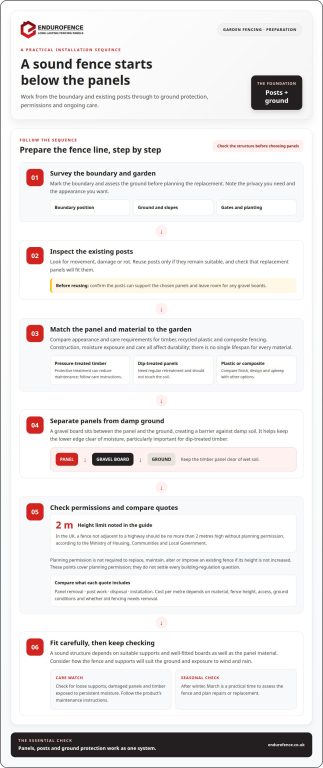
Start by assessing the boundary, existing posts, ground conditions and the upkeep each fencing style needs. When aiming for fit and forget garden fencing, choosing durable materials and preparing the fence line carefully helps reduce ongoing work.
Installation and installer choices
When comparing quotes, check what each includes, such as panel removal, post work, disposal and installation. Consider how the panels and supports will suit the ground and exposure to wind and rain. A sound structure depends on suitable supports and well-fitted boards as well as the panel material.
There is no single lifespan for composite, metal, concrete or pressure-treated timber fencing. Construction, moisture exposure and care all affect durability. Compare each material’s care requirements before deciding which suits your garden.
Permissions, costs and guarantees
In the UK, a fence not adjacent to a highway should be no more than 2 metres high without planning permission, according to the Ministry of Housing, Communities and Local Government. Planning permission is not required to replace, maintain, alter or improve an existing fence if its height isn’t increased. These points address planning permission; don’t assume they settle every building-regulation question.
Installation cost per metre depends on material, fence height, access, ground conditions and whether old fencing needs removal. Compare those items in each quote rather than looking at the headline figure alone. Read warranty terms for the covered materials, exclusions and maintenance conditions.
Before work begins, mark the boundary and inspect posts for movement, damage or rot. Existing posts may be reused if they remain suitable. For a replacement, confirm that the chosen panels fit the posts and leave room for any gravel boards. Plan the layout around slopes, gates and established planting.
Pressure-treated timber has a protective treatment that can reduce maintenance, while dip-treated panels need regular retreatment. Dip-treated panels should not touch the ground. Hedges need pruning or maintenance 1-3 times a year, and take time to establish as a screen. After winter, March is a practical time to assess fences and plan repairs or replacement.
Common problems include loose supports, damaged panels and timber exposed to persistent moisture. Regular maintenance helps preserve a fence’s strength and durability, whatever its material.
Fencing for privacy, security and garden appearance
Choose panels by balancing privacy, light and the style of your garden. Solid panels screen views, while slatted designs let in more light but provide less privacy.
A 1.8-metre fence is a common choice for garden privacy, and a 6 ft fence is widely used for enhanced privacy and security in the UK. Consider the boundary and the views you want to block before settling on a height. Check how the fence will look from both sides, especially beside a patio or seating area.
Privacy and sunlight often pull in different directions. A solid panel may shade nearby borders, while an open design lets in more light but leaves clearer sightlines. If plants need sun, note where they sit in relation to the fence and which areas may fall into shade.
Appearance comes down to the panel pattern, colour and finish. Traditional designs can suit established gardens, while clean lines may feel more in keeping with a contemporary space. Planed boards create a smoother, more uniform look than rough-sawn timber. Match the fence finish to nearby gates, sheds or boundary walls for a joined-up appearance.
Composite, metal and concrete fencing can all screen a boundary, but the level of privacy depends on the design. Solid, close-fitting panels leave fewer gaps than open or slatted styles. Installed costs vary with the panels, posts, access and work involved, so compare quotes for the same height and layout.
For a practical next step, consider maintenance-free fence panels if you want a solid, low-upkeep finish. Before deciding, sketch the boundary, mark seating areas and plants, then compare panel styles against those priorities.
Timber, recycled plastic and composite fencing
Choose a fence material by weighing appearance, upkeep and how it suits the boundary. Timber offers a traditional look and can be pressure-treated to help protect it from decay. Treatment doesn’t remove the need for care: follow the product’s maintenance instructions and watch for worn or damaged sections. A gravel board also helps keep panels clear of wet ground.
Composite panels can resemble timber, offering a board-style appearance without solid timber boards. Compare the surface finish and design with nearby gates, sheds and planting. Recycled plastic is another option; compare its appearance and care requirements with other materials. Panel construction and exposure to moisture also affect how a fence suits your garden.
For pressure-treated timber, look at how the panels have been treated and what ongoing care their instructions require. Some softwood fencing companies offer guarantees of 20 to 25 years, but guarantee terms vary. Read what the guarantee covers and any conditions attached. Properly installed wooden posts may need replacing after 25 years, so consider the posts as well as the panels when weighing long-term maintenance.
Neo Timber fencing is another named option to include in your comparison. Assess its stated material, finish, care instructions and guarantee alongside timber, recycled plastic and composite alternatives, rather than relying on the name alone. For any material, examine how the panels meet the posts and ground. A gravel board creates separation from damp soil, helping protect the lower edge of the panels. Check whether the fence style suits the boundary, then compare like-for-like panel layouts and maintenance requirements before deciding.
Gravel boards and ground contact
A gravel board sits between the fence panel and the ground, creating a barrier against damp soil. This matters particularly for dip-treated timber panels, which shouldn’t touch the ground. Keeping the lower edge clear helps limit moisture exposure and can reduce premature damage where rainwater collects along a boundary.
Fence posts need attention too. They commonly rot in the area extending 100 mm below and above ground level, where moisture and soil meet the timber. During replacement, inspect this section closely for soft wood, movement or damage. A gravel board protects the panel edge, but it doesn’t protect a post that is already deteriorating.
Choose a board material and finish that suit the panels and garden. Concrete boards provide a durable barrier, while timber boards can create a more traditional, coordinated appearance. Concrete posts need no further maintenance treatment, but they cost more than timber posts. Compare the whole boundary structure, not just the visible panels.
Before fitting replacement panels, position the gravel board evenly between the posts. Uneven ground can leave gaps beneath the board or make panels sit at different heights. Check the alignment for a neat finish, and inspect the board for cracks or movement when you assess the fence.
Gravel boards are a practical part of a durable fence, but they don’t make every component maintenance-free. Check the boards, posts and panel edges for moisture damage, especially after wet weather. Replace a damaged board before it leaves the panel in contact with soil. If you’re considering post covers for your fence, explore how they can finish and protect the post area.
EnduroFence
EnduroFence offers a practical route to a lower-maintenance boundary when existing concrete posts remain suitable. Its Maintenance-Free Fence Panels are designed to fit those posts, making them relevant when you want to replace timber panels without changing the whole fence structure. The panels have profiled steel outer sheets and a high-density insulated core, providing durability, weather resistance and security without painting or treatment.
EnduroFence’s Retro Fitting Panel Swap lets you replace panels within existing posts. No training or qualification is needed to install the panels. EnduroSmart Post Covers are also available to finish the posts alongside the new panels.
If you’re considering a panel replacement or want to discuss the options for your garden boundary, contact EnduroFence.
Plan for a fence that still suits your garden
Choose a boundary that works for your garden now and as it changes. Before settling on a design, consider how planting may spread, where you walk, and whether seating or storage might move. These details help keep the fence practical without getting in the way.
List your priorities before deciding: the feel you want for the garden, the views you want to screen and how the fence should fit with existing features. Fit and forget garden fencing means choosing panels that suit everyday use and the look you want, with care requirements that match your expectations.
Picture the boundary from inside the house and from the garden entrance. A fence that works from both viewpoints can make the space feel more considered. Keep your plans simple and focus on the details that matter to you.
Contact EnduroFence about your fencing to discuss a practical next step for your garden.
Frequently Asked Questions
How do I calculate the number of panels I need?
Measure the fence line and count each space between posts. Traditional UK fence panels are generally 183 cm wide, while European-style panels are generally 180 cm wide, so check which width fits your post slots. Divide the total run by the panel width, then allow for the actual number of post-to-post spaces. For corners, gates or uneven boundaries, measure each straight section separately.
How do I deal with a sloping plot?
On a slope, panels can follow the ground or sit in a stepped line. Stepping keeps rectangular panels level but may leave gaps beneath sections. Following the slope creates a more continuous lower edge if the panels suit that layout. Mark changes in ground level and plan how gravel boards will sit beneath the panels.
How high should it be?
A 1.8 m fence is a common privacy choice for a garden. In the UK, fencing adjacent to a highway should be no more than 1 m high without planning permission; elsewhere, it should be no more than 2 m, according to the Ministry of Housing, Communities and Local Government. Consider the boundary position and purpose before choosing a height.
What does “fit and forget” garden fencing mean in the UK?
“Fit and forget” describes fencing designed to need little routine attention after installation. The phrase does not replace the need to choose suitable panels, posts and ground clearance. A gravel board, for example, keeps timber panels clear of wet soil. Compare material care requirements to decide what low-maintenance fencing means for your garden.
Which garden fence materials are most durable and low maintenance in the UK?
No single material suits every garden: exposure, construction and contact with the ground all affect durability. Timber has a traditional appearance, but check its care requirements. Composite and recycled plastic offer alternatives, so compare their construction and care instructions. EnduroFence’s Maintenance-Free Fence Panels, made with profiled steel outer sheets and a high-density insulated core, offer another low-maintenance option.

Leave a Reply