

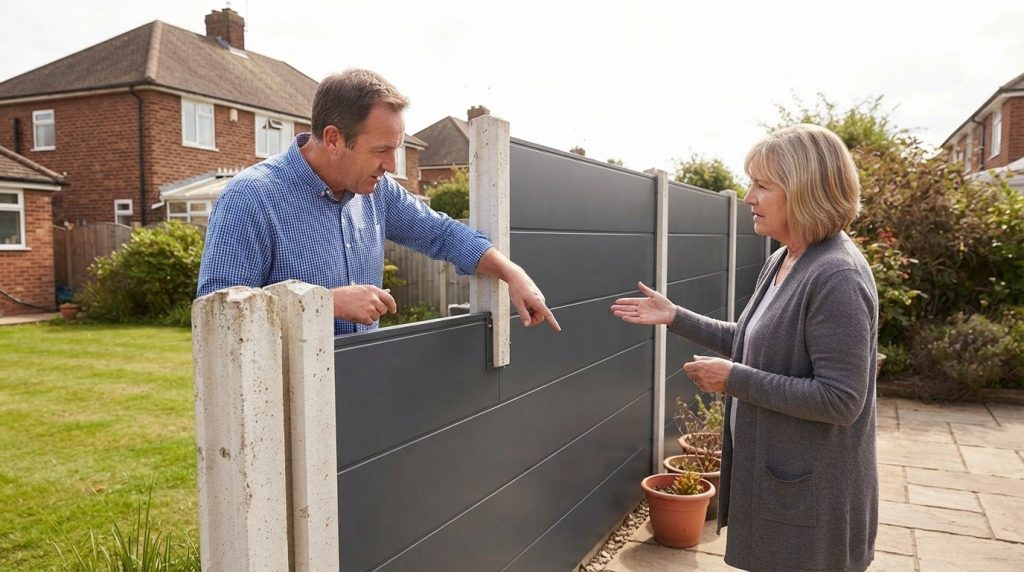
Garden boundary legal requirements in the UK: who owns the fence
Don’t assume a fence belongs to you simply because it stands along your side of the garden. The practical starting point for understanding garden boundary legal requirements in the UK is to check your property documents and any written agreement about the boundary. These can help clarify ownership and responsibility before you arrange repairs, a replacement or a new fence.
A worn fence may look like a straightforward repair, but uncertainty about ownership can complicate the decision. This guide explains what to look for, how to approach repair responsibilities and what to consider before putting up a fence. It also shows how replacing a fence differs from changing the boundary itself, so you can make an informed decision and discuss the next step with your neighbour.
Key Takeaways
- Use your property documents and any written boundary agreement to help establish who owns the fence.
- Don’t assume ownership and responsibility for repairs are the same; clarify both before arranging work.
- Agree the position and scope of a proposed fence change with your neighbour before work begins.
- If you’re replacing timber panels in existing concrete posts, EnduroFence’s maintenance-free panels are designed for a retrofit swap.
Garden boundary legal requirements UK
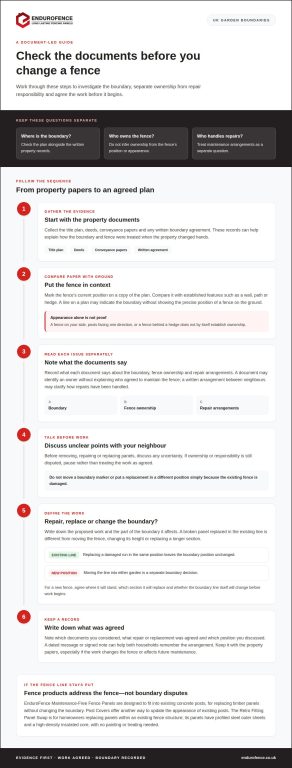
Start with the documents connected to the property, not the fence’s appearance. A fence on your side, or posts facing one direction, does not reliably establish ownership. Look for the title plan, deeds, conveyance documents and any written boundary agreement. Together, these records can help explain how the boundary and fence were treated when the property changed hands.
Read the plan alongside the written documents. A line on a plan may indicate the boundary, but the drawing might not show the precise position of a fence on the ground. Compare it with established features such as a wall, path or hedge, and note where the fence sits in relation to them. For example, a fence behind a hedge does not, by itself, establish who owns either feature.
Treat ownership and responsibility for repairs as separate questions. A document may identify who owns a fence without explaining who agreed to maintain it. A written arrangement between neighbours may also help clarify how repairs have been handled. Note what the documents say about each issue rather than assuming that the person who last repaired the fence owns it.
Before arranging work, follow a simple document-led process:
- Gather the title plan, deeds, conveyance papers and any written boundary agreement.
- Mark the fence’s current position on a copy of the plan, using visible garden features for context.
- Note separately what each document says about the boundary, fence ownership and repair arrangements.
- Discuss any unclear point with your neighbour before removing, repairing or replacing panels.
This review can reveal differences between the paperwork and the fence’s current position. For example, a plan may show a boundary line while an old agreement describes a fence or hedge. Consider those details together. Don’t move a boundary marker or install a replacement in a different position just because the existing fence is damaged.
Before arranging repairs, define the work being discussed. Replacing a broken panel in the existing line is different from moving the fence, changing its height or replacing a longer section. Write down the proposed work and the part of the boundary it affects. If the documents describe a repair arrangement, use that wording to guide the discussion. If ownership or responsibility is still disputed, pause before treating the work as agreed.
A new fence also needs a clearly defined scope. Set out where it will stand, which section it will replace and whether the boundary line itself will change. Share those details with your neighbour before work begins. For example, replacing a damaged run on the existing line leaves the boundary position unchanged. Moving the line into either garden is a separate boundary decision.
Keep a written record of the decision. Note which documents you considered, what repair or replacement was agreed and which position you discussed. A dated message or signed note can help both households remember the arrangement. Keep it with the property papers, especially if the work changes the fence or affects future maintenance. Clear records cannot resolve every disagreement, but they make the history of a boundary decision easier to follow.
In short, the practical starting point for garden boundary legal requirements in the UK is evidence, not appearance. Use property records to investigate ownership, distinguish ownership from repair responsibility, and agree the scope before changing a fence. This gives you a clearer basis for deciding what work can proceed without confusing a fence repair with a change to the boundary itself.
EnduroFence
Once you’ve clarified the boundary and agreed what work can proceed, EnduroFence can help with the fence itself. If the existing fence line is staying in place, Maintenance-Free Fence Panels are designed to fit into existing concrete posts, making them suitable for replacing timber panels without changing the boundary. Post Covers offer another way to update the appearance of existing posts.
EnduroFence’s Retro Fitting Panel Swap is for homeowners replacing panels within an existing fence structure. The panels have profiled steel outer sheets and a high-density insulated core, with no painting or treating needed. These products address the fence itself, not disputes about ownership or the legal boundary. Explore EnduroFence’s options and get a free quote through the website.
Move your fence project forward
Once you’ve reached a shared understanding with your neighbour, keep the practical decisions consistent with it. A clear project brief can record the agreed fence line, the section to be renewed and the finish you want, giving everyone a useful reference as the work moves ahead. It also helps keep a fence upgrade distinct from an unresolved ownership question.
Understanding garden boundary legal requirements in the UK is a useful starting point. Next, choose an option that suits the agreed work. EnduroFence offers Maintenance-Free Fence Panels, Post Covers and Retro Fitting Panel Swap for different fence projects. Explore the options and request a free quote through the website, while keeping the boundary decisions already made in view.
If you’re ready to discuss your fence project, contact EnduroFence about your boundary. A considered next step can make the project easier to plan and help you move ahead with confidence.

Leave a Reply