

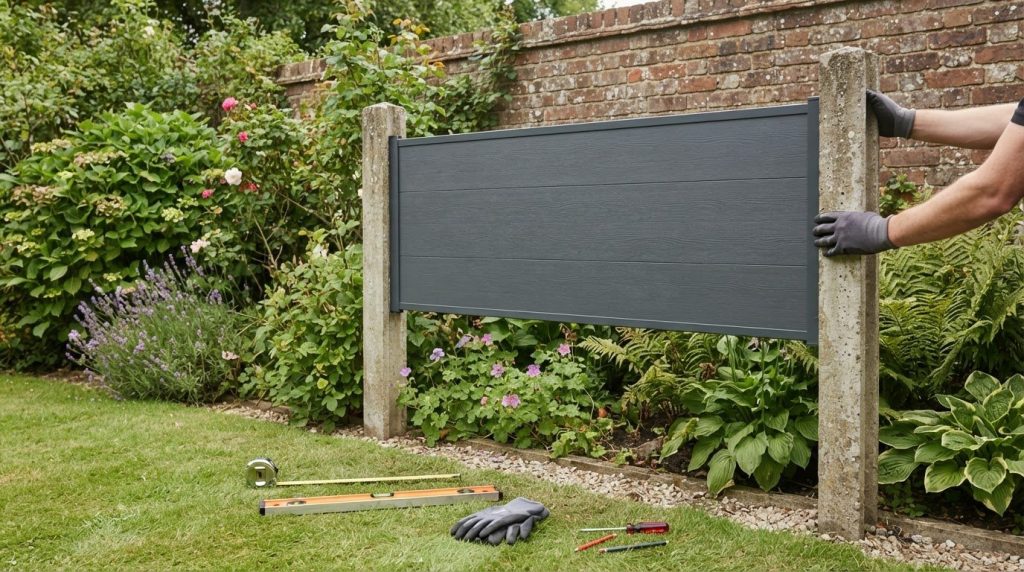
Garden Fence Panels Easy to Install: A Practical UK Guide
What if replacing a fence panel didn’t mean rebuilding the whole boundary? If your existing concrete posts are sound, stable and correctly spaced, keeping them can simplify a garden update. Searching for “garden fence panels easy install” usually comes down to finding panels designed to fit your posts, and planning the replacement around the space you have.
Before choosing panels, check whether the posts can be reused and whether the new panel will fit their openings and slots. EnduroFence maintenance-free steel panels are designed to fit existing concrete posts, offering an alternative to timber panels without the need for painting or treatment.
This guide explains what to measure, how to assess the posts and what to prepare before starting. It also compares a panel swap with a full rebuild, so you can choose an approach that suits the condition of your fence and avoid taking on more work than necessary.
Key Takeaways
- Easy-fit panels reduce avoidable work, but the right fit and sound existing posts matter as much as the panel material.
- Measure each opening and check the post slots before choosing garden fence panels easy install.
- Compare a panel swap with a full rebuild by considering the posts’ condition, the scope of work and whether groundwork is needed.
- Prepare the area by planning access, clearing space and protecting nearby plants before handling panels.
- EnduroFence maintenance-free steel panels are designed for existing concrete posts, so check the fit before choosing a replacement.
What makes garden fence panels easy to install?
An easy panel replacement starts with the fence you already have. A panel that fits the existing posts can avoid extra work, while a clear plan helps prevent delays caused by blocked access or incorrect measurements. The easiest option is not necessarily the lightest panel or the one with the fewest parts. Compatibility, preparation and the condition of the posts all matter.
Fences have different forms and purposes, as the overview of types of fences illustrates. For a panel replacement, focus on the practical fit: can the new panel sit securely in the opening and post slots? Searching for “garden fence panels easy install” should lead you to consider the whole fence section, not just a product description.
Which parts of a fence project can make fitting easier?
Start by checking the posts. If they are concrete, sound, stable and aligned, retaining them may avoid digging out old foundations and setting new posts. Look for visible cracks, movement, leaning and damaged slots. A post that has shifted can prevent a good fit even when the panel dimensions seem right.
Before ordering, measure each opening and compare it with the panel dimensions. Check how the panel edges are meant to sit in the post slots, rather than relying on a familiar-looking panel size. A panel swap replaces the infill between suitable posts. A full rebuild also involves removing and replacing posts, which adds groundwork and means organising more of the fence line.
- Inspect posts for movement, damage and alignment.
- Measure each opening and compare it with the panel dimensions.
- Check that the panel edges are suited to the post slots.
- Decide whether the posts can stay or the fence needs wider work.
Does easy installation mean compromising on durability?
No. Ease of fitting and the panel’s material are separate considerations. A panel can be straightforward to install and still be chosen for its construction and maintenance requirements. Consider how you want the fence to look and how much upkeep you want to avoid, as well as whether the panel will fit the existing structure.
Steel panels with an insulated core are one maintenance-free option. EnduroFence panels have profiled steel outer sheets and a high-density insulated core, and are designed to fit existing concrete posts. Installation is straightforward and requires no specialised tools or qualifications. The posts and measurements still need to be suitable for the replacement.
Keep the decisions in order: first establish whether a panel replacement is practical, then choose the material and finish. Checking the structure and dimensions helps avoid choosing a panel that will not fit. Considering maintenance separately helps you select an option that suits your preferences after installation too.
How panel design and existing posts simplify garden fence installation
A panel designed for existing concrete posts can keep a fence update focused. If the posts are sound, you can replace the infill without removing the supports or disturbing the ground around them. This approach works only when the posts are stable and the replacement panel matches their openings and slots.
A retrofit panel replacement means removing an existing panel and fitting a compatible one between posts that remain in place. It can reduce the scope of the project, but accurate measuring and checking the posts are still essential.
Why compatibility with existing concrete posts matters
Concrete posts hold the panel in position. If they are upright, secure and free from damage that affects the slots, they may be suitable to retain. Check every post along the section you plan to update. One loose or misaligned post can prevent a replacement panel from fitting, even if the other openings look consistent.
Measure each opening and note the shape and condition of the post slots before selecting panels. Concrete posts and fence panels do not all follow one universal dimension. Compare the actual opening, slot arrangement and panel dimensions instead of judging compatibility by appearance alone.
How panel materials affect the fitting experience
Material is only one part of the decision. Access to the boundary, room to position a panel and obstacles near the posts all affect handling. Narrow paths, garden features and planting can make it harder to move a panel into position, whatever its material.
EnduroFence panels have profiled steel outer sheets around a high-density insulated core. This describes the panel’s construction, but it does not tell you whether it will fit your fence. Check the dimensions and post compatibility separately. Installation is straightforward and requires no specialised tools or qualifications, which can make a panel replacement more accessible.
If the posts need replacing, the job becomes broader. It may involve removing the existing supports and preparing the ground for new ones. A DIY fence installation guide can provide wider context on setting posts, although a panel swap with retained posts has a different scope. Work out which parts of your fence need attention before choosing a fitting approach.
For a panel update, use this sequence: assess the posts, record the opening dimensions, compare the panel’s intended fit, then plan how to move it into position. If a maintenance-free option is on your shortlist, explore EnduroFence fence panels designed for existing concrete posts.
Easy-install garden fence panels compared: panel swap or full rebuild?
Choose the scope of work by assessing the posts first, not the panel finish. A panel swap can keep the project focused if the existing posts are stable and suit the replacement panels. If they are damaged, loose or incompatible, a rebuild may be more practical. Use the comparison below to decide which approach better matches the fence’s condition.
| What to consider | Panel swap | Full rebuild |
|---|---|---|
| Scope of work | Replace the panels between retained posts. | Remove and replace posts as well as panels. |
| Groundwork | Usually avoids post-removal and new post-setting work if the posts can stay. | May require digging and preparing the ground for replacement posts. |
| Existing posts | Must be stable, suitably aligned and compatible with the new panels. | Consider if existing posts are damaged, unstable or unsuitable for the chosen panels. |
| Garden disruption | Generally more contained to the panel section being changed. | Can affect a wider area as the fence line and supports are renewed. |
When can replacing panels be simpler than rebuilding?
A panel-only update may suit a fence where the posts appear upright, firmly set and free from obvious damage around the slots. These are practical signs to look for, not a structural inspection. Check the whole section: one post that has shifted or cracked can affect the fit of a replacement panel.
Keeping suitable posts can limit disturbance to the ground, nearby planting and garden features. The work then centres on removing the old infill and fitting panels that match the openings. EnduroFence’s retrofit panel swap is designed to replace panels while retaining suitable existing concrete posts.
When might a complete fence rebuild be the better route?
A wider rebuild may be worth considering if posts are visibly loose, leaning, damaged or too far out of alignment for compatible panels to fit. The same applies if the existing post slots do not match the replacement panel format. Keeping unsuitable posts simply to reduce the work could result in a poor fit or leave the underlying problem unresolved.
Separate the decisions: first consider whether the posts can remain, then choose the panel material and colour. Steel and timber differ in construction and upkeep, but both need suitable supports. EnduroFence maintenance-free steel panels are designed for existing concrete posts, making them an option when those posts are in suitable condition.
In short, garden fence panels easy install are only an easy-fit choice if the site and supports suit them. A focused panel swap can avoid unnecessary groundwork, while a full rebuild addresses posts that cannot provide a sound, compatible base. Let the fence’s condition guide the scope.
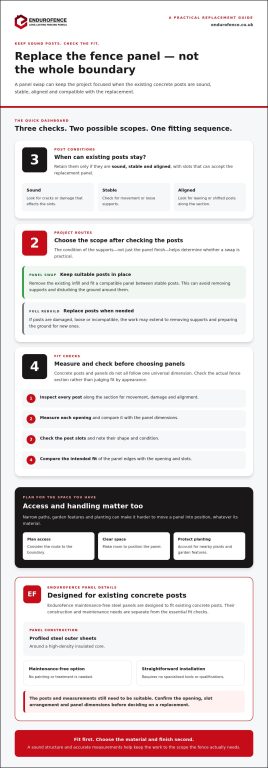
Prepare for an easier garden fence panel installation
Planning ahead can prevent common hold-ups, such as discovering that a panel will not fit or that access is blocked. Work through the checks in order: inspect the posts, measure each opening, plan how you will reach the fence, then organise the panels and work area.
What should you check before ordering panels?
Start at the fence line. Look for visible cracks, movement, leaning or damaged slots in the existing posts. This is not a structural inspection, but it can help identify obvious reasons why a panel-only replacement may not be suitable.
Measure each opening and record the dimensions. Check the space between the posts and how the panel edges need to sit in the slots. Do not assume every section is identical, particularly along an older boundary. Note obstacles such as narrow paths, garden furniture or planting that could restrict access when panels are moved.
Choose a colour and finish after you have established the practical requirements. Consider how the fence will look alongside the house, paving and planting. EnduroFence offers maintenance-free steel panels in a choice of colours and finishes, designed to fit existing concrete posts.
How can you organise the fitting day?
Before handling panels, clear a route from the storage area to the fence and make space to put removed panels down safely. Move or protect nearby plants and garden items that could be knocked or scratched. Make sure gates and paths are usable, and plan where materials will go so they do not block access as the work progresses.
- Inspect the posts. Note visible damage or movement that could affect the replacement.
- Measure the openings. Record each section and compare it with the panel dimensions and slot arrangement.
- Plan access. Clear a route and decide where old and new panels can be placed.
- Organise the panels. Keep them near the relevant fence sections, with any required accessories together.
Follow the fitting guidance supplied with the panels. Do not force a panel into a tight opening or make improvised changes to get it to fit. If the measurements or post condition suggest a mismatch, pause and reconsider the panel choice before starting.
EnduroFence panels are designed for straightforward installation without specialised tools or qualifications. A panel swap can be more manageable when the existing posts and measurements are suitable. For maintenance-free panels designed around existing concrete posts, explore EnduroFence panels and request a free quote.
How EnduroFence makes garden fence panel replacement easier
A simpler fence update starts with three checks: can the existing posts stay, what size panels will fit, and which replacement suits your garden? If the concrete posts are sound and compatible, you may be able to change the panels without rebuilding the whole fence line. That keeps the project focused on the parts that need updating.
What makes EnduroFence panels a practical replacement option?
EnduroFence maintenance-free steel panels are designed to fit existing concrete posts in UK gardens. They combine profiled steel outer sheets with a high-density insulated core. They offer an alternative to timber panels without the need for painting or treatment.
The panels are intended for straightforward installation without specialised tools or qualifications. The right fit still depends on your fence: post condition, opening dimensions and slot compatibility all matter. Check these before choosing a panel rather than assuming that every concrete-post fence will suit the same replacement.
Material and appearance are separate choices. Once you have considered the fit, choose from the available colours and finishes to suit your garden and the surrounding boundary. A considered colour choice can refresh the fence while allowing suitable existing posts to stay in place.
How to take the next step with confidence
Before requesting a quote, gather the measurements for each fence opening and note any visible issues with the posts. It also helps to have a preferred colour or finish in mind. These details give you a practical starting point for planning the replacement.
Keep the checks simple:
- Record the dimensions of each opening and the arrangement of the post slots.
- Look for visible damage, movement or misalignment in the existing posts.
- Consider access along the fence and how panels will be moved into place.
- Choose a colour and finish that work with your garden.
If your posts are suitable and the dimensions match, EnduroFence panels offer a way to update the fence without automatically replacing its supports. If the posts are damaged or the fit is unsuitable, the project may need a broader approach. Make that decision before selecting panels.
For anyone searching for “garden fence panels easy install”, checking fit first is a practical way to narrow down the options. Share your measurements and finish preference when requesting a free quote through the EnduroFence website. Request a free fence panel quote.
Make your next fence update a considered one
A fence project feels more manageable when the next step is clear. Decide which section needs attention first, note anything that could affect access and keep your measurements together. That gives you a practical starting point, whether you are updating one panel or planning a larger change.
If you searched for “garden fence panels easy install”, use what you have learned to move from browsing to a plan. Consider how you want the fence to look as well as what the existing structure can accommodate. EnduroFence offers maintenance-free steel panels designed for existing concrete posts, with a choice of colours and finishes. Installation does not require specialised tools or qualifications.
A free quote is a useful next step once you have checked the posts and measured the openings. Share your measurements and preferences through the website to plan a panel replacement that suits your garden.
Request a free EnduroFence quote and start planning your fence update.
Frequently Asked Questions
Do easy-install garden fence panels need painting?
No. EnduroFence maintenance-free steel panels do not need painting or treatment, which removes a regular upkeep task after fitting. If you are comparing options after searching “garden fence panels easy install”, check the care guidance for the specific panel you choose, as maintenance needs depend on its material and finish. Do not apply paint or treatment unless the panel guidance recommends it, as this could affect the surface or finish.
Can I fit garden fence panels in wet weather?
It is better to wait if rain has made the ground slippery or the route to the fence difficult to use safely. Wet conditions can make it harder to keep a panel under control, particularly when moving it through a narrow space. Check the forecast and choose a time when you have stable footing and clear access. Follow the panel’s fitting guidance and do not rush to work around poor conditions.
Can I replace one garden fence panel without changing the whole fence?
Yes, you can replace a single panel if the surrounding posts are stable and the new panel fits the opening and slots. Damage to one panel does not automatically mean the rest of the boundary needs replacing. Measure that section carefully and compare its post arrangement with the replacement. Check that neighbouring panels are secure too, so the updated section sits consistently and does not leave another issue unresolved.
Are steel fence panels difficult to handle?
Handling depends on the panel’s size and construction, as well as the space around the fence. A clear route and an unobstructed place to set the panel down can make positioning more manageable. Get help from another person where needed, and do not assume a panel is safe to move alone based on material alone. Follow the supplied handling guidance and take extra care around steps, tight turns and planting.
Can garden fence panels be cut to fit?
Do not assume a panel can be cut to suit an opening. Cutting may affect its construction, finish or ability to sit correctly in the posts, particularly with a steel panel that has an insulated core. Measure the space before ordering and compare it with the panel dimensions. If the sizes do not match, follow the product’s fitting guidance rather than making an improvised alteration.
How do I stop fence panels rattling in concrete posts?
First work out whether the movement comes from a loose panel, a gap in the slot or a damaged or shifting post. Check the panel’s position and look for visible cracks or movement in the concrete. Use only a fixing or packing method recommended for that panel and post arrangement. Avoid wedging in improvised materials, which may not hold securely or could prevent the panel from fitting as intended.

Leave a Reply