

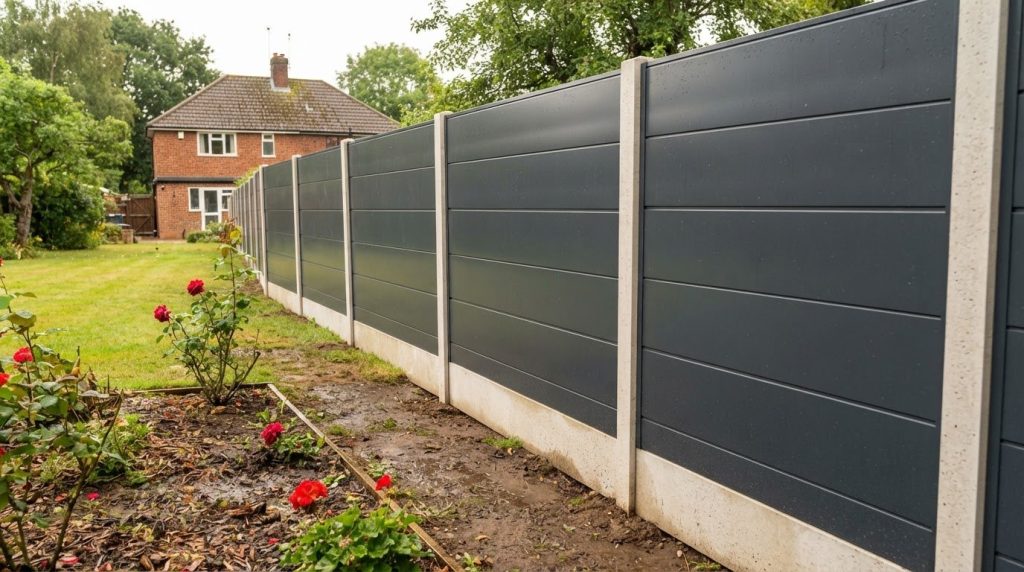
Garden fencing options for UK homes
A well-installed timber garden fence often lasts 10 to 15 years, so choosing garden fencing that lasts means looking beyond the panel itself. Pressure-treated fence panels are estimated to last 10 to 15 years, while concrete posts can last 25 years or more. Timber treatment, moisture and the way the fence is supported all affect its useful life.
When planning a new boundary, it’s understandable to focus on the panels, but the posts and the fence’s contact with the ground matter too. A gravel board helps protect panels from ground moisture, while your choice of material affects how much upkeep the fence needs.
This guide explains how long common UK fence options may last, from treated timber and concrete supports to composite fencing. You’ll see how timber choice, gravel boards and upkeep affect durability, so you can weigh the practical differences before deciding what suits your garden.
Key Takeaways
- Use typical panel lifespans as a guide, then consider how moisture, treatment and support affect the fence in your garden.
- Choose timber with its treatment and upkeep in mind; cedar and pressure-treated options have different durability and maintenance needs.
- Protect timber panels from ground moisture with a gravel board, and factor in the support provided by concrete posts.
- Consider composite if you want a different balance of longevity and upkeep, or explore replacement panels designed to fit existing concrete posts.
How Long Do Fence Panels Last?
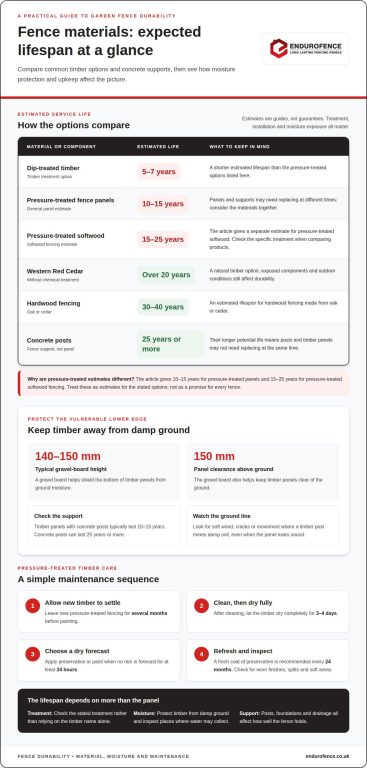
Pressure-treated fence panels are estimated to last 10 to 15 years. Concrete posts can last 25 years or more, so the panels and their supports may need replacing at different times. For garden fencing that lasts, consider the materials together, not just the visible boards.
Panel prices depend on material, dimensions, design and installation requirements. Slatted and Venetian panels create more open boundaries, while hit-and-miss boards overlap for privacy and airflow. In high-wind zones, hit-and-miss panels can reduce the load on posts by roughly 25%. In the UK, fences beside a highway, road or footpath are generally limited to 1 metre in height without planning permission, according to UK Government. Choosing garden fencing that lasts also means checking how the style suits its location.
Maintenance and Preservative Treatment
Timber panels need suitable care to protect them from weather damage. Leave new pressure-treated fencing for several months before painting. After cleaning, let the timber dry completely for three to four days. Apply preservative or paint when no rain is forecast for at least 24 hours. Inspect the finish during routine garden upkeep, especially where water may collect or paint has started peeling.
Post Foundations and Ground-Line Rot
Ground-line rot can weaken a timber post where it meets damp soil. Look for soft wood, cracks or movement at the base, even if the panel itself appears sound. A typical installation guideline is to bury at least one-third of each post’s total length. Posts in direct soil contact should meet Use Class 4 standards. Drainage and soil conditions also affect how well the foundation holds.
Guarantees and Signs of Fence Damage
For fences, gates and railings, check guarantee terms for duration, covered components and exclusions. Keep your purchase details and follow any stated care conditions. Signs a garden fence needs repair or replacement include leaning posts, loose panels, broken boards and rot near ground level. Repair a localised fault if the surrounding parts remain sound. Widespread decay or repeated movement may make replacing more of the fence the practical option.
Redwood, cedar and pressure-treated timber options
Timber choices balance appearance, treatment and expected service life. Compare the wood itself and how its exposed components are likely to handle outdoor conditions.
Timber Types and Treatment Options
Western Red Cedar can last over 20 years without chemical treatment. Hardwood fencing made from oak or cedar is estimated to last 30 to 40 years. Redwood is another option, but assess its specified treatment and the fence’s exposed components rather than relying on the timber name alone.
Pressure-treated softwood fencing is estimated to last 15 to 25 years, while dip-treated timber is estimated at 5 to 7 years. These treatments differ, so check which one applies before comparing a guarantee or choosing an alternative. Appearance matters too: select a finish that suits the garden and consider how painting will affect ongoing care.
Pressure-Treated Timber Lifespan
Treated timber fencing is estimated to last 10 to 25 years. That broad range reflects differences in treatment, installation and exposure to moisture. Pressure-treated softwood sits within this range, with an estimated lifespan of 15 to 25 years. These figures are useful comparisons, not a promise for every fence.
Maintenance affects how well the surface resists damage. A fresh coat of preservative is recommended every 24 months for pressure-treated timber. Inspect the panels and posts for worn finishes, splits or soft areas, especially where water collects. Addressing a damaged component early can help prevent the fault spreading into adjoining timber.
Choose by weighing upfront appearance against the time required for upkeep. Cedar can suit a natural finish, while pressure-treated timber offers a treated alternative with a stated maintenance interval. Dip-treated panels have a shorter estimated lifespan, so include likely replacement and treatment work in your decision. A guarantee should be read alongside treatment details and maintenance requirements, not as a substitute for them. If you prefer to avoid painting timber, consider a low-maintenance fencing alternative for your garden.
Timber panels with concrete posts and gravel boards
Concrete posts provide a durable support for timber panels, while gravel boards help shield their lower edges from damp ground. Timber panels used with concrete posts typically last 10 to 15 years.
In UK back gardens, fences are generally permitted up to 2 metres high without planning permission, according to UK Government. Boundaries beside a highway, road or footpath have a different limit, so consider the fence’s position as well as its height. A gravel board is typically 140-150 mm high; it also helps keep timber panels 150 mm above ground.
Panel dimensions affect both appearance and installation. A listed panel size of 1.83 m high by 1.83 m wide is a useful example, but garden boundaries may have awkward gaps or uneven ground. Measure each bay before choosing panels. For a narrow gap, cutting a panel may be possible, but the cut edge needs a suitable finish and secure support. Avoid forcing a full-width panel into a space that does not fit.
Trade-grade and retail-grade panels can differ in construction, finish and component quality. Compare timber thickness, framing, treatment and fixing points rather than judging longevity by the label alone. Check how the panel is designed to fit between posts and whether trimming its boards could weaken the frame.
Wind exposure also affects your choice of design. Solid panels catch more wind, while hit-and-miss boards leave gaps for airflow. Slatted designs are another more open option, with a different balance of privacy and wind resistance. Choose a style that suits the boundary and its exposure, not just its appearance. Check panel height, post spacing and gravel-board position to ensure the design fits your garden.
Composite fencing durability and maintenance
Composite fencing is estimated to last 20 to 30 years, and is often described as lasting 20 years or more. That makes it a long-term alternative to traditional timber, although actual service life depends on the product, installation and exposure. Compare the stated lifespan with the maintenance involved, rather than treating durability as the only measure.
Composite fencing can suit modern or traditional gardens, with decorative finishes that create a consistent boundary. Although composite boards form a continuous fence, its strength still depends on sound supports and secure fixings. Consider the ground beneath the fence too: gravel boards separate the lower edge from soil and help protect the boundary from ground moisture.
Compared with timber that needs preservative treatment or painting, composite fencing generally needs less upkeep. Remove loose leaves and surface dirt, then clean the panels using a method suitable for their finish. Check fixings, posts and board alignment as part of routine garden care. Attend to damaged sections or loose fittings, since movement can affect neighbouring components as well as the panel itself.
Before choosing composite, consider the full layout. Measure the boundary, note changes in level and identify gates or corners that affect panel placement. Find out how the boards connect to the posts and whether individual components can be replaced. These practical details affect installation and future repairs, whatever the material’s expected lifespan.
Composite is not automatically the right choice for every garden. Weigh its longer estimated lifespan against the style, structure and maintenance you want. If you prefer a simpler upkeep routine, explore a low-maintenance fencing option designed for garden boundaries.
EnduroFence
If you want to replace timber panels while keeping sound existing concrete posts, EnduroFence offers a practical option. Its Maintenance-Free Fence Panels have profiled steel outer sheets on both sides and a high-density insulated core. They are weather-resistant and secure, with no painting or treating needed.
EnduroFence’s Retro Fitting Panel Swap is designed for situations where existing concrete posts can remain in place, helping reduce the work involved in updating a garden boundary. EnduroSmart Post Cover offers another option for finishing existing posts. These products suit homeowners seeking to avoid ongoing fence upkeep, rather than those set on keeping a traditional timber finish.
Consider the condition and layout of your current fence before choosing a panel replacement. If you’d like to discuss an option for your garden, contact EnduroFence.
Choose a fence that fits your next step
Start with how you want the garden to work, not just how the boundary looks today. Consider the upkeep you’re willing to take on, the privacy you need and whether existing supports can remain in place. These priorities help narrow your options while keeping longer-term effort in view.
Before changing the fence, consider how it will connect with the rest of the garden. A consistent finish can bring the boundary together, while replacing panels between sound existing posts can avoid changing more than necessary. Choose an option that suits your space and how much upkeep you want to take on.
If you’re considering a more convenient alternative, explore whether garden fencing that lasts could also mean less routine treatment and painting. EnduroFence can help you consider suitable options for your garden. Contact EnduroFence about your garden fencing to discuss a practical next step.
Frequently Asked Questions
Which garden fence materials last longest in the UK?
Metal fencing and quality hardwood can have the longest estimated lifespans among the materials covered here. Metal and security fencing is estimated to last 30 years or more, while hardwood fencing made from oak or cedar is estimated at 30 to 40 years. Composite is another durable option, with an estimated lifespan of 20 to 30 years. Installation and exposure affect how well materials hold up.
How long do timber, composite, metal and concrete garden fences last?
Typical estimates vary by material and component. Treated timber fencing is estimated at 10 to 25 years, composite at 20 to 30 years, and metal fencing at 30 years or more. Concrete fence posts can last 25 years or more, but that figure applies to posts, not a complete concrete fence. For timber panels, treatment and moisture exposure influence service life.
How much does durable garden fencing cost per metre in the UK?
There isn’t one per-metre price for durable fencing. The total depends on the material, fence height, panel dimensions and installation requirements. Replacing panels between sound existing posts differs from replacing the supports too. Ground levels, access and the number of corners or gates can also affect the work involved. Compare quotes for the same scope, including panels, posts and any additional components.
Which fence posts and foundations last longest in wet or windy conditions?
Concrete posts offer a long-lasting alternative to timber posts, particularly where posts would otherwise sit in damp soil. For timber posts in direct soil contact, Use Class 4 is the recommended standard. In exposed, windy gardens, hit-and-miss panels can reduce the load on posts by roughly 25%. A sound foundation and appropriate drainage also help prevent movement and moisture-related deterioration.
How can I protect a garden fence from rot, rust and storm damage?
Keep timber panels clear of soil and use a gravel board to reduce exposure to ground moisture. Maintain the preservative finish on treated timber, and inspect it for splits or soft areas. For metal fencing, look for damage to the protective finish and address it promptly. After strong winds, check posts, fixings and panel alignment; loose supports can cause further damage if left unattended.
How often should garden fencing be maintained or treated?
Inspect fencing during routine garden upkeep, and after severe weather, for loose fixings, leaning posts, damaged finishes or signs of rot. Pressure-treated timber fencing should receive a fresh coat of preservative every 24 months. Clean timber before treatment and let it dry completely first. Maintenance-free steel panels have different requirements: they need no painting or treating, so follow the care needs of the material you have.

Leave a Reply