

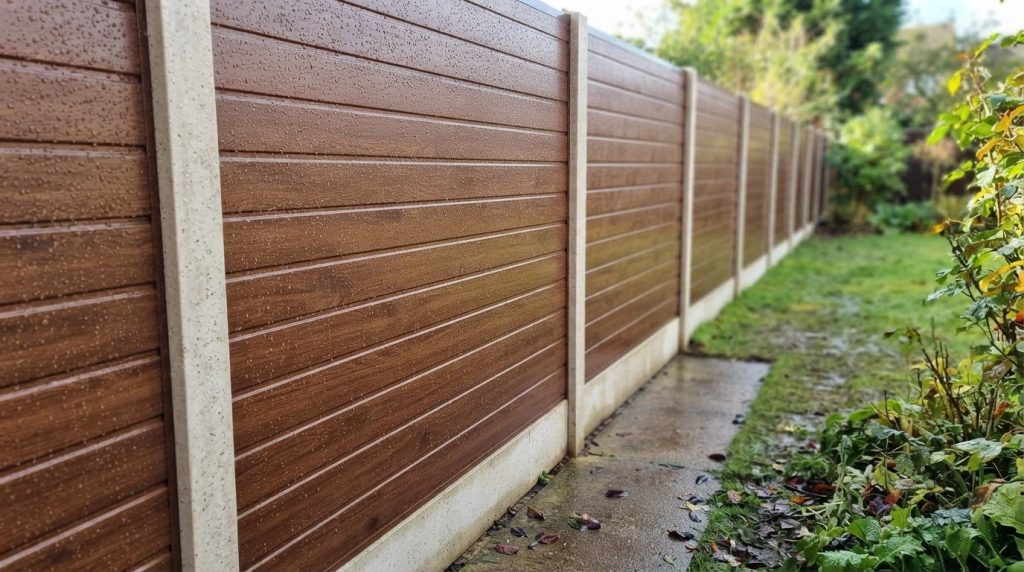
Hardwearing Fence Panels for Gardens and Existing Posts
Replacing a worn panel doesn’t have to mean replacing sound concrete posts. The lifespan of hardwearing fence panels depends on their material, exposure to the weather and upkeep, so choosing a durable option starts with understanding how those factors affect performance.
It’s also important to find panels that suit the posts already in your garden. This article explains what influences fence-panel life, what composite and recycled materials can offer, and how to choose a replacement that fits existing concrete posts. You’ll also learn how maintenance-free steel panels are designed to slot into those posts, helping you plan a practical update without treating the whole fence as a single job.
Key Takeaways
- Fence-panel lifespan depends on the material, weather exposure and upkeep, so weigh these factors when choosing a replacement.
- Composite panels use recycled plastic and reclaimed wood fibres, offering an alternative to traditional timber.
- For existing concrete posts, the key is choosing panels designed to fit the post slots.
- Interlocking construction and weather-resistant materials can help a fence stand up to wind and rain with less routine maintenance.
How Long Do Fence Panels Last?
Fence panels have no single lifespan. Material, weather exposure, installation and upkeep all affect how long they remain serviceable. Timber can deteriorate when it stays damp or its protective finish wears away. Composite panels are described as resistant to rot, while steel panels use profiled outer sheets and an insulated core. Compare these features when choosing hardwearing fence panels, and consider the condition of the posts and rails too.
For windy or exposed gardens, look for panels that interlock securely and fit their supports. Interlocking composite panels form a tight seal against wind and rain. Stable posts and secure fixings matter as well, because a durable panel cannot compensate for loose supports. Consider how much wind the fence will catch, especially where a solid panel faces an open garden.
Composite fence panels typically cost between £22 and £29 on the UK market. The price varies with material, dimensions and specification, so compare products on a like-for-like basis. Include the number of bays and any extra components in your estimate. A second set of hardwearing fence panels in a different material may sit outside that composite panel price range.
Standard UK fence panels commonly come in five-foot and six-foot heights. Smaller fencing options range from 900mm to 1200mm, while composite panels are 1.8 metres wide. Measure the space between posts and the available height before choosing a size. Existing gravel boards and post slots can affect which panel fits.
To help a fence withstand strong winds, begin with stable posts and fit each panel securely into its supports. Follow the installation guidance, align the sections, then engage the interlocking edges fully. Don’t force a panel into slots that don’t match its dimensions. For drilling into timber decking, use an 8 mm drill bit; for concrete or stone, use an 8 mm masonry drill bit.
Before finishing the installation, check that posts are upright, slots are clear and each panel sits evenly. Make sure interlocking edges meet along their full length without gaps. Follow the fitting sequence and use the specified tools. These steps help the fencing sit securely and maintain a close joint through changing weather.
Composite panel materials and recycled content
Composite fence panels can combine recycled plastic with reclaimed wood fibres. Composite panels can be made from different materials, so check the product specification to understand their composition. These descriptions reflect different material make-ups, not one standard recipe. Read the product specification to understand what each panel contains. In a garden, material choice affects the panel’s appearance, upkeep and response to outdoor conditions.
Recycled plastic and reclaimed fibres give composite fencing a different composition from solid timber. The materials and their proportions can vary between products, so check the specification rather than assuming all panels have the same recycled content or finish. Consider the appearance too: a smooth, uniform surface may suit a contemporary garden, while a wood-effect finish can complement traditional planting.
Construction also affects how composite sections fit together. Some slat systems use a hidden tongue-and-groove joint, which overlaps each slat as the fence is assembled. In one such format, a slat measures 1830 mm long, 210 mm wide and 21 mm thick, with approximately 200 mm of coverage. Those dimensions show why the stated coverage can differ from the slat’s full width.
Use the product dimensions to plan the finished height and the number of slats required. A system with overlapping boards builds upwards in stages, so its total height depends on the number fitted. Check how the top and bottom edges finish, and whether the design needs rails or channels. These details help you assess the finished look before installation, especially where an existing garden fence has limited space.
Recycled content alone doesn’t indicate how a panel will perform outdoors. Compare the stated materials, construction and care guidance as separate details. Rot resistance relates to the panel material, while joint design affects how sections meet. Considering these features gives you a clearer basis for choosing composite fencing to suit your garden.
The panels are available in three colours: Graphite, Walnut and Natural. Each slat weighs approximately 5.75 kg, and a standard set reaches an overall finished height of approximately 183 cm without a gravel board. One full bay includes nine 1.83 m slats; each set includes one composite post and one post cap as standard.
Panels for existing concrete posts
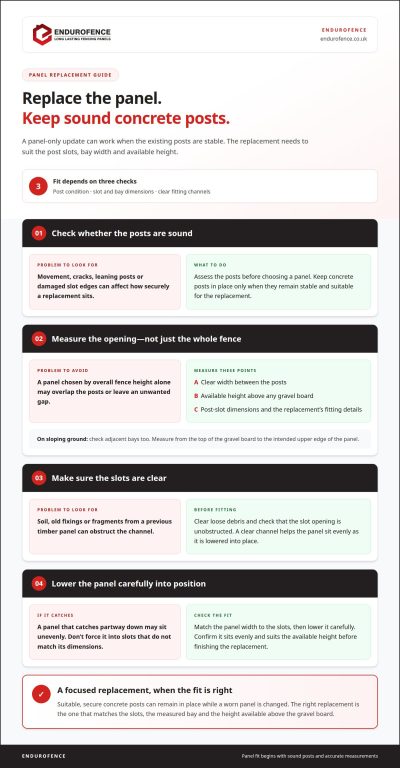
Sound concrete posts can stay in place when replacing a worn fence panel. The replacement must suit the posts’ slots, bay width and available height. Composite panels may suit some existing slotted posts, but check the product dimensions and fitting details before choosing one. This makes them an option where the existing posts are still stable and the garden needs a panel change rather than a complete fence rebuild.
Start by assessing the posts and measuring the space between them. Look for movement, cracks, leaning or damaged slot edges, which can affect how securely a replacement sits. Measure the clear width between the posts and the height available above any gravel board. These measurements help you choose a panel that fits without forcing it into the slots.
Check the condition of the slots. Soil, old fixings or fragments from a previous timber panel can obstruct the channel. Clear loose debris and make sure the opening is unobstructed before fitting. If a panel catches partway down, it may sit unevenly. Match the replacement’s width to the slots and lower it carefully into position.
Existing gravel boards affect the finished height. Measure from the top of the board to the panel’s intended upper edge, rather than relying only on the full fence height. This helps you avoid choosing a panel that overlaps the posts or leaves an unwanted gap. Check adjacent bays too, especially where the ground slopes.
Keeping suitable concrete posts makes a panel-only replacement more focused. It avoids disturbing posts that remain secure and allows you to change the fence’s appearance. The right fit depends on the post slots, bay measurements and gravel-board arrangement. EnduroFence Maintenance-Free Fence Panels are designed to slot into existing concrete posts, making them a practical option for replacing timber panels.
This option is worth considering when your posts are sound and the measurements suit a slotted panel. Compare the product dimensions and fitting details with the bay before ordering, and account for the gravel-board arrangement to choose the right panel.
What makes a fence panel hardwearing and weather-resistant?
A panel’s resilience depends on its construction and fit. EnduroFence panels have profiled steel outer sheets on both sides and a high-density insulated core. They are powder-coated and maintenance-free, with no painting or treating needed. Material isn’t the only consideration: joints, edges and the condition of the supporting posts also affect how a fence performs outdoors.
Panel shape can help manage rain. Composite panels that are 300mm tall have convex curved tops designed to help water run off. This reduces the chance of rain sitting along a flat upper edge. Check the panel profile when comparing designs, especially if the fence is exposed to frequent wet weather. The shape is a practical feature, not a substitute for sound installation.
Joints matter in wind and rain. Interlocking composite panels are designed to form a tight seal between sections. That close connection helps limit gaps where wind and water can pass through. During fitting, make sure each section engages fully with the next. Misaligned joints can undermine the intended seal, even when the panel material itself is durable.
Care requirements vary by material. EnduroFence Maintenance-Free Fence Panels need no painting or treating, while composite products vary in composition and construction. Read the product information for the specific panels you’re considering, rather than assuming all materials have the same properties.
Before installation, examine the posts, panel edges and connecting points. Replace damaged components and clear anything obstructing the slots. Once fitted, look along the fence line for uneven joints or gaps. This simple visual check helps identify poor alignment before it affects the finish. For a weather-resistant option designed to fit existing concrete posts, explore maintenance-free panel options.
EnduroFence: Maintenance-Free Fence Panels
EnduroFence supplies Maintenance-Free Fence Panels designed to fit existing concrete posts. They suit homeowners who want to replace worn timber panels while keeping sound posts in place. Each panel has profiled steel outer sheets on both sides and a high-density insulated core. The panels are powder-coated, with no painting or treating needed.
EnduroFence’s Retro Fitting Panel Swap is designed for fences where the posts are already in place and only the panels need replacing. Installation is straightforward, and no training or qualification is needed. EnduroFence also offers the EnduroSmart Post Cover for homeowners looking to update the appearance of their fence posts.
If you’re weighing up a panel replacement for your garden, contact EnduroFence to discuss your fencing needs.
Plan a fence upgrade that suits your garden
Choose your next step based on the condition of the existing fence, rather than treating every bay as a complete replacement. If the posts remain sound, a panel swap may be a focused way to refresh the boundary. Before choosing a material, consider the appearance you want and whether you prefer a panel that needs no painting or treating.
The right hardwearing fence panels should work with the existing layout and feel suited to everyday use. A clear idea of your priorities, such as appearance, reduced upkeep or retaining existing posts, makes it easier to discuss the options and decide what fits your project.
For a practical next step, contact EnduroFence about fence panels. A considered choice can make your garden boundary easier to live with for years to come.
Frequently Asked Questions
Which fence panel materials last longest in the UK: timber, composite, metal or concrete?
No single material lasts longest in every garden; exposure, construction and installation all affect how panels perform. Timber can deteriorate if it stays damp or its protective finish wears away, while composite products vary in composition. EnduroFence panels have profiled steel outer sheets on both sides and a high-density insulated core, with no painting or treating needed. Compare the complete fence layout, including the panels, posts and any gravel boards.
Which UK brands or retailers offer durable fence panels and warranties?
EnduroFence supplies maintenance-free steel fence panels designed for existing concrete posts. The Ultimate composite fencing range comes with a 15-year residential warranty.

Leave a Reply