

Home based franchise opportunities UK: costs and options
Working from home doesn’t automatically make a franchise cheap or flexible. Home-based franchise opportunities in the UK vary by business model, investment and equipment, so the right option depends on your budget and preferred way of working. Look beyond the initial investment: insurance and ongoing running costs also affect affordability.
If you want a business that fits around home life, weigh its practical demands alongside the appeal of avoiding a daily commute. This guide covers costs and equipment, business insurance, and how flexible hours may fit your routine.
You’ll also find examples of UK franchise listings and their minimum investments, alongside practical points to consider before choosing. Use them to understand the commitment involved and decide which type of home-based business could suit your skills, budget and working preferences.
Key Takeaways
- Build a realistic start-up budget by accounting for equipment, running costs and business insurance, not just the franchise investment.
- Assess whether the working pattern genuinely suits your home life, and set a routine that gives the business structure.
- Compare franchise listings by investment level, required skills and the support provided before deciding which opportunity to explore.
- Consider practical requirements such as permissions, planning and business rates, which can depend on how you use your home.
1. Home-based business costs, equipment and insurance
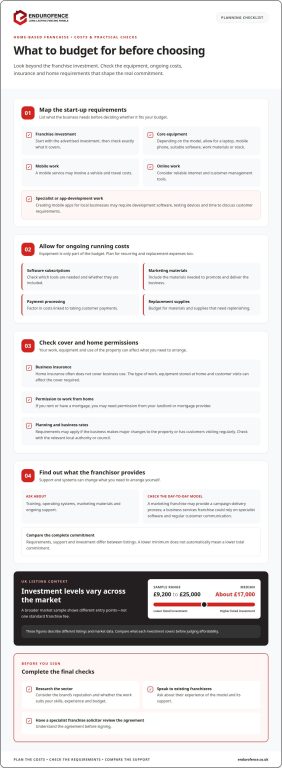
Start with the franchise investment, then map out the costs of running the business. A home-based model may still require a laptop, mobile phone, suitable software, work materials or stock. A mobile service may also involve a vehicle and travel costs, while an online business may need reliable internet and customer-management tools. List each requirement before deciding whether the opportunity fits your budget.
Budget for ongoing expenses as well as equipment. These could include software subscriptions, marketing materials, payment processing and replacement supplies. Home insurance often does not cover business use, so you may need business cover. The type of work, equipment stored at home and customer visits can affect the cover required. If you rent or have a mortgage, running a business from home may require permission from your landlord or mortgage provider, local planning authority, or local council, according to the UK Government. Business rates or planning requirements may also apply if the business makes major changes to the property or has customers visiting regularly.
Franchisor support can affect what infrastructure you need to arrange yourself. Find out what training, operating systems, marketing materials and ongoing support are included in the franchise model. For example, a marketing franchise may provide a process for delivering campaigns, while a business services franchise could rely on specialist software and regular customer communication. These systems affect both start-up needs and day-to-day costs.
Some home-based models focus on creating mobile apps for local businesses. This work may require development software, testing devices and time spent discussing customer requirements. Other models involve local services, online sales or mobile work, each with different equipment and travel demands. Before signing, research the sector, speak to existing franchisees and consider the brand’s reputation. Choose an opportunity suited to your skills, experience and budget, and have a specialist franchise solicitor review the agreement before you sign.
Potential work-life balance and flexible working hours
Working from home after the COVID-19 pandemic remains attractive to people seeking more control over their working day. A regular working day outside the home often takes 10 hours when commuting is included. A home-based franchise can remove that journey, but it still needs planned working time, customer contact and a clear boundary between work and home life.
Some work-from-home franchises allow part-time hours or flexible scheduling, which may help you manage childcare, school runs or other commitments. Flexibility depends on the model: a business serving customers by appointment may offer a different routine from one relying on fixed delivery windows or prompt online responses. Before launching, map the work around your existing responsibilities. Include travel time if you’ll visit customers, and plan how to handle enquiries during family commitments.
Flexibility doesn’t remove the need for working capital. You need enough funds to cover outgoings while you build a customer base and generate income. Earnings depend on the franchise model, customer demand, the hours you can commit and how efficiently you manage the work. A growing business may bring more enquiries, but it can also require more time for service delivery and administration. Build your routine around realistic capacity, rather than assuming every available hour can become paid work.
Self-discipline gives a home-based business structure. Choose a regular start time, such as 8 AM, and set clear periods for customer work, administration and breaks. A three-hour break during the day generally doesn’t hurt business when tasks and customer commitments are scheduled around it. Protect focused work time by separating your workspace from household distractions, agreeing boundaries with children or other family members, and checking messages at set intervals. Review the routine as the business develops, so flexibility supports both service and home life.
3. UK home-based franchise listings and minimum investments
UK listings show how widely entry points can vary. Across a broader market sample, business opportunities typically range from £9,200 to £25,000, with a median of about £17,000. These figures describe different listings and market data, not a single standard fee.
Compare what each figure covers before judging affordability. The investment may relate to different requirements, support and business models, so a lower minimum does not automatically mean a lower total commitment. Research the franchisor’s requirements, support and investment level, then speak to existing franchisees. Consider whether the work suits your skills, experience and budget, whether you live in London or elsewhere, and how it fits around commitments such as the school run. A winning opportunity is one that fits your circumstances, not simply the lowest advertised amount.
Which home-based franchises are members of the British Franchise Association? Membership is separate from appearing in a listing. Use the British Franchise Association’s member directory to identify members, rather than inferring membership from an investment figure or an established brand name.
To research your options, compare the franchise model, support, requirements and investment, then speak with current franchisees about their experience. Before signing, have a specialist franchise solicitor review the agreement. This can help you understand the obligations, fees and terms you are accepting.
Buying and launching a franchise typically involves researching opportunities, assessing the investment and support, speaking with franchisees, reviewing the agreement with a solicitor, and completing the franchisor’s launch process. Include these steps in your decision-making so you consider funding, training and preparation before trading begins.
4. Home-based franchise opportunities
Home-based businesses represent 52% of UK businesses. That breadth matters: working from home describes where you manage the business, not necessarily where you serve customers. Some franchise models combine home administration with local visits, deliveries or mobile work. Others operate mainly online. Compare the actual weekly tasks with your preferred working pattern before choosing a sector.
Home-based franchise sectors include vehicle-based and internet-based businesses, lawn care, window cleaning, delivery and pet food supply. Each calls for different skills and working arrangements. Lawn care or window cleaning may involve travelling to customers, while an internet-based model could centre on digital work. Delivery and pet food supply may involve handling stock or coordinating orders. These examples clarify what “home-based” means in practice.
Start with your strengths. A specialist service may suit someone with relevant technical skills, while a customer-facing model may rely more on communication and organisation. Then compare how each brand trains franchisees, supports daily operations and helps them reach customers. Ask existing franchisees about their everyday work and its challenges. Their experience can show whether the opportunity’s demands match your expectations, beyond its advertised appeal.
Consider how the business would use your home before committing. According to the UK Government, running a business from home may require permission from your mortgage provider or landlord, the local planning authority, or the local council. For example, storing stock or regularly receiving customers may affect how you use the property. Major changes to the home or regular customer visits may also bring planning requirements or business rates. Factor these practical conditions into your choice, alongside your skills, preferred sector and available working time. A suitable opportunity should make sense both at home and in the market it serves.
EnduroFence: Franchise
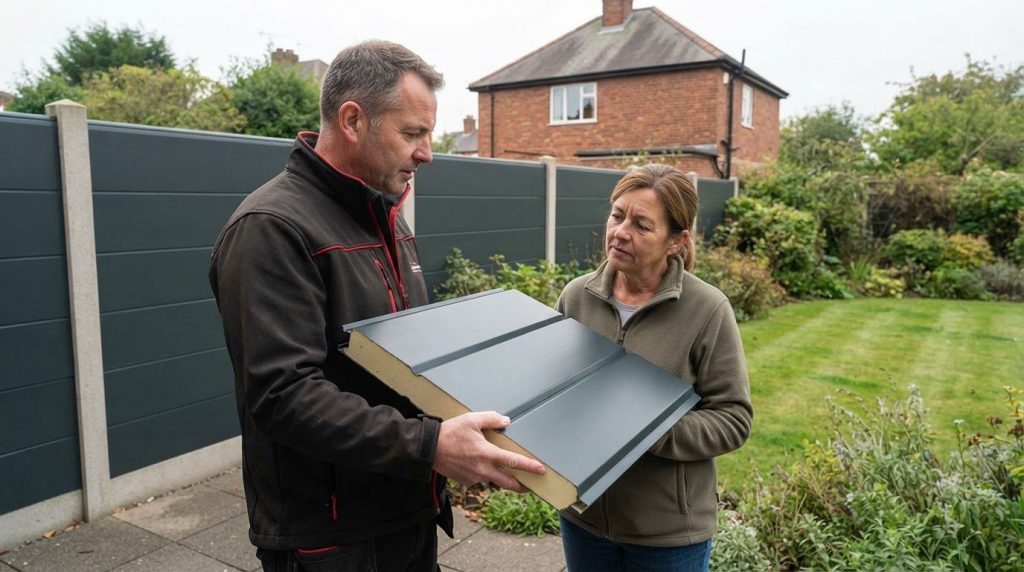
EnduroFence offers a franchise opportunity centred on maintenance-free fencing for UK gardens. Its Maintenance-Free Fence Panels are designed to fit existing concrete posts, giving homeowners an alternative to replacing timber panels. The range also includes Post Covers and Retro Fitting Panel Swap, which lets homeowners replace panels within their existing posts.
This may appeal if you’re exploring a franchise based on a practical home improvement product rather than a purely digital or office-based service. The panels have profiled steel outer sheets with a high-density insulated core, and no painting or treating is needed. Installation requires no specialised tools or qualifications, making the panels straightforward for homeowners to fit.
Explore EnduroFence’s franchise opportunity if this sector matches your interests and business plans. Contact EnduroFence to discuss the franchise.
Choose a franchise direction that fits your plans
Next, decide whether a product-led business matches the work you want to build. As you assess home based franchise opportunities in the UK, consider how customers, everyday tasks and growth plans align with your strengths and preferred routine. A good fit matters more than choosing an idea simply because it can be managed from home. Picture the business in practice, from explaining products to helping customers make decisions.
EnduroFence’s franchise centres on Maintenance-Free Fence Panels, with Post Covers and Retro Fitting Panel Swap also offered. This gives prospective franchisees a specific product range to consider as they assess whether this type of business suits their plans. If that direction feels relevant, start a conversation with EnduroFence about your plans. A considered decision is a strong place to start, and you can move forward at a pace that feels right.
Frequently Asked Questions
What home-based franchise opportunities are available in the UK?
UK home-based franchise opportunities include internet-based and vehicle-based models, alongside local services such as lawn care, window cleaning, delivery and pet food supply. The key distinction is whether home is just the administration base or also where stock, equipment and customers are handled. This affects workspace, travel and daily scheduling, so match the operating pattern to your circumstances.
Which UK home-based franchises have the lowest start-up costs?
Treat this as the advertised entry point, not automatically the full cash requirement. Before deciding, establish what the minimum covers, whether you need working capital and which other costs apply to your chosen model. A low starting figure alone doesn’t reveal overall affordability.
What are the typical initial investment and ongoing fees for UK home-based franchises?
There isn’t one standard fee structure across UK franchises. Initial investment and recurring charges depend on the agreement and business model. Ask for a written breakdown of the franchise fee, required equipment, working capital and any recurring royalties or marketing contributions. Then map when each payment is due against your expected cash flow, rather than comparing headline investment figures alone.
How much can a UK home-based franchisee realistically earn, and what are typical payback periods?
Earnings and payback depend on sales, operating costs, the time you commit and how quickly you establish a customer base. No single figure applies across sectors. Build a forecast using cautious sales assumptions, realistic costs and your planned working hours. Include a slower start in your calculations, and distinguish business turnover from the income you can take out.
What legal checks and disclosure requirements apply when buying a franchise in the UK?
Have a specialist franchise solicitor review the franchise agreement before signing. Read the written terms carefully, including your obligations, fees, support arrangements, renewal conditions and exit provisions. Research the sector, speak with existing franchisees and consider the brand’s reputation. These checks help you understand the commitment and identify points that need clarification before entering the agreement.
What are the main risks and disadvantages of running a home-based franchise?
Working from home can blur the boundary between business and personal time, while household interruptions may affect concentration. Income can also take time to build, and franchise obligations may limit how you run parts of the business. A model involving stock, customer visits or travel brings practical demands beyond desk work. Consider these alongside the investment and your available time before committing.

Leave a Reply