

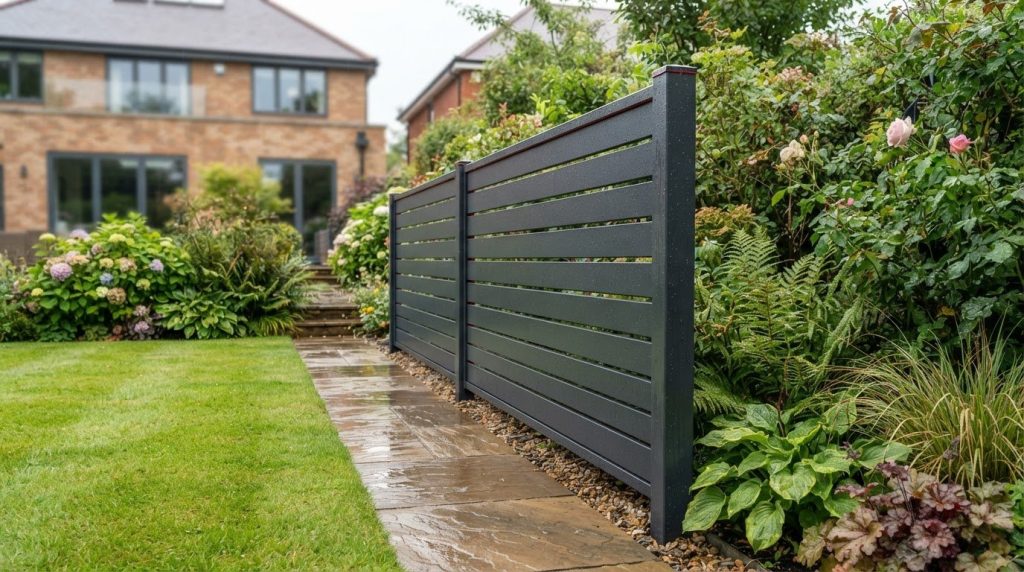
Is Steel Fencing Any Good? A Practical Guide for UK Gardens
Are steel fences any good for a UK garden? They can be, if the panel’s construction, finish and design suit your needs. Steel fencing isn’t automatically rust-prone or industrial-looking: these qualities depend on the product and how it’s used. Before choosing, consider the level of privacy you want, the finish’s care requirements and whether the panels will fit your boundary.
Steel may cost more upfront than basic timber, and a solid, uniform panel won’t suit every garden. Check what protection the steel has against corrosion, how the panel is fitted and what maintenance the manufacturer recommends. This guide explains what to compare, how steel differs from other panel materials and when panels designed for existing concrete posts may be worth considering.
Key Takeaways
- Find out when steel fencing can suit a UK garden, depending on the balance you want between durability, upkeep, privacy and appearance.
- Learn why panel profile, core construction and fitting matter, and which finish details to verify rather than assume.
- Weigh lower routine treatment needs against the upfront choice, compatibility and visual considerations that come with steel panels.
- Use a practical checklist to assess your garden’s privacy needs, preferred look, exposure and existing posts before choosing panels.
- See whether are steel fences any good applies to your garden, including how panels designed for existing concrete posts may fit your plans.
Are steel fences any good for a UK garden? Start with what matters
Steel fencing can work well in a UK garden when the panel’s construction, finish and fit match what you need. The material alone doesn’t tell you how a fence will perform. Panel design, protective finish, installation and exposure to the elements all influence its upkeep and how it looks over time.
Start by deciding what matters most: a clear boundary, privacy, a consistent appearance or less routine care. Then consider whether a panel will suit your existing posts and garden layout. For example, an open boundary may be right for one household, while another may want a more enclosed screen. Looking at sightlines from neighbouring windows can help you decide how much screening you need.
Assess the complete panel rather than judging by its material or appearance alone. Steel is used in different fence designs, and a rigid panel doesn’t automatically guarantee a particular lifespan or level of corrosion resistance. Check the product’s construction and finish details, as well as how exposed the fence will be to wind and rain.
What do homeowners usually want from a garden fence?
Most people are balancing a dependable boundary, the right level of privacy, a style that suits the house and garden, and manageable upkeep. Think about the views into the garden, the space around the posts and whether you prefer a solid or more open boundary. These practical considerations will help you compare panel designs without assuming one material is right for every home.
What makes steel fencing different from other panel materials?
Steel is rigid, but fence construction varies. Some designs use steel wire, including chain-link fencing made from galvanized or coated steel wire; others use formed steel sheets as part of a panel. These designs aren’t interchangeable, so compare them based on the privacy, appearance and fitting method you want.
Some panels combine profiled steel outer sheets with an insulated core. EnduroFence panels use this construction and are designed to fit existing concrete posts. The core is a feature of the panel, but its presence alone doesn’t establish a particular acoustic, thermal or weather performance. Check the product information, compare the dimensions with your posts and decide whether the design suits your garden.
How steel fence construction affects strength, weather resistance, and upkeep
A steel fence’s performance depends on more than the metal itself. Panel shape and thickness, support, protective finish and fitting all matter. A suitable finish can help protect the steel, but don’t assume a panel will resist corrosion indefinitely. Check the product specifications and care instructions before buying.
Construction details matter more than the word “steel” alone: they affect how a panel handles exposure, stays in place and needs to be cared for. Consider the fence’s position too. A sheltered boundary and one regularly exposed to wind and rain face different conditions, so assess the site alongside the panel.
Does steel fencing rust or need treatment?
Steel can corrode if its protective layer is unsuitable, damaged or worn. Water resistance and rust prevention aren’t the same thing: a panel may shed rain effectively, but that doesn’t confirm that its steel is adequately protected. Check the manufacturer’s current specifications for the finish and corrosion protection. If the surface is damaged, follow the product guidance on how to care for it. Don’t assume every panel has the same coating or that all steel fencing is rust-proof or maintenance-free.
Pay attention to joins, edges and fixing points, where the finish is especially important. Follow the care instructions and inspect the fence periodically, particularly after damage or severe weather. Regular checks can help you notice issues rather than relying on the material name as a guarantee.
What does an insulated core add to a steel panel?
Some systems use steel sheets on the outer faces of a panel, with another material forming the centre. EnduroFence panels, for example, have profiled steel outer sheets and a high-density insulated core. This describes the panel’s construction; it doesn’t, by itself, confirm a particular sound, heat, fire or security performance. Check current product information before relying on a specific claim.
Profile and fitting also affect how the assembled fence performs. A panel needs to be compatible with its posts and installed as specified, using fixings suited to the system. If you’re assessing the advantages of steel in fencing, MA Steel Fab discusses steel’s use in architectural metalwork, including fencing. Use general material information as context, then verify the exact panel’s finish and construction with its manufacturer.
To review a specific option, you can review EnduroFence steel fence panels and check whether their construction and fitting approach suit your existing boundary. Compare the stated dimensions and product details with your requirements before choosing.
Steel fence advantages and drawbacks: is it right for your garden?
Steel can be practical if you want a defined boundary with a clean, modern look and less routine treatment than some fencing materials may require. The result still depends on the panel’s finish and design, and whether these suit your garden. Don’t assume steel is automatically stronger, quieter, safer or longer-lasting. Check the specifications for the product you’re considering.
Steel fencing is suitable when its verified specifications and appearance match your priorities, not simply because it’s made of steel. Weigh the convenience of a panel system against its visual style, care instructions and compatibility with your existing boundary.
Where can steel fencing be a practical choice?
A steel panel may suit a garden where you prefer a contemporary, consistent finish and want to limit regular surface treatment. A range of colours and finishes can make it easier to find a look that works with your home, paving and planting. Consider how a solid panel will affect privacy and the feel of the space before deciding.
Replacing panels may also be an option if your existing concrete posts are sound and correctly spaced. EnduroFence panels are designed to fit existing concrete posts, but check the measurements and post condition before assuming a replacement will be straightforward. Some panels have profiled steel outer sheets with a high-density insulated core. That describes their construction, not a guarantee of particular sound or heat performance.
What limitations should you consider before choosing steel?
A strong, uniform finish won’t suit every garden. The colour or profile may feel too industrial beside a traditional house or softer planting, so consider the panel in the context of your boundary. Privacy also depends on the design: an open style and a solid panel provide different levels of screening.
Compatibility is another practical consideration. Measure the opening between posts and check for damage, movement or an unsuitable arrangement. A panel that doesn’t match the available dimensions may need a different fitting approach. Don’t assume all steel panels use the same fixing method.
Read the care instructions for the exact panel you’re considering. Confirm its protective finish, how to look after it and what information supports any claims about durability or other performance. A finish may reduce routine upkeep, but care requirements vary by product and conditions. Include fitting requirements and appearance in your comparison, not just the material.
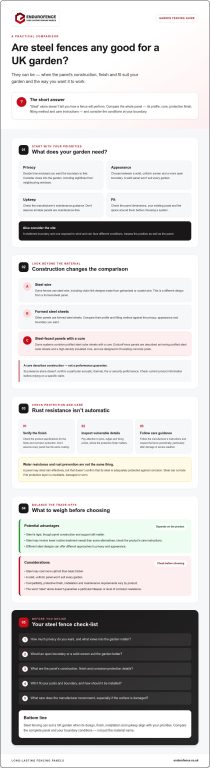
How to assess steel fence panels before you choose them
A short checklist helps you compare panels against your garden’s requirements, rather than appearance alone. If you’re still asking “are steel fences any good?”, use these checks to see whether a particular option suits your boundary.
- Set your priorities. Decide how much privacy you need, which colour and profile will suit the garden, and how much ongoing care you’re prepared to do.
- Assess the site. Consider exposure to wind and rain. Note changes in ground level, nearby structures and any other constraints that could affect fitting.
- Check the existing posts. If you have concrete posts, look for movement or damage and inspect the panel-retaining slots. Measure the opening and slots, then compare your measurements with the supplier’s stated panel dimensions.
- Review the construction and finish. Check what the outer sheets and any core are made from, which finish is specified, what colours are available and how the panel should be cared for.
- Confirm fitting requirements. Read the fitting guidance and check the method, fixings and tools needed. Make sure you’re comfortable with the work before choosing a panel system.
Which measurements and existing features should you check?
Measure the width between posts at more than one point, as existing structures may not be perfectly even. Check the slot dimensions as well as the panel opening, and note whether the ground rises or falls along the boundary. Record obstacles or other features that could affect access or fitting. Confirm compatibility with the supplier before ordering rather than relying on a visual estimate.
Which product details deserve a closer look?
Ask for current product information covering the panel’s profile, core construction, finish and care requirements. If rust resistance or another performance benefit matters to your decision, look for supporting specifications rather than assuming it applies to every steel panel. Compare the fitting instructions with your post arrangement and the tools available to you.
For a retrofit panel swap, check the measurements and condition of the existing posts first. This helps you focus on compatibility without assuming every opening will suit the same panel. EnduroFence panels are designed for existing concrete posts, but you still need to check the dimensions against your boundary.
Once you’ve noted your measurements and preferences, request a quote for steel fence panels to help assess whether the option fits your requirements.
Could EnduroFence steel panels suit your garden? A practical next step
If your existing concrete posts are in suitable condition, panels designed to fit them may offer a practical way to update your boundary without replacing the whole structure. EnduroFence supplies maintenance-free panels for UK gardens, but suitability still depends on accurate measurements, the condition and arrangement of your posts, and the appearance and level of privacy you want.
What is confirmed about EnduroFence steel fence panels?
EnduroFence panels have profiled steel outer sheets and a high-density insulated core. They’re available in a range of colours and finishes, so you can consider how they’ll look alongside your house and garden. The insulated core is a construction feature, not a promise of particular sound, heat or other performance. Check current product information if a specific performance claim matters to your decision.
The panels are designed to fit existing concrete posts, subject to checking dimensions and compatibility. Homeowners can replace existing panels without specialised tools or qualifications. EnduroFence supplies the panels rather than providing professional installation, so review the fitting guidance and decide whether you’re comfortable doing the work yourself.
What should you do before requesting a quote?
Prepare a few details first. Measure the panel openings and note how the concrete posts are arranged, including the condition of the panel-retaining slots. Then consider which colour and finish you prefer, how much screening you need and what level of ongoing care you expect. These details help you judge whether the panels are a sensible match for your garden.
If you’re still weighing up whether are steel fences any good for your situation, compare the product information with your measurements and priorities. Don’t assume a panel will fit simply because it’s intended for concrete posts. Confirm the dimensions and fitting requirements before making a decision.
Once you’ve gathered those details, request a free EnduroFence quote to explore whether the panels suit your boundary. A quote is a useful next step for checking your requirements; it doesn’t replace confirming the product dimensions and installation guidance.
Choose a fence that fits your garden
So, are steel fences any good? They can be a practical choice when the panel’s construction, protective finish and fitting requirements suit your garden. Check the product specifications instead of assuming every steel fence offers the same weather resistance or needs the same upkeep. Then weigh privacy, appearance and compatibility with your existing posts before deciding.
EnduroFence panels are designed to fit existing concrete posts and have profiled steel outer sheets with a high-density insulated core. A range of colours and finishes gives you options to consider alongside your home and garden. Confirm the panel dimensions and fitting guidance for your boundary, as a good match depends on more than appearance alone.
If you’ve measured your existing posts and know what finish and level of privacy you want, request a free quote for steel fence panels. Check the product details against your boundary to take a considered next step.
Frequently Asked Questions
Are steel fences any good for a garden?
Yes, steel fences can suit a garden if their construction, finish and design match your needs. Consider privacy, appearance, upkeep and how the panels will fit your boundary. Steel fencing comes in different forms, so check details such as the protective finish and fitting requirements rather than assuming every panel performs the same way. A suitable option should meet your practical needs as well as complement your garden.
Do steel fence panels rust?
Steel fence panels can rust if their protective finish is damaged or unsuitable for their exposure. The risk depends on the panel’s corrosion protection, finish condition, installation and care, so don’t assume every product has the same coating. Check the manufacturer’s current specifications and guidance, including what to do if the surface is scratched. Water resistance alone doesn’t confirm that a panel is protected against corrosion.
Do steel fences need painting or treating?
It depends on the specific panel and its finish. Some steel fencing may need care or treatment in line with the manufacturer’s instructions, particularly if its protective surface is damaged. EnduroFence describes its panels as maintenance-free and says they don’t require painting or treatment. Check the product information for the exact panel you’re considering, rather than applying that claim to all steel fences.
Are steel fences more secure than timber fences?
Not necessarily. Security depends on the whole fence system, including the panel design, height, fixings, posts and how securely it’s installed. A steel panel’s material alone doesn’t establish how difficult it is to climb, damage or remove, and timber fences also vary in construction. If security is a priority, ask for evidence supporting any product-specific claims and consider how the design suits your boundary.
Can steel fence panels fit existing concrete posts?
Some steel fence panels are designed to fit existing concrete posts, but compatibility depends on the opening, post spacing and panel-retaining slots. EnduroFence panels are designed for existing concrete posts. Measure the space and check the posts’ condition before ordering, then confirm the panel dimensions and fitting method with the supplier. Don’t assume a panel will fit simply because it’s intended for use with concrete posts.
Can I install steel fence panels myself?
DIY fitting may be possible if the panel system is designed for homeowner installation and you’re comfortable following its instructions. EnduroFence says homeowners can replace existing panels without specialised tools or qualifications. Before starting, check the fitting guidance, required tools and compatibility with your posts. EnduroFence supplies panels but doesn’t provide professional installation, so decide whether the work is suitable for you before ordering.
Are steel fences suitable for every garden?
No. A steel fence may not suit every garden’s style, layout or privacy needs. Consider whether the panel’s colour and profile work with your home, how enclosed you want the boundary to feel and whether the system fits your existing posts. Exposure and fitting conditions matter too. Review the specific panel’s finish and care guidance, then compare its dimensions and appearance with your garden before choosing.

Leave a Reply