

Low Maintenance Garden Fencing for UK Homes
The lowest-effort fence is one that needs cleaning, not regular painting or staining. For low maintenance garden fencing in the UK, composite is a popular option because its plastic content helps limit moisture absorption, although dirt and algae can still build up on the surface.
It’s sensible to want a fence that stands up to British weather without adding another regular job to your list. Composite fencing generally needs less routine treatment than timber, but low maintenance doesn’t mean no upkeep: occasional cleaning and checks help keep panels in good condition. Sealing isn’t usually part of its routine care.
This guide explains how composite fencing handles wet and windy conditions, what cleaning it needs, and which colours and styles may suit your garden. You’ll also learn how panels can fit into existing concrete posts, so you can understand the practical options before choosing a fencing solution.
Key Takeaways
- Composite fencing doesn’t need painting or staining, but occasional cleaning and checks can help keep it looking tidy.
- Understand how the panel material and its protective finish affect performance in changing weather.
- Explore colour and wood-effect options, including the seven colours available in the Superior range.
- See how replacement panels can fit existing concrete fence posts and what that means for a fence refresh.
Does Composite Fencing Need Sealing?
Composite fencing combines wood fibres and plastic, creating panels that need no painting or staining. Some composite panels are made from over 75% recycled materials, including recycled plastic and wood fibres. The plastic helps limit moisture absorption, reducing one cause of deterioration in timber. Routine sealing isn’t usually part of composite care; follow the maintenance instructions for the panels you choose.
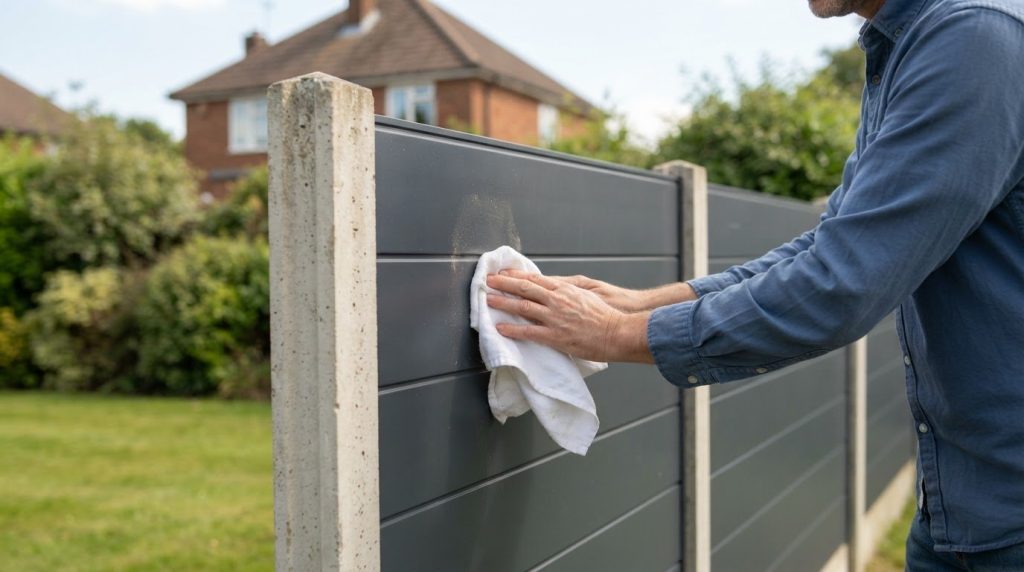
For cleaning, use warm water, mild detergent and a soft brush or cloth, then rinse thoroughly. Dirt, algae and organic deposits can collect in shaded, damp areas. Check for loose fixings, panel damage and movement in the supporting structure; trim plants away to reduce trapped moisture. These simple tasks help maintain composite fencing without regular surface treatments.
Vinyl is easy to clean and resists rot, insects and weather damage, while aluminium is lightweight and rust-resistant. Steel’s performance depends on its finish, and damage to that finish can expose the metal beneath. Wrought iron with a powder-coated finish resists rust and corrosion, but the finish still matters. Concrete resists rot, weathering and pests; bamboo is a sustainable option that needs some maintenance. Timber may need cleaning, repainting or staining, depending on its treatment and exposure.
The lowest-maintenance garden fencing options in the UK include composite, aluminium and vinyl, as they generally need less routine treatment than timber. Choose based on the finish, exposure and upkeep you’re comfortable with; no material is entirely maintenance-free.
Fence-height and planning requirements depend on the property’s location and planning context, so one height figure does not cover every UK situation. The applicable rules can vary with the site and proposed fence.
Responsibility for a boundary fence depends on the property documents and any agreements between neighbours. The fence’s position or the side facing your garden alone does not establish who must maintain it.
Concrete posts provide firm support and can take replacement panels; their weight makes handling more demanding. Gravel boards lift fence panels clear of soil, helping limit ground contact, but add another component and joint to the fence. Composite panels can also come in plain, slatted or wood-effect finishes, letting the style enhance a garden or coordinate with existing decking.
Weather resistance and material durability
Garden fences face rain, wind, frost and occasional heat. Compare the material, protective finish and support structure, not appearance alone.
Weather Resistance
Composite, aluminium and vinyl resist moisture-related deterioration, but their surfaces respond differently to damage. Composite’s plastic content helps limit moisture absorption; aluminium resists rust, though scratches can affect its protective finish. Vinyl is easy to clean, but PVC may become brittle or discoloured over time, depending on product quality and exposure. In exposed gardens, consider how panels are supported and whether nearby plants trap dampness.
Durability and Guarantees
Steel can corrode if damage exposes the metal beneath its protective finish. EnduroFence Maintenance-Free Fence Panels are powder-coated and designed to need no painting or treating. Naturally durable or pressure-treated timber can last well, although it benefits from periodic inspection. A guarantee describes the cover offered for specified faults; it is not the same as a claim that a fence will withstand every weather event. Read its coverage and exclusions as part of assessing durability.
Wind resistance depends on the complete fence solution: panels, fixings, posts and the condition of the ground or existing supports. A sound panel can still move if its supporting structure is loose. Inspect the fence after strong wind, heavy rain or freezing weather, looking for movement, damaged panels and loose fixings. Trim shrubs away to reduce trapped moisture and make the structure easier to inspect.
Environmental exposure also affects finishes. Prolonged sun and extreme heat can affect fencing materials, while repeated wetting can expose weak points around joints or damaged surfaces. Concrete resists rot, weathering and pests, but its weight and solid appearance may not suit every garden. Choose colours and finishes with the garden’s exposure and upkeep in mind, rather than assuming a particular style determines performance.
For a durable alternative to timber, compare the material’s weather resistance with the condition of the fence supports. A practical choice balances the garden’s exposure, the finish’s vulnerability to damage and the care needed to keep panels secure. EnduroFence panels are powder-coated and need no painting or treating.

Colours and wood-effect styles
Colour shapes how an outdoor boundary sits alongside brickwork, paving and planting. One composite range offers seven colours, giving homeowners options beyond the natural tones associated with timber. Before choosing, compare the fence against your house, decking and garden furniture. A dark grey panel can create contrast beside pale paving, whilst a lighter shade can blend with stone or light-coloured walls.
Wood-grain finishes suit gardens where you want the appearance of timber without regular staining. EnduroFence panels have a wood-grain finish, with no painting or treating needed. Look at the finish in daylight and shade, since the garden’s exposure changes how a colour appears. Also consider whether the boundary should complement existing materials or provide a clear visual contrast.
Style affects the overall appearance as much as colour. Slatted panels create a more open visual effect than solid panels, while a plain finish gives the boundary a simpler look. For example, align slats with horizontal lines in a deck or garden seating. If the fence meets an existing wall or different panel type, choosing a consistent colour can help the transition feel deliberate.
Make the choice in a few practical steps: identify nearby colours, decide whether the fence should blend or stand out, then compare suitable finishes. Check how the selected style works with gates, posts and the garden layout. Aluminium posts or post covers can also influence the finished appearance, so consider them alongside the panels. For a sustainable material choice, bamboo is another option, although it needs some maintenance. The right combination balances the look you prefer with the care you’re willing to provide.
Fencing panels and installation options
Panel choice depends on your existing posts, garden exposure and preferred installation approach.
Fence Panel Choices
Replacement panels can refresh a fence without changing compatible existing concrete posts. This can make a panel swap a practical option when the posts remain sound but timber panels need replacing. EnduroFence Maintenance-Free Fence Panels have profiled steel outer sheets on both sides and a high-density insulated core. They are powder-coated, with no painting or treating needed.
Check that the panel type suits the post arrangement and the boundary’s layout. EnduroFence Maintenance-Free Fence Panels are designed to slot into existing concrete posts, while post covers can change their appearance. Match the panel finish to nearby surfaces, and consider whether you’re replacing one section or updating the whole fence.
Panels and Posts for Exposed Gardens
For a windy or exposed garden, assess the whole fence: panels, fixings and supporting posts all affect stability. Existing concrete posts need to be sound and secure before replacement panels are fitted. A damaged panel or moving post can undermine the structure, whatever the panel material. Choose a system designed to fit the support you have, rather than judging resistance by panel appearance alone.
Installation can be straightforward: compatible replacement panels fit into existing concrete posts, and the panel swap requires no specialised tools or qualifications. If the posts are unsuitable or damaged, a panel-only change may not address the underlying issue. Consider the condition of the supports and the fit before deciding on the scope of the work.
Where existing concrete posts are in good condition, a retrofit panel swap can provide a practical way to replace timber panels without replacing the supports. Explore retrofit panel swap options for a fence refresh designed around existing posts.
EnduroFence: Maintenance-Free Fence Panels
EnduroFence offers Maintenance-Free Fence Panels for homeowners replacing timber panels or looking to reduce routine fence care. Each panel has profiled steel outer sheets on both sides and a high-density insulated core. The panels are powder-coated, with no painting or treating needed.
The panels are designed to fit existing concrete posts, making a retro fitting panel swap a practical option when those supports are suitable. Installation is straightforward and no training or qualification is needed, so homeowners can replace panels themselves. EnduroFence also offers post covers to refresh the appearance of existing posts.
If you want to replace worn panels without changing suitable concrete posts, explore this option. Contact EnduroFence to discuss your fencing requirements.
Plan a Fence That Fits Your Garden
Choosing low-maintenance garden fencing in the UK is also a chance to plan how the boundary should work for you over time. Think about whether you’re replacing a few worn panels or changing the look of the whole garden. The condition of existing supports, the finish you prefer and the routine care you want to avoid can all shape the next step.
EnduroFence offers Maintenance-Free Fence Panels, Post Covers and a Retro Fitting Panel Swap. These options give you different ways to approach a fence update, from refreshing its appearance to replacing panels. Consider which best matches the work your garden needs, then get in touch to discuss your requirements.
Contact EnduroFence about your fencing and take a practical next step towards a boundary that suits your home.
Frequently Asked Questions
Why Choose Low Maintenance Fencing?
Choose it to spend less time on routine fence treatments and repairs. For example, a homeowner replacing peeling timber panels may prefer a material that doesn’t need regular repainting. Consider the work you want to avoid, the boundary’s exposure and the condition of its supports. Low maintenance means fewer routine tasks, not that every fence material or installation is maintenance-free.
What is a Low Maintenance Fence?
A low-maintenance fence needs little routine care to stay serviceable. The tasks depend on the material: some need occasional cleaning, while timber may need protective treatments. Look at the panel surface, joints and posts together. Durable panels can still need attention if fixings loosen or the supporting structure moves.
Why choose composite fence panels?
Composite panels suit homeowners who want a wood-like appearance with less routine treatment than timber. They combine wood fibres and plastic; the plastic component helps reduce moisture absorption. Composite is distinct from EnduroFence’s panels, which have profiled steel outer sheets on both sides and a high-density insulated core. Compare the look, material and care involved when choosing your garden boundary.
How do composite, metal, vinyl and treated timber garden fences compare for durability and upkeep?
Composite and vinyl generally need less routine treatment than timber, while aluminium resists rust. Steel relies on its protective finish, and damage can expose it to corrosion. EnduroFence panels are powder-coated and need no painting or treating. Treated timber can be durable but benefits from inspections and may need surface care. Compare the whole system, including fixings and posts, and consider shade, dampness and exposure before choosing.
What is the average cost per metre to supply and install garden fencing in the UK?
There isn’t one useful per-metre figure for every UK garden fence. The total varies with panel material and height, the length of the boundary, access, the condition of existing posts and whether old fencing needs removal. Supply-only panels and a supplied-and-installed project are different costs. EnduroFence sells panels and related products, not professional installation services.
How long do different types of low-maintenance garden fencing last?
There isn’t a single lifespan that applies to every fence material or garden. Durability is affected by product quality, weather exposure, protective finishes and the condition of posts and fixings. For example, damaged steel finishes can expose the metal to corrosion, while timber’s performance depends partly on its treatment. Compare product-specific durability information rather than assuming materials all last equally long.

Leave a Reply