

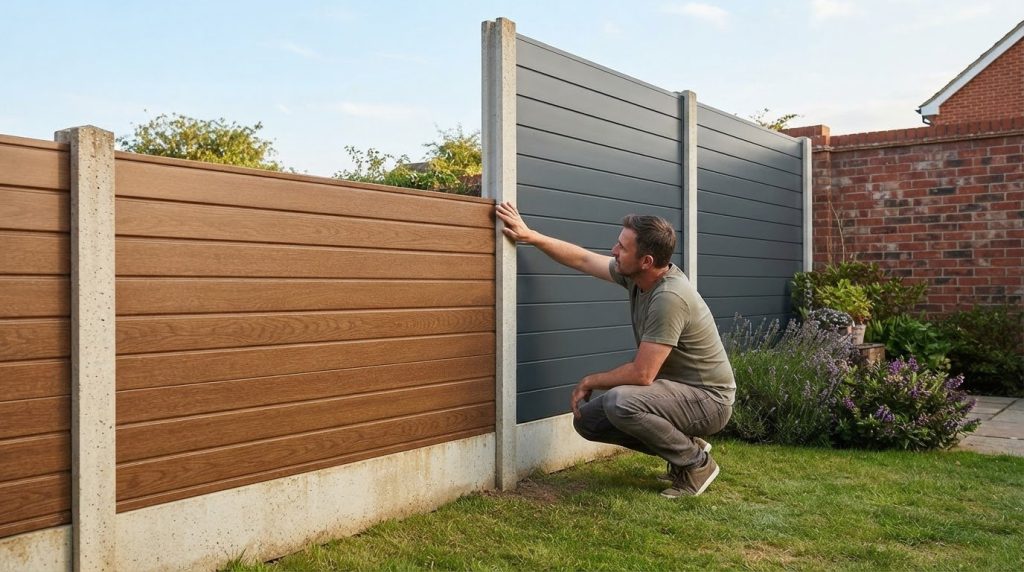
Residential Galvanised Steel Fence Panels in Different Sizes and Styles
A galvanised steel fence can suit changeable UK weather without making regular painting part of the upkeep. Its protective coating helps guard against rust and corrosion, although the condition of the finish still matters. For residential gardens, horizontal panels commonly provide 1 m of cover width and can be overlapped to create fence heights of 1 m, 2 m or 3 m.
Choosing a fence is about more than weather resistance. You need panels that fit the space, work with your existing posts and suit your home. This guide explains what to consider when choosing galvanised steel fence panels for residential gardens, including sizing, fitting, colours, heights and finishes.
You’ll also learn how steel panels cope with rain and changing conditions, and why the coating and occasional care matter for long-term performance. From panel dimensions to fitting into existing concrete posts, the details ahead will help you understand which options may suit your garden.
Key Takeaways
- Learn which measurements matter when matching panels to existing posts, so you can plan a replacement more confidently.
- Compare panel heights, styles and finishes to find an option that suits your garden’s layout and appearance.
- Understand how galvanisation helps protect steel from corrosion, and what simple upkeep can help preserve the finish.
- See when a retro fitting panel swap can offer a practical way to replace ageing fence panels without changing the existing posts.
Horizontal panel dimensions and fitting
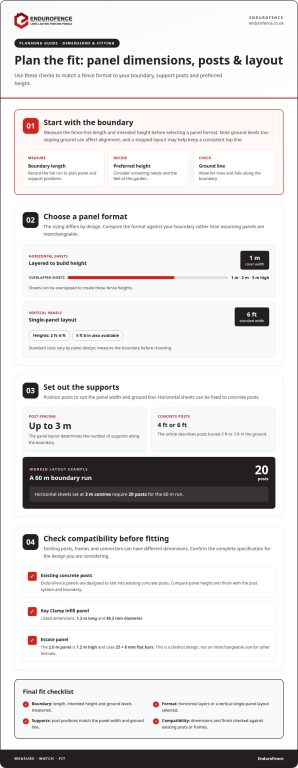
For residential gardens, horizontal steel sheets commonly provide 1 m of cover width. They can be overlapped to make fences 1 m, 2 m or 3 m high. Posts can be spaced up to 3 m apart, so the panel layout determines the number of supports along the boundary.
Standard sizes vary by panel design. Vertical steel panels are supplied in standard widths of 6 ft, with heights ranging from 2 ft to 6 ft. Horizontal sheets can be combined in layers to achieve a different height, while vertical panels suit a single-panel layout. Measure the length and height of the garden boundary before choosing a format.
Fitting starts with setting out the post positions to match the panel width and the ground line. Horizontal sheets can be fixed to 4 ft or 6 ft concrete posts buried 2 ft or 3 ft in the ground. Keep neighbouring panels aligned and overlap each sheet as needed to build the selected height. For example, a 60 m run with horizontal sheets at 3 m centres requires 20 posts.
Frame dimensions matter when selecting an infill panel or connector. A galvanised Key Clamp infill panel is 1.2 m long and has a 48.3 mm diameter. Estate panels are another format: a 2.0 m panel is 1.2 m high and uses 25 × 8 mm flat bars. These dimensions describe distinct designs, so they should not be treated as interchangeable.
When comparing panels, check their dimensions, finish and compatibility with your existing posts. EnduroFence Maintenance-Free Fence Panels are designed to slot into existing concrete posts. They have profiled steel outer sheets on both sides with a high-density insulated core, and are powder-coated, with no painting or treating needed. Compare panel height and finish to find the right fit for your boundary.
Fence panel colours and heights
For a garden boundary, choose the panel height and finish together. Steel panels are available in heights from 2 ft to 6 ft, with other sizes available on request. Vertical panels can also be made at 5 ft 6 in, which gives a useful option when a standard height doesn’t suit the boundary. Galvanised steel has a metallic appearance; powder coating provides another finish choice.
UK planning permission and boundary requirements depend on the property and its location. Before choosing a fence, consider its planned height, position and appearance, as local planning controls may affect what is suitable for your site.
Height affects both privacy and the feel of a garden. A lower panel can mark a boundary while keeping views open, while a taller design creates more screening. Measure ground levels along the fence line as well as the intended height, since sloping ground can affect panel alignment. A stepped layout may help maintain a consistent top line where the ground rises or falls.
Finish influences how the fence sits alongside paving, planting and the house. Galvanised steel leaves the metal’s surface visible, while a powder-coated panel adds a coated outer finish. The available example measures 180 × 180 cm, but dimensions and finish should be considered together when planning the whole run. For a cohesive look, compare the panel finish with nearby gates or other garden details before settling on a style.
Before comparing panels, note the boundary length, preferred height and finish. Check the panel dimensions against your layout, then consider whether the fence should blend with its surroundings or create a stronger visual edge. EnduroFence panels come in two heights to suit concrete post systems with or without gravel boards, and are available in a choice of colours and finishes. Galvanised steel fence panels for residential gardens can provide a clean, simple boundary when the height and finish suit the site.
Fence panel styles and finishes
Style affects how a metal fence looks and how much of the boundary it screens. Hoop-top panels use curved upper rails, while estate fencing uses straight flat bars for a more open appearance. For example, the galvanised 12 mm round-bar Hoop Top Fence Panel measures 1656 × 1000 mm. Its 16 mm round-bar counterpart measures 1724 × 1000 mm, giving customers two distinct bar sizes and panel dimensions to compare.
Estate panels have a simpler construction. The galvanised 1.0 m estate fencing panel is 1.2 m high and uses 25 × 8 mm flat bars. A 2.0 m version is also 1.2 m high, with the same bar dimensions. These open designs allow the boundary to remain visible through the fencing, unlike a solid sheet-style panel. Compare the bar layout with the level of screening your garden needs.
Galvanised steel and powder-coated steel offer different finishes. Galvanisation provides a protective coating on the steel, whilst a powder-coated panel adds a coloured outer finish. One listed galvanised and powder-coated panel measures 180 × 180 cm. That example shows why it’s useful to compare the finish and full panel dimensions together, rather than choosing by colour alone. A coated surface also affects the panel’s appearance beside brickwork, paving and planting.
For straightforward maintenance, clean powder-coated steel with clean or lukewarm water. Avoid abrasive cleaners and aggressive chemicals, which can damage the coating. During routine care, look over the finish for scratches or other visible damage, especially around edges and joins. A damaged coating can expose the underlying metal, so prompt attention helps preserve the surface. Match the panel’s shape, bar thickness and finish to the setting, then compare complete specifications before deciding which style suits your boundary.
Galvanised steel panel durability
Galvanised steel fence panels are not automatically better than timber, aluminium or composite fencing. The right choice depends on the finish, construction, expected maintenance and appearance you want. Galvanisation forms a protective barrier against rust and corrosion, making steel a practical option where weather resistance matters.
A stated life expectancy for steel fence panels is over 30 years. That figure is not a guarantee for every garden: coating condition, installation quality and exposure to damage all influence how a panel performs. Check that panels sit securely in their supports and that edges or cut areas have no visible damage after fitting.
Rain and damp conditions can challenge exposed metal, so the galvanised coating plays a key role. It separates the steel from moisture and helps limit corrosion. Scratches can interrupt that protective layer, so inspect the coating periodically, especially around joins, corners and places where panels meet posts. Address visible damage promptly to help preserve the surface.
EnduroFence panels are designed to be straightforward to fit into existing concrete posts, with no additional tools, qualifications or specialised training needed. Check the boundary length and panel dimensions before ordering, and confirm whether your concrete posts have gravel boards so you can choose the appropriate panel height.
Timber, aluminium and composite fencing each have different materials and finishes, so compare them by the upkeep and appearance they require, rather than assuming one suits every property. For steel, the clear takeaway is to choose a suitable coated panel, install it securely and keep an eye on its condition over time.
If you’re planning to replace weathered fencing, explore a steel panel upgrade suited to an existing garden boundary.
EnduroFence: Maintenance-Free Fence Panels
EnduroFence supplies maintenance-free steel fence panels for homeowners replacing worn garden fencing or looking for a durable alternative. The panels are made with profiled steel outer sheets and a high-density insulated core, providing weather resistance and security without painting or treatment.
EnduroFence panels are designed to fit into existing concrete posts, making them a practical option when the posts are suitable but the panels need replacing. The Retro Fitting Panel Swap lets you update the fence while keeping those posts in place. Installation is straightforward, and no training or qualification is needed.
EnduroFence also offers the EnduroSmart Post Cover and EnduroSmart Cap to complete the look of your existing posts. Choose Maintenance-Free Fence Panels when you want to replace timber panels while keeping suitable concrete posts. Browse the EnduroFence range and request a free quote through the website.
Plan your next fencing step
Before settling on a design, consider how you use the garden day to day. Think about the views you want to keep, the areas that need more privacy and how the boundary will look alongside planting, paving and your home. This makes it easier to choose a fence that works as a whole, rather than treating each panel as a separate decision.
When choosing galvanised steel fence panels for residential gardens, focus on the look and function you want. Check the fence length, preferred height and existing post setup to narrow down your options. EnduroFence panels are designed to slot into existing concrete posts, so suitable supports can remain in place.
Take the next step when you’re ready to explore a suitable approach for your garden. Contact EnduroFence about your fence to discuss your requirements and move towards a boundary that works for your home.
Frequently Asked Questions
Are metal fence panels suitable for all weather conditions?
Galvanised steel panels are designed for outdoor use, and galvanisation helps protect the steel against rust and corrosion. Weather resistance still depends on the panel’s condition and finish. For an exposed garden boundary, consider how securely panels are fixed and whether the coating has been damaged. No material should be treated as immune to dents, scratches or wear.
Is it cheaper to put up your own fence?
Fitting panels yourself can avoid the cost of professional installation, particularly when suitable concrete posts are already in place. EnduroFence panels are designed for straightforward installation, and no training or qualification is needed. Measure the boundary carefully and check the panel dimensions and height against your existing posts before ordering.
What is the typical length of a fence panel?
There isn’t one length that applies to every design. Horizontal steel sheets commonly provide 1 m of cover width, while vertical panels are supplied in a standard width of 6 ft. Other formats differ: a galvanised Key Clamp infill panel is 1.2 m long. Check the stated panel size and cover dimensions so adjoining sections meet correctly.
What types of galvanised steel fence panels are available for residential gardens in the UK?
Options include horizontal sheets, vertical panels, open estate fencing and hoop-top designs. Finishes can be galvanised or powder-coated, while EnduroFence panels also come in wood-grain, textured and flat finishes, with mid-rib and multi-rib designs. EnduroFence panels use profiled steel outer sheets on both sides and a high-density insulated core. The choice depends on the look and screening you want.
How much do galvanised steel fence panels cost in the UK, including installation?
There’s no single total for panels and installation. The amount depends on the panel type, the length of fence, the number of posts and whether existing supports can be reused. A like-for-like comparison should include fixings and any replacement parts, not just the panel price. EnduroFence panels are designed for homeowners to fit without specialised tools or qualifications.
How long do galvanised steel fence panels last, and what maintenance do they need?
Galvanised steel fence panels have a stated life expectancy of over 30 years. For standard panels, periodic cleaning and checks for coating damage can help preserve their condition. EnduroFence Maintenance-Free Fence Panels differ: their powder-coated finish needs no painting or treating. Their profiled steel outer sheets and insulated core are designed for weather resistance, so routine painting isn’t part of their upkeep.

Leave a Reply