

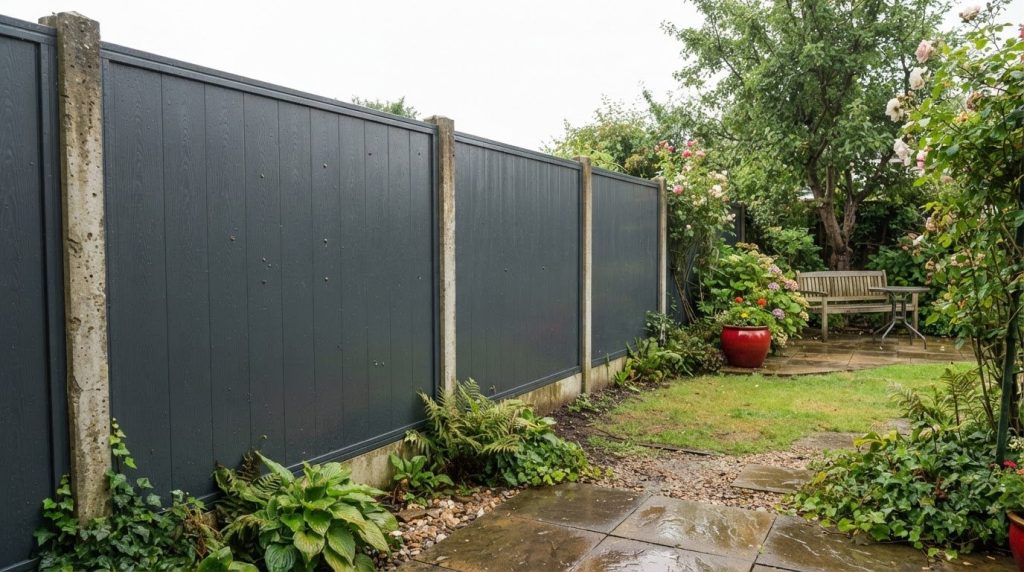
Steel Privacy Fence Panels for UK Gardens
Bad weather doesn’t automatically rule out metal fencing. Steel privacy fence panels in the UK are designed to withstand rain, snow and UV exposure, making them a practical option for gardens. The level of privacy depends on the panel design, while its height and how it’s fixed in place affect how well it suits your boundary.
Before choosing a fence, weigh privacy and weather exposure together. A solid panel screens the garden, while its design and supporting posts also affect how the boundary handles wind. This guide explains what to compare so you can choose a style that suits your garden and existing posts.
You’ll learn how woven steel panels handle typical UK conditions, what affects privacy and wind performance, and how vertical bar heights change the balance between visibility and security. We’ll also cover practical points to consider when replacing a fence, including fitting panels into existing concrete posts.
Key Takeaways
- Measure the span between existing posts before comparing panel sizes; vertical steel panels are 1.83 metres wide.
- Metal panels are designed to withstand rain, snow and UV exposure, making them a practical option for UK gardens.
- Choose vertical bar height with both visibility and boundary security in mind; available heights range from 0.61 metres to 1.83 metres.
- Consider how the panel’s openness affects privacy and wind exposure, then match the design to your garden and boundary.
WHY CHOOSE A WOVEN STEEL FENCE?
Steel fence designs range from solid screening to open vertical bars, so begin with the privacy you want. Compare panel dimensions with your boundary and existing posts before choosing a style.
Panel Styles and Dimensions
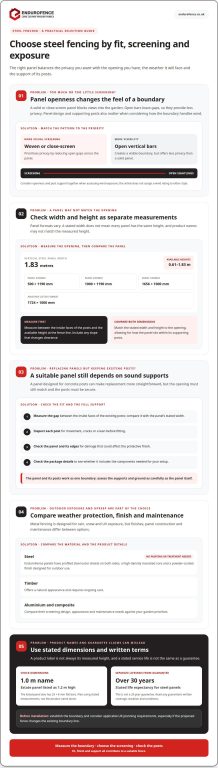
Steel panels come in different shapes and sizes, including plain mild steel and galvanised hoop-top designs. Vertical steel panels are 1.83 metres wide, while examples of other panel formats measure 500 x 1190 mm, 1000 x 1190 mm and 1656 x 1000 mm. These dimensions show why the style and panel format matter when planning a run of fencing.
Measure the gap between posts and the available height, then compare those measurements with each panel’s stated dimensions. A woven or close-screen style prioritises visual privacy; an open bar pattern leaves gaps between bars. Galvanised steel offers a different finish from untreated timber, so consider appearance as well as fit.
Fence Heights and Panel Sizes
Vertical steel fence panels are available in heights from 0.61 metres to 1.83 metres. That range gives you options for a lower boundary or a taller screen, but the finished height depends on the panel and how it sits within the posts. Measure from the ground at the fence line, including any slope that changes the available clearance.
Width and height are separate measurements: a standard width does not mean every panel has the same height. For example, a panel measuring 1656 x 1000 mm has a different format from one measuring 1724 x 1000 mm. Match both dimensions to the opening, and allow for the way the panel fits its supporting posts.
Comparing Fence Materials
Steel can suit homeowners seeking a durable panel that needs no painting or treatment, while timber offers a natural appearance and requires ongoing care. Aluminium and composite are other options; compare their screening design, appearance and maintenance needs against your garden priorities. A claimed 25 year guarantee is a separate product term, not something to infer from the material alone.
Planning permission and boundary rules can affect a fence’s height and position in the UK. Establish the boundary and consider applicable planning requirements before installation, particularly if the proposed fence changes the existing boundary line.
Are metal fence panels suitable for all weather conditions?
EnduroFence steel panels have profiled steel outer sheets on both sides and a high-density insulated core. Their powder-coated finish is designed for outdoor use, while secure, suitable posts support the fence. Consider the panel and its posts together when planning a replacement.
Steel panels with profiled outer sheets and a high-density insulated core combine a protective exterior with a substantial panel structure. A sound finish helps protect the metal, whilst secure posts keep the fence stable as conditions change. Inspect the full panel and its edges before fitting, since damage can affect how well the finish protects the steel.
Post spacing determines whether a panel sits securely. Measure between the inside faces of the existing posts, then compare the opening with the panel’s stated width. Check each post for movement, cracks or a lean before installation. A panel designed to slot between existing concrete posts can make a replacement more straightforward, but the opening still needs to match.
Online purchasing lets you browse panel dimensions, finishes and fitting information before choosing. Use the product details to compare the panel with your measured opening, and check whether the package includes the components needed for your setup. A garden fence is only as secure as its support, so assess the posts and ground as carefully as the panel itself.
Professional installation is not automatically necessary for every panel replacement. Some panels are designed for straightforward fitting without specialised tools or qualifications. A guarantee is a separate written commitment, so read its coverage, duration and conditions rather than assuming it follows from the material. For an existing concrete-post boundary, replacement panels for concrete posts offer a practical route to updating the barrier while retaining those supports.
Vertical bar fencing heights and security
Vertical bars provide a visible boundary, but gaps between bars offer less privacy than solid panels. Vertical steel panels are available in different heights, so check the stated dimensions against your boundary. Choose a height that suits the boundary’s purpose, then consider how the open design affects sightlines from the garden. A taller fence creates a more substantial barrier, while the bar spacing and secure fixing also influence access.
Check the product dimensions carefully: a galvanised 1.0 m Estate Fencing panel is listed as 1.2 m high, with 25 x 8 mm flat bars. The product name and measured height are different, so use the stated dimensions when planning the boundary. Measure the ground level and post opening, then compare the panel’s actual height and width. Keep the panel square during fitting to help it sit evenly.
V-mesh fencing is another open metal style. Compare its stated width and height with the garden boundary, and review the finish for the intended outdoor setting. Mesh openings affect visibility and the sense of screening, whilst the overall panel dimensions determine how it fits between supports. Estate-style bars suit boundaries where an open appearance matters; a close-screen panel is more appropriate when privacy is the priority.
Separate service-life information from a guarantee. Steel fence panels have a stated life expectancy of over 30 years, but that figure is not a 25-year guarantee. A guarantee describes specific cover and conditions, so read its terms rather than treating a finish or material as a promise. For self-build woven-steel fencing kits, lay out panels, posts and fixings before assembly. Follow the kit’s fitting sequence, secure each panel evenly, and check the finished run for alignment and stability.
Privacy and wind resistance
In a UK garden, privacy, wind exposure and weather protection depend on panel design and installation. Compare how much the fence screens and how much air can pass through.
Weather and Wind Resistance
A solid panel blocks sightlines more effectively than open trellis, but presents a broader surface to wind. Open designs allow more airflow, although gaps reduce privacy. Choose by weighing the garden’s exposure against the screening you need, then make sure posts and fixings suit the panel. Nearby buildings, hedges and traffic-facing boundaries can also affect where screening matters most.
A secure fit depends on the supporting posts as well as the panel. Check that existing posts are sound and aligned before fitting. For a replacement, assess the full fence run so you can identify any posts that need attention before installing new panels.
Weather Resistance
EnduroFence panels have profiled steel outer sheets on both sides, a high-density insulated core and a powder-coated finish. They require no painting or treating, and are available in a choice of colours, wood-grain, textured and flat finishes, plus mid-rib and multi-rib designs. Compare the finish and profile with the garden’s paving and planting.
Weather performance and fire resistance are different considerations. An outdoor finish does not, by itself, establish a panel’s fire performance. The complete assembly, including its core and coatings, matters. Check the stated fire information for the specific panel if that performance is relevant to your boundary.
For a practical finishing detail, explore post covers for exposed fence supports. They can help create a more considered finish alongside the panel colour and garden layout.
EnduroFence: Maintenance-Free Fence Panels
EnduroFence supplies maintenance-free steel fence panels for homeowners replacing a garden boundary. Their profiled steel outer sheets and high-density insulated core form a durable, weather-resistant option, with no painting or treating needed.
EnduroFence panels are designed to slot into existing concrete posts, making them suitable for replacing timber panels when the posts are sound. No training or qualification is needed, and installation requires no additional tools. EnduroSmart Post Covers are also available to finish the supports.
If your existing posts need replacing, this panel-swap option may not suit the project. For a practical replacement using existing posts, contact EnduroFence to discuss your fence.
Prepare your garden boundary for its next chapter
Before choosing steel privacy fence panels in the UK, consider how you use the garden. Note where you want more privacy, which views you’d like to keep, and any changes in ground level or boundary direction. These details help you choose a panel style and height that suit the space.
Consider how the fence will sit alongside planting, paving and the rest of the garden. A considered choice can help the boundary feel integrated rather than added as an afterthought. Note your priorities, take a few photographs and describe the look you want.
With those details in hand, you can discuss a suitable next step for your boundary. Contact EnduroFence about steel fencing to explore the options for your garden and move forward with a clearer plan.
Frequently Asked Questions
What types of steel privacy fence panels are available in the UK?
UK options include woven or close-screen panels, vertical bar designs, hoop-top panels and plain mild-steel panels. For example, a hoop-top style gives a more decorative boundary, while close-screen panels prioritise privacy. V-mesh is another open design. Compare the amount of screening, panel shape and finish with the garden’s purpose before selecting a style.
How much do steel privacy fence panels cost in the UK, including installation?
Your project cost depends on the panels selected and whether you install them yourself or arrange separate installation. EnduroFence panels are designed for homeowners to install without additional tools or qualifications; EnduroFence does not provide professional installation. Measure the fence run and count the panels needed, then request a product quote through EnduroFence.
Which UK suppliers sell steel privacy fence panels and what are their prices?
EnduroFence supplies maintenance-free steel fence panels for UK gardens, including panels designed to fit existing concrete posts. Panel prices depend on the product selected, so use your measured opening and required quantity when requesting a quote. EnduroSmart Post Covers are available separately from the fencing panels.
What are the standard heights, widths and thicknesses of steel privacy fence panels?
Dimensions vary by style. Vertical steel panels are 1.83 metres wide, with heights from 0.61 metres to 1.83 metres. Other examples include plain mild-steel panels measuring 500 x 1190 mm and 1000 x 1190 mm. Compare the stated width and height with your post opening; select thickness using the specification for the exact panel you’re considering.
How do you install steel privacy fence panels and what posts and fixings are needed?
For a replacement, inspect the existing posts and measure the opening between them. EnduroFence panels are designed to slot into existing concrete posts, and no training or qualification is needed for installation. Follow the product’s fitting guidance and use the specified components. Sound, aligned posts help the panels fit neatly.
How durable are steel privacy fence panels, and are they galvanised or powder-coated against rust?
Steel-panel finishes differ, so check the exact product specification rather than assuming every panel is galvanised. EnduroFence panels have profiled steel outer sheets on both sides, a high-density insulated core and a powder-coated finish. They need no painting or treating. For a garden exposed to rain, inspect the stated finish and care information when comparing products, since construction and coating can vary.

Leave a Reply