

Upgrading Timber Fence Panels to Metal: The Ultimate Easy Install Guide
How many weekends have you lost to the repetitive cycle of sanding, staining, and repairing timber that eventually rots anyway? Most homeowners accept this as an inevitable part of garden ownership, but the constant battle against UK gales and ground-level decay is both exhausting and expensive. If you’re tired of panels rattling in the wind or blowing out entirely, upgrading timber fence panels to metal is the most practical way to secure your boundary for the long term.
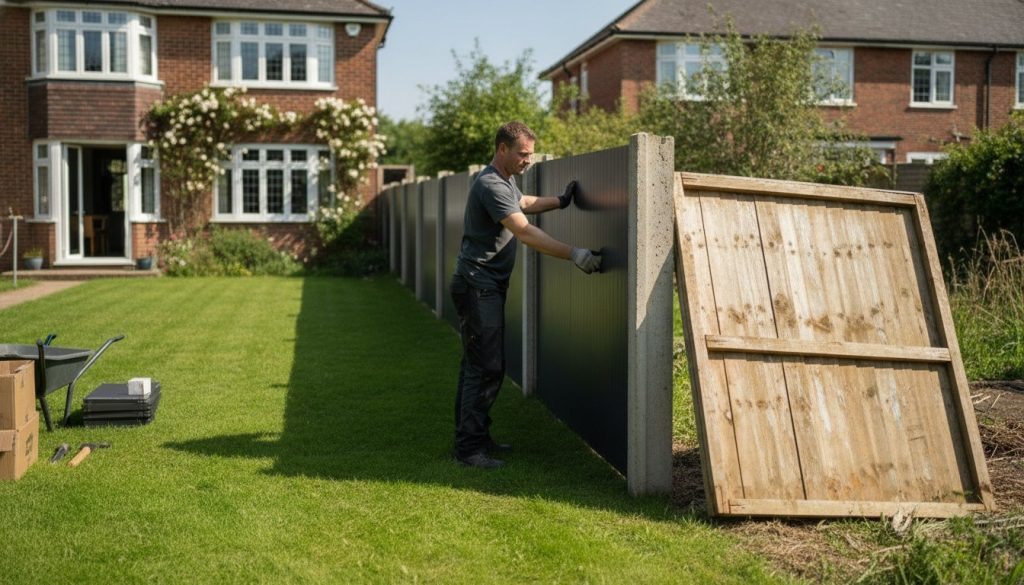
You’ll achieve a professional, modern look without the need for a specialist fencer or the upheaval of digging up your garden. By utilising your existing concrete posts, you can transform your outdoor space into a maintenance-free sanctuary in just one weekend. This guide walks you through the straightforward process of retrofitting steel panels, ensuring your new fence stands firm against the elements whilst looking sharp for decades to come.
Key Takeaways
- Learn why the lower upfront cost of timber leads to higher long-term expenses and how to end the cycle of annual painting and staining.
- Understand the simple slot-in mechanism that allows you to reuse your existing concrete posts for a stress-free garden transformation.
- Discover the structural advantages of steel, including superior wind resistance that prevents panels from rattling or blowing out during gales.
- Follow a practical step-by-step guide for upgrading timber fence panels to metal as a straightforward DIY project you can complete in a single weekend.
- Explore modern aesthetic options like Anthracite Grey that provide a premium, lasting finish whilst requiring zero ongoing maintenance.
Why Upgrading Timber Fence Panels to Metal is the Last Garden Project You Will Ever Need
For many UK homeowners, spring brings a familiar sense of dread: the annual fence inspection. After a winter of driving rain and high winds, timber panels often appear grey, warped, or detached from their fixings. Whilst wood is a traditional choice, upgrading timber fence panels to metal is becoming the preferred solution for those who want to finish their garden work once and for all. It’s a move away from temporary fixes toward a permanent boundary that stands up to the elements.
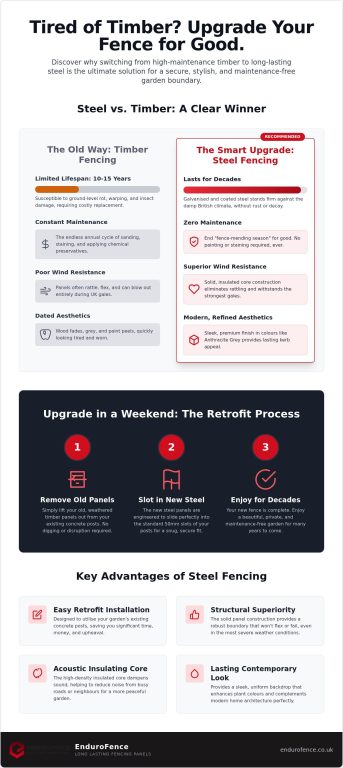
Choosing metal isn’t just about durability; it’s a financial decision that pays off over time. Timber panels are prone to ground-level rot, meaning they often require replacement every 10 to 15 years. When you consider the cumulative cost of replacement panels and the recurring expense of treatments, the initial saving on wood quickly disappears. By comparison, steel offers a solution that doesn’t succumb to the damp British climate. When exploring different types of fencing materials, it’s clear that steel provides the resilience needed for high-wind areas where timber often fails.
The Annual Maintenance Trap
The hours spent sanding, painting, and treating timber are hours you could spend enjoying your garden. Timber requires regular applications of chemical preservatives to stave off fungal growth and insect damage. These treatments are not only time-consuming but can also be messy and potentially harmful to surrounding soil and plants. Upgrading timber fence panels to metal removes this burden entirely. Steel panels from EnduroFence don’t need painting or staining. They maintain their structural integrity and finish without any help from you, effectively ending “fence-mending season” for good.
Aesthetic Evolution: From Rustic to Refined
Garden design in the UK has shifted towards a more architectural, contemporary look. Whilst timber often looks rustic, it can quickly appear dated as the wood fades and the paint begins to peel. Modern steel panels provide a sleek, uniform backdrop that makes the vibrant greens and textures of your garden plants stand out. Popular shades like Anthracite Grey and Goosewing Grey offer a premium finish that complements modern bifold doors and window frames. This choice reflects a desire for kerb appeal that lasts decades rather than just one season. Whether you’re looking to improve home security or simply want a cleaner boundary, the move to metal provides a permanent, stylish upgrade to your home’s exterior.
The Anatomy of an Easy Install: How Retrofit Metal Panels Work
When we talk about a retrofit steel fence panel, we aren’t referring to traditional wrought iron railings or thin garden mesh. These are solid, high-performance boundary solutions designed to provide total privacy and security. Unlike timber panels that sit loosely in their fixings, these panels are precision-engineered to provide a snug, permanent fit. They offer a clean, architectural finish that remains consistent from the day they’re installed, avoiding the unsightly gaps that appear when wood begins to age.
Designed for Standard UK Concrete Posts
Most British gardens already have the perfect foundation for a modern upgrade. The vast majority of concrete posts feature a standard 50mm slot, which was originally intended for timber lap panels. Upgrading timber fence panels to metal takes advantage of this established infrastructure. The panels are manufactured to slide directly into these existing channels with millimetre-precision. The retrofit concept involves reusing your existing garden infrastructure to save significant time and effort during installation.
This “slot-in” mechanism is the core of the easy install process. Because the panels are lightweight yet structurally rigid, they can be handled easily without the need for specialist lifting equipment. If you’re planning a Retro Fitting Panel Swap, you’ll find that the steel panels glide into place much more smoothly than weathered, swollen timber ever could. This design ensures that your boundary is secure and uniform across the entire length of the garden.
The Benefit of an Insulated Core
One common misconception is that metal fencing feels “tinny” or vibrates in the wind. EnduroFence panels solve this by using profiled steel outer sheets bonded to a high-density insulated core. This sandwich construction creates a remarkably solid panel that doesn’t rattle or flex. The core provides significant sound-dampening qualities, which is a major advantage for homes near busy roads or active neighbourhoods. It effectively acts as an acoustic barrier, making your outdoor space feel more private and tranquil.
Beyond noise reduction, the insulated core offers thermal benefits for your garden. Timber absorbs and releases moisture, but steel remains stable. This stability helps create a consistent microclimate near the fence line, protecting delicate plants from the extreme temperature fluctuations often found against thin wooden boards. When upgrading timber fence panels to metal, you’re choosing a material that remains dimensionally stable regardless of the weather. It won’t warp in the summer heat or shrink in the winter frost, ensuring your garden stays looking its best year-round.
Comparing Fencing Materials: Why Steel Outperforms Timber and Composite
When choosing a boundary, homeowners usually weigh up three main options: traditional timber, composite, and steel. Pressure-treated timber is often the default choice, but it’s inherently vulnerable to biological decay. Even the most expensive larch lap or closeboard panels will eventually succumb to wet rot or insect infestation. Composite offers a partial solution, yet it can become brittle over time and often requires a completely new post system. Upgrading timber fence panels to metal provides a superior balance of strength and convenience without the need for a full garden overhaul.
Wind resistance is where the difference becomes most apparent. In the UK, high winds often cause timber panels to “blow out” because they act like sails and are held in by simple nails or friction. Steel panels are far more resilient. Their structural weight and precision fit within concrete posts mean they’re less likely to rattle or dislodge during a storm. Additionally, steel is non-combustible, offering a level of fire safety that wood or plastic-based composites simply cannot match.
Security is another vital consideration. A standard timber panel can be easily kicked through or lifted out by an intruder. Steel panels are significantly harder to breach, providing a robust physical barrier that improves home security. This makes upgrading timber fence panels to metal a practical choice for those prioritising the safety of their property and wanting a boundary that won’t be easily compromised.
The Longevity Factor
Timber fences typically last between 10 and 15 years, even with regular care. Quality steel fencing is designed to last 30 years or more. This extended lifespan is due to the factory-applied coatings that protect the metal from the elements. Whilst timber fades and peels, steel maintains its colour fastness for decades. It doesn’t rot at the ground level where moisture is most prevalent, ensuring the base of your fence remains as strong as the top for its entire life.
Maintenance and Total Cost of Ownership
The “set and forget” nature of steel is its greatest advantage. The timber rule usually dictates a full treatment every two years to prevent the wood from drying out or rotting. Steel panels are a one-and-done investment. They don’t require chemical preservatives, and cleaning is as simple as a quick wipe-down with a damp cloth or a spray with a garden hose. When you calculate the total cost of ownership over 20 years, steel is often the more economical choice because it eliminates the recurring labour and material costs associated with wood.
Step-by-Step Guide: Upgrading to Metal Panels Using Existing Concrete Posts
The most daunting part of any fencing project is usually the prospect of digging up old posts and mixing heavy concrete. By choosing a retrofit solution, you bypass the hardest labour entirely. If your existing concrete posts are upright and structurally sound, they provide the perfect framework for a modern boundary. Upgrading timber fence panels to metal is a logical weekend project that transforms your garden’s appearance with minimal upheaval.
Before you begin, perform a quick stability check. Give each concrete post a firm push to ensure it isn’t leaning or loose in the ground. Minor moss or lichen on the concrete won’t affect the installation, as this will be addressed during the cleaning stage or hidden by covers later. Once you’ve confirmed the posts are secure, you’re ready to start the transition.
Measuring and Ordering
Precision is key to a smooth installation. Measure the distance between the inside faces of your concrete posts at both the top and the bottom. Standard UK concrete posts are designed for 6ft (1828mm) panels, but it’s vital to verify this before ordering your Maintenance-Free Fence Panels. You should also consider your height requirements. Under UK permitted development rights, back garden fences can usually be up to 2 metres high, whilst those adjacent to a highway are limited to 1 metre without planning permission. If your existing concrete gravel boards are in good condition, you can leave them in place and sit your new steel panels directly on top.
The Installation Process
The actual swap is remarkably fast. Follow these steps to ensure a professional finish:
- Remove old panels: Slide the old timber panels upwards and out of the slots. Wear heavy-duty gloves to protect against splinters and rusted nails. Dispose of the old wood responsibly at a local recycling centre.
- Clear the channels: Use a sturdy screwdriver or a narrow trowel to scrape out any stones, old ivy, or debris from the concrete post grooves. This ensures the new panels slide down without catching.
- Slide in the steel: Position the new steel panel at the top of the post slots. With one person on each side, carefully guide the panel down the channels. The precision-engineered edges should glide smoothly to the base.
- Check for level: Ensure the first panel is perfectly level before proceeding to the next. This keeps the entire run of fencing looking uniform.
The Finishing Touch: Concrete Post Covers
Even with brand-new steel panels, weathered or stained concrete posts can detract from the overall aesthetic. Upgrading timber fence panels to metal is often paired with the installation of matching steel post covers. These custom-shaped sleeves slide directly over your existing concrete posts, concealing the aged stone and creating a seamless, high-end look. This allows you to achieve the appearance of a completely new, modern fence system without the expense or effort of a full professional installation.
Choosing EnduroFence for Your Maintenance-Free Garden Upgrade
Selecting the right partner for your garden transformation is just as important as the materials you choose. EnduroFence has developed a system that specifically addresses the shortcomings of traditional boundaries whilst simplifying the installation process. By focusing on a precision-engineered retrofit design, we’ve made upgrading timber fence panels to metal a realistic option for any UK homeowner. Our approach is built on providing a permanent fix that respects your time and your property’s value.
Our business operates through a dedicated network of local providers across the country. This Franchise model ensures that whilst you benefit from a nationally recognised product, you also receive the attentive service of a local specialist who understands the specific challenges of your area. We coordinate national delivery to ensure your panels arrive safely and on time, allowing you to plan your weekend project with total confidence.
Quality You Can Trust
The EnduroFence difference lies in our uncompromising choice of materials. Each panel consists of profiled steel outer sheets that are treated with advanced protective coatings to resist the corrosive effects of the British climate. These sheets are bonded to a high-density insulated core, which provides the structural rigidity missing from thin, single-skin metal alternatives. This core is a significant factor in garden privacy, as it prevents the “drumming” effect often associated with rain and provides a solid barrier against external noise. We are dedicated to providing a high-quality, permanent solution that completely removes the burden of ongoing garden maintenance from your life.
Aesthetics are never an afterthought. We offer a range of colours designed to complement modern British architecture, including the ever-popular Anthracite Grey and the subtle Goosewing Grey. These factory-applied finishes are designed for longevity, ensuring your boundary remains a sharp, clean backdrop for your landscaping without the fading or peeling common to timber stains.
Next Steps for Your Garden
Getting started is a straightforward process that begins with our online quote tool. Once you have your measurements, this tool allows you to accurately plan your project and understand the requirements for your specific layout. If you have an unusual post setup or need technical advice on how our panels will interface with your existing garden features, our team is available to provide expert guidance.
Before your panels arrive, spend a short amount of time preparing your garden by clearing any overhanging foliage near the fence line. This small step ensures that when your delivery arrives, you can move straight into the installation phase. Upgrading timber fence panels to metal is more than just a home improvement task; it’s a long-term investment in a garden that serves as a place of relaxation rather than a source of never-ending work.
Secure Your Garden with a Permanent Boundary
Upgrading timber fence panels to metal is the most effective way to end the exhausting cycle of annual painting and storm-driven repairs. This guide has shown that you don’t need to start from scratch; by utilising your existing concrete posts, you can achieve a professional look in just one weekend. The maintenance-free steel design, paired with an insulated core for strength and silence, provides performance that traditional wood simply cannot match.
You’ve worked hard on your outdoor space, so it’s time to choose a boundary that works just as hard for you. This “fit and forget” approach ensures your garden remains a private sanctuary rather than a source of ongoing chores. Whether you’re looking for a sleek contemporary finish or a robust barrier against the wind, the solution is simpler than you might think. It’s an investment that pays off in both time saved and long-term durability.
Get a Free Quote for Your Maintenance-Free Upgrade today to take the first step toward a worry-free garden. Take pride in a garden boundary that stays sharp and secure for decades to come.
Frequently Asked Questions
Do metal fence panels fit into standard UK concrete posts?
Yes, they are specifically designed for the standard 50mm slots found in most UK concrete posts. This makes upgrading timber fence panels to metal a simple retrofit project that anyone can undertake. The panels slide into the existing infrastructure without needing any modifications to the posts. This design ensures a secure fit across the entire run of your garden boundary whilst reusing your current foundations.
Are steel fence panels noisy when it rains or in high winds?
No, these panels are engineered to be quiet. Unlike single-skin metal fencing, EnduroFence panels feature a high-density insulated core bonded between profiled steel sheets. This construction dampens sound and prevents the vibration often associated with metal. The solid core ensures that even during heavy UK rain or high winds, your garden remains a peaceful environment. It’s a significant upgrade over rattling timber panels that often disturb your peace.
Do I need to paint or treat my steel fence panels?
You never need to paint, stain, or apply chemical preservatives to these panels. The steel is manufactured with a durable factory coating that resists fading and weather damage. This maintenance-free design is a primary reason for upgrading timber fence panels to metal. You’ll save hours of labour every year whilst avoiding the recurring costs of timber treatments. It effectively ends the cycle of annual maintenance that traditional wood requires.
Can I install metal fence panels on my own?
Whilst the installation process is straightforward, we recommend it as a two-person job for ease and safety. The panels are lightweight enough to handle without specialist tools, but having someone to guide the edges into the concrete slots makes the process much smoother. Most homeowners find they can complete a full panel swap across their garden in a single weekend. It’s an accessible project for any competent DIY enthusiast.
Will my metal fence panels rust over time?
These panels are highly resistant to corrosion. They are made from high-quality steel with advanced protective coatings specifically designed to withstand the damp British climate. Unlike timber that rots at the ground level, the steel remains structurally sound and visually consistent for decades. This resilience ensures your investment maintains its kerb appeal without the decay seen in traditional wooden alternatives. It’s a permanent solution that stands the test of time.
How do I stop my fence panels from rattling in the concrete posts?
The precision engineering of our panels ensures a snug fit that significantly reduces movement. If your existing concrete posts have particularly wide or worn channels, you can use simple foam strips or spacers to create a tighter seal. Because the panels don’t shrink like timber, once they are secured, they won’t develop the loose gaps that cause traditional wood panels to rattle during storms. This provides a much quieter boundary year-round.
What colours are available for the steel panels?
We offer a range of contemporary colours designed to suit the modern UK garden aesthetic. Our most popular options include Anthracite Grey and Goosewing Grey, which provide a sharp, architectural look. These factory-applied finishes are much more durable than traditional fence paint. They maintain their depth of colour for years without peeling or flaking. This ensures your garden backdrop stays looking premium without the need for regular touch-ups or repainting.
Do I need to remove my existing gravel boards?
You don’t need to remove your gravel boards if they are in good condition and sit level between your posts. The steel panels can sit directly on top of existing concrete gravel boards. However, if you want a completely uniform look, you can choose panels that reach the ground or use our matching post covers to hide the aged concrete entirely. This flexibility allows you to customise the final appearance of your boundary without extra work.

Leave a Reply