

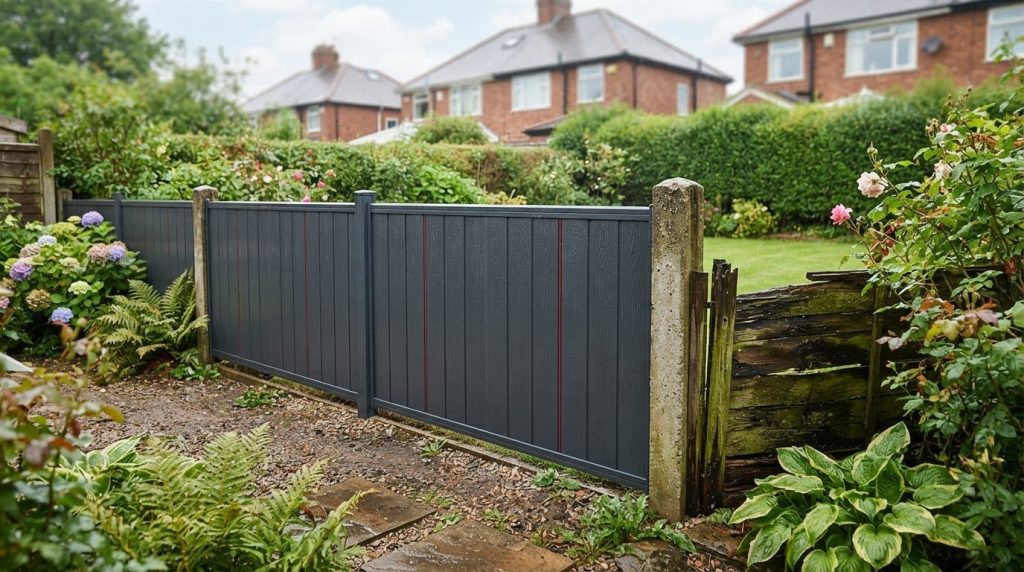
A Definitive Guide to Fence Panels That Won’t Rot in 2026
No amount of weatherproof stain can permanently protect traditional timber fencing against a relentless British winter. If you are tired of sacrificing damp weekends to paint peeling boards, or replacing storm-battered panels every few winters, you have likely started searching for fence panels that won’t rot.
It is genuinely frustrating to invest your time and money into garden boundaries, only to watch fungal decay and ground-level moisture quietly eat away at the foot of your fence. Boundaries should protect your home and enhance your outdoor space, not trap you in an endless cycle of scraping, staining, and costly seasonal repairs.
In this guide, you will discover precisely why organic timber fails in our damp climate, alongside the modern, rot-proof materials engineered to solve the problem for good. We will objectively compare the most resilient options available in 2026 and show you how simple retrofitting can transform your garden using your existing concrete posts.
Key Takeaways
- Understand why prolonged damp conditions and ground-level fungal spores inevitably break down traditional wooden boards.
- Explore modern alternatives such as composite, PVC, and profiled steel fence panels that won’t rot or demand seasonal painting.
- Compare structural wind resistance, colour stability, and lifespans across the leading inorganic boundary materials.
- Discover how sliding new panels directly into sound concrete posts saves significant time, effort, and expense.
- Learn how choosing permanent, maintenance-free materials protects your garden boundary while providing superior long-term value.
Why Traditional Timber Fence Panels Rot in the UK Climate
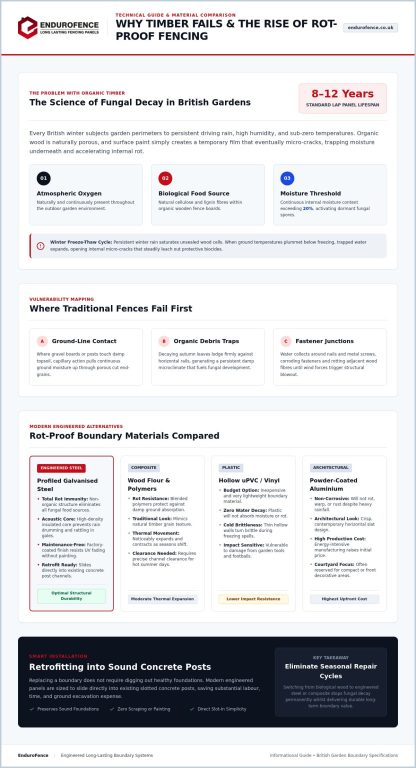
Every British winter subjects garden boundaries to months of relentless driving rain, high humidity, and freezing temperatures. While freshly installed timber looks pristine on day one, organic wood remains naturally porous. Standard lap panels typically last only 8 to 12 years before structural degradation sets in, prompting many homeowners to look for fence panels that won’t rot under prolonged moisture exposure.
The decay process begins when wood-decaying fungal spores, which are naturally present throughout our environment, settle into damp timber. Wet rot thrives in consistently damp conditions, softening the outer timber fibres until the wood breaks apart. Dry rot, though less common outdoors, can still establish itself when trapped dampness spreads across shielded timber sections. Applying decorative fence paint simply conceals this process; surface treatments form a thin film that eventually cracks, trapping water underneath and accelerating internal decay.
The Science of Fungal Decay in Garden Wood
Fungal decay requires three primary triggers: oxygen, a food source, and a continuous moisture content above twenty per cent. When persistent rain saturates unsealed wood cells, dormant fungi activate and feed directly on cellulose and lignin. As winter temperatures drop, this trapped water expands, creating micro-cracks throughout the timber grain. While chemical wood preservation techniques such as pressure treating provide initial protection, rain and ground moisture gradually leach these biocides out, leaving the core vulnerable to biological breakdown.
Common Failure Points: Posts, Pales, and Gravel Boards
Boundary failures rarely occur evenly; decay attacks specific vulnerable junctions first:
- Ground-line intersections: Where wooden gravel boards or posts touch damp topsoil, capillary action pulls continuous moisture up through the cut end grain.
- Debris traps: Piles of decaying autumn leaves lodged against lower horizontal rails create a permanent, moist microclimate that accelerates fungal growth.
- Fastener points: Moisture gathers around metal nails and screws, rusting the fasteners and degrading the surrounding wood fibres until whole panels blow out in high winds.
Understanding these biological vulnerabilities highlights why switching to engineered fence panels that won’t rot provides the only definitive fix for damp British gardens.
The Main Types of Fence Panels That Won’t Rot
Replacing biological timber with inorganic materials eliminates the fundamental food source that wood-decaying fungi require. Today, several robust alternatives offer British homeowners genuine, long-term boundary security without demanding seasonal coats of stain. Evaluating these options side by side makes it easier to select fence panels that won’t rot under damp ground conditions.
Engineered Steel Fence Panels
Profiled steel panels provide exceptional rigidity alongside total immunity to fungal decay. Coated with resilient factory finishes, the galvanised metal repels rainwater and resists ultraviolet fading without any need for paint. High-density insulated cores sit securely between the steel skins, preventing drumming noises during heavy downpours and stopping panels from rattling in seasonal gales. For homeowners seeking a clean finish that slides directly into existing posts, maintenance-free fence panels made from engineered steel offer an enduring, practical solution.
Composite and Plastic Fencing Solutions
Wood-plastic composite panels blend recycled polymers with dense wood flour to mimic traditional grain while resisting water absorption. While composite handles damp ground well, the material expands and contracts noticeably with shifting temperatures, requiring sufficient channel clearance in summer. Hollow uPVC or vinyl systems provide an inexpensive, lightweight choice, though thin plastic walls can turn brittle during freezing spells, leaving them vulnerable to impact damage from garden tools or wayward footballs.
Aluminium Boundary Systems
Powder-coated aluminium fencing delivers a sleek, architectural aesthetic with crisp horizontal slats. Much like high-tensile wire and galvanised materials documented in agricultural research on durable fencing options, architectural aluminium relies on non-corrosive properties to achieve decades of outdoor service. These panels will not rot, warp, or rust in relentless rain. However, the energy-intensive manufacturing process makes aluminium one of the priciest boundary materials upfront, leading many homeowners to reserve it for compact contemporary courtyards or decorative front boundaries.
Each material successfully removes moisture rot from your garden boundaries. Choosing the right one comes down to balancing structural strength, acoustic damping, and ease of installation into your existing garden layout.
Comparing Rot-Proof Fencing Materials: Durability, Maintenance, and Style
Selecting the right boundary upgrade means looking beyond initial aesthetics to evaluate how materials behave across decades of exposure. While several non-timber options qualify as fence panels that won’t rot, their everyday performance varies considerably across structural stability, acoustic dampening, and upkeep requirements.
Structural Longevity and Weather Resistance
Lifespans differ dramatically once materials face real-world wind and wet. Standard overlap timber often fails within 8 to 12 years, and even quality closeboard rarely exceeds 15 to 20 years. In contrast, composite boards average 25 to 35 years, while engineered galvanised steel systems routinely deliver 50 or more years of service life.
Rigidity also determines how well a fence withstands seasonal gales:
- Wind loading: Hollow plastic and lightweight boards can bend or flex out of post channels during severe gusts. Profiled steel panels maintain structural stiffness, transferring wind energy safely into posts without bowing.
- Acoustic performance: Hollow uPVC and standard composite slats offer minimal sound dampening. Steel panels engineered with a high-density insulated core absorb suburban noise, stopping garden clatter and preventing hollow drumming during downpours.
- Impact resilience: High-density composite and metal surfaces withstand everyday knocks from lawnmowers, energetic pets, and garden debris far better than thin PVC panels, which can crack when hit during cold snaps.
Maintenance Needs and Colour Retention
Rot-proof does not automatically mean maintenance-free. Wood-plastic composites contain organic cellulose particles that absorb moisture over time, creating a welcoming surface for green algae and lichen. Keeping composite boards looking clean usually requires regular scrubbing with warm soapy water and specialised cleaners to lift mould from the faux grain.
Factory-finished metal surfaces provide a non-porous barrier where airborne spores simply cannot root. A light rinse with a standard garden hose easily clears dust and splashback without scrubbing or harsh chemicals.
Colour stability also sets premium materials apart. Modern architectural coatings applied to steel resist ultraviolet degradation far better than unstabilised plastics, ensuring popular tones like anthracite grey and slate maintain their depth rather than chalking or fading into uneven grey after a few bright summers.
How to Retrofit Rot-Proof Panels Using Existing Concrete Posts
Replacing an ageing boundary does not require digging up your entire garden. Millions of British homes already feature slotted concrete posts set deep into solid foundations. If your uprights remain structurally sound, excavating them wastes both labour and money. A far simpler route involves sourcing fence panels that won’t rot and sliding them directly into your existing posts.
Assessing Your Existing Garden Post Foundations
Before ordering replacement panels, inspect your existing posts to confirm they are structurally viable. Walk your fence line and look closely for deep horizontal cracks, leaning uprights, or concrete crumbling near the soil line. Minor surface moss or harmless cosmetic discoloration is easy to resolve, but loose posts need securing first. Next, check the internal channel width and measure the distance between posts to confirm your bays match standard British six-foot spacing. Finally, lift away old rotting timber carefully to avoid chipping the concrete channel edges.
The Slide-In Installation Method
A retrofitted panel swap requires no specialised joinery tools or disruptive garden excavations. Two people can easily lift each panel into position, align the side profiles with the vertical post slots, and lower it steadily into place. Ensure each unit sits square and level against the base, whether resting on an existing concrete gravel board or a firm boundary footing. To complete the transformation, sliding matching steel post covers over your weathered concrete posts conceals tired, stained masonry and creates a smart, contemporary finish across the entire run.
Preventing Wind Vibration and Noise
Poorly fitted replacement panels often cause headaches during seasonal gales. Lightweight hollow plastic or thin single-skin boards leave too much slack inside concrete channels, resulting in loud, frustrating rattling every time the wind picks up. Selecting engineered fence panels that won’t rot with high-density insulated cores solves this problem immediately. The internal insulation provides dimensional stability, absorbs wind pressure, and dampens vibration within the concrete tracks.
If you want a straightforward boundary upgrade that eliminates painting and resists violent storms, explore how maintenance-free steel fence panels slot seamlessly into your garden posts to provide a permanent, quiet perimeter.
Selecting the Right Rot-Proof Fencing for Your British Garden
Every outdoor space presents distinct challenges, from exposed corner plots to narrow urban courtyards. Choosing the right boundary involves assessing site exposure, understanding planning regulations, and matching panel designs with your broader landscaping goals. Installing modern fence panels that won’t rot ensures your garden remains secure and visually cohesive across every season.
Key Considerations: Wind Exposure and Garden Layout
Before purchasing replacement panels, assess the natural wind flow around your property. Gaps between detached houses often create wind-tunnel effects that channel intense gusts directly into boundary runs. In these exposed zones, rigid steel systems provide the necessary structural strength to stay firmly anchored without flexing out of post channels.
Boundary height also demands careful thought. Under planning regulations in England, you can erect a rear garden fence up to 2 metres high without planning permission. However, boundaries adjacent to a highway or public footpath are restricted to 1 metre. Remember that adding a decorative trellis counts towards this overall height limit, and submitting a householder planning application carries a £272 fee if you exceed permitted development rules.
Style should complement your surroundings as well. Contemporary outdoor spaces with porcelain paving, composite decking, and architectural planting look best paired with clean horizontal lines and modern, muted shades like charcoal or anthracite grey.
Long-Term Cost Efficiency and Weekend Freedom
Timber fencing often appears economical initially, but ongoing maintenance costs accumulate quickly. Tally up the recurring expense of wood preservative tins, brushes, and replacement timber pales every few years. Factor in the cost of hiring a skip to dispose of waterlogged, fungal-ridden timber after severe winter storms. The true value of choosing fence panels that won’t rot lies in reclaimable time; your weekends remain completely free from messy scraping, sanding, and staining.
Upgrading your boundaries is straightforward once you know your post measurements:
- Measure the bay width between your posts and note the required height from ground level.
- Count the total number of intermediate, corner, and end posts requiring matching sleeves.
- Select factory-finished materials designed for permanent exposure.
To end the cycle of recurring timber decay and secure your garden for decades ahead, explore modern profiled steel solutions from EnduroFence and enjoy lasting peace of mind.
Upgrade to a Permanent, Maintenance-Free Boundary
Endless cycles of sanding, staining, and replacing storm-damaged timber don’t have to be an inevitable part of British homeownership. Choosing modern fence panels that won’t rot addresses the issue at a biological level, shielding your boundary line against perpetual moisture, fungal decay, and ground-level dampness.
Upgrading your garden doesn’t require tearing up solid foundations either. Precision-engineered coated steel outer sheets never rot, while high-density insulated acoustic cores prevent noisy wind rattles during rough winter storms. Because these panels slot directly into standard UK slotted concrete posts without specialist tools, retrofitting delivers a sleek, architectural finish in an afternoon without the cost of new groundworks.
Reclaim your damp weekends and enjoy the lasting peace of mind that comes with a secure, pristine boundary. Explore long-lasting steel fence panels at EnduroFence to see how simple a permanent garden transformation can be.
Frequently Asked Questions
Will composite or steel fence panels really never rot in wet ground?
Yes, neither material contains the untreated organic wood cellulose that wood-decaying fungi need to survive. Steel fence panels are completely inorganic and immune to fungal decay, even when resting against damp soil or saturated gravel boards. High-grade composite panels encapsulate wood fibres in dense polymers to resist moisture absorption. As a result, genuine fence panels that won’t rot remain structurally sound through relentless rain and ground-level dampness.
Can I fit rot-proof fence panels into my existing concrete posts?
Yes, modern engineered panels are manufactured specifically to slot directly into standard UK slotted concrete posts. Provided your existing concrete uprights are plumb and structurally sound, you simply lift out the weathered timber boards and slide the replacement panels into the post channels. You don’t need to dig up concrete foundations, and you can add matching steel post covers over weathered concrete to create a clean, uniform boundary.
Do fence panels that won’t rot require regular painting or staining?
No, rot-proof boundary materials never require recurring coats of preservative paint, stain, or chemical sealants. Profiled steel panels feature factory-applied exterior coatings that permanently seal the metal against rain and sun. Composite and vinyl options carry colour throughout their profiles. Upkeep is straightforward; an occasional rinse with a standard garden hose and soft brush easily clears away surface splashback, garden dust, or airborne dirt.
How do steel fence panels handle high winds compared to traditional timber?
Profiled steel fence panels handle severe gales significantly better than traditional timber because they offer superior structural rigidity and tensile strength. Standard timber lap boards often crack, warp, or pull away from rusted nails during heavy winter storms. Steel panels engineered with an insulated core resist bending across wide bays and transfer wind loads evenly into the concrete posts, virtually eliminating storm-damaged blowouts.
Are non-rot fence panels prone to fading under direct sunlight?
High-grade inorganic panels resist ultraviolet fading remarkably well thanks to modern stabilisers and architectural exterior finishes. While basic plastics can lighten or turn brittle after prolonged sun exposure, quality exterior steel panels use robust factory coatings engineered for harsh outdoor environments. These coatings retain their rich pigment across popular shades like anthracite grey and slate, keeping their colour uniform across shaded and sunlit sections alike.
Can I install rot-proof replacement panels myself without hiring a contractor?
Yes, swapping old panels for new rot-proof alternatives is a straightforward DIY task that requires no specialist tools or trade experience. Because engineered fence panels that won’t rot are designed to slide directly into existing slotted posts, the job is easily handled by two adults. Once you remove the decaying timber, you simply guide the new panels into the tracks, saving substantial time and avoiding installation labour costs.
What is the best way to stop replacement panels rattling in concrete posts?
The most effective way to eliminate panel rattle is installing panels engineered with the correct dimensional thickness and an insulated acoustic core. Thin, hollow plastic or single-skin boards leave excess slack within concrete post channels, causing noisy vibrations during gusty weather. Panels with a dense core fit snugly within the slots and absorb wind buffeting, while simple rubber channel spacers can quickly tighten any irregular, older posts.

Leave a Reply