

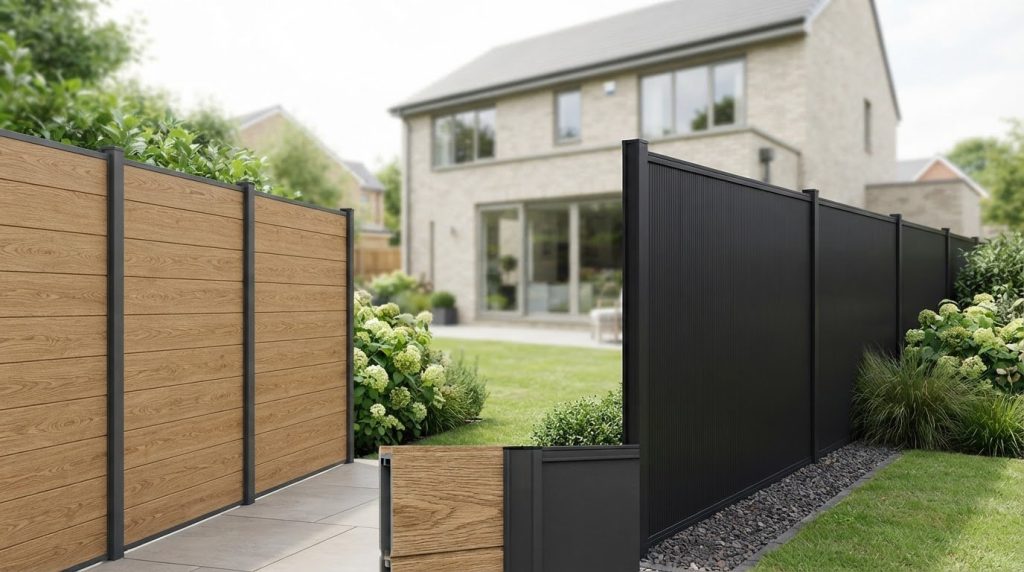
Composite Fence Panels: Composite vs Steel in 2026
The panels that look most like timber aren’t automatically the easiest choice for your garden. Composite fence panels combine materials such as wood fibres and plastics to create a wood-effect finish. Steel panels may be more practical if you want to reduce upkeep or reuse existing concrete posts.
It’s understandable to focus on appearance first. Yet a material label alone won’t tell you how a fence will handle the weather, what cleaning it needs or whether it will fit your current posts. Composite and steel can suit different gardens. To assess durability and choose fence panels that won’t rot, look at the specific panel’s construction, finish and care guidance.
This guide compares composite and steel fence panels by upkeep, appearance, durability and fit, so you can weigh the trade-offs against your garden’s needs. You’ll also find out what to check in panel specifications and fitting details before choosing. If you’re considering steel, EnduroFence panels have profiled steel outer sheets and a high-density insulated core, and are designed to fit existing concrete posts. Check compatibility with your particular posts before deciding.
Key Takeaways
- Check the stated composition of composite fence panels, as formulations can vary between manufacturers.
- Compare construction, appearance, privacy and routine care, and assess claims against the product specifications and your garden conditions.
- Look beyond the word “composite” when assessing durability. Check the finish and follow the manufacturer’s care guidance.
- Before ordering, decide what the fence needs to do, measure the panel space and check the condition of your existing posts.
- Steel may be worth considering if reduced upkeep and fitting into existing concrete posts are priorities. Confirm compatibility with your post size.
What are composite fence panels, and what should you expect from them?
Composite fence panels combine materials to create a single fencing product. Some use wood fibres and polymers, but the proportions, manufacturing methods and finished properties vary. In short, composite fence panels combine two or more materials, with their precise composition and performance depending on the manufacturer’s formulation.
That variation matters when you’re choosing a fence. A wood-effect surface may suit a garden where you want a softer look. Other priorities might include privacy, less routine care or fitting panels into posts already in place. Don’t assume the material name alone tells you how a panel will look, wear or fit.
What materials are used to make composite fence panels?
Some products combine wood fibres with polymers, a broad material group that includes plastics. Wood-plastic composites (WPCs) are one example, but their composition and applications can differ. Check the manufacturer’s specification for the actual materials used, including whether recycled content is stated. Don’t treat one blend as standard.
Unlike solid timber, composite is a manufactured mixture rather than a panel made from a single piece of wood. Steel panels use metal in their construction instead. This helps explain why appearance, care instructions and fitting details aren’t interchangeable between materials.
What can composite fencing offer a homeowner?
Composite may offer a wood-like appearance without being solid timber, and some panel designs can provide a private boundary. The result depends on the product’s colour, surface texture, panel construction and layout. If possible, look at a sample, especially where the fence will sit beside paving, planting or the house.
Some homeowners choose composite in the hope of reducing routine upkeep. Treat this as a product-specific consideration, not a promise that every panel needs no care. Read the cleaning instructions and check what the manufacturer recommends for your garden conditions.
Before deciding, consider how you’ll use the boundary and what matters most: appearance, privacy, ongoing care or compatibility with your posts. Then compare the panel’s dimensions and installation guidance with your space and posts. If a specification is unclear, ask the manufacturer before ordering. These checks are more useful than a broad claim about composite materials alone.
Composite vs steel fence panels: compare construction, upkeep and appearance
Both materials can form a garden boundary, but a useful comparison starts with the specific panel, not a general claim about composite or steel. Check construction, care instructions and fitting requirements, then consider how each option suits your garden and existing posts.
| Consideration | Composite | Steel |
|---|---|---|
| Construction | A manufactured blend. Ingredients and build vary by product. | Construction varies. EnduroFence panels have profiled steel outer sheets and a high-density insulated core. |
| Appearance | Colour and surface texture depend on the product. | Finish and appearance depend on the panel specification. |
| Routine care | Follow the manufacturer’s cleaning and maintenance instructions for the specific panel. | EnduroFence describes its panels as requiring no painting or treatment. Check the care guidance for any panel you consider. |
| Privacy | Depends on panel design, construction and how it is fitted. | Depends on panel design, dimensions and installation. |
| Compatibility | Check panel dimensions and the manufacturer’s fitting guidance against your posts. | EnduroFence panels are designed for existing concrete posts. Confirm compatibility with your particular post size. |
How do composite and steel panels differ in upkeep?
Don’t assume every composite panel has the same care needs. Cleaning methods and maintenance advice depend on its materials and finish, so read the product instructions before buying. EnduroFence states that its steel panels need no painting or treatment. This is a claim about its panels, not a reason to skip the supplied guidance or assume all steel panels have identical requirements.
Which material suits your preferred look and fence layout?
Choose by the finished appearance you want, then check whether the product details support that choice. Colours, surface styles and dimensions can differ, so avoid relying on a generic description or a photograph alone. If possible, view a sample in your garden’s light and alongside nearby paving, brickwork or planting.
Layout matters too. Measure the opening between posts and decide how much privacy you want before comparing panel designs. Installation method and site conditions can affect the finished result, so check the fitting guidance as well as the panel itself. A specification that matches your posts and intended layout is more useful than a broad promise about material performance.
In short, choose the material that fits your priorities, then verify the individual panel’s construction, care instructions, dimensions and compatibility. If steel is on your shortlist, you can review EnduroFence steel fence panels alongside the composite options you’re considering.
Are composite fence panels durable and low-maintenance in practice?
The word “composite” doesn’t guarantee a set lifespan or mean a fence needs no care. Composite fence panels vary in formulation and construction, so assess the particular product rather than relying on the material label or a broad marketing claim. Look for written specifications and care guidance, and check what evidence the manufacturer provides for performance claims.
What factors affect composite panel performance?
Start with the panel’s stated composition, build and finish. Then check the installation instructions. A product fitted in a way that conflicts with its guidance may not perform as intended. Exposure matters too. Sun, wind, rain, nearby planting and the fence’s position can all affect how it weathers, whatever material it’s made from.
Colour change, movement or surface wear may be relevant for some products, but these aren’t guaranteed outcomes for every composite panel. Ask the manufacturer what to expect for the model you’re considering. Check the product documentation for stated limitations, care requirements and performance evidence.
What does low maintenance mean for steel and composite fencing?
Low maintenance means less routine work, not that a fence never needs attention. Follow the specific cleaning instructions and inspect panels periodically for dirt, damage or changes that may need attention. Compare the written guidance for the products you’re considering rather than assuming one material always needs less care.
EnduroFence describes its steel panels as requiring no painting or treatment. That statement applies to its panels, not every steel fence. Likewise, don’t assume composite needs no cleaning. Confirm the manufacturer’s instructions for the panel you choose.
Potential advantages and checks:
- Composite: Can offer a range of wood-effect appearances. Verify the exact finish, construction, care instructions and any lifespan claims for the product.
- Steel: EnduroFence states that its panels need no painting or treatment. Check the specific panel’s care guidance and suitability for your posts and site.
- Both: Installation, exposure and ongoing care can affect condition. Review the fitting guidance and product documentation before deciding.
Judge durability through details you can verify: what the panel is made from, how it is finished, how it should be fitted and what care the manufacturer recommends. That gives you a more dependable basis for comparison than a promise based on material alone.
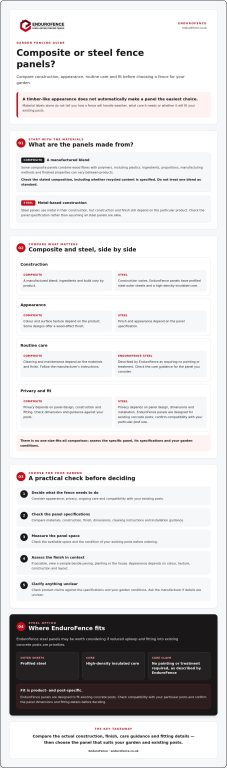
How to choose composite fence panels: a practical garden checklist
Start with what the fence needs to do, then weigh your material priorities. If privacy and appearance matter most, focus on panel design and finish. If you want to reuse existing posts or reduce routine work, prioritise compatibility and care instructions. Use this list to gather the details before requesting product information.
- Define the purpose. Note whether you need privacy, a boundary for pets or children, or a particular look. Decide which matters most: appearance, upkeep, construction or fitting your existing posts.
- Measure the opening. Measure the clear width between posts at more than one point, as openings may not be perfectly even. Record the usable panel height and any differences you find. Check the supplier’s measurements rather than assuming a nominal panel size will fit.
- Inspect the posts. Check for movement, cracks, damage or deterioration before planning a panel replacement. Record the post type and any details that may affect fitting. Confirm compatibility with the supplier, since not every panel fits every post.
- Compare the specifications. Check the panel’s construction, finish, fitting method, care instructions and any stated limitations. Ask what cleaning is required and whether the installation guidance suits your layout.
- Consider future upkeep and handling. Check how panels should be moved and handled, and review delivery information before ordering. Ask whether matching panels or replacement parts may be available later, without assuming future stock is guaranteed.
How should you check panel dimensions and existing posts?
Measure carefully and keep your measurements with clear notes about the posts’ condition. If the opening varies, share the measurements taken at each point rather than relying on a single figure. Confirm the usable height and fitting requirements with the supplier before ordering. This can help identify a mismatch before the panels arrive.
Which product specifications should you compare before buying?
Compare written product details rather than relying on broad claims or appearance alone. If you’re also considering steel, look for the supplier’s maintenance-free fencing information and retrofit panel guidance where available. These can help you assess care requirements and fitting into existing posts. Check that the guidance applies to the specific panels you’re considering.
Once you’ve recorded your measurements and priorities, you can request a free quote from EnduroFence and ask for relevant panel details. Preparation makes it easier to compare options against your garden, rather than choosing on material name alone.
Could EnduroFence steel panels be a practical alternative to composite?
If you’re replacing worn fence panels and want to keep existing concrete posts, steel may be worth considering alongside composite. EnduroFence panels are designed for existing concrete posts and have profiled steel outer sheets with a high-density insulated core. EnduroFence describes them as weather-resistant and says they don’t require painting or treatment. These are product details to weigh against your priorities, not a guarantee of performance in every garden.
When might steel panels suit your garden better?
Steel may appeal if you want to reduce routine upkeep or replace timber panels without changing the existing posts. Reusing sound posts may be relevant to your decision, but suitability depends on their condition, measurements and the panel’s fitting requirements. Check these details before assuming a panel will fit.
Composite may be a better match if its particular finish, appearance or stated specifications suit your garden more closely. Compare actual products rather than deciding from the material name alone. Your preferred look, the amount of care you’re comfortable with and the condition of the current boundary all matter.
What should you check before choosing EnduroFence panels?
Before requesting product information, note the fence layout, measure the panel openings and inspect the existing concrete posts for movement or damage. Share those details so you can check suitability rather than assume compatibility. Confirm the dimensions, colour and finish options, plus the fitting guidance for your particular layout.
It also helps to be clear about your priorities. Are you mainly looking to avoid painting and treatment, retain the existing posts or achieve a particular appearance? Compare the answers with the specifications for the composite panels you’re considering. This keeps the decision grounded in what each product states, instead of broad claims about steel or composite as a whole.
If reduced upkeep and a potential retrofit into existing concrete posts are high on your list, you can explore EnduroFence panels and request a free quote. Bring your measurements and questions about finish and fitting, then decide whether the option suits your garden.
Choose the fence that fits your garden and priorities
The right choice isn’t decided by the material name alone. Compare the specific panel’s construction, appearance and care guidance, then check its dimensions against your layout and existing posts. Composite fence panels may suit your preferred finish, whilst steel may be worth considering if reducing routine upkeep is a priority.
EnduroFence steel panels have profiled steel outer sheets and a high-density insulated core, and are designed to fit existing concrete posts. Confirm the measurements and compatibility for your posts before choosing. EnduroFence says homeowners can replace its panels without specialised tools or qualifications.
If steel sounds like a practical option, take your measurements and questions about fitting and finishes with you. Explore EnduroFence panels and request a free quote to review the details. With the right checks, you can choose a fence that suits your garden and priorities.
Frequently Asked Questions
What are composite fence panels made from?
Composite fence panels are manufactured from a combination of materials, often including wood fibres and polymers, but the formulation varies by product. Some manufacturers may use recycled content, but don’t assume this applies to every panel. Check the product specification for the stated ingredients and construction. This helps you compare products and understand the recommended care, rather than relying on the general label “composite”.
Are composite fence panels better than steel panels?
Neither material is automatically better. The right choice depends on your garden, preferred appearance, upkeep priorities and existing posts. Compare the specifications for each panel, including construction, finish, care guidance and fitting requirements. Composite may suit you if its particular look and details meet your needs. Steel may be worth considering if reduced upkeep or using existing concrete posts matters. Confirm measurements and compatibility before choosing either material.
Do composite fence panels need painting or treating?
Don’t assume every composite panel has the same maintenance requirements. Check the manufacturer’s care instructions to see whether painting or treatment is recommended and what cleaning is needed. A product described as low-maintenance may still need occasional cleaning or inspection. EnduroFence describes its steel panels as requiring no painting or treatment, but that claim applies to its panels and isn’t guidance for all steel or composite fencing.
Can composite fence panels fit existing concrete posts?
They may fit, but compatibility depends on the panel dimensions, fitting method and your particular posts. Measure the clear opening between posts at more than one point, note the usable height and inspect the posts for movement or damage. Then give those details to the supplier and confirm the fit before ordering. Don’t assume a panel will suit existing concrete posts simply because its material or intended use appears similar.
How long do composite fence panels last?
There isn’t one lifespan that applies to every composite panel. Formulation, construction, installation, exposure and care can all affect how a particular product performs. Check whether the manufacturer states an expected service life and what conditions or maintenance apply to that claim. Treat an estimate as product-specific information, not a guarantee. If the documentation doesn’t explain the basis for a lifespan claim, ask the supplier for clarification before comparing it with steel.
Are composite fence panels easy to install yourself?
It depends on the panel’s weight, fitting method, your existing posts and your experience with practical work. Read the manufacturer’s installation instructions before deciding, and check what tools and handling arrangements are required. Don’t assume composite panels share the same fitting process. EnduroFence says its steel panels can be replaced by homeowners without specialised tools or qualifications. This information applies to its steel panels, not composite products.
Can composite fence panels change colour or warp?
Colour change or movement may be possible for some products, but it can’t be assumed for every composite panel. The formulation, finish, installation and exposure may affect how a specific product behaves. Check the manufacturer’s documentation for guidance on colour stability, movement and suitable installation conditions. Ask what changes to expect over time and how to care for the surface. This gives you product-specific information instead of relying on general claims about composite materials.

Leave a Reply