

How to Replace Rotten Fence Panels in Concrete Posts
Why spend another weekend painting a fence that’s destined to rot when your concrete posts are already doing the heavy lifting? It’s a common frustration for homeowners across the UK. You have solid foundations, yet you’re still dealing with timber panels that rattle in the wind and decay at the base. If you’re looking to replace rotten fence panels in concrete posts, you don’t need to start from scratch or commit to a lifetime of annual staining. You’ve already got the most difficult part of the installation finished.
In this guide, you’ll discover the most durable ways to swap out failing timber for modern, maintenance-free alternatives without the upheaval of removing your existing concrete posts. We’ll show you how to use your current garden infrastructure to create a secure, tidy boundary that won’t blow out in a storm. We’ll cover everything from the technical fit within standard channels to selecting colours that never need a paintbrush, providing a straightforward path to a garden that looks professional and stays that way.
Key Takeaways
- Understand why moisture traps in concrete channels accelerate timber decay and how to replace rotten fence panels in concrete posts with a permanent, maintenance-free solution.
- Compare traditional timber options against modern steel retrofitting to see which material offers the best value so you don’t have to repeat the job in five years.
- Learn how an insulated steel core provides strength and sound dampening while remaining light enough for a straightforward DIY installation.
- Master the safe removal of failing timber and the preparation of existing concrete channels to ensure a perfect fit for your new panels.
- Find out how to complete your garden’s transformation using matching post covers that mask unsightly grey concrete for a uniform, high-end look.
Identifying the Root Cause of Rotten Fence Panels in Concrete Posts
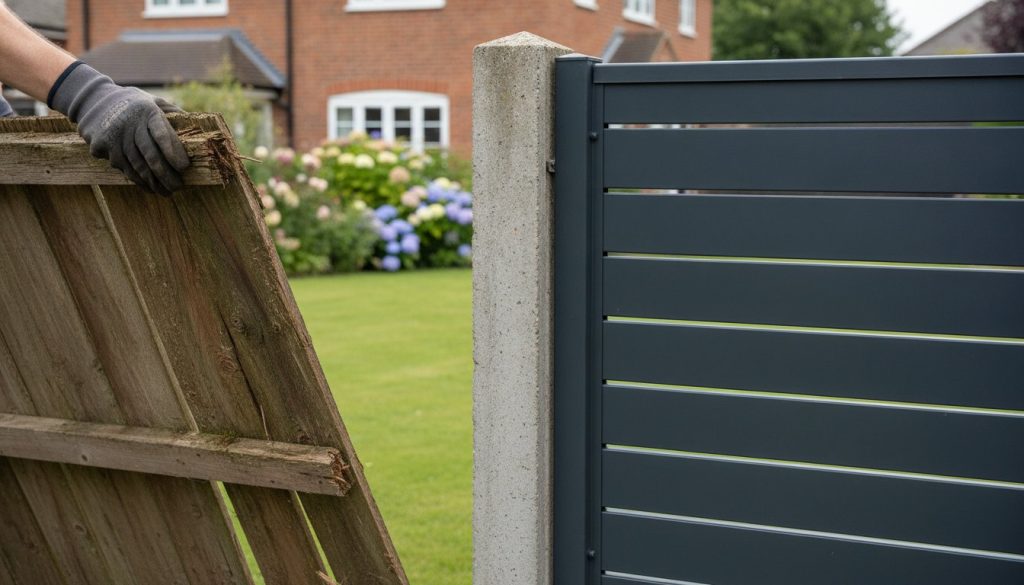
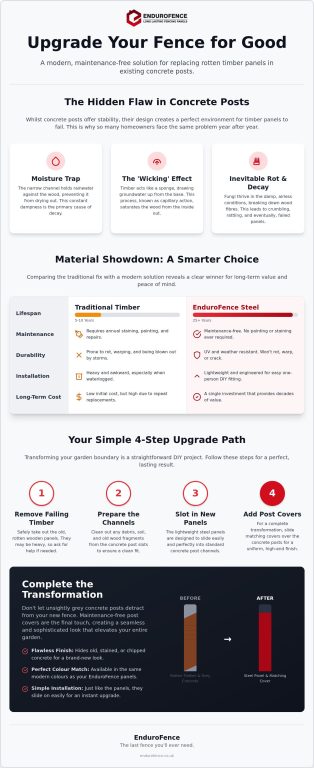
Concrete posts are often seen as the ultimate solution for a sturdy boundary, but for the timber panels sitting inside them, they can be a death sentence. Whilst the posts remain upright for decades, the narrow channels where the wood meets the concrete create a perfect environment for decay. This is the primary reason homeowners eventually need to learn more about fences and how to replace rotten fence panels in concrete posts effectively. When timber is held tightly against a cold, non-porous surface like concrete, it loses its ability to breathe.
The most common culprit is the “wicking” effect. Timber is naturally porous, meaning it acts like a sponge. When a panel sits directly on a concrete gravel board or inside a damp post slot, it sucks up groundwater through capillary action. Because the base of the panel is often shaded by plants or hidden from the sun, this moisture never fully evaporates. Over time, the wood fibres break down, leading to soft, spongy rot that starts at the base and moves upwards. You’ll likely notice your panels are failing when they begin to rattle in the wind, bow outwards, or when the bottom slats start to crumble away entirely.
Why Timber Fails in Concrete Channels
The design of a standard concrete post prioritises stability over airflow. Once a timber panel is slid into the slot, there is almost no room for air to circulate around the edges. When rain gets trapped in these gaps, the wood stays damp for weeks. Debris like dead leaves and soil often builds up at the base of the post, creating a permanent damp microclimate. In the UK, our frequent wet-dry cycles cause the wood to expand and contract rapidly. This movement creates small cracks in the grain, allowing rot-causing fungi to penetrate deep into the core of the timber where treatments can’t reach.
The Financial Reality of Constant Maintenance
Choosing the “cheaper” timber option often feels sensible at the checkout, but the long-term maths tells a different story. Standard lap panels typically last between 5 and 10 years in the UK climate before they require replacement. When you factor in the cost of brushes, high-quality stains, and the hours spent every spring treating the wood, the investment grows significantly. Beyond the money, failing panels compromise your home’s security and privacy. A rattling, rotten panel is far easier to bypass than a solid boundary, and it leaves your garden exposed to the full force of winter storms, which can easily blow out weakened timber sections.
A Roundup of Replacement Options: From Traditional Timber to Modern Steel
When you decide to replace rotten fence panels in concrete posts, you aren’t limited to the same timber that failed you previously. The market has shifted towards materials that prioritise longevity over repeat sales. Whilst timber has been the default for decades, homeowners are increasingly looking for solutions that don’t require a weekend of manual labour every spring.
Traditional lap panels remain the budget-friendly choice for a quick fix. However, their thin slats are prone to warping and usually only offer a lifespan of 5 to 10 years. Closeboard timber is a step up in terms of strength, using thicker feather-edge boards that provide better privacy. Even so, these panels still rely on chemical treatments that wash away over time, leaving the wood vulnerable to the wicking effect at the gravel board level. Composite fencing offers a mid-point, providing better rot resistance than wood, though it can be heavy and sometimes lacks the structural rigidity needed for high-wind areas.
For those seeking a permanent fix, maintenance-free steel has become the modern standard. These panels are engineered to withstand the British climate without the need for annual staining or painting. They offer a pragmatic way to upgrade your boundary whilst keeping your existing concrete infrastructure intact.
Material Comparison: Durability and Upkeep
Timber panels are high maintenance by nature. Even pressure-treated wood eventually succumbs to the wet-dry cycles of our climate. In contrast, steel panels are UV and weather resistant, often providing a lifespan of 25 years or more. Weight is another practical factor for the DIYer. A waterlogged timber panel is incredibly heavy and awkward to manoeuvre into a concrete slot. Steel is significantly lighter, making it much easier to slide into place without needing professional assistance.
Aesthetic Versatility in the Modern Garden
Modern garden design often focuses on clean lines and a cohesive colour palette. Many homeowners now choose to match their fencing to other architectural features, such as anthracite aluminium bifold doors or contemporary garden furniture. Steel panels provide a sleek finish that timber simply cannot replicate. They don’t silver over time or show unsightly water marks at the base. If you’re tired of the constant cycle of painting and replacing, upgrading to Maintenance-Free Fence Panels is the most efficient way to use your existing garden infrastructure.
Why Steel Panels are the Ultimate Retrofit Solution for Concrete Posts
Most traditional fencing guides suggest that when timber fails, your only option is to buy more wood. This approach ignores the fact that your existing concrete posts are likely still in excellent structural condition. When you replace rotten fence panels in concrete posts with a steel retrofit system, you’re choosing a solution designed specifically to work with your garden’s existing infrastructure. It is a pragmatic upgrade that moves away from the cycle of temporary fixes.
The precision engineering behind these panels ensures they slide perfectly into standard UK concrete post channels. Unlike timber, which often requires trimming or force to fit, steel panels are manufactured to consistent tolerances. This eliminates the gaps that lead to the annoying rattling sounds common with wood panels in high winds. Because the panels are secured within the existing slots, they create a unified boundary that won’t blow out during winter storms. The “fit and forget” philosophy of EnduroFence technology means you can finally stop worrying about the next big gale damaging your garden boundary.
The Anatomy of a Maintenance-Free Steel Panel
A high-quality steel panel is far more than just a sheet of metal. It is a layered system designed for durability and performance in the British climate. The construction typically includes:
- Profiled steel outer sheets: These provide maximum impact resistance and give the fence its modern, clean aesthetic.
- High-density insulated core: This core provides structural rigidity without the excessive weight of solid timber. It also offers acoustic insulation, which is particularly effective for gardens located near busy roads.
- Weatherproof coatings: Advanced finishes eliminate the need for annual painting or chemical treatments, protecting the steel from UV damage and corrosion.
Why Retrofitting is the Sustainable Choice
Choosing to replace rotten fence panels in concrete posts rather than installing an entirely new system is a significantly more sustainable way to manage your property. Concrete is a carbon-intensive material to manufacture and transport. By keeping your functional posts in place, you avoid the environmental cost of new concrete production and reduce the amount of waste sent to landfill.
From a practical perspective, retrofitting also means minimal garden disruption. There is no need for heavy machinery, digging new post holes, or mixing fresh cement. Your established flowerbeds and lawns remain untouched. It is a clean, efficient process that respects the time and effort you’ve already invested in your garden’s landscape.
Step-by-Step Guide: How to Replace Rotten Panels Safely and Efficiently
Upgrading your garden boundary is a straightforward project once you understand the mechanics of the existing structure. When you replace rotten fence panels in concrete posts, the goal is to work with the strength of the concrete whilst removing the vulnerability of the timber. This process requires a methodical approach to ensure the new panels sit perfectly and provide the long-term security you expect.
Preparation and Safety First
Start by clearing any climbing plants or debris from the base of the posts. You’ll need heavy-duty gloves, eye protection, and a sturdy pry bar. Accurate measurement is vital; whilst most UK panels follow the standard 1.83m (6ft) width, concrete posts can settle over time. Measure the distance between the inner channels at the top, middle, and bottom to identify any slight narrowing. This is a two-person job, as lifting panels vertically out of high concrete slots can be awkward and physically demanding for one person alone.
Managing Stuck or Swollen Timber
Removing the old timber is often the most challenging stage. If the wood is dry, it may slide out easily. However, waterlogged timber often expands, locking itself into the concrete slot. Use your pry bar to gently nudge the panel upwards from the base. If the panel refuses to budge, avoid using excessive force on the concrete, as this can cause the post to crack. Instead, use a saw to cut the old panel vertically down the centre. This collapses the structure inward, allowing you to pull the rotten pieces out of the channels with ease. A retrofit approach allows you to modernise your property by installing high-performance materials into your existing concrete infrastructure, effectively saving the significant time and expense of a full replacement.
Once the old wood is gone, use a narrow tool to scrape out any remaining debris, old nails, or splinters from the concrete slots. Ensuring a clean channel is the secret to a smooth installation. With the channels prepared, you can begin the installation of your new steel panels. Because steel doesn’t swell or warp, it should glide into the slot with minimal resistance. Work with your partner to lift the panel and guide it into both channels simultaneously. After sliding it to the base, check that it sits level on the gravel board. Complete the transformation by securing the top caps, which provide a clean finish and protect the panel core from the elements.
If you’re ready to start your project, explore our Retro Fitting Panel Swap options to find the perfect match for your garden.
Completing the Transformation with Maintenance-Free Post Covers
Even after you replace rotten fence panels in concrete posts, the visual transformation often feels incomplete. Whilst the new panels look sleek and modern, they are still framed by weathered, grey concrete that can look out of place in a contemporary garden design. This aesthetic mismatch is a common frustration for homeowners who have invested time in a retrofit project. The solution is to use maintenance-free post covers to mask the original structure and create a uniform, high-end finish that complements your new panels.
Post covers are precision-engineered steel sleeves designed to wrap around your existing concrete posts. They require no specialised tools or digging to install, effectively snapping into place to provide a seamless appearance. This simple addition ensures your boundary looks like a professional, integrated system rather than a series of separate components. By colour-matching the covers to your new panels, you can achieve a consistent look across the entire perimeter of your garden, hiding the industrial look of old concrete for good.
Concrete Post Covers UK: A Roundup of Styles
Selecting the right style is about creating a “full system” look for your property. When you match your covers to your steel panels, the individual posts seem to disappear into the boundary. Beyond aesthetics, steel post covers offer superior durability. Unlike the underlying concrete, these covers won’t chip, crack, or suffer from unsightly moss and lichen growth. They feature low-profile designs that hug the original post tightly, ensuring they don’t eat into your precious garden space. This is particularly useful for narrow side passages or smaller urban gardens where maintaining every centimetre of width is essential.
The Final Result: A Maintenance-Free Garden
Visualising the before and after of this transformation is rewarding. You move from a rattling, decaying timber fence to a sleek, modern boundary that is built to last. This upgrade offers long-term peace of mind, knowing your property is secure and your weekends are no longer dedicated to the annual chore of staining or painting. You’ve successfully utilised your existing infrastructure to create a premium finish that will stand up to the UK weather for decades to come. It’s a pragmatic, innovative way to modernise your home whilst reducing ongoing labour.
Ready to ditch the paintbrush? Explore the EnduroFence range today and discover how our maintenance-free solutions can permanently upgrade your garden boundary.
Secure Your Garden with a Permanent Fencing Solution
You now understand why timber fails within concrete channels and how to replace rotten fence panels in concrete posts using a more resilient, modern alternative. By choosing a retrofit approach, you utilise the strength of your existing concrete posts whilst eliminating the constant cycle of decay and repair. This simple swap doesn’t just fix a broken boundary; it upgrades your entire garden infrastructure for the long term.
Transitioning to steel panels provides immediate peace of mind. These systems are engineered to withstand the British weather without warping or rattling, and they remove the need for annual staining or chemical treatments. With the right materials, your fence becomes a “fit and forget” feature of your home rather than a recurring chore.
Ready to reclaim your weekends? Upgrade your garden with EnduroFence maintenance-free panels. Our panels are designed for an easy DIY retrofit and are available for national delivery across the UK. Start your transformation today and enjoy a tidy, secure boundary that stays looking its best for decades to come.
Frequently Asked Questions
Can I replace timber panels with steel if my concrete posts are old?
Yes, you can install steel panels into older concrete posts as long as the posts remain upright and structurally sound. Because steel panels are lightweight and feature an insulated core, they actually put less physical strain on your existing infrastructure than waterlogged timber. This makes them an ideal choice for a retrofit project where you want to modernise your garden without the disruption of digging out old concrete foundations.
How do I stop my new fence panels from rattling in the concrete channels?
Steel panels are designed with precision tolerances to ensure a snug fit within standard UK concrete channels. Unlike timber, which shrinks and warps as it dries, steel remains dimensionally stable. This consistency is the most effective way to replace rotten fence panels in concrete posts and eliminate the annoying rattling sounds caused by gaps. The rigidity of the insulated core also prevents the panels from bowing or vibrating during high winds.
Do I need to remove the concrete gravel boards to replace the panels?
You don’t need to remove your existing concrete gravel boards when upgrading your fencing. Steel panels are engineered to sit directly on top of your current boards, utilising the solid foundation you already have in place. This “Retro Fitting Panel Swap” approach is designed to save you time and labour. It allows for a clean transformation of your garden boundary without the need for any digging or heavy machinery.
Are steel fence panels for concrete posts easy to install as a DIY project?
Installing steel panels is a straightforward DIY project that most homeowners can complete in a single afternoon. Because the panels are significantly lighter than solid timber, they are easy to lift and slide into the concrete slots with the help of a partner. You won’t need any specialised tools or professional qualifications to achieve a high-end, secure finish that looks like it was installed by a specialist contractor.
Will steel fence panels rust over time in the British weather?
Modern steel panels are specifically manufactured to withstand the wet British climate without rusting. They feature advanced weatherproof coatings and profiled steel outer sheets that resist corrosion and UV damage. Unlike timber, which requires annual chemical treatments to prevent rot, these maintenance-free materials maintain their structural integrity and colour for decades. This durability makes them a pragmatic long-term investment for any UK property owner seeking a secure boundary.
How do I choose the right colour for my replacement fence panels?
Selecting the right colour often involves matching your fence to other architectural elements in your garden. Many homeowners choose contemporary finishes like anthracite grey to coordinate with aluminium bifold doors or window frames. Because these panels never require painting, the colour you choose on day one will remain vibrant for years. We offer a range of modern shades designed to provide a clean, architectural line that complements any garden landscape.
What is the standard width of a fence panel for UK concrete posts?
The standard width for a fence panel in the UK is 1.83m, which is equivalent to 6 feet. Our steel panels are engineered to match these standard dimensions, ensuring they slide directly into the channels of your existing concrete posts. It’s always best to measure the gap between your posts at the top, middle, and bottom before ordering to ensure there are no obstructions or slight narrowings in the concrete slots.
Are maintenance-free panels more expensive than traditional timber?
Whilst the initial purchase price of steel panels is higher than budget lap timber, they represent a smarter financial choice over a decade. You save significantly by eliminating the ongoing costs of brushes, stains, and professional labour. When you factor in the lifespan of over 25 years, a steel retrofit is often more cost-effective than replacing rotten timber panels every five to seven years as they succumb to the weather.

Leave a Reply