

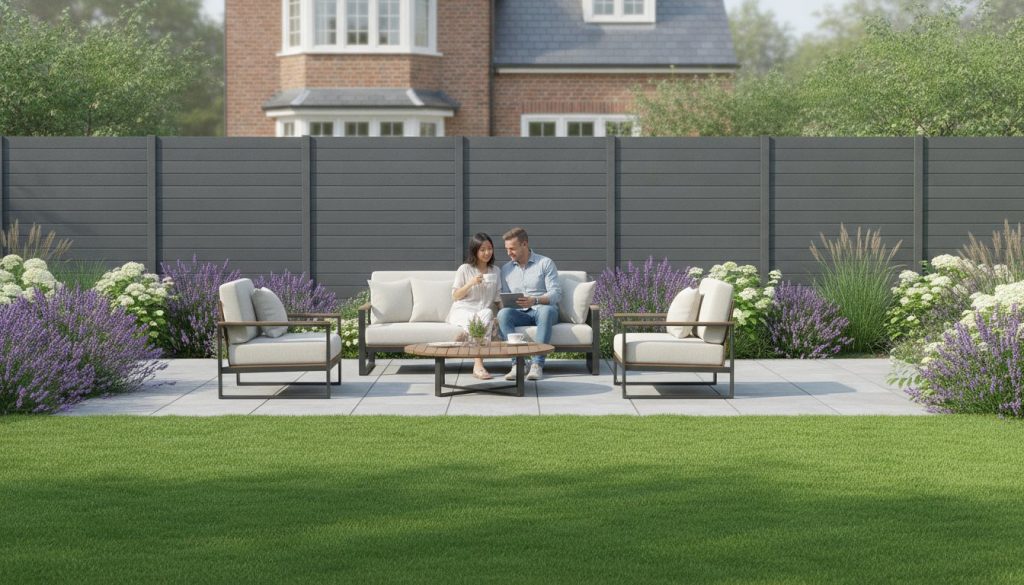
Garden Fence Privacy Ideas UK: Modern Solutions for a Secluded Space in 2026
What if your garden fence could provide total seclusion without ever needing a paintbrush or a repair kit? Most homeowners value their privacy, yet many find themselves overlooked by neighbours or listening to timber panels rattle during a typical British storm. If you’re tired of the annual chore of treating wood, it’s time to consider the durable garden fence privacy ideas UK residents are adopting to reclaim their outdoor space. You deserve a sanctuary that feels secure and looks professional without the constant cycle of maintenance.
It’s frustrating when your private retreat feels exposed or requires constant upkeep. We understand that a garden should be a place of rest, not a list of chores. This article promises to help you discover the most effective and durable ways to secure your garden sanctuary whilst avoiding the constant cycle of timber maintenance. We’ll explore modern steel solutions that offer total visual privacy and sound reduction. You’ll see how easy it is to complete a DIY panel swap using your existing concrete posts, creating a maintenance-free boundary that stays silent and sturdy for years to come.
Key Takeaways
- Understand UK planning regulations, which typically allow for fences up to 2 metres high, to ensure your sanctuary remains both private and compliant.
- Discover the most effective garden fence privacy ideas UK homeowners are using to replace high-maintenance timber with durable, insulated steel panels.
- Select contemporary colours like Anthracite Grey to provide a modern aesthetic that offers total visual seclusion without the need for annual painting.
- Learn how to complete a simple DIY panel swap in a single weekend by retrofitting new steel panels directly into your existing, structurally sound concrete posts.
- Gain acoustic benefits alongside visual privacy by choosing panels with an insulated core designed to dampen noise from busy residential surroundings.
The Quest for Seclusion: Why Garden Privacy Matters in the UK
A garden is more than just an outdoor patch of grass; it’s a vital extension of your home. In busy UK residential areas, the psychological benefit of a private sanctuary is immense. Having a space where you can decompress without the feeling of being watched helps reduce stress and increases the time you’ll actually spend outdoors. However, achieving this sense of peace is becoming harder as housing density increases and gardens become more overlooked. Homeowners often find that basic boundaries fail to provide the quiet and seclusion they expect, leading to a feeling of exposure that’s difficult to ignore.
By 2026, the trend has shifted decisively away from temporary fixes. People are tired of flimsy willow hurdles that rot within a few seasons or timber panels that shrink and leave visible gaps. When researching garden fence privacy ideas UK residents can rely on, the focus is now on long-term structural integrity. Reclaiming your space requires moving past the constant cycle of “making do” with materials that don’t offer total visual or acoustic blockage.
The Overlooked Garden Syndrome
Modern UK housing developments frequently lack natural seclusion. Many homes are designed with “borrowed views” in mind, which often means your patio is visible from several neighbouring upstairs windows. Common privacy gaps usually appear at the top of the fence line or around side gates where standard panels don’t quite meet the post. These small openings can make an entire garden feel public. Unlike natural hurdles or thin screening that can be seen through, a solid boundary is essential to block these intrusive sightlines. While there are different types of fencing available, many traditional options fail to address the specific heights and angles needed to truly secure a modern British garden.
Visual vs Acoustic Privacy
True seclusion is a two-part equation. Visual seclusion stops the gaze of passers-by, but acoustic dampening addresses the intrusive sounds of local traffic or nearby chatter. Seeing your neighbour is only half the problem if you can hear every word of their conversation. High-quality fencing plays a vital role in reducing ambient neighbourhood noise, turning a loud outdoor area into a peaceful retreat. Acoustic privacy is the measurable level of decibel reduction achieved when a physical barrier effectively blocks sound waves from entering your private space. By choosing a system with a solid, insulated core, you don’t just hide from view; you create a quieter environment that feels significantly more detached from the outside world.
A Roundup of 5 Essential Garden Fence Privacy Ideas for UK Homes
Selecting the right boundary involves balancing aesthetics with the reality of the British climate. When exploring garden fence privacy ideas UK homeowners often look for a solution that provides immediate seclusion without creating a permanent maintenance burden. It’s essential to choose a material that can withstand the horizontal rain and gale-force winds common in many parts of the country. Finding the right balance between style and function is the core challenge when reviewing garden fence privacy ideas UK residents can implement themselves.
Natural and Timber Options
Willow hurdles and bamboo screening are popular for their rustic, organic appearance. They offer a quick fix for overlooked areas, but they’re often semi-transparent and lack the structural weight to withstand heavy storms. In coastal or hilltop locations, these materials can easily become detached or damaged by high winds. They’re best used as decorative additions rather than primary security barriers.
Traditional timber, such as close-board or lap-panel fencing, remains the most common choice across the UK. While it provides a solid visual barrier initially, it comes with a significant hidden cost in both time and money. Timber requires staining or painting every 1-3 years to prevent rot, warping, and insect damage. Over time, even pressure-treated wood will succumb to the damp British weather. This leads to panels that rattle in their posts during the night or eventually fail entirely, requiring a full and expensive replacement.
Modern Material Alternatives
Living walls, created using dense hedges or climbing plants like clematis and ivy, offer a beautiful green border. They provide excellent acoustic dampening and a natural feel. However, they require years to establish and constant trimming to maintain their shape and prevent them from encroaching on your neighbours’ space. For those who want immediate results, composite fencing provides a blend of wood fibres and plastic. It offers improved longevity over wood, though some versions can be subject to fading or thermal expansion in direct sunlight.
Steel panels have emerged as the premium choice for those seeking a total privacy solution. These systems offer complete visual blockage and superior security without any of the maintenance associated with wood. Before you build, check the UK planning permission for fences to ensure your new boundary complies with the standard 2-metre height limit for rear gardens. If you already have concrete posts in place, you can simplify the process by choosing maintenance-free fence panels that slide directly into your existing infrastructure. This modern approach ensures your sanctuary remains private and aesthetically pleasing for decades, rather than just a few seasons.
Why Maintenance-Free Steel Panels are the Superior Privacy Choice
While natural screening and timber are often the first options homeowners consider, they frequently fall short of providing a truly permanent solution. Steel panels represent a significant evolution in garden fence privacy ideas UK residents are now prioritising. Unlike wood, which is a living material prone to decay, steel offers a precision-engineered boundary that remains unchanged by the seasons. It provides a level of structural reliability that ensures your sanctuary stays secluded without the need for constant vigilance or repair.
The End of the Annual Painting Cycle
The hidden cost of timber fencing is measured in both time and money spent on maintenance. Traditional panels require regular sanding, staining, or painting to prevent the wood from rotting in the damp British climate. By choosing maintenance-free fence panels, you effectively reclaim several weekends every few years. These systems are designed to hold their colour and structural integrity indefinitely. High-quality profiled steel sheets are coated with weather-resistant finishes that prevent corrosion and UV fading, ensuring the fence looks pristine without any manual intervention.
This durability is especially valuable in areas exposed to harsh conditions. Whether it’s the salt air of a coastal town or the driving rain on a hilltop, steel remains impervious to the moisture that causes timber to warp and split. You don’t have to worry about knots falling out or slats shrinking to create unwanted peep-holes. The result is a solid, consistent visual barrier that never requires a paintbrush or a repair kit.
Quietening Your Garden
Privacy is as much about what you hear as what you see. Urban and suburban gardens are often plagued by ambient noise from traffic, neighbours, or local activity. A high-density insulated core within the panel acts as a powerful sound barrier, absorbing vibrations rather than letting them pass through. This technology transforms a standard boundary into a functional acoustic shield. Acoustic privacy is achieved through the specific density of the materials used, which results in a noticeable decibel reduction within your outdoor space.
Beyond blocking external noise, steel construction eliminates the internal noise issues common with older systems. Many homeowners are familiar with the irritating sound of timber panels rattling against concrete posts during a windy night. Precision-engineered steel panels fit securely into existing infrastructure, staying silent even in gale-force conditions. This creates a peaceful sound cocoon, allowing you to enjoy your garden in total tranquillity. Additionally, the inherent strength of steel makes these panels significantly harder to breach than timber, providing a robust security layer that protects your home and family.
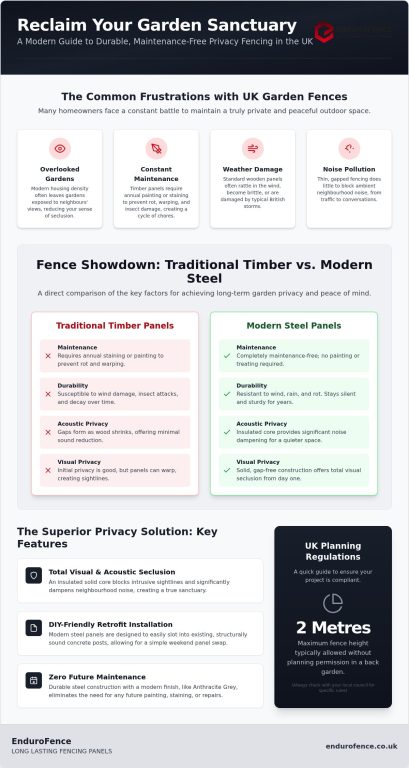
Choosing Garden Fencing Colours for Privacy and Style in the UK
Selecting the right colour for your boundary is a strategic decision that affects both the aesthetic appeal and the perceived size of your outdoor space. In the context of garden fence privacy ideas UK homeowners are increasingly moving away from traditional timber shades in favour of a palette that enhances the feeling of a secluded sanctuary. The colour you choose acts as the backdrop for your entire garden; it can either highlight your planting or recede to create a sense of infinite space.
Modern Palette Trends for 2026
Anthracite Grey has solidified its position as the modern standard for UK architectural projects. This deep, sophisticated shade provides a neutral foundation that complements the vibrant greens and floral colours of a British garden. One of the primary benefits of this palette is the ability to coordinate your fencing with other home features. By matching your boundary to your window frames or bi-fold doors, you create a cohesive transition between your indoor and outdoor living areas. You can find more advice on Coordinating Garden Fencing Colours UK to ensure your project looks professionally designed from every angle.
For those with more traditional tastes, Sage Green and Olive remain popular choices. These shades are particularly effective at blending privacy panels into natural foliage, making the barrier feel less like a wall and more like part of the landscape. Using these tones allows you to maintain total visual seclusion whilst keeping the atmosphere soft and organic. Darker colours like deep charcoal actually make small gardens feel larger because the dark surface recedes from the eye, making the physical limits of the property less obvious and more expansive.
Maintaining Aesthetic Appeal
A significant advantage of modern steel systems is their ability to maintain colour integrity over time. Unlike timber, which fades to a patchy silver-grey or requires annual staining to keep its hue, steel finishes are engineered to resist UV degradation. This means the Anthracite or Sage Green you choose today will look just as vibrant in five years. These finishes are designed to look attractive in the low light of a British winter as well as the bright sun of summer, providing a consistent aesthetic throughout the year.
Choosing a long-lasting finish eliminates the frustration of seeing your investment peel or flake after a single season. If you are ready to upgrade your garden with a permanent colour solution that stays pristine, consider the range of maintenance-free fence panels available for a quick and durable transformation.
Implementing Your Privacy Plan: The Retrofit Advantage
Many UK gardens already possess the most difficult part of a fence to install: concrete posts. If your current posts are structurally sound and upright, there’s no reason to undergo the messy and expensive process of digging them out. Retrofitting allows you to utilise these sturdy foundations whilst completely transforming the look and security of your boundary. When evaluating garden fence privacy ideas UK homeowners often overlook the potential of their existing infrastructure, yet a Retro Fitting Panel Swap is the most efficient way to upgrade.
This approach is specifically designed for the DIY enthusiast. You don’t need specialised tools, heavy machinery, or a team of contractors to achieve a high-end result. Because the system is engineered to fit into standard concrete post channels, the physical labour is significantly reduced. It’s a pragmatic solution that turns a daunting renovation into a manageable weekend project. You can focus on the aesthetic upgrade rather than heavy construction, ensuring your garden remains a place of rest throughout the process. It’s a straightforward way to modernise your property whilst avoiding the high costs of professional labour.
The Retrofit Process Step-by-Step
The first step is to measure the gaps between your existing posts. Most UK gardens follow standard sizing, but check each section to ensure a perfect fit. Remove the old, rattling timber carefully to avoid damaging the concrete channels; often, a simple handsaw or crowbar is all that’s required. With the slots clear, simply slide the new steel panels into place. This provides immediate visual blockage and a more secure boundary than flimsy wood, instantly improving your garden’s seclusion and structural integrity.
Solving the “Ugly Post” Problem
You can hide weathered or stained concrete by using Post Covers. These precision-engineered sleeves slide over your existing posts, hiding the porous grey surface completely. Available in colours matching your panels, such as Anthracite Grey, they create a seamless, unified look across the entire fence line. The final result is a modern, secure, and maintenance-free border that looks entirely new without the cost of a full ground-up installation. By combining modern garden fence privacy ideas UK with the practical benefits of retrofitting, you reclaim your sanctuary with minimal effort.
Reclaiming Your Private Garden Sanctuary
Securing a secluded outdoor space doesn’t have to mean committing to a lifetime of timber maintenance. By exploring the most effective garden fence privacy ideas UK homeowners are adopting, it’s clear that the shift towards modern materials offers the best long-term value. You’ve seen how retrofitting steel panels into your existing concrete posts can transform your boundary in a single weekend. This approach provides a solid visual barrier whilst the high-density insulated core delivers essential sound privacy from the surrounding neighbourhood.
Choosing a solution that requires no painting or treatment means you can spend your time enjoying your garden rather than working on it. These panels are specifically designed to fit existing UK concrete posts, ensuring a secure and rattle-free finish that stands up to the British weather. It’s a straightforward way to modernise your home and protect your peace of mind. Explore EnduroFence Maintenance-Free Panels and Get a Free Quote today to start your transformation. You’re just a few steps away from a durable, stylish, and truly private retreat.
Frequently Asked Questions
Do I need planning permission for a 2-metre high privacy fence in the UK?
Under current UK regulations, you typically don’t need planning permission for a rear garden fence up to 2 metres high. However, if the fence is adjacent to a highway used by vehicles, the maximum height permitted without permission is 1 metre. If you wish to exceed these limits, you must apply for householder planning permission, which currently incurs a fee of £272 in England as of 2026. Always check your property deeds for restrictive covenants.
How do I stop my fence panels from rattling in their concrete posts?
Rattling occurs when timber panels shrink or warp, creating gaps within the concrete post channels. Modern steel panels solve this because they are precision-engineered to maintain their shape regardless of the weather. When exploring garden fence privacy ideas UK residents often choose these systems because they slide securely into existing infrastructure. This creates a tight, silent fit that doesn’t vibrate or move during high winds, ensuring a peaceful outdoor environment.
Can I install steel fence panels myself or do I need a professional?
You can certainly install these panels yourself. The system is designed for a straightforward DIY panel swap that requires no specialised tools or professional qualifications. Most homeowners find they can transform their entire boundary in a single weekend. Because the panels are designed to retrofit into standard concrete posts, the process involves simply removing the old timber and sliding the new steel sections into place, significantly reducing the perceived effort.
Will steel fencing make my garden look too industrial?
Modern steel panels provide a sleek, architectural finish rather than an industrial look. By choosing contemporary colours like Anthracite Grey or Olive Green, you can coordinate your fencing with your home’s window frames and bi-fold doors. This creates a cohesive, high-end aesthetic that complements both traditional and modern garden designs. The profiled steel surface acts as a sophisticated backdrop that makes your natural planting and garden furniture stand out.
What is the best colour for a fence to make a small garden feel private but spacious?
Darker shades like Anthracite Grey are often the best choice for making a small garden feel both private and spacious. While it may seem counterintuitive, dark colours recede from the eye, making the physical limits of your garden less obvious. This psychological effect creates a sense of depth and openness. When considering garden fence privacy ideas UK homeowners find that these dark, solid boundaries provide total seclusion whilst making the outdoor space feel significantly larger.
How long do maintenance-free steel fence panels actually last?
Maintenance-free steel panels are built to last for decades without the need for replacement. Unlike timber, which is a natural material prone to rot, warping, and insect damage, weather-resistant steel maintains its structural integrity indefinitely. The high-quality finishes are engineered to resist UV fading and corrosion, even in the damp British climate. This makes them a once-and-for-all solution that eliminates the ongoing costs and labour associated with traditional wood fencing.
Can steel panels be cut to size if my garden has awkward gaps?
Steel panels can be cut to size quite easily using standard metal-cutting tools like an angle grinder with a thin cutting disc. This allows you to accommodate awkward gaps, sloping ground, or non-standard post distances. Always ensure you treat any cut edges with a matching touch-up paint to maintain the weather-resistant seal. This flexibility ensures you can achieve a professional, seamless finish even in gardens with irregular boundaries or unique structural challenges.
Do steel fence panels interfere with Wi-Fi signals in the garden?
Steel fencing has a negligible impact on Wi-Fi signals for most residential gardens. While metal can reflect signals, modern routers are powerful enough to provide consistent coverage through or around the panels. If you find your signal is weaker at the far end of the garden, it’s usually due to the distance from the router rather than the fencing material itself. Using a standard Wi-Fi extender or mesh system will easily resolve any connectivity issues outdoors.

Leave a Reply